
Creating a dedicated reading nook is one of the most rewarding home improvement projects, especially when space is at a premium in urban homes across the Philippines. A reading corner serves as a personal sanctuary—a quiet zone where you can escape into a novel, catch up on long-form articles, or simply enjoy a quiet cup of coffee. In recent years, whimsical and sculptural furniture designs have taken center stage in modern interior styling. Among these, choosing the right seating rabbit chair has become a highly popular way to infuse personality, playfulness, and cozy aesthetic appeal into a bedroom corner or living room alcove.
While the visual charm of animal-shaped furniture is undeniable, selecting a chair for a reading nook requires looking beyond pure novelty. Unlike accent chairs meant only for brief visits, a reading chair must support your body comfortably for hours at a time. A poorly constructed novelty chair can quickly lead to back strain, neck stiffness, and overall discomfort, turning your dream reading corner into an unused decorative spot. Balancing the whimsical allure of a rabbit-shaped silhouette with rigorous standards of ergonomics, material durability, and structural integrity is essential to making a purchase that you will cherish for years.
Evaluating Ergonomics and Comfort for Your Seating Rabbit
When assessing a seating rabbit chair for long reading sessions, ergonomics must be your primary filter. The defining feature of a rabbit chair—its whimsical, elongated “ears” that form the backrest—must do more than look delightful; it must provide functional physical support. Ideally, the curved backrest and the upright ears should align with the natural curvature of your spine. If the ears are positioned too far back or curve at an awkward angle, they may force your neck forward or leave your upper shoulders completely unsupported. Look for designs where the transition from the seat to the backrest offers a gentle lumbar curve, allowing you to sit back fully without slouching.
Products mentioned in this guide
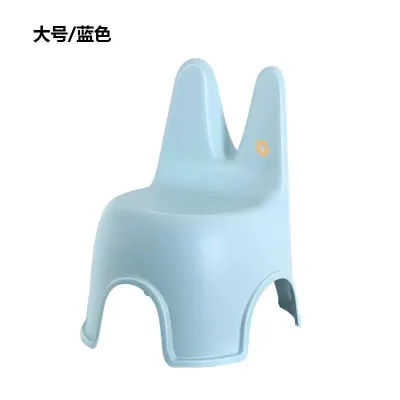
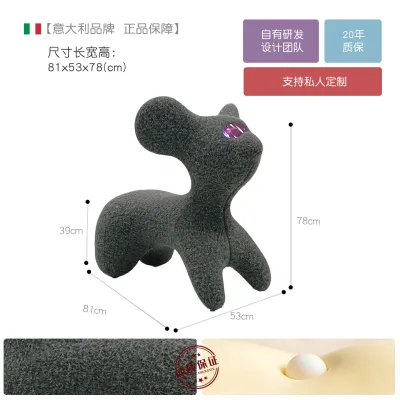
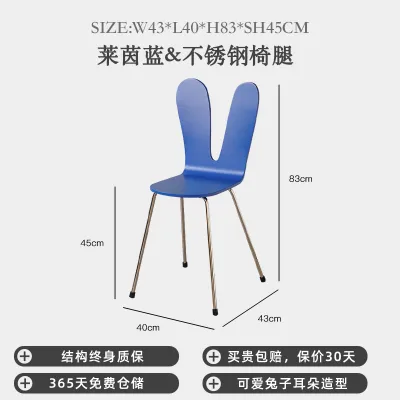
Prices are valid at publication and may change. Please refer to the product page for the latest price.
Seat depth and height are equally critical dimensions to verify before purchasing. For an average adult, a seat depth of 50 to 55 centimeters allows the thighs to be fully supported without the front edge of the seat pressing into the back of the knees, which can restrict blood circulation. The seat height should ideally range between 40 and 45 centimeters from the floor, allowing your feet to rest flat on the ground. If the seat is too high, your legs will dangle, putting pressure on your lower thighs; if it is too low, your knees will bend sharply, transferring stress to your lower back.
To ensure maximum comfort, pay close attention to the seat angle. A slight backward tilt of 3 to 5 degrees helps distribute your body weight more evenly across the seat cushion and backrest, reducing pressure on your sit bones. This subtle angle prevents you from sliding forward as you relax into your book. If the seat is perfectly flat or tilts slightly forward, you will constantly find yourself adjusting your posture, which interrupts your reading flow and fatigues your core muscles.
The internal composition of the seat cushion determines how well the chair retains its comfort over hours of continuous use. High-resilience (HR) polyurethane foam with a density rating of at least 30 to 35 kilograms per cubic meter is the gold standard for durable accent chairs. This material compresses under your weight to relieve pressure points but quickly springs back to its original shape when you stand up. In contrast, cheap polyester fiberfill or low-density plush stuffing may feel exceptionally soft and cloud-like during a two-minute showroom test, but it will rapidly bottom out during a long reading session, leaving you sitting on the hard frame beneath.
Some high-end rabbit chairs incorporate pocket springs within the foam core, offering a supportive, responsive feel similar to a premium mattress. This combination is highly recommended if you plan to spend several hours a day in your reading nook. The pocket springs provide targeted uplift, while the surrounding foam layers soften the contact points, ensuring that the cushion does not sag or lose its shape even after years of daily use.
Finally, consider the positioning of your arms. Reading requires holding a physical book, tablet, or e-reader for extended periods, which can quickly fatigue your shoulders and upper back if your arms are left hanging. Check whether the rabbit chair features integrated side panels, low-profile armrests, or a wide, scooped seat design that allows you to rest your elbows naturally. If the chair has a completely armless, narrow silhouette, you may need to supplement it with a specialized reading pillow or a small cushion placed on your lap to support your forearms comfortably.
Choosing Upholstery and Materials for Humid Climates
In the Philippines, the tropical climate and high relative humidity play a massive role in how comfortable a chair feels and how long it lasts. Because a reading nook is designed for prolonged physical contact, the upholstery fabric must be highly breathable and resistant to moisture-related wear. If your reading corner is located in a room that relies on natural ventilation or a ceiling fan rather than continuous air conditioning, selecting the wrong material can turn your cozy reading session into a sweaty, uncomfortable experience.

Velvet and faux fur are incredibly popular upholstery choices for rabbit chairs because they enhance the soft, animal-like theme of the design. However, dense synthetic velvets and long-pile faux furs tend to trap body heat and moisture, making them less suitable for warm, humid rooms. If you love the plush look of velvet, seek out high-quality cotton-blend velvets or performance fabrics engineered with moisture-wicking properties. For a highly textured look that remains relatively breathable, bouclé fabrics made from cotton or linen blends offer an excellent alternative, providing a cozy, tactile surface without excessive heat retention.
Pure linen, linen-cotton blends, and flat-weave canvas are outstanding choices for tropical reading nooks. These natural fibers allow air to circulate freely, keeping the seating surface cool against your skin even during the warmest afternoons. The trade-off is that natural linens wrinkle easily and may require more careful spot cleaning. To get the best of both worlds, look for performance linen-polyester blends that offer the breathability of natural fibers alongside the stain resistance and durability of synthetic yarns.
High humidity also poses a threat to the internal components of your chair. If a fabric traps moisture, it can create a breeding ground for mold, mildew, and dust mites within the foam cushioning. To prevent this, ensure your reading nook is located in a well-ventilated area, and prioritize upholstery fabrics that have been treated with anti-microbial or moisture-resistant finishes. If you are buying a chair with synthetic fillings, check if the manufacturer specifies the use of open-cell foam, which allows air to flow through the cushion and dry out any trapped humidity.
To assess how well a fabric will withstand daily wear, check for its double-rub count, often measured via the Martindale or Wyzenbeek method. For a residential reading chair, a Martindale rating of 15,000 to 20,000 rubs is considered suitable for light to medium daily use, while a rating above 25,000 rubs indicates heavy-duty durability. Additionally, if you share your home with pets or young children, prioritize fabrics treated with factory-applied, water-repellent, or stain-resistant finishes. Removable, zippered cushion covers are an invaluable feature, allowing you to easily wash or dry-clean the fabric to keep the chair fresh and free from dust mites, which thrive in humid tropical environments.
Sizing, Proportions, and Space Planning for Your Corner
A rabbit chair is inherently a statement piece with significant visual weight. Because of its rounded, organic lines and prominent ear-shaped backrest, it often occupies more physical and visual space than a standard square-back accent chair. Before committing to a purchase, it is vital to plan your reading nook’s layout carefully to ensure the room feels balanced rather than cluttered.
Begin by measuring the exact footprint of the area where you intend to place the chair. Use painter’s tape to outline the chair’s maximum width and depth on the floor. A standard rabbit accent chair typically requires a footprint of at least 80 by 80 centimeters, but you must also factor in a clearance zone of 60 to 90 centimeters around the chair to allow for comfortable movement, vacuuming, and sitting down. If your reading nook is tucked into a tight bedroom corner, a massive, over-stuffed rabbit chair can quickly overwhelm the space and block natural light paths.
Consider the vertical proportions of the room as well. The high “ears” of a rabbit chair draw the eye upward, which can be a fantastic design trick to make low ceilings feel higher. However, if the chair is placed directly under a low-hanging shelf, a wall-mounted air conditioning unit, or a low window sill, it can look cramped and awkward. Ensure there is at least 30 to 40 centimeters of open vertical space above the tips of the ears to maintain a sense of breathing room.
Beyond the room’s layout, you must verify the logistics of getting the chair into your home. Measure the clear width and height of all doorways, narrow hallways, tight stairwell turns, and elevator doors. Because the “ears” of a rabbit chair are often integrated into a single, solid frame, they cannot be easily disassembled. A chair with a total height of 110 centimeters might struggle to clear tight, low-ceilinged stairwells or small condominium elevators in high-rise developments in Metro Manila. Always compare the chair’s packaged shipping dimensions against your home’s entry points.
An effective reading nook requires a cohesive ecosystem of furniture. Your rabbit chair should be paired with a small side table to hold your books, glasses, and a warm beverage, as well as a dedicated reading lamp. To ensure a comfortable reach, the height of the side table should be roughly equal to or slightly below the height of the chair’s armrests—usually between 50 and 60 centimeters. The reading lamp should be positioned slightly behind and to the side of the chair, casting light directly onto your reading material without creating harsh glare or casting shadows across your lap.
To visually ground your rabbit chair, consider placing a small, round area rug underneath it. A textured jute or low-pile cotton rug can help define the reading zone, separating it from the rest of the room. Choose a rug diameter that is at least 30 to 40 centimeters wider than the chair’s base, allowing the front legs of the chair and your side table to sit comfortably on the rug surface.
Verifying Structural Integrity and Daily-Use Safety
The unconventional geometry of a rabbit-shaped chair introduces unique structural considerations. Because the backrest extends upwards into two distinct ear shapes, the center of gravity of the chair can sometimes be higher or further back than that of a traditional low-profile armchair. This makes verifying the structural integrity and stability of the frame a critical safety step, particularly if the chair will be used by children or if you tend to shift weight frequently while reading.
Start by investigating the internal frame materials. High-quality accent chairs are built around frames made of kiln-dried solid hardwood, such as mahogany, gmelina, or imported ash. Kiln-drying is a crucial process that removes moisture from the wood, preventing it from warping, cracking, or rotting in high-humidity climates. Avoid chairs constructed primarily from cheap particleboard or thin, unreinforced medium-density fiberboard (MDF), as these materials can soften and sag over time when exposed to ambient moisture, leading to loose joints and structural failure.
Examine how the joints of the frame are secured. Quality craftsmanship relies on double-dowelled, corner-blocked joints that are glued and screwed together. Avoid chairs where the primary structural joints are held together only with staples or simple nails, as these will quickly loosen under the repetitive stress of sitting and standing. If you are shopping in a physical retail store, perform a simple stability check: grasp the top of the backrest (the ears) and gently shake the chair from side to side. There should be no noticeable wobble, creaking, or flexing in the frame.
Pay close attention to how the legs are attached to the main frame. The strongest designs feature heavy-duty metal mounting plates or hanger bolts that are securely threaded into the hardwood frame. Avoid chairs where the legs are simply screwed directly into thin wood paneling without any reinforcement, as these can easily strip or snap if the chair is dragged across the floor. If the legs are made of metal, ensure they are constructed from thick-gauge steel or rust-resistant aluminum with seamless welds.
The base of the chair must be wide and solid enough to prevent tipping. Splayed wooden or metal legs that extend slightly outward past the footprint of the seat cushion provide excellent lateral stability. If the rabbit chair features a swivel pedestal base, ensure the base plate is heavy and wide, constructed from solid steel or cast iron. Always check the manufacturer’s specified weight capacity, which should ideally be at least 100 to 120 kilograms for a standard adult chair. Finally, look for non-slip, non-marring floor pads on the bottom of the legs. These pads protect delicate hardwood or ceramic tile floors from scratches and prevent the chair from sliding backward when you sit down.
Quick Evaluation Checklist Before You Buy
To help you make a confident decision, use this quick checklist to evaluate any rabbit chair before finalizing your purchase, whether you are shopping online or visiting a local showroom:
- Confirm Finished Dimensions: Measure your designated corner and verify that you have at least 60 to 90 centimeters of clearance around the chair's footprint.
- Check Entryway Access: Compare the chair’s maximum height, width, and diagonal depth against your doorways, hallways, and elevator dimensions.
- Assess Cushion Density: Look for high-resilience (HR) polyurethane foam (30-35 kg/m³) to ensure lasting support that won't bottom out.
- Evaluate Fabric Breathability: Opt for cotton, linen blends, or performance textiles if your reading nook is in a humid or non-air-conditioned room.
- Verify Frame Materials: Prioritize kiln-dried solid hardwood over cheap particleboard or thin MDF to prevent warping and structural failure.
- Inspect Joint Construction: Look for double-dowelled, corner-blocked, and screwed joints rather than simple stapled or nailed connections.
- Check Weight Capacity and Stability: Ensure the stated weight limit meets your needs (ideally 100-120 kg) and verify that the base is wide enough to prevent tipping.
- Review the Return and Warranty Policy: Confirm that the retailer offers at least a one-year structural warranty and understand their return policy in case the chair does not fit your space.
Frequently Asked Questions (FAQ)
How do I clean and maintain a velvet or faux fur rabbit chair?
Routine maintenance is key to keeping plush fabrics looking fresh and preventing dust accumulation. Vacuum your rabbit chair weekly using a soft upholstery brush attachment, working in the direction of the pile to lift dust without crushing the fibers. For minor spills, immediately blot the area with a clean, dry microfiber cloth—never rub, as this can push the liquid deeper into the fabric and damage the pile. If a spot cleaner is needed, mix a few drops of mild, pH-neutral dish soap with warm water, apply the foam sparingly with a damp cloth, blot gently, and let it air dry completely. Always consult the manufacturer’s specific care label before applying any commercial fabric cleaners or using steam, as excessive heat and moisture can permanently mat faux fur and velvet.
Do I need an ottoman to read comfortably in a rabbit chair?
Whether you need an ottoman depends largely on the chair’s seat depth and your personal body proportions. If the rabbit chair has a deep seat (greater than 55 centimeters) and your feet do not rest flat on the floor, your lower back will lack proper support, leading to muscle strain over time. In this scenario, pairing the chair with a matching or neutral ottoman is highly recommended. Elevating your feet relieves pressure on your lower back, improves blood circulation in your legs, and allows you to shift into a variety of comfortable reclining postures. Before purchasing, check the chair’s seat-to-floor height and compare it to your leg length to determine if a footstool is necessary for your comfort.
Community discussion
Share your experience or ask a question. Comments are reviewed before publication.