
When organizing a home office, finding the right storage solution is crucial for maintaining productivity and keeping clutter at bay. A steel stand rack offers an exceptionally durable, industrial-grade option for holding books, printers, and document archives. However, choosing the perfect unit requires looking beyond basic aesthetic appeal to evaluate specific structural specifications.
To find a rack that fits your workspace, you must prioritize physical dimensions, load capacities, steel thickness, and rust-resistant finishes. Understanding these technical details ensures your storage unit remains stable, safe, and functional for years. This guide breaks down the essential technical specifications to look for when shopping for a steel stand rack in the Philippines.
Dimensions and Clearance: Matching Rack Size to Your Space
Before purchasing any heavy-duty shelving, you must measure your physical workspace to avoid delivery or installation headaches. Many buyers make the mistake of looking only at the overall footprint—the total length and width—listed on product pages. However, the outer dimensions do not always equal the usable shelf space.
Products mentioned in this guide
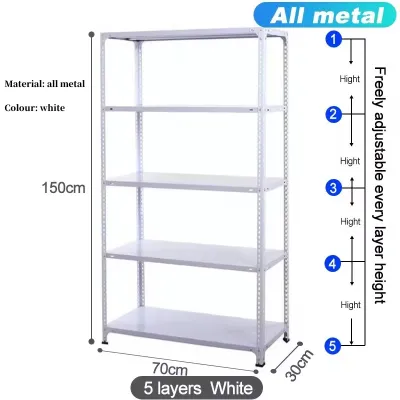
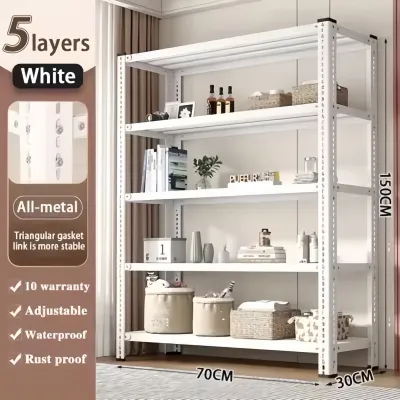
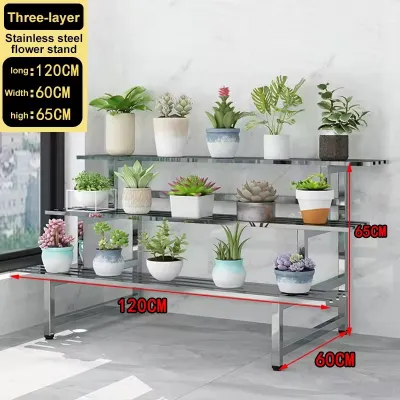
Prices are valid at publication and may change. Please refer to the product page for the latest price.
The vertical uprights, corner posts, and support lips on a steel stand rack can significantly reduce the actual width and depth available for storage. If you plan to store wide storage boxes or specific plastic bins, measure the clear span between the inner edges of the frame posts rather than relying on the outer dimensions.
Getting the rack into your home office requires planning the transit route. Take precise measurements of your home’s doorways, narrow hallways, staircases, and elevator doors—especially if you live in a high-rise condominium in Metro Manila. A pre-assembled or welded steel frame that cannot clear a tight stairwell corner will leave you with an unusable piece of furniture.
Vertical clearance is equally vital if you intend to store tall office equipment. Look for a steel stand rack that features adjustable shelf heights, typically spaced at one-inch or two-inch increments. This adjustability allows you to customize the vertical clearance to accommodate bulky items like desktop laser printers, paper trays, or large ring binders without wasting valuable vertical space.
Load Capacity and Steel Gauge: Evaluating Steel Stand Rack Limits
Understanding weight limits is essential for safety, particularly when loading a steel stand rack with heavy office archives and machinery. Manufacturers typically specify two different weight ratings: per-shelf load capacity and total unit capacity. You must never assume that the total capacity is simply the individual shelf limit multiplied by the number of shelves.

For example, a five-shelf rack might feature a per-shelf limit of 100 kilograms, but the overall frame might only be rated for a maximum of 400 kilograms. Exceeding either of these thresholds can lead to structural failure, bowing shelves, or a dangerous collapse. Always distribute the heaviest items on the bottom shelves to maintain a low center of gravity.
The thickness of the metal, often referred to as the steel gauge, directly influences structural durability. In the steel industry, a lower gauge number indicates thicker, stronger metal. For instance, a 14-gauge steel frame is significantly thicker and more rigid than an 18-gauge frame. However, do not rely solely on steel thickness; check if the manufacturer utilizes cross-bracing or double-rivet supports, which dramatically increase stability without adding unnecessary weight.
To choose the right capacity tier, estimate the weight of your typical office inventory. A standard stack of heavy textbooks or legal-sized document binders can easily weigh 15 to 25 kilograms per shelf. If you plan to store desktop computers, uninterrupted power supplies (UPS), or heavy toolboxes, look for a rack rated for at least 100 to 150 kilograms per shelf to ensure a safe margin of error.
Surface Finish: Choosing the Right Rust Protection
In the tropical climate of the Philippines, high humidity and seasonal dampness pose a constant threat to metal furniture. An unprotected steel stand rack will quickly develop rust, leading to structural degradation and unsightly staining on your office documents. Therefore, evaluating the surface finish specification is just as important as checking the load limits.
Powder coating is the gold standard for indoor steel furniture. This process involves applying a dry electrostatic powder to the steel and curing it under high heat to form a hard, continuous protective barrier. Powder-coated finishes offer excellent scratch resistance, making them highly durable against the daily friction of sliding metal bins or heavy binders.
Epoxy resin and baked enamel finishes are also common, though they may offer slightly less resistance to deep scratches than high-quality powder coatings. When browsing product specifications, look for indicators of comprehensive edge coverage. Rust often starts at the sharp, cut edges of steel sheets or around bolt holes where the protective coating might be thin or chipped.
Before finalizing your purchase, inspect the manufacturer’s care instructions and warranty terms. High-quality manufacturers often provide specific warranties covering surface rust or paint peeling under normal indoor conditions, giving you peace of mind in humid environments.
Assembly and Stability: Boltless vs. Bolted Designs
How your steel stand rack is put together affects both its initial setup experience and its long-term structural rigidity. Standard steel racks generally fall into two categories: boltless designs and traditional bolted frames.
Boltless racks, which utilize rivet-style or keyhole slot-in connections, are incredibly popular for home offices. They require minimal tools—often just a rubber mallet—and can be assembled in a fraction of the time needed for bolted units. However, while boltless designs are convenient, high-quality bolted frames can sometimes offer superior long-term rigidity, especially if you need to move the rack frequently while fully loaded.
Stability is a critical safety consideration, particularly to prevent accidental tip-overs. Look for racks that include anti-tip wall anchor hardware, allowing you to secure the top of the frame directly to a concrete or wooden wall stud. Additionally, adjustable leveling feet are essential for compensating for uneven tile or wood flooring, preventing wobbles that could cause items to slide off.
If you frequently reconfigure your workspace, check the mobility specifications. Some steel stand racks support heavy-duty caster wheels. If you opt for casters, ensure they feature reliable locking mechanisms on at least two wheels to keep the rack firmly in place during daily use.
Minor Specs That Won't Make or Break Your Decision
While technical specifications are vital, some minor details receive far too much marketing attention and should not dictate your choice. For instance, exact color variations like “matte black,” “charcoal grey,” or “industrial silver” have zero impact on structural performance. Focus on the quality of the finish rather than obsessing over minor aesthetic shade differences.
Similarly, proprietary brand names for standard carbon steel types are often just marketing terms. Unless you are purchasing specialized medical-grade or marine-grade equipment, standard carbon steel with a robust powder coat is more than sufficient. Do not pay a massive premium for branded steel alloys when standard gauge and finish specifications tell you everything you need to know about durability.
Frequently Asked Questions (FAQ)
Does a higher shelf count mean a higher total weight capacity?
No, a higher number of shelves does not increase the overall weight capacity of the unit. The total load capacity is strictly capped by the strength of the vertical uprights and the base structure. Adding more shelves simply allows you to distribute your items across more levels, but the combined weight of all stored items must still remain below the manufacturer’s maximum total unit limit.
Is stainless steel necessary for an indoor home office rack?
Stainless steel is generally unnecessary for a standard indoor home office. Standard carbon steel treated with a high-quality powder coat provides excellent protection against indoor humidity at a fraction of the cost. Reserve expensive stainless steel specifications for outdoor environments, commercial kitchens, or areas with direct water exposure and high salinity.
Community discussion
Share your experience or ask a question. Comments are reviewed before publication.