
Finding a practical toy organizer storage rack for a compact home or high-rise condo in the Philippines requires balancing floor space with vertical capacity. When floor space is limited, the right storage solution must keep toys organized, accessible, and safe without turning your living room or bedroom into a cluttered obstacle course. By focusing on precise measurements, vertical design, modular flexibility, and secure anchoring, you can maintain an open, functional home while keeping playthings neatly tucked away.
Measure Your Available Space and Clearance
Before browsing online marketplaces or local furniture showrooms, grab a tape measure to map out your exact floor dimensions. Measure the maximum width and depth of the designated area, keeping in mind that even a few centimeters of overhang can obstruct a busy walkway. Don’t forget to measure the ceiling height, as maximizing vertical space is your primary strategy in a compact layout.
In high-rise condo living, delivery logistics are just as critical as the final room placement. Measure the width and height of your unit’s door frames, narrow hallways, and the building’s elevator cabin to ensure the packaged or pre-assembled rack can actually reach your unit without getting stuck.
Products mentioned in this guide
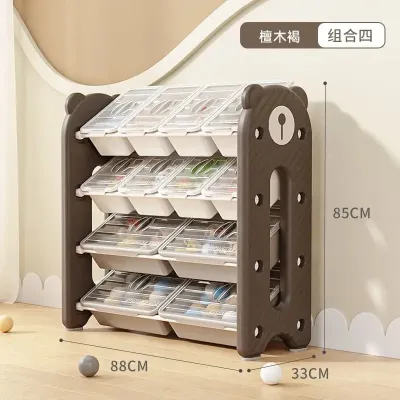
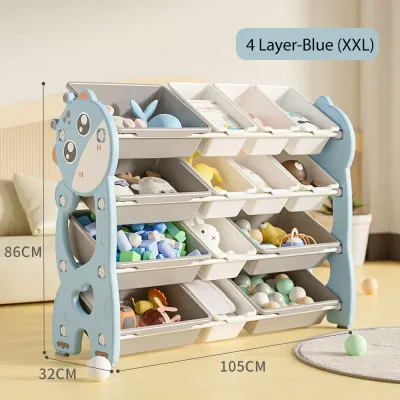
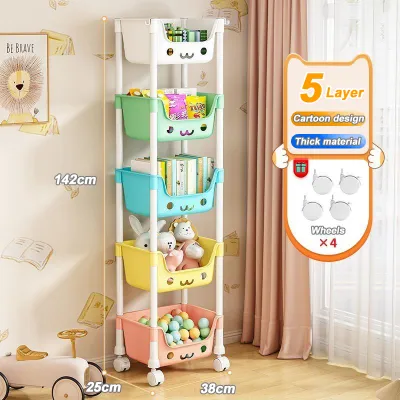
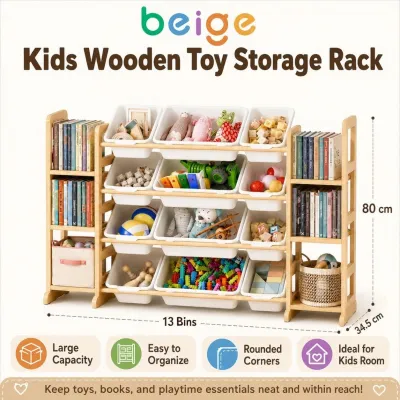
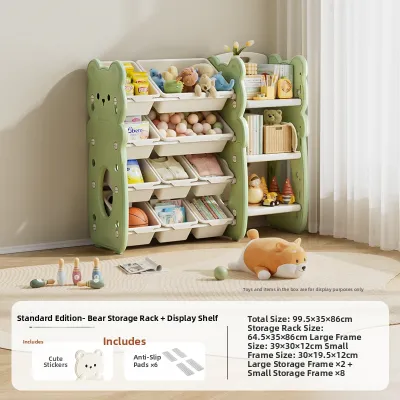
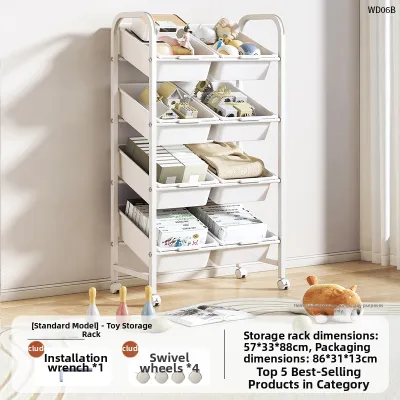
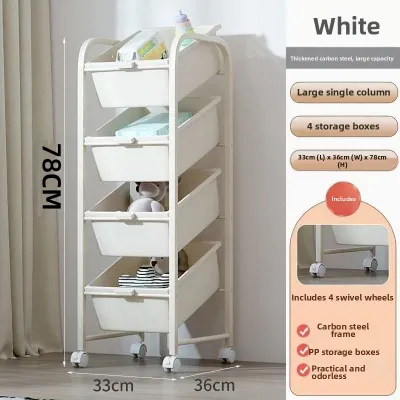
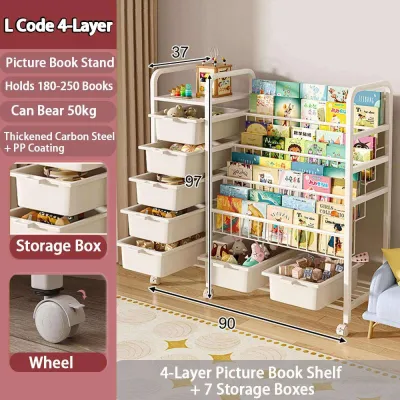
Prices are valid at publication and may change. Please refer to the product page for the latest price.
Finally, calculate the necessary clearance for daily movement. Ensure there is enough space for nearby doors to swing fully open, and leave ample room for children to pull out storage bins or drawers without bumping into other furniture. A good rule of thumb is to allow at least 60 to 90 centimeters of open floor space in front of the rack for comfortable access and play.
Maximize Vertical Storage Safely
When floor area is at a premium, the only way to expand your storage capacity is to go upward. Selecting a tall, narrow shelving unit allows you to store a large volume of toys while occupying a minimal footprint. This design keeps the center of the room open for playtime, making a small bedroom or living area feel significantly larger.

However, tall furniture in a home with active children introduces a serious safety risk. You must verify that the toy organizer includes robust anti-tip hardware, such as wall straps or brackets. Before drilling, check your wall type; many Philippine condos feature solid concrete or masonry walls that require specific masonry drill bits and wall plugs, whereas partition walls may require locating studs or using heavy-duty drywall anchors.
To ensure the rack remains useful as your child grows, look for models with adjustable shelves. Toys change rapidly from bulky toddler playsets to smaller board games and books. Adjustable shelving lets you reconfigure the vertical spacing, preventing wasted gaps and ensuring every centimeter of height is utilized efficiently.
Choose Flexible and Modular Configurations
Modular cube organizers offer high flexibility compared to traditional fixed-frame racks. These systems allow you to stack cubes vertically or arrange them horizontally to fit under windows or sloped ceilings. As your storage needs evolve, you can easily add more units or reconfigure the layout to suit a changing room design.
Pairing your rack with interchangeable storage bins is a practical way to manage visual clutter. Fabric drawers or plastic bins can be pulled out completely for playtime and slid back into place when it is time to clean up. Using opaque bins hides mismatched toy parts, instantly making a small room look more organized and serene.
If you frequently need to clear the floor for activities, consider a mobile storage cart equipped with heavy-duty, locking casters. A rolling cart can be wheeled into a corner or closet when guests arrive and rolled out during playtime. Always ensure the casters lock securely to prevent the cart from rolling unexpectedly when a child is reaching for a toy.
Verify Weight Capacity and Child-Safe Features
Before purchasing any storage rack, check the manufacturer’s specifications for the maximum weight capacity per shelf. Overloading a shelf with heavy books or wooden toys can cause the material to sag, warp, or fail entirely over time. Look for reinforced supports or thicker shelving materials if you plan to store dense items.
Safety is paramount in a child’s environment, so inspect the physical design of the rack for child-friendly features. Choose units with rounded corners and smooth edges to prevent scrapes and bruises during active play. Additionally, verify that the surface finishes are non-toxic, moisture-resistant, and easy to wipe clean, as tropical humidity and sticky hands can quickly degrade unprotected surfaces.
When assembling the furniture, carefully review the instructions to confirm all structural hardware is present and correctly installed. Check the stability of the fully assembled rack by gently shaking it; there should be no wobbling or loose joints. Regularly inspect the fasteners over time, tightening any screws that may have loosened with daily use.
Avoid Common Sizing and Placement Mistakes
One of the most frequent mistakes when planning furniture placement is forgetting to account for baseboards, skirting boards, or wall outlets. A rack that cannot sit flush against the wall due to a thick baseboard leaves a gap that reduces stability and makes anchoring more difficult. Ensure you measure from the baseboard rather than the bare wall, and avoid blocking essential electrical outlets or light switches.
Another common pitfall is choosing a storage unit that is too deep. Racks deeper than 30 to 35 centimeters can easily overwhelm a narrow condo hallway or small bedroom, making the space feel cramped and restricting natural light. Opt for shallower shelving that keeps items visible and accessible without protruding into the room’s main pathways.
Lastly, never store heavy items on the upper shelves of a tall rack. Placing heavy board games, wooden blocks, or storage boxes near the top raises the unit’s center of gravity, making it highly susceptible to tipping. Always place the heaviest items on the bottom shelves and reserve the higher, harder-to-reach shelves for lightweight toys or decorative items.
Frequently Asked Questions (FAQ)
How do I keep a toy storage rack from tipping over in a small room?
To prevent tipping, always secure the storage rack to the wall using the manufacturer’s provided anti-tip straps or brackets. For concrete or hollow-block walls common in local condos, use appropriate masonry wall plugs and screws. Additionally, always place the heaviest toys, books, and bins on the lowest shelves to keep the center of gravity as close to the floor as possible.
Are fabric storage bins better than plastic ones for small spaces?
Both materials have distinct advantages depending on your needs. Fabric bins are lightweight, soft, and can be collapsed flat when not in use, making them highly useful for saving space and preventing minor bumps. Plastic bins, on the other hand, are highly durable, easy to sanitize, and resistant to the tropical humidity that can sometimes cause fabric to hold moisture or dust.
Community discussion
Share your experience or ask a question. Comments are reviewed before publication.