
A nightstand with hidden storage offers a practical way to keep bedroom essentials organized, secure, and out of sight. In the Philippines, where homes range from compact city condominiums to spacious suburban houses, maximizing bedroom space while maintaining privacy is a common priority. Whether you need to conceal valuables, store daily medications safely, or simply reduce visual clutter, finding the right piece requires balancing security, accessibility, and design. This guide outlines how to evaluate concealed storage mechanisms, measure your space, and verify product quality to select a nightstand that fits your specific needs.
Is a Hidden Storage Nightstand Right for Your Needs?
Deciding to invest in a nightstand with secret cabinet storage involves evaluating your daily habits and privacy requirements. Many homeowners in the Philippines find these specialized pieces of furniture highly beneficial for securing small valuables, such as emergency cash in Pesos (₱), jewelry, or sensitive personal documents, without drawing the attention that a traditional metal safe might. By blending security features directly into everyday bedroom furniture, you can keep essential items within arm’s reach while keeping them completely out of sight from visitors or household staff.
Beyond security, these nightstands are excellent tools for maintaining a clean, minimalist aesthetic. If you prefer a clutter-free bedside but still need quick access to items like reading glasses, journals, or daily medications, a hidden compartment allows you to clear the tabletop surface entirely. This is particularly useful in tropical climates where dust can accumulate quickly on exposed surfaces, making enclosed storage a more hygienic and low-maintenance choice for your bedroom.
Products mentioned in this guide
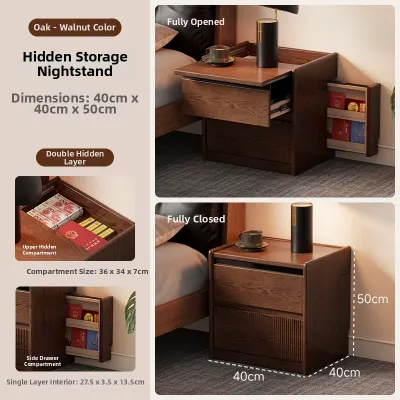
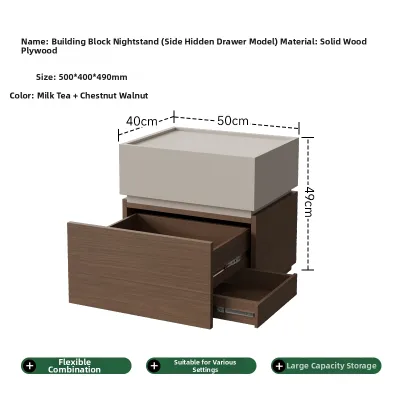
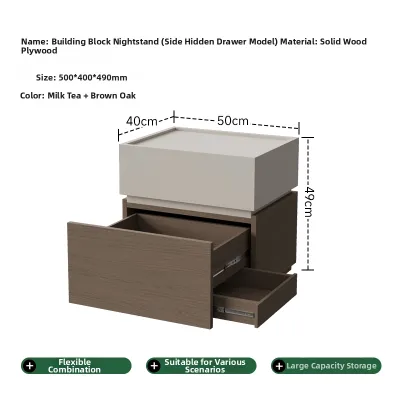
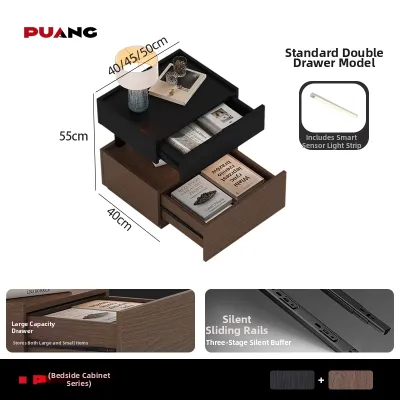
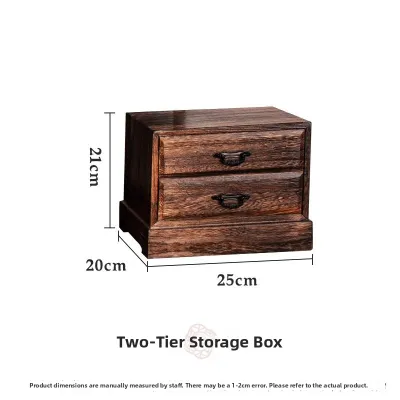

Prices are valid at publication and may change. Please refer to the product page for the latest price.
However, choosing a nightstand with concealed storage does come with specific trade-offs that you must consider before purchasing. These units often feature more complex internal construction, which can make them heavier and more difficult to move during room cleaning or relocation. Additionally, the specialized hardware or custom carpentry required for hidden compartments can increase the overall cost compared to standard open-shelf or basic drawer nightstands. You must also consider daily accessibility; if a compartment is too difficult or time-consuming to open, you may find yourself leaving valuables exposed out of sheer inconvenience.
Aesthetic integration is another crucial factor to keep in mind. A successful hidden storage nightstand must look entirely ordinary from the outside. If the piece features unusual proportions, visible seams where none should exist, or conspicuous locking hardware, it defeats the purpose of concealment. When browsing options, look for designs that match your existing bedroom decor—whether that is modern Scandinavian, rustic industrial, or traditional Filipino hardwood—to ensure the piece blends seamlessly into the background.
Key Features to Evaluate Before Buying
When comparing different nightstand models with secret cabinet storage, a systematic evaluation of their structural and functional features will help you avoid low-quality purchases. The first and most critical aspect to assess is the overall build quality and material durability. Because hidden compartments rely on precise alignments to remain undetectable, any warping, sagging, or misalignment of the wood can instantly give away the secret space or cause the mechanism to jam.

In the Philippines, the high relative humidity throughout the year poses a unique challenge to wooden furniture. Solid wood can expand and contract with seasonal moisture changes, while low-grade engineered wood or medium-density fiberboard (MDF) without proper sealing can swell and degrade. When evaluating a nightstand, check the manufacturer’s specifications for moisture-resistant finishes, high-quality sealants, and robust joint construction. Look for sturdy joinery, such as dovetail joints or reinforced corner blocks, which help the frame maintain its shape under load and resist warping over time.
Security mechanisms are the next priority on your checklist. Depending on your security needs, you can choose between manual and electronic locking options. Manual systems often use hidden magnetic latches, mechanical push-triggers, or clever physical counterweights that require no power source to operate. Electronic options, such as RFID card readers, biometric fingerprint scanners, or digital keypads, offer rapid access and high security but require regular battery maintenance. Evaluate how you will manage keys or backup power options to ensure you are never locked out of your own compartment during a power outage or battery failure.
The interior layout of the hidden compartment should also align with the specific items you plan to store. If you intend to store delicate items like jewelry or watches, look for compartments lined with protective felt or velvet to prevent scratches. For those planning to store electronic devices, check for integrated cable management channels or built-in charging ports that allow you to charge your phone or tablet securely inside the closed compartment. Adjustable shelving or customizable dividers within the secret space can also help you organize smaller items efficiently.
Finally, you must strike a careful balance between ease of daily access and long-term concealment. A compartment designed for emergency items might prioritize deep concealment over quick access, utilizing hidden panels that require a multi-step physical process to open. Conversely, a compartment meant for daily-use items, like a tablet or medication, should feature a smooth, rapid-release mechanism that you can operate in seconds. Assess your primary motivation for buying the nightstand to determine which side of this balance fits your lifestyle.
Common Types of Concealed Storage Mechanisms
Concealed storage nightstands utilize several distinct engineering methods to hide space within their standard dimensions. Understanding these mechanisms will help you choose a style that matches your physical capabilities and daily routines. One of the most common designs is the false bottom or hidden drawer integrated within a standard drawer unit. In this setup, a shallow, secondary compartment sits directly beneath the main drawer floor, accessible only by lifting a removable panel or releasing a hidden latch. This style is highly effective because it utilizes space that onlookers naturally assume is empty or solid.
Another popular option is the drop-down front, flip-top, or sliding panel mechanism. These designs often feature a top surface that slides forward or sideways on smooth metal glides, revealing a recessed compartment underneath. Alternatively, a side panel or the decorative trim along the bottom of the nightstand might swing outward on concealed hinges. These mechanisms are excellent for storing larger items, but they require you to keep the surrounding area clear. For instance, a sliding-top nightstand means you cannot place heavy lamps, water glasses, or decorative items permanently on top of the table, as they would obstruct the opening mechanism.
Diversion safes represent a third category, where the hidden compartment is disguised as an entirely different structural component of the furniture. This could include a hollowed-out decorative column, a secret compartment built into the thick crown molding at the base, or a false back panel behind the main cabinet space. These designs are exceptionally difficult for unauthorized individuals to locate because they do not conform to standard drawer or cabinet layouts. They are ideal for long-term storage of highly sensitive items that you do not need to access on a daily basis.
To choose the right mechanism, consider who will be using the room and how often you will need to access the hidden space. False bottoms are excellent for low-frequency, high-security needs, while sliding tops or magnetic-latch side panels are better suited for daily convenience. If you share a bedroom, ensure that the physical effort required to operate the mechanism—such as lifting a heavy solid-wood top—is manageable for everyone who needs access.
How to Measure and Plan Your Bedroom Space
Before finalizing your purchase, you must conduct thorough physical measurements of your bedroom to ensure the nightstand fits both your space and your daily routines. Begin by measuring the available bedside clearance. You need to measure not only the width and depth of the floor space next to your bed but also the height of your mattress. Ideally, the top of the nightstand should sit level with or slightly below the top of your mattress, allowing for comfortable reach while lying down.
Next, plan for the clearance required to operate the hidden compartment itself. If the nightstand features a side-opening panel, a pull-out secret drawer, or a drop-down front, you must ensure there is adequate walkway space and clearance from the bed frame, walls, or nearby wardrobe doors. A hidden drawer that cannot fully extend because it hits the bed frame is practically useless. Mark the maximum extension dimensions of all moving parts on your bedroom floor using painter’s tape to visualize the clearance before buying.
In the Philippines, many urban residents live in multi-story townhouses or high-rise condominiums where tight corridors, narrow doorways, and compact elevators are common. It is vital to measure the dimensions of your entryways, hallways, stairwells, and lift doors to guarantee that the nightstand can be delivered and brought into your bedroom without damage. If the nightstand is delivered fully assembled—which is common for high-end or custom-built pieces with complex hidden mechanisms—ensure that the delivery path can accommodate its finished dimensions.
You must also verify the stability of the unit and the load limits of your flooring. Nightstands with hidden compartments, especially those made of solid hardwoods like mahogany or tanguile, can be significantly heavier than standard hollow bedside tables. When loaded with books, lamps, and the contents of the secret compartment, the concentrated weight on the nightstand’s legs can be substantial. Ensure your flooring can support this weight without indentation, and check that the nightstand is perfectly level to prevent the hidden mechanisms from binding or failing to latch properly. If you plan to use electronic locks or built-in charging ports, map out the location of your wall outlets to ensure the power cords can reach safely without creating a tripping hazard.
Where to Shop and What to Verify Before Checkout
Sourcing a high-quality nightstand with secret cabinet storage in the Philippines requires careful selection of purchasing channels and diligent pre-purchase verification. You can explore several options, including official brand stores, specialized local furniture retailers, and custom furniture makers. While online marketplaces and ecommerce platforms offer a wide variety of budget-friendly options, you must exercise caution. Mass-produced, low-cost items often use cheaper hardware and thinner materials, which can compromise both the security and the longevity of the hidden compartments.
If you choose to shop online, prioritize listings that provide detailed technical specifications, clear diagrams of the locking mechanisms, and verified buyer feedback. Look closely at reviews that mention the durability of the hinges, the reliability of the locks, and whether the hidden compartment remains truly undetectable over months of regular use. If possible, visit physical showrooms or local furniture boutiques where you can personally test the smooth operation of the drawers, inspect the wood finish, and verify the stability of the frame.
Before checking out, carefully review the retailer’s return policies and warranty coverage. Pay close attention to whether the warranty covers the specialized locking hardware and hidden mechanisms, as these are the components most likely to require maintenance or replacement over time. If the nightstand requires assembly, download the user manual beforehand to assess whether you have the tools and technical skill required to assemble it correctly. Misaligned assembly can ruin the concealment effect or cause the locking mechanisms to malfunction.
For those with highly specific security requirements, unique bedroom layouts, or a preference for premium local hardwoods, consulting a professional custom carpenter or furniture designer is often the best path forward. A local craftsman can design a bespoke nightstand that perfectly matches your existing bedroom suite while integrating highly secure, custom-tailored hidden compartments. While custom furniture typically requires a higher initial investment and longer lead times, it ensures a level of build quality, material suitability for the local climate, and personalized security that off-the-shelf options rarely match.
Frequently Asked Questions (FAQ)
Are nightstands with secret compartments fireproof or waterproof?
Standard nightstands with hidden compartments are constructed from furniture-grade wood, MDF, or plywood, meaning they do not provide protection against fire or water damage. While some manufacturers may apply water-resistant sealants or fire-retardant coatings to the exterior finish, these treatments are designed to resist minor spills and surface wear rather than extreme environmental hazards. If you need to protect irreplaceable documents, digital backup drives, or highly sensitive valuables from fire or flooding, you should not rely on a wooden nightstand. Instead, consider placing a certified, fireproof, and waterproof safe inside the hidden compartment of the nightstand, or use a dedicated home safe that meets international safety standards for environmental protection.
Can I add a hidden compartment to my existing nightstand?
It is entirely possible to modify an existing nightstand to include a hidden compartment, but doing so carries structural risks. Altering the frame, removing drawer backs, or cutting into the structural panels of mass-produced furniture can compromise its overall stability, cause drawers to sag, and void any existing manufacturer warranties. If you wish to attempt a DIY modification, a safer and non-destructive alternative is to use false-bottom inserts or low-profile organizer boxes designed to sit discreetly at the bottom of your existing drawers. For permanent, seamless, and structurally sound modifications, it is highly recommended to consult a professional carpenter who can reinforce the furniture frame while crafting a secure and undetectable hidden space.

Community discussion
Share your experience or ask a question. Comments are reviewed before publication.