
Finding the right nightstand with concealed compartments and built-in charging in the Philippines requires balancing security, convenience, and bedroom aesthetics. While many standard bedside tables offer basic drawers, a specialized secret storage cabinet provides a discreet way to secure personal items, documents, or daily clutter right beside your bed. Because specific product availability and pricing fluctuate across online marketplaces and physical showrooms, relying on a static list of models is less effective than mastering the evaluation criteria. By understanding how to assess compartment mechanisms, charging safety, physical dimensions, and tropical material durability, you can make an informed purchase that fits your home perfectly.
Defining Your Secret Storage Needs and Compartment Types
Before selecting a nightstand, you must establish clear evaluation dimensions for the concealed compartment based on your security and organization goals. Start by identifying the primary items you intend to store. If you plan to secure small valuables like jewelry, passports, or emergency cash, a compact, highly concealed compartment is ideal. Conversely, if you need to store larger private documents, tablets, or everyday clutter, you will require a compartment with a larger internal volume and a higher weight capacity. Overloading a hidden drawer can strain its internal hardware, leading to mechanical failure or making the compartment obvious due to sagging.
Next, compare the different concealment mechanisms available on the market. Drop-down tabletops, false-bottom drawers, and side-sliding panels each offer distinct advantages and trade-offs. A drop-down tabletop often utilizes a magnetic lock or a hidden latch, providing quick access from the top but requiring you to keep the surface relatively clear of heavy items. False-bottom drawers are highly discreet because they look like standard drawers from the outside, but they require you to remove the top layer of items to access the hidden space. Side-sliding panels slide out from the side of the nightstand, offering excellent discretion, though they require clear physical space on either side of the unit to operate.
Products mentioned in this guide
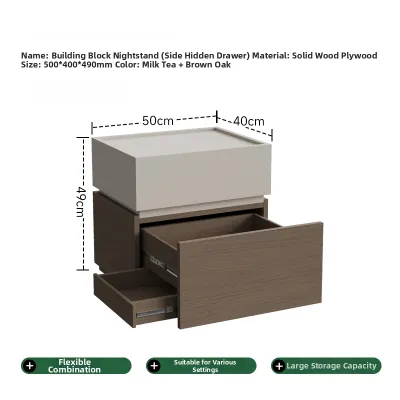
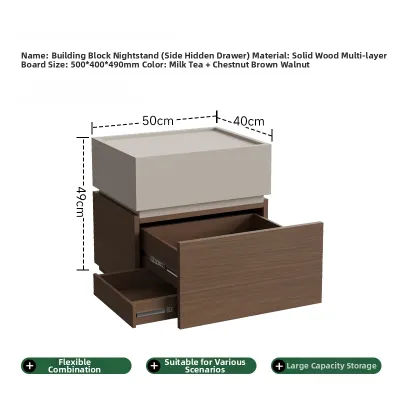
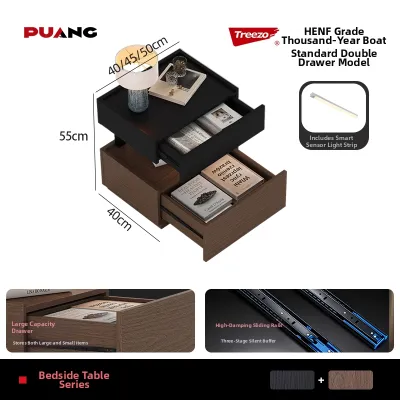
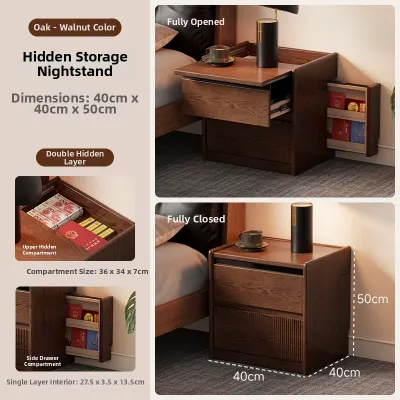
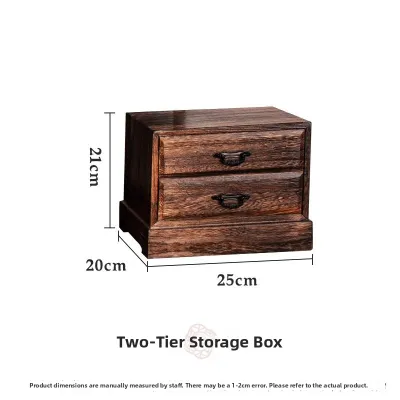
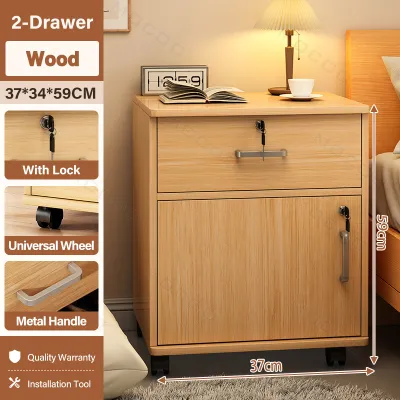
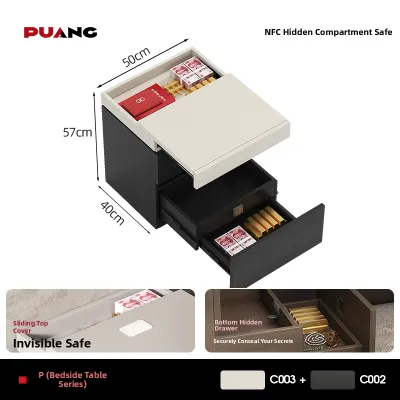
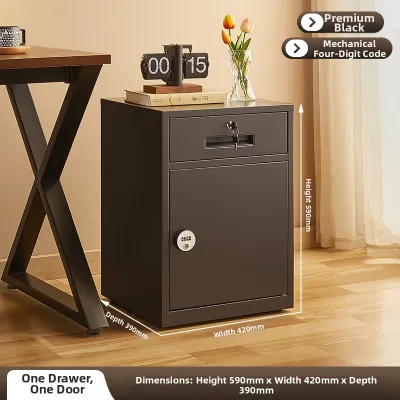
Prices are valid at publication and may change. Please refer to the product page for the latest price.
When evaluating concealment mechanisms, also consider the locking system. Some secret storage cabinets use simple mechanical push-latches, which require no keys or power but can be discovered by anyone who accidentally presses the correct panel. Others utilize magnetic keys or RFID cards that you must place against a specific, unmarked spot on the wood to release the lock. While RFID locks offer a higher level of security and a modern feel, they require batteries to operate; you must verify if the lock has a low-battery warning system or an external override port to prevent getting locked out of your own compartment.
The quality of the hardware is the most critical factor in ensuring truly discreet access. When inspecting a nightstand in a showroom or reviewing specifications online, focus on the smoothness of the sliding tracks and the noise level during operation. High-quality ball-bearing drawer slides allow the compartment to open silently and smoothly, preventing squeaks or sudden jerks that could give away the secret location. Look for soft-close mechanisms or magnetic latches that do not make a loud clicking sound when closed. If the hardware feels flimsy or catches during operation, the compartment may eventually jam, compromising both security and convenience.
Evaluating Built-in Charging Ports and Cable Management
An integrated charging station adds immense convenience to a modern nightstand, but it requires careful technical verification to ensure safety and compatibility with your devices. Begin by checking the types of built-in ports provided in the power strip or charging module. A versatile nightstand should feature a mix of USB-A and USB-C ports, alongside standard electrical outlets. If the unit includes a wireless charging pad integrated into the tabletop, verify its power output rating. Many basic wireless pads only offer 5W or 7.5W charging, which can be slow for modern smartphones; look for modules that support 10W or 15W fast charging to ensure your devices are fully powered by morning.

The physical configuration of the nightstand’s main power cord is another essential safety consideration. Measure the distance from your bedside layout to the nearest wall outlet. The nightstand’s main power cord should be long enough to reach the outlet comfortably without being stretched tight or requiring the use of extension cords. In the Philippines, standard wall outlets are typically two-pronged, so ensure the nightstand’s plug matches your home’s outlets or that you have a high-quality, grounded adapter ready. Avoid running the main power cord under heavy rugs or pinching it behind the bed frame, as this can damage the insulation and create a fire hazard.
Another technical aspect to verify is heat dissipation. Charging smartphones, tablets, or power banks generates heat, especially when using fast-charging ports or wireless pads. If the charging module is enclosed within a tight, unventilated hidden compartment, this heat can build up quickly, potentially damaging your devices or degrading the nightstand’s materials over time. Look for charging stations that feature small ventilation grilles or are positioned in semi-open compartments that allow continuous airflow, ensuring your electronics remain cool while charging overnight.
Effective cable management is vital to prevent your bedside area from becoming a cluttered mess of wires. Look for nightstands designed with integrated cable routing features, such as rear grommets, hidden channels, or dedicated cord slots. These design elements allow you to route charging cables from the internal power strip directly to your phone or tablet without tangling. If the charging module is located inside a hidden compartment, ensure there is a small, dedicated gap or notch that allows the cable to exit the compartment while keeping the door or lid fully closed. This keeps your devices charging safely on the tabletop while keeping the power source completely out of sight.
Sizing, Clearance, and Bed Height Alignment
A nightstand must fit proportionally within your bedroom layout while allowing full operation of its hidden features. The first measurement to take is the height of your mattress from the floor. Ideally, the top surface of the nightstand should align within two to three inches of the top of your mattress. If the nightstand is too high or too low, reaching for your phone, turning on a lamp, or accessing the charging ports while lying down becomes awkward and uncomfortable. This height alignment also ensures that any top-access hidden compartments are at an ergonomic level for easy operation.
Next, calculate the available floor width beside your bed, factoring in the extra clearance needed to operate the hidden compartments. If you choose a nightstand with a side-sliding panel or a drawer that pulls out from the side, you must ensure there is enough clearance between the nightstand and the adjacent wall or wardrobe. For front-opening drawers or drop-down panels, ensure the bed frame or bedding does not block the path of the opening mechanism. A tight space can restrict access to your hidden items, defeating the purpose of having a functional secret storage cabinet.
Additionally, pay attention to the design of the nightstand’s base. Many homes in the Philippines feature prominent baseboards along the bedroom walls. If the nightstand does not have a baseboard cutout or recessed back legs, it will not sit completely flush against the wall. This creates a small gap where charging cables can slip down, or worse, makes it easier for someone to spot a side-sliding secret compartment from behind. Choosing a unit that sits flush against your wall ensures a cleaner look and keeps the hidden features completely concealed from all viewing angles.
Finally, consider the overall weight and footprint of the unit. A solid, heavy nightstand offers excellent stability and is less likely to tip over when drawers are fully extended, but it can be difficult to move. You will periodically need to pull the nightstand away from the wall to clean accumulated dust, retrieve dropped items, or access the rear power outlets. If the unit is exceptionally heavy, look for models with smooth, non-marking nylon glides on the feet to protect your flooring. If you live in a high-rise condominium, ensure the packaged dimensions of the nightstand can easily fit through your building’s doorways, hallways, and elevator access points before finalizing your purchase.
Material Checks for Humidity and Daily Wear
The tropical climate of the Philippines, characterized by high humidity and seasonal temperature shifts, demands careful material selection for bedroom furniture. Engineered wood, such as medium-density fiberboard (MDF) or particleboard, is commonly used for modern nightstands due to its affordability and clean lines. However, raw engineered wood is highly susceptible to moisture absorption, which causes the material to swell, warp, and degrade. To prevent this, inspect the edge banding and surface seals of the nightstand. Ensure that all edges, including the back and underside of the unit, are fully sealed with a high-quality laminate, veneer, or water-resistant paint to block moisture from entering the core.
In addition to humidity, tropical environments are prone to wood-boring insects. While engineered wood with high-quality laminate offers decent resistance to pests, solid wood alternatives like sustainably sourced mahogany, gmelina, or acacia are highly durable if properly treated. If you opt for a solid wood nightstand, verify that the wood has been kiln-dried and treated with insect-resistant sealants. Kiln-drying removes excess moisture from the timber before manufacturing, which drastically reduces the risk of the wood warping, splitting, or shrinking when exposed to the fluctuating humidity levels of Philippine households.
Reviewing the manufacturer’s care instructions is essential for maintaining the appearance and functionality of the nightstand over time. Different finishes require specific cleaning methods; for instance, a high-gloss lacquer or a delicate wood veneer can be easily scratched or stripped by harsh chemical cleaners. Use a soft, dry microfiber cloth for daily dusting, and occasionally wipe the surfaces with a slightly damp cloth if needed. Avoid using excessive water near the joints, seams, or electrical components. If the nightstand features metal drawer slides or hidden hinges, check if they require occasional lubrication with a silicone-based spray to prevent rust and maintain silent operation in humid weather.
Strategic placement within your bedroom can significantly extend the lifespan of your furniture. Avoid placing the nightstand in direct sunlight coming through a window, as prolonged UV exposure can fade wood finishes, crack laminates, and degrade plastic charging components. Similarly, position the nightstand away from the direct draft of your air-conditioning unit. The constant cycle of cold, dry air from the air conditioner followed by warm, humid air when the unit is turned off can cause solid wood components to expand and contract unevenly, leading to warped panels or loose joints in the hidden compartment mechanisms.
Pre-Purchase Verification for Online and In-Store Orders
Before completing your purchase, whether on an online marketplace or at a local physical showroom, you should run through a final verification checklist to protect your investment. Start by reviewing the seller’s return policy and warranty coverage. Pay close attention to the warranty terms for the electrical charging components, as these are often covered under a shorter warranty period than the wooden structure of the nightstand itself. Additionally, check if professional assembly is included in the purchase price or if the unit is delivered flat-packed. If you must assemble it yourself, ensure you have the necessary tools and that the instructions are clear, as improper assembly can cause the hidden compartments to misalign.
Next, verify the manufacturer’s stated weight capacity for both the main tabletop and the individual drawers. A quality nightstand should clearly specify how much weight it can safely support. Placing a heavy lamp, books, or decorative items on a tabletop that exceeds its weight limit can cause the top panel to sag, which may jam the hidden compartment directly underneath it. Likewise, the secret drawer itself should have a designated weight limit; overloading it can damage the hidden tracks or cause the drawer to drop out of alignment, making the secret compartment visible to anyone looking closely at the unit.
Finally, analyze user reviews on ecommerce platforms, focusing specifically on long-term feedback rather than initial impressions. Look for comments regarding the durability of the drawer hardware over several months of use. Pay attention to any complaints about the charging ports overheating, failing to charge devices consistently, or making a high-pitched buzzing sound. Reviews that mention the actual ease of accessing the secret compartment can provide valuable insight into whether the design is practical for daily use or if it is too cumbersome to operate. This real-world feedback is often the most reliable indicator of the product’s overall quality and longevity.
Frequently Asked Questions (FAQ)
Can I retrofit a standard nightstand with hidden storage and charging?
Yes, but retrofitting an existing nightstand carries structural risks that you must carefully evaluate. Cutting into a standard nightstand to create a false bottom or a secret compartment can compromise its structural integrity, potentially causing the unit to sag or collapse under weight. It will also void any remaining manufacturer warranty. If you decide to proceed, ensure you have the proper woodworking tools and reinforce the surrounding frame to maintain stability.
For a safer, non-destructive alternative, you can add charging capabilities using adhesive wireless charging pads that mount underneath the tabletop, allowing you to charge your phone through the wood without visible wires. You can also use discreet adhesive cable routing clips to keep cords organized along the back legs of the furniture. If you need secure storage without modifying the nightstand, consider placing a small, lockable steel cash box inside an existing drawer or utilizing low-profile under-bed storage organizers.
What safety certifications should I look for in built-in charging modules?
When purchasing a nightstand with integrated electrical components, safety should be your top priority to prevent electrical fires or damage to your expensive devices. Look for charging modules that carry recognized international safety certifications, such as the CE mark, FCC certification, or UL listing. In the Philippines, electrical products should ideally comply with local safety standards, so check if the power strip or adapter has a Philippine National Standard (PNS) or Import Commodity Clearance (ICC) mark.
Ensure the built-in charging module features integrated surge protection, overcurrent protection, and overcharge prevention. These safety mechanisms automatically cut off or regulate the electrical flow if a power surge occurs or if your device’s battery is fully charged, protecting your smartphone or tablet from overheating. Avoid purchasing nightstands that use unbranded, generic power strips with exposed wiring or those that lack clear voltage and amperage specifications, as these pose a significant safety hazard in any home.

Community discussion
Share your experience or ask a question. Comments are reviewed before publication.