
Finding the right storage solution for your footwear can be a challenge, especially when dealing with the compact closet layouts common in modern condominiums, studio apartments, and townhouses in the Philippines. A folded shoe rack organizer offers an efficient way to maximize your storage capacity without permanently sacrificing valuable floor area. By choosing a collapsible or hanging design, you can easily adapt your storage setup as your footwear collection changes or reclaim space when certain pairs are not in use. The ideal choice for your home depends on a careful balance of your available closet dimensions, the weight of your footwear, and how well the organizer’s materials can withstand local environmental factors like high humidity.
To find the best option for your space, you must evaluate how different designs interact with your closet’s structure. Freestanding collapsible racks, hanging over-the-door organizers, and wall-mounted pull-down systems each offer distinct advantages and physical limitations. Understanding these differences allows you to select a system that keeps your shoes organized, accessible, and protected from damage.
How to Measure Your Closet for a Foldable Shoe Rack
Before purchasing any folded shoe rack organizer, taking precise measurements of your closet interior is essential to ensure a proper fit and prevent obstruction. Begin by using a metal measuring tape to record the exact width, depth, and vertical clearance of the floor space where you plan to place the rack. If your closet features built-in shelving or drawers, measure the open space beneath or adjacent to these fixtures rather than relying on the overall dimensions of the closet shell.
Products mentioned in this guide
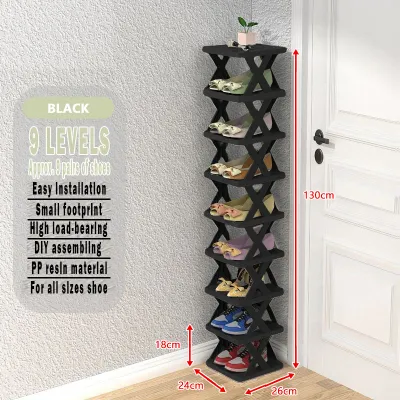
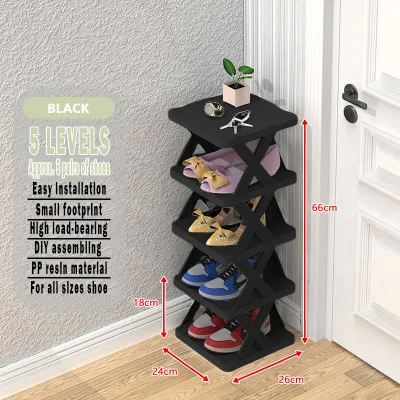
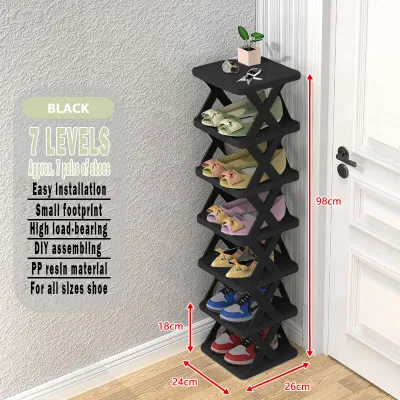
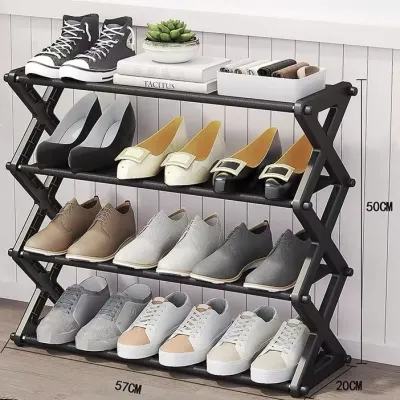
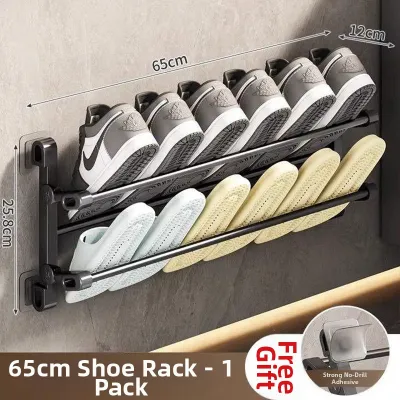

Prices are valid at publication and may change. Please refer to the product page for the latest price.
Next, evaluate the clearance required for your closet doors to operate smoothly. For hinged doors, map out the swing radius to ensure the front of the shoe rack will not block the door from opening fully or cause the door to strike your shoes. If your closet utilizes sliding doors, measure the depth of the door tracks and the overlap zone; a rack that is too deep can prevent the doors from sliding past one another, leaving a portion of your closet permanently inaccessible.
Do not forget to account for existing hanging garments and minor floor obstructions. Measure the distance from the bottom hem of your longest hanging clothes, such as dresses, trousers, or traditional formal wear, to the closet floor to determine your maximum height limit. Additionally, check for baseboards, floor molding, or electrical outlets along the back wall, as these features can prevent a flat-folding rack from sitting flush against the wall, causing it to protrude further into your walking space than expected.
Hanging and Over-the-Door Foldable Racks
Hanging and over-the-door foldable organizers are excellent for utilizing unused vertical space, making them ideal for closets with extremely limited floor areas. These organizers typically suspend from the top of the closet door or from the main hanging rod, keeping your footwear completely off the ground. This setup not only frees up floor space for larger items but also keeps your shoes at eye level for quick selection.

Before installing an over-the-door rack, you must verify the structural integrity and hinge weight rating of your closet door. Many modern interior doors are hollow-core designs that can warp or sag if subjected to excessive, concentrated weight over time. Inspect the hinges to ensure they are securely screwed into the door frame and can handle the combined weight of the organizer and your shoes without pulling loose.
Additionally, measure the thickness of your door and compare it to the hook dimensions of the organizer. If the hooks are too wide, the rack will slide and wobble when the door is moved, which can scratch the door’s paint or finish. These hanging systems are highly suitable for lightweight footwear such as slippers, sandals, flats, and canvas slip-ons, but they may struggle to support heavier leather shoes or thick-soled sneakers without sagging or stretching out of shape.
Collapsible Stackable Floor Racks
Collapsible and stackable floor racks provide a highly flexible, freestanding storage solution that can expand or contract based on your current shoe inventory. These units typically feature hinged shelves or scissor-style frames that allow them to fold completely flat when not in use. This portability makes them incredibly convenient for renters or anyone who frequently rearranges their living space.
When evaluating these racks, compare the physical footprint of the unit when it is fully expanded against its dimensions when completely folded. A good collapsible rack should fold down to a thickness of just a few centimeters, allowing you to slide it under a bed, behind a door, or into a narrow gap between wardrobe panels when it is not needed. This flexibility is particularly useful for managing seasonal footwear or temporary guest storage.
Stability is another critical factor, especially if you plan to stack multiple units to utilize vertical space. Inspect the interlocking mechanisms, locking tabs, or alignment pins provided by the manufacturer to ensure they create a rigid connection between tiers. On tiled or slightly uneven closet floors, a weak joint can cause a tall stack of racks to wobble or lean, increasing the risk of a tip-over when you retrieve a pair of shoes.
Finally, verify the vertical clearance between individual tiers to ensure your shoes fit comfortably. Measure the height of your tallest daily footwear, such as high-top sneakers or low boots, and compare it to the shelf spacing. If the tier height is too restrictive, you may end up crushing the upper materials of your shoes or finding yourself unable to use certain shelves for anything other than flat sandals.
Retractable and Pull-Down Closet Racks
For high-ceiling closets or deep wardrobe systems, retractable and pull-down foldable racks offer a sophisticated way to access upper storage zones that would otherwise go unused. These systems are mounted directly to the closet walls or the underside of upper shelving, allowing you to pull the rack down to a comfortable height to retrieve your shoes and then fold or slide it back up out of the way.
Because these systems bear a significant amount of dynamic weight as they swing downward, they require secure structural mounting. You must identify the location of solid wood wall studs or mount the system directly into concrete or masonry walls, which are common in many homes in the Philippines. Attempting to install a pull-down rack directly into thin drywall or hollow wood closet panels without proper reinforcement will likely result in the mounting screws pulling out, damaging your closet and potentially causing injury.
Before committing to a pull-down system, calculate the exact swing arc clearance required for the mechanism to operate. The rack must have enough clear space to swing outward and downward without colliding with hanging clothes, adjacent shelves, or the closet doors. If your closet layout is tight, even a minor miscalculation can render the pull-down feature unusable.
If you are unfamiliar with structural mounting, locating wall studs, or selecting the correct heavy-duty anchoring hardware, it is best to stop and consult a qualified local carpenter or handyman. Professional installation ensures that the mounting brackets are perfectly level and securely anchored, preventing the system from pulling away from the wall under a full load of footwear.
Key Features to Check Before Buying
To avoid purchasing an unstable or poorly fitting folded shoe rack organizer, you must carefully evaluate several critical product specifications before making a decision. Always start by verifying the manufacturer’s weight limits, which should be clearly stated on the product label or packaging. Look for both the maximum weight capacity per individual tier and the overall weight limit for the entire unit, keeping in mind that these limits assume the weight is distributed evenly across the shelves.
Material durability is especially important in the tropical climate of the Philippines, where high humidity levels can accelerate wear and tear. If you choose a metal rack, look for specifications indicating a rust-resistant powder coating or chrome plating to prevent corrosion over time. For fabric-based organizers, inspect the quality of the material, looking for reinforced stitching along the seams, heavy-duty non-woven fabrics, or breathable mesh panels that resist tearing under tension.
The folding mechanism itself deserves close inspection to ensure long-term reliability and safety. Test how smoothly the hinges, joints, or sliding tracks operate; they should move freely without sticking or requiring excessive force. Look for units that feature secure locking pins or safety latches that hold the rack firmly in its open position, and be mindful of potential pinch-point hazards where fingers could easily get caught during assembly or folding.
Installation and Safety Checks for Closet Use
Proper installation and ongoing safety checks are vital to ensure your folded shoe rack organizer functions safely without damaging your closet or creating hazards for your household. If you are securing a freestanding rack to the wall to prevent tipping, or if you are mounting a hanging system, you must select the correct wall anchors for your specific wall construction. Use expansion plugs or masonry anchors for concrete walls, and toggle bolts or threaded anchors for hollow drywall partitions.
To minimize tipping risks, always load your shoe rack strategically by placing your heaviest footwear on the lowest tiers. Thick-soled sneakers, heavy leather shoes, and boots should always occupy the bottom shelves to keep the unit’s center of gravity as low as possible. Lighter items, such as slippers, sandals, and canvas shoes, can then be safely stored on the upper levels of the rack.
Finally, perform a regular check to ensure that the rack, whether fully expanded or folded, does not block essential closet features. It should never obstruct access to electrical outlets, light switches, or ventilation grilles. Maintaining proper airflow inside your closet is crucial, particularly in humid environments, to prevent the buildup of stagnant air that can lead to mold, mildew, and unpleasant odors on your stored footwear.
Frequently Asked Questions (FAQ)
Can foldable shoe racks hold heavy boots or winter footwear?
Most standard foldable shoe racks are designed primarily for lightweight daily footwear and may not accommodate the height or weight of heavy boots. To determine compatibility, you must check the tier height clearance and the specific load capacity labels provided on the product packaging. If you need to store heavy or bulky footwear, look for heavy-duty metal collapsible units with reinforced shelving, or plan to store these heavier items on the closet floor while using the foldable rack for your lighter shoes.
How do I prevent over-the-door racks from damaging closet doors?
To protect your closet doors from scratches and structural strain, apply adhesive felt padding or protective foam strips to the inside surfaces of the metal mounting hooks. This cushions the contact points and prevents the hooks from scraping the door’s paint or finish when the door is opened and closed. Additionally, verify your door’s hinge weight rating before loading the rack, and adjust the hook positions so they do not interfere with the door frame or latch mechanism.
Are fabric foldable organizers better than plastic or metal for enclosed closets?
Fabric, plastic, and metal organizers each have distinct trade-offs when used in enclosed, humid closet environments. Fabric organizers offer excellent breathability, which helps prevent moisture retention and odor buildup, but they lack structural rigidity and require regular cleaning to remove dust. Plastic and metal racks provide superior structural support for heavier shoes and are easy to wipe clean, but they do not assist with airflow. If you select a metal rack, ensure it features a high-quality, rust-resistant coating to withstand the local humidity.
Community discussion
Share your experience or ask a question. Comments are reviewed before publication.