
Finding the perfect wood stante for display in your home requires balancing aesthetics with structural reality. Whether you are setting up a dedicated study room, organizing a home office, or adding a decorative touch to your living room, a wooden display stand serves as both a functional organizer and a visual anchor. The ideal choice is never a one-size-fits-all solution; instead, it depends heavily on the specific items you plan to showcase, the physical dimensions of your room, and the structural integrity of the furniture itself. By evaluating these factors systematically, you can select a piece that enhances your space while safely supporting your books, collectibles, or indoor plants.
In tropical environments, choosing wooden furniture also means considering environmental factors like high humidity and temperature fluctuations. These conditions can affect wood stability, finish longevity, and overall structural health over time. Taking a methodical approach to assessing materials, load capacities, and installation requirements ensures that your investment remains durable, safe, and visually appealing for years to come.
Key Factors for Evaluating Wooden Display Stands
Before browsing designs, establishing your baseline spatial and structural requirements is essential. The first step is to measure your available floor and vertical space with a physical tape measure. Do not rely on visual estimation alone; measure the exact width, depth, and height of the designated area. Be sure to account for clearance around doors, windows, light switches, and wall outlets. Additionally, measure the thickness of your baseboards, as they can prevent a flat-backed display stand from sitting completely flush against the wall unless the unit features a bottom cutout.
Products mentioned in this guide
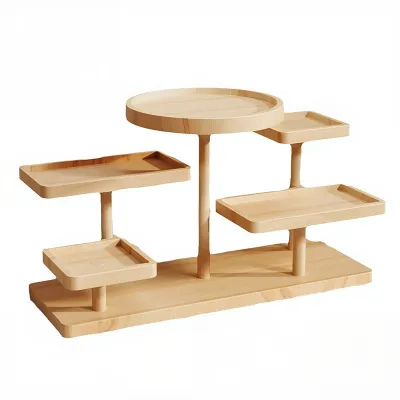

Prices are valid at publication and may change. Please refer to the product page for the latest price.
Next, examine the manufacturer’s technical specifications for structural limits. Pay close attention to the listed shelf thickness and the maximum weight capacity per shelf. A display stand intended for lightweight decorative items may bow or fail if loaded with heavy reference books or ceramic pots. Understanding these limits beforehand prevents structural damage and ensures you select a stand engineered for your specific storage needs.
Finally, assess the footprint of the display stand relative to the overall volume of the room. A massive, deep unit can easily overwhelm a compact study room, making the space feel cramped and obstructing natural foot traffic. Aim for a balanced proportion where the stand provides maximum vertical storage without protruding too far into walking paths. As a general rule, maintain at least 60 to 70 centimeters of clear walkway space in front of the stand to allow for comfortable movement and easy access to your displayed items.
Matching the Stand Design to Your Display Items
The configuration of your wooden display stand should directly reflect the physical characteristics of the items you intend to showcase. If you plan to store heavy items like textbooks, encyclopedias, or large binders, prioritize stands with reinforced joints, thicker shelf boards, and built-in anti-sag supports. Look for designs that utilize solid wood or high-density plywood, as these materials offer superior resistance to bending under continuous weight. Reinforced back panels also add lateral stability, preventing the stand from swaying or leaning over time.

For collectibles, trophies, and delicate decor, the focus shifts to visibility and visual balance. Adjustable shelf heights are highly beneficial here, allowing you to customize the vertical clearance to fit items of varying sizes without leaving awkward, empty gaps. Consider the depth of the shelves as well; shallow shelves (around 20 to 25 centimeters) keep small collectibles near the front and highly visible, whereas deeper shelves can cast shadows and hide smaller pieces from view.
If you intend to display indoor plants or items that require moisture, you must take extra precautions to protect the wood. High humidity and accidental water spills can quickly ruin unsealed wood surfaces, leading to warping, staining, or mold growth. Check product descriptions for water-resistant surface treatments, such as polyurethane sealants or melamine laminates. Even with a protective finish, it is highly recommended to use waterproof protective mats, coasters, or non-porous saucers under all plant pots to prevent standing water from contacting the wood directly.
Evaluating Wood Materials and Surface Finishes
Understanding the differences between wood materials allows you to interpret product labels accurately and make an informed decision based on durability and budget. Solid wood stands, often crafted from local hardwoods or imported softwoods, are highly prized for their natural grain patterns, structural strength, and long-term refinishing potential. However, solid wood is naturally reactive to humidity changes, which can cause minor expansion or contraction. When evaluating solid wood, check for quality joinery—such as mortise-and-tenon or dowel joints—rather than simple nailed or glued seams.
Plywood and engineered boards, such as Medium-Density Fiberboard (MDF) and particleboard, offer alternative structural characteristics. High-quality plywood consists of layered wood veneers glued together, providing excellent resistance to warping and a high strength-to-weight ratio. MDF and particleboard are flatter and more budget-friendly, making them common in modern, minimalist designs. However, because they are made of compressed wood fibers or particles, they are highly vulnerable to moisture damage if their protective outer layers are compromised.
To ensure long-term durability, carefully evaluate the surface treatments applied to engineered wood. Melamine and high-pressure laminates (HPL) provide excellent resistance to scratches, stains, and moisture, making them ideal for high-use areas. Wood veneers offer the authentic look of solid wood but require gentler cleaning and are more susceptible to deep scratches. Additionally, inspect the quality of the edge banding on all sides of engineered wood panels. High-quality, thick PVC or ABS edge banding seals the inner core from ambient humidity, preventing the edges from swelling, peeling, or chipping over time.
Space Planning, Safety, and Installation Checks
Successfully integrating a wooden display stand into your home requires careful planning that extends beyond the final placement room. Before finalizing your purchase, measure all entryways, tight hallway corners, stairwells, and elevator doors along the delivery path. Large, pre-assembled solid wood units or long flat-pack boxes can easily get stuck in narrow condo corridors or low-ceiling staircases. Confirming these delivery clearances beforehand saves significant logistical hassle and prevents accidental damage to your walls and the furniture itself.
Safety is a paramount consideration, particularly for tall, narrow, or top-heavy display stands. To eliminate the risk of accidental tip-overs—especially in households with active pets or young children—all units taller than one meter should be securely anchored to the wall. Identify your wall type before installation; concrete or solid brick walls require masonry drill bits and heavy-duty wall plugs (often referred to locally as tox screws), while drywall partitions require specialized toggle bolts or anchoring directly into the wooden or metal wall studs.
Finally, review the assembly requirements of the display stand. Many modern wooden stands are delivered flat-packed and require self-assembly. Check the product listing to see if all necessary hardware, hex keys, and wall-anchoring brackets are included in the package, or if you will need to provide your own screwdriver, hammer, or drill. Read through the manufacturer’s assembly instructions to determine if the process is manageable for one person, or if the weight and complexity of the panels require a second person to assist with lifting and alignment.
Sourcing and Verifying Products on Online Marketplaces
When shopping for furniture on online marketplaces, a systematic verification process is crucial to ensure you receive a high-quality product that matches your expectations. Start by cross-referencing the primary product images with the technical drawings, line diagrams, or dimension charts provided in the listing. Photos can sometimes be digitally altered or styled in ways that make the display stand appear larger or sturdier than it actually is. Verifying the exact measurements in centimeters or millimeters ensures the unit will fit your space precisely.
Next, look closely at the user review section, focusing on practical feedback rather than star ratings alone. Filter or search the reviews for specific keywords such as “assembly,” “stability,” “wobble,” or “odor.” User-uploaded photos and videos are incredibly valuable, as they show the actual color of the wood finish under natural home lighting and reveal the true quality of the joints and edge banding. Pay attention to comments regarding off-gassing odors; a strong chemical smell can indicate the use of low-grade adhesives in engineered wood, which may require several days of ventilation in an open area before indoor use.
Lastly, protect your purchase by thoroughly checking the seller’s return policies, warranty terms, and customer service reputation. Reliable sellers typically offer clear guidelines on how to handle transit damage, missing hardware, or defective panels. Before placing your order, send a quick inquiry to the seller asking to clarify a specific product detail, such as the exact weight limit or the type of wall anchors included. A prompt, helpful, and professional response is a strong indicator of good customer support, giving you confidence that any potential issues during delivery or assembly will be resolved efficiently.
Frequently Asked Questions (FAQ)
How can I prevent wooden shelves from sagging under heavy books?
To prevent wooden shelves from bowing or sagging under the weight of heavy books, start by checking the product specifications for built-in structural supports. Look for stands that feature center support legs, thicker shelf panels (at least 18 millimeters), or integrated metal reinforcement bars running underneath the shelves. If your existing stand lacks these features, you can manually reinforce the shelves by installing small metal L-brackets underneath the center of each shelf, securing them directly to the back panel.
Additionally, practice proper weight distribution when organizing your display. Place your heaviest items, such as encyclopedias, photo albums, or heavy binders, on the bottom shelves and position them as close to the vertical side supports as possible rather than in the middle of the shelf span. Keep lighter paperbacks and decorative items on the upper shelves and near the center. Periodically monitor the shelves for any visible bowing, and rotate or redistribute your items to relieve sustained pressure on a single area.
Is solid wood always the best choice for a home study display stand?
While solid wood is highly durable and offers a classic, premium aesthetic, it is not always the absolute best choice for every home study. Solid wood stands are significantly heavier, making them difficult to relocate, and they generally require a larger initial investment in ₱. They are also sensitive to extreme humidity fluctuations, which can cause natural wood to expand, contract, or develop minor surface cracks if the indoor climate is not consistently controlled.
For those working within a specific budget in ₱ or living in temporary housing, high-quality engineered wood options like plywood or well-sealed MDF can be highly practical alternatives. Plywood offers excellent dimensional stability and resistance to warping in humid conditions, while laminated MDF provides a smooth, easy-to-clean surface that resists scratches and minor spills. Ultimately, the best choice depends on your long-term housing plans, your local indoor humidity levels, the total weight of your display items, and your allocated budget.
Community discussion
Share your experience or ask a question. Comments are reviewed before publication.