
Selecting the ideal Allie Steel wardrobe size for your bedroom is a balancing act between your room’s physical layout and your personal storage requirements. A wardrobe that is too large can restrict movement, block natural light, and make a bedroom feel cramped, while one that is too small will leave you struggling with cluttered clothes and disorganized accessories. In the tropical climate of the Philippines, where indoor humidity levels run high, choosing the right size also ensures proper airflow around your furniture to prevent mold and mildew growth. By taking precise measurements of your room, understanding how steel furniture dimensions work, and evaluating your storage habits, you can find a wardrobe that fits your space beautifully and functions reliably for years.
Assessing Your Bedroom Space and Layout
Before browsing different wardrobe models, you must establish the exact physical boundaries of your bedroom. Start by clearing the designated area and using a heavy-duty metal measuring tape to record the floor footprint. Measure the available width along the wall where the wardrobe will stand, as well as the depth extending out into the room. It is highly recommended to measure at three different heights—near the floor, at the midpoint of the wall, and near the ceiling—because residential walls are rarely perfectly square or plumb.
Next, measure the ceiling height of your bedroom. Standard residential ceiling heights in modern Philippine condominiums often range from 2.4 to 2.7 meters, whereas older townhouses or provincial homes might feature higher clearances. Knowing this height is vital, especially if you are considering a tall freestanding steel wardrobe that maximizes vertical space. Always leave a clearance of at least 10 to 15 centimeters between the top of the wardrobe and the ceiling to allow for assembly, ventilation, and cleaning.
Products mentioned in this guide
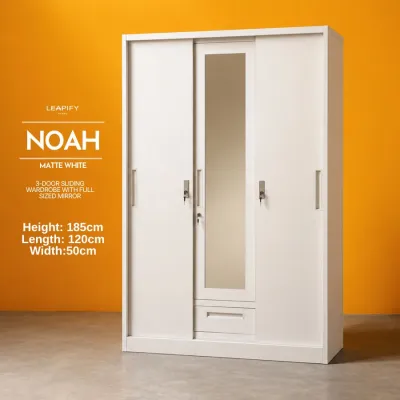
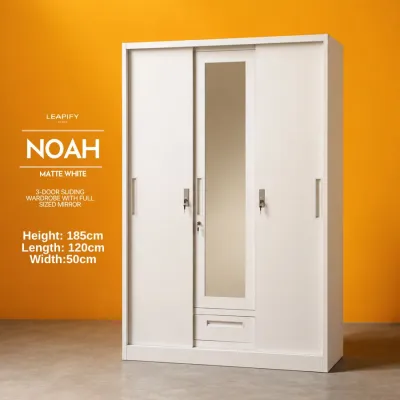



Prices are valid at publication and may change. Please refer to the product page for the latest price.
Beyond basic height and width, you must identify potential architectural obstacles that could prevent a flush installation. Take note of skirting boards running along the base of your walls, as they can push the bottom of the wardrobe several millimeters away from the wall, creating a gap at the top. Locate all wall-mounted electrical outlets, light switches, and internet ports to ensure the wardrobe does not block access to essential power sources. Additionally, check the positions of window sills, door frames, and wall-mounted air conditioning units, ensuring the wardrobe does not obstruct airflow or light.
Finally, map out the traffic flow and door clearance within the room. A functional bedroom requires comfortable walking paths, typically requiring at least 60 to 70 centimeters of open space in front of any piece of furniture. If your bedroom door, bathroom door, or balcony door opens inward toward the wardrobe area, measure their full swing paths to prevent collisions. If you share the bedroom, consider how the space functions when multiple people are moving around, ensuring that opening the wardrobe doors does not completely block the main pathway.
Understanding Allie Steel Wardrobe Dimensions
Freestanding steel wardrobes are highly valued for their structural strength and clean lines, but their rigid frames mean they cannot be squeezed into tight spots like flexible fabric or modular wooden wardrobes. Standard widths for steel wardrobes generally correspond to the number of doors they feature. Single-door units usually measure around 45 to 60 centimeters wide, making them ideal for tight corners or guest rooms. Two-door models typically range from 80 to 100 centimeters in width, which is the standard choice for individual storage. Three-door and four-door configurations can span from 120 to over 160 centimeters, offering generous space for couples or shared bedrooms.

The depth of a steel wardrobe is equally critical to its functionality. Standard external depths generally range from 45 to 60 centimeters. A wardrobe with a depth of 50 to 60 centimeters is highly recommended if you plan to hang bulkier items like suits, jackets, or traditional formal wear without folding or crushing them. If your bedroom is exceptionally narrow, a shallow wardrobe of 40 to 45 centimeters might fit the floor plan better, but you may need to use pull-out parallel hanging rods instead of standard perpendicular hangers. Always verify the exact external dimensions on the specific Allie product label or manual before making a purchase.
When choosing between door styles, consider how the door mechanism impacts your floor space. Hinged doors require a clear clearance area in front of the wardrobe equal to the width of the door panel, usually between 40 and 50 centimeters, to swing open completely. Sliding door models, on the other hand, operate entirely within the wardrobe’s footprint, making them an excellent choice for narrow bedrooms or tight walkways. However, keep in mind that sliding doors only allow you to access one side of the wardrobe at a time, whereas hinged doors can all be opened simultaneously for a full view of your belongings.
It is also important to understand how steel frame thickness affects your usable storage. Unlike wooden wardrobes with thick MDF or particleboard panels, steel wardrobes feature thin, high-density steel sheets, typically ranging from 0.5 to 0.8 millimeters in thickness, reinforced by internal structural channels. This thin-profile construction means that the difference between the external footprint and the internal usable volume is minimal, giving you more storage capacity per square centimeter of floor space. However, because steel is highly sensitive to ambient moisture, you should check the manufacturer’s specifications to ensure the unit features a high-quality, electrostatic powder-coated finish. This finish is vital in the humid Philippine climate to protect the metal joints and panels from rust and corrosion.
Matching Storage Capacity to Your Needs
To choose the right wardrobe size, you must align its physical dimensions with a realistic audit of your daily storage needs. Begin by sorting your clothing and accessories into categories based on how they should be stored. Items such as dresses, long trousers, button-down shirts, and delicate fabrics require hanging space to maintain their shape and prevent creasing. On the other hand, casual t-shirts, activewear, knitwear, and bed linens are better suited for folded storage on flat shelves or inside drawers.
Once you have categorized your belongings, evaluate the internal layout options of the wardrobe sizes you are considering. For a wardrobe with a standard height of 180 to 200 centimeters, a single hanging rod typically requires about 90 to 100 centimeters of vertical clearance for shirts and jackets, while long dresses or coats need 120 to 150 centimeters. If your wardrobe needs consist mostly of folded items, look for configurations that maximize adjustable shelving. Modular internal systems, such as removable shelves, hanging organizers, and slide-out metal baskets, allow you to adapt the interior space to your changing needs without requiring a larger external footprint.
When planning your wardrobe size, it is wise to account for future storage needs without unnecessarily oversizing the unit. While it is tempting to buy the largest wardrobe that can physically fit into your room, doing so can make your bedroom feel dark and cramped. Instead, aim for a balanced size that leaves approximately 10% to 15% of your storage space empty for future acquisitions. If you run out of space, utilize smart organizational techniques, such as vacuum-sealing seasonal bedding or using slim velvet hangers, to maximize the efficiency of your existing steel wardrobe.
Installation Clearances and Common Sizing Mistakes
One of the most common oversights when purchasing a steel wardrobe is focusing solely on the final placement spot while ignoring the logistics of delivery and assembly. Because steel panels are rigid, heavy, and cannot be bent, you must measure every doorway, hallway corner, stairwell, and elevator cabin along the delivery route. If you live in a high-rise condominium or a multi-story townhouse in the Philippines, verify the clearance height of the service elevator and the turning radius of tight stairwells to ensure the delivery team can safely transport the components to your bedroom.
Assembly clearances are another critical factor, particularly for flat-packed steel wardrobes. If the wardrobe must be assembled horizontally on the floor and then tilted upright, you must calculate the diagonal height of the unit. The diagonal measurement of the wardrobe’s side panel must be less than your ceiling height; otherwise, the top corner of the wardrobe will scrape or jam against the ceiling as you try to stand it up. If your ceiling clearance is tight, you will need to assemble the wardrobe vertically, which requires additional physical space on either side of the unit for tools, fasteners, and manual maneuvering.
To avoid frustrating installation setbacks, watch out for these common sizing and structural mistakes:
- Assuming walls are perfectly plumb: Most plaster and concrete walls have subtle bows or curves. Always leave a safety buffer of at least 2 to 3 centimeters between the wardrobe and adjacent walls to accommodate these imperfections.
- Ignoring ceiling fan blades: In many tropical homes, ceiling fans are essential for air circulation. Ensure that the swing path of your wardrobe doors remains well clear of the fan blades when they are in motion.
- Forgetting floor unevenness: Tiled or concrete floors can have minor level variances. A rigid steel wardrobe placed on an uneven floor may wobble, causing the doors to misalign or fail to latch properly. Check if the wardrobe model includes adjustable leveling feet, or plan to use durable, non-slip shims to stabilize the base.
- Neglecting wall anchoring: Due to their height and weight, tall steel wardrobes can pose a tip-over hazard if overloaded or pulled forward. Check the manufacturer's care and safety instructions, and ensure you have the appropriate masonry anchors and drills to secure the unit firmly to concrete or brick walls.
Frequently Asked Questions (FAQ)
Do steel wardrobes require special floor reinforcement?
Standard residential floors, including concrete slabs, ceramic tiles, and engineered wood, are fully capable of supporting the weight of a loaded steel wardrobe. However, because steel wardrobes are heavy and concentrate their weight onto small metal feet or base edges, they can leave indentations or scratches on softer flooring materials like vinyl, linoleum, or soft wood. To protect your floors, it is highly recommended to place heavy-duty rubber floor protectors, felt pads, or a load-distributing base plate under the wardrobe’s contact points.
Can I customize the internal layout of a pre-sized steel wardrobe?
The level of customization depends entirely on the specific manufacturer’s design and model specifications. Many high-quality steel wardrobes feature pre-drilled adjustment slots along the inner frame, allowing you to reposition shelves or change the height of hanging rods. Some models also support modular add-ons, such as extra shelves, drawer inserts, or internal lockboxes. Before purchasing aftermarket accessories, always check the product manual or contact the manufacturer to verify compatibility with your specific wardrobe model.
Community discussion
Share your experience or ask a question. Comments are reviewed before publication.