
To choose the right bookshelf cabinet size for a small study room, you must balance the unit’s physical footprint with the room’s functional clearances. In compact spaces, a depth of 30 to 40 centimeters and a width that leaves at least 70 to 80 centimeters of walkway clearance are ideal. Utilizing vertical space with a tall, narrow cabinet maximizes storage without consuming valuable floor area, provided the unit is securely anchored to the wall.
Measure Your Study Room and Clearance Space
Philippine condominiums and compact bedrooms often feature tight corners, prominent baseboards, and low-hanging air conditioning units or window sills. Before browsing for a bookshelf cabinet, use a steel tape measure to map out the exact wall space where the unit will stand. Do not rely on visual estimates. Measure the distance from the corner to the nearest door frame or window trim. Note the location of electrical outlets, light switches, and internet ports; placing a heavy cabinet directly in front of these can block access or force you to leave an awkward gap between the furniture and the wall.
Next, calculate the clearance required for daily movement. A small study room must accommodate not just the bookshelf cabinet, but also your desk, chair, and walking paths. Measure the footprint of your desk chair when fully pushed back and when in use. Ensure there is at least 75 centimeters of open space between the front of the bookshelf cabinet and any adjacent furniture to allow you to stand, bend, or pull out books comfortably. If the study room door or a closet door swings into the room, map its arc to ensure it will not collide with the cabinet.
Products mentioned in this guide
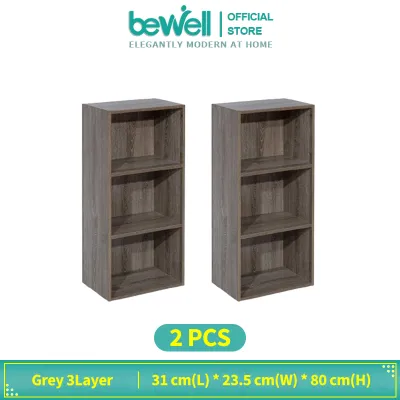
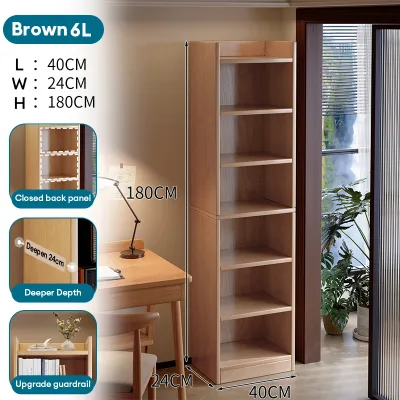

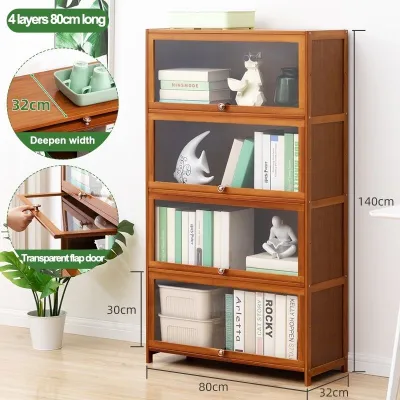
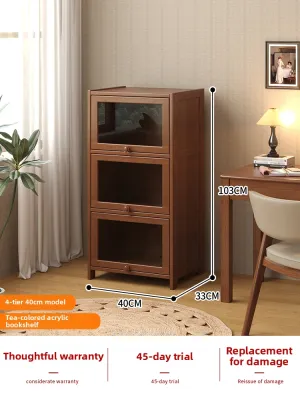
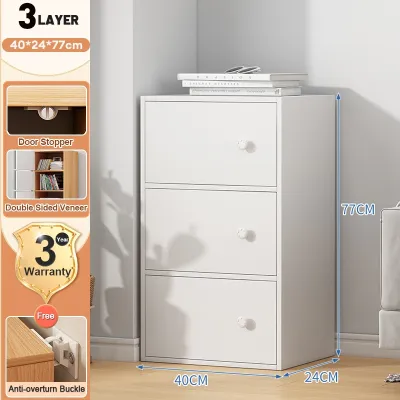
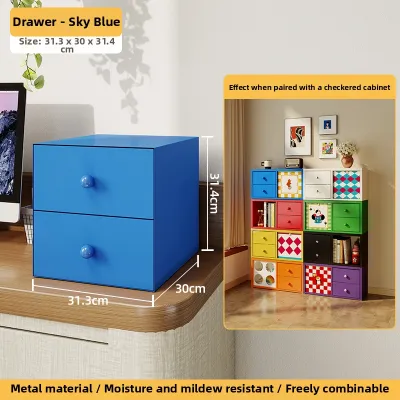
Prices are valid at publication and may change. Please refer to the product page for the latest price.
Finally, look upward. In tropical climates like the Philippines, wall-mounted air conditioning units, ceiling fans, and window-type AC vents are common. Measure the height from the floor to the bottom of these fixtures. A tall cabinet placed too close to an air conditioner can restrict airflow, block filter access, or expose your books to direct condensation and humidity.
Match Bookshelf Cabinet Dimensions to Your Layout
Selecting the right dimensions is a balancing act between physical storage capacity and visual weight. In a compact study, a bulky or overly deep cabinet can make the entire room feel cramped and dark, whereas a well-proportioned unit preserves an open, airy atmosphere while keeping your workspace organized.

Width and Depth Considerations
The depth of your bookshelf cabinet directly impacts the remaining floor space. Standard book depths rarely exceed 20 to 25 centimeters, meaning a cabinet depth of 30 centimeters is usually sufficient for novels, textbooks, and standard binders. Opting for a deeper cabinet—such as 40 to 45 centimeters—is only necessary if you plan to store deep storage boxes or electronic equipment, but this extra depth will significantly reduce your walkway and chair clearance.
When evaluating width, measure the available wall span and compare it to adjacent furniture. If you have a wide, uninterrupted wall, a single wide cabinet can create a clean, unified look. However, for tight or awkwardly shaped study rooms, choosing two narrow, modular units instead of one wide cabinet offers greater flexibility. Modular units can be placed on either side of a desk, positioned in separate corners, or rearranged easily if you decide to reconfigure your home office layout in the future.
Height and Vertical Space Utilization
When floor space is limited, vertical space is your most valuable asset. A tall, narrow bookshelf cabinet utilizes the often-wasted area close to the ceiling, allowing you to store a large volume of books and office supplies on a minimal footprint. This vertical orientation also draws the eye upward, which can make a small study room feel taller and more spacious.
However, tall cabinets introduce safety and aesthetic considerations. Any unit taller than 120 centimeters should be treated as a potential tip-over hazard, especially in regions prone to seismic activity or when shelves are loaded unevenly. You must verify that the cabinet can be securely anchored to your wall. Additionally, a solid, dark, and towering cabinet can dominate a small room visually. To maintain balance, look for units with open upper shelves or lighter finishes that blend into the wall color, reducing the visual impact of the height.
Evaluate Configurations for Compact Spaces
The configuration of your bookshelf cabinet determines how easily you can access your items and how tidy the room looks. Open shelving is excellent for quick access and creates a light, open aesthetic, but it exposes your books to dust and high tropical humidity, which can degrade paper over time. It also requires constant organization to prevent the room from looking cluttered. Closed cabinet doors, on the other hand, hide clutter and protect contents from dust, but they can make the furniture piece look heavier and more imposing.
If you choose a closed or semi-closed cabinet, pay close attention to the door mechanism. Hinged doors require clear floor space in front of the cabinet to swing open fully. In a tight study room, this swing path might collide with your desk chair or require you to step aside every time you open the cabinet. Sliding doors are a highly efficient alternative for compact spaces, as they glide horizontally within the cabinet frame and require zero front clearance to operate.
A combination unit often provides the best balance for a small study. These designs typically feature a closed cabinet at the bottom—perfect for hiding messy paperwork, cables, and storage boxes—and open shelves on top for books, decorative items, and plants. This setup keeps the visual weight at the bottom of the room while maintaining an open, airy feel at eye level.
Check Delivery, Assembly, and Installation Clearances
Before finalizing your purchase, you must ensure the bookshelf cabinet can actually reach its designated spot. Many modern condominiums and apartments in the Philippines have tight service elevators, narrow stairwells, and sharp turns in hallways. Check the manufacturer’s packaged dimensions (often listed as shipping box dimensions) and compare them against the clearance of your building’s entry points, elevator doors, and your apartment’s front door.
Once the package arrives, you will need adequate space to assemble it. Flat-pack furniture typically requires you to lay the pieces flat on the floor during assembly. Verify that your study room—or an adjacent living space—has enough clear floor area to accommodate the fully extended pieces, assembly tools, and room for you to move around them.
Finally, review the installation requirements. Check the manufacturer’s instructions regarding the necessary anchoring hardware and wall compatibility. Concrete, brick, and drywall require different types of wall plugs and screws. Ensure you have the correct tools, such as a masonry drill bit for concrete condo walls, to complete the installation safely and securely.
Frequently Asked Questions (FAQ)
Can I use a bookshelf cabinet as a room divider in a small study?
Using a bookshelf cabinet as a room divider is a practical way to zone a multi-functional space, but it requires careful planning. Most standard cabinets are designed to stand flush against a wall and feature unfinished back panels made of thin plywood or fiberboard. If you plan to use a unit as a divider, ensure it has a finished back or is specifically designed as a double-sided open bookcase. Furthermore, freestanding dividers lack the stability of wall-supported furniture. You must secure the unit to the floor, an adjacent wall, or the ceiling using specialized brackets to prevent it from tipping over in high-traffic areas.
How much weight can a typical small bookshelf cabinet hold?
To prevent damage and ensure safety, you must verify the manufacturer’s specified load capacity for both the individual shelves and the overall cabinet structure. Do not assume all shelves can support heavy textbooks or dense files. Generally, solid wood or thick manufactured wood shelves have higher load capacities than thin particleboard. When loading your cabinet, place the heaviest items, such as large binders and encyclopedias, on the bottom shelves to lower the center of gravity and improve stability. Distribute weight evenly across each shelf to prevent bowing, and regularly check the joints and shelf supports for signs of stress or sagging.

Community discussion
Share your experience or ask a question. Comments are reviewed before publication.