
Finding the perfect dresser vanity for a small bedroom requires balancing physical footprint with daily utility. The most effective setup for tight quarters is a slim-profile dresser vanity with a depth of 30 to 40 centimeters, prioritizing vertical storage and multi-functional designs. By choosing a style that matches your room’s layout—whether that is a floating unit to free up floor space or a convertible desk-vanity hybrid—you can create a dedicated beauty station without making your bedroom feel cramped.
Assessing Your Space: Ideal Dresser Vanity Dimensions for Small Rooms
To avoid buying a piece of furniture that overwhelms your room, start with a tape measure. Measure the designated wall width, available floor depth, and vertical height. Do not just measure flat wall-to-wall; you must account for baseboards, electrical outlets, light switches, window sills, and door swings. In compact condominiums or townhomes, even a two-centimeter difference caused by thick baseboards can prevent a dresser vanity from fitting flush against the wall.
Clearance is the most critical factor in keeping your bedroom functional. You need to leave a clear pathway of 60 to 90 centimeters in front of the vanity. This space ensures you can comfortably pull out the vanity chair or stool, sit down without your back hitting the bed, and slide open the lowest drawers completely. If your walking path is narrower than 60 centimeters, you will likely find yourself constantly bumping into the furniture, turning a daily routine into a frustrating chore.
Products mentioned in this guide
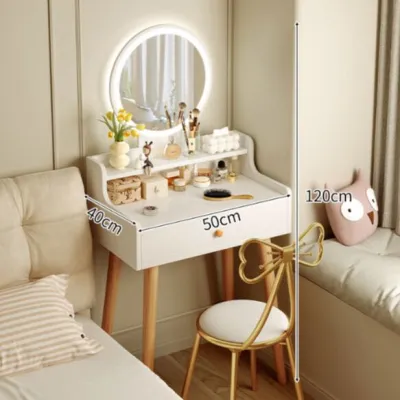
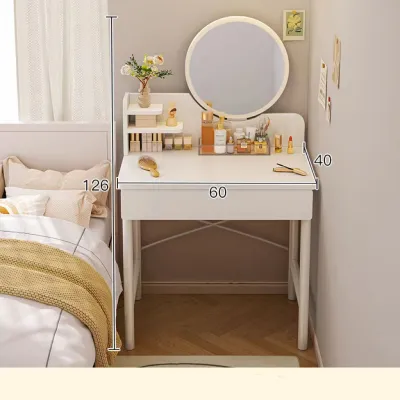
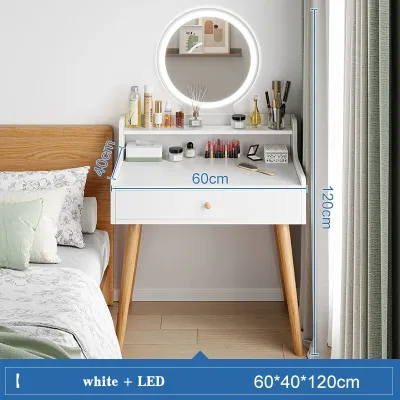
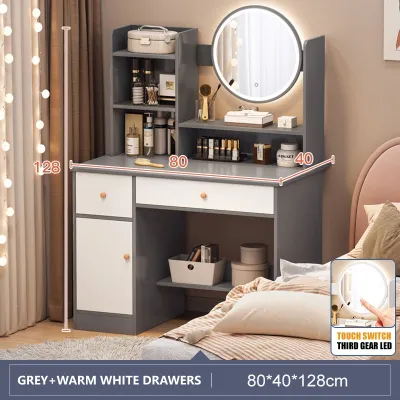
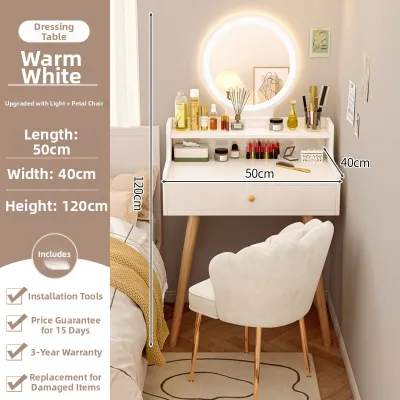
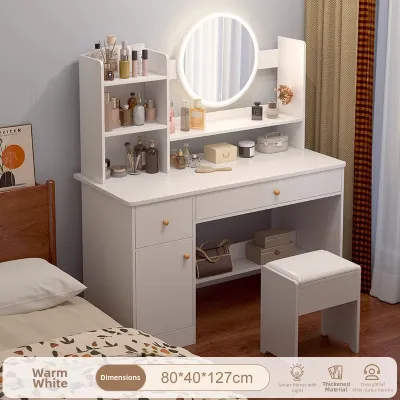
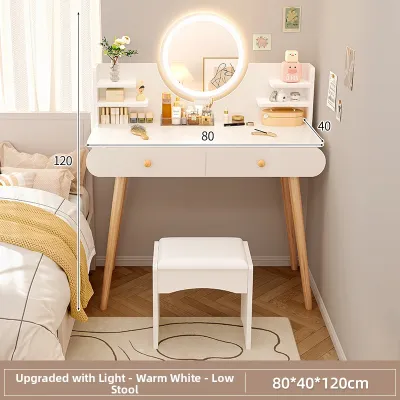

Prices are valid at publication and may change. Please refer to the product page for the latest price.
Before finalizing your purchase, visualize the delivery path. Measure your home’s entryways, hallway corners, stairwells, and elevator doors. A beautiful, fully assembled dresser vanity does no good if it cannot clear the tight turns of your apartment building’s stairwell or fit inside the elevator cabin. If access is tight, look for flat-pack options that can be assembled directly inside your bedroom, or confirm that the mirror and vanity legs can be detached during transport.
Top Dresser Vanity Styles That Maximize Space and Function
Selecting the right silhouette can visually open up a compact bedroom while physically saving precious floor space. The goal is to minimize visual clutter and choose a design that serves multiple purposes or tucks away neatly when not in use. Entry-level compact units often range from ₱2,000 to ₱5,000 on local online marketplaces, while premium solid-wood or custom-built options can exceed ₱15,000.

Corner and L-Shaped Vanities
Corner and L-shaped dresser vanity units are highly effective at reclaiming underutilized “dead space” in square bedrooms. In many small layouts, corners are left empty because standard rectangular furniture does not fit well near doors or windows. A corner vanity fits snugly into a 90-degree angle, centering your seating area and utilizing the wall space on both sides.
When choosing a corner model, pay close attention to the corner depth and your seating clearance. Because the desk surface extends diagonally, the depth from the front edge to the back corner can be surprisingly deep. Ensure that your legs can fit comfortably underneath the unit and that you have enough room to pull the chair back diagonally without hitting the corner of your bed or a nearby closet door.
Wall-Mounted and Floating Vanities
Wall-mounted or floating vanities are excellent for creating the illusion of a larger room. By eliminating the legs and exposing the floor underneath, these units make a small bedroom feel open and airy. This design also simplifies cleaning, allowing you to sweep or vacuum easily without navigating around dusty furniture legs.
However, floating designs require careful installation. Because these units must support their own weight, plus the weight of mirrors, cosmetics, and your hands resting on the surface, they must be anchored securely. You must locate the wall studs or use heavy-duty masonry anchors if mounting on concrete or hollow-block walls. Always check the manufacturer’s maximum load capacity and follow the exact mounting instructions to prevent the unit from pulling away from the wall.
Slim, Narrow, and Convertible Vanities
If you have a very tight alcove or a narrow pathway alongside your bed, a slim-depth dresser vanity is your best option. These models typically feature a depth of under 40 centimeters, which keeps them flush with shallow wardrobes or fits neatly into narrow corridors.
Convertible vanities offer exceptional versatility for multi-use spaces. Many modern designs feature a flip-top or drop-down mirror. When the mirror is flipped down, the vanity transforms into a completely flat writing desk or laptop station, making it perfect for hybrid work-from-home setups. Once your workday is done, you simply lift the lid to reveal your makeup storage and mirror, keeping your clutter entirely out of sight.
Balancing Storage and Makeup Functionality in Compact Designs
To get the most out of a compact dresser vanity, you must prioritize vertical storage solutions. Instead of relying on a wide tabletop that quickly becomes cluttered with makeup organizers, choose designs that draw the eye upward. Look for vanities that feature tall, integrated side cabinets, open hutch shelving, or a mirrored medicine cabinet. Utilizing the wall space above your vanity allows you to store daily essentials within arm’s reach while leaving the main tabletop clear for actual use.
Smart interior drawer organization is another key to small-space efficiency. A single deep drawer often becomes a chaotic pile where small cosmetics get lost. Instead, seek out vanities with shallow top drawers designed specifically for makeup palettes, lipsticks, and brushes. Built-in drawer dividers or modular acrylic inserts will help keep everything in its place. For larger items like hair dryers, straighteners, or tall lotion bottles, ensure the vanity has at least one deep lower drawer or a side cupboard with adjustable shelving.
In humid tropical climates like the Philippines, the choice of materials and hardware is crucial for long-term durability. High humidity can cause solid wood to swell and cheap, unsealed particleboard to warp, bubble, or harbor mold. When shopping, check for moisture-resistant finishes, such as polyurethane coatings or high-pressure laminates, which protect the underlying material. Additionally, ensure the drawers are equipped with smooth, rust-resistant metal glides rather than wooden runners, which can easily stick and jam when the air is damp.
Common Sizing and Placement Mistakes to Avoid
One of the most common mistakes is forgetting to account for the physical space required to operate the dresser vanity. While the unit might fit perfectly when closed, you must measure how far the drawers extend when fully opened and whether any cabinet doors swing out into your walking path. If a drawer blocks your bedroom door or hits the side of your mattress, the vanity will quickly become a major daily inconvenience.
Placement relative to light sources is another critical consideration. Avoid placing your vanity directly opposite a bright window, as this can create harsh glare in your mirror and make it difficult to see your face clearly. Ideally, position the vanity adjacent to a window to catch soft, natural side-light, or ensure you have enough wall space to install dedicated LED vanity lights or plug in a lighted makeup mirror.
Safety should never be overlooked, especially in households with children or pets. Tall, narrow dresser vanities can easily become top-heavy when multiple drawers are pulled out at once. To prevent dangerous tip-over accidents, always use the included wall-anchoring hardware to secure the vanity to the wall. If the manufacturer does not include an anti-tip kit, purchase a high-quality furniture strap or bracket separately.
Finally, do not forget to verify that any large, fixed mirrors can actually navigate the entryways of your home. Some vanities come with massive, pre-attached mirrors that cannot be easily disassembled. Double-check these dimensions against your front door, bedroom door, and ceiling heights before making a purchase to avoid an expensive return process.
Frequently Asked Questions (FAQ)
What is the standard depth for a small dresser vanity?
While standard dresser vanities often measure 45 to 50 centimeters deep, small-space models are designed with a shallower footprint, typically ranging from 30 to 40 centimeters. When calculating your room’s layout, remember to add the depth of your vanity chair or stool. A standard stool requires an additional 40 to 50 centimeters of clearance when in use, though it can often be tucked completely under the vanity when not active.
Can I use a regular dresser as a vanity in a small room?
Yes, you can easily repurpose a regular dresser as a vanity if its height is comfortable for sitting, which is typically between 70 and 80 centimeters. Ensure there is enough leg clearance if you plan to sit close, or opt for a low-profile stool. To complete the setup, add a high-quality tabletop mirror and insert modular drawer organizers to keep your cosmetics, jewelry, and styling tools neatly separated.
Community discussion
Share your experience or ask a question. Comments are reviewed before publication.