
Choosing the right durabox storage for clothes requires balancing your physical wardrobe dimensions with your actual clothing volume. Many homeowners make the mistake of buying storage boxes based solely on advertised liter capacities, only to find that the containers do not fit past their wardrobe doors or leave no room for air circulation. To maximize your closet space, you must measure your cabinet’s interior, evaluate your garments, and strategically map out your storage zones.
By selecting the correct dimensions, you can keep your bedroom organized while protecting your garments from dust and tropical humidity. This guide will walk you through the precise steps to measure your wardrobe, assess your clothing volume, and arrange your storage containers for optimal accessibility and safety.
How to Measure Your Wardrobe's Usable Interior Space
Before purchasing any plastic storage containers, you need to understand the difference between your wardrobe’s external dimensions and its usable interior space. Wardrobe manufacturers often list external measurements that include decorative crown molding, thick side panels, and baseboards. These outer dimensions do not represent the actual space available for your storage bins. To avoid purchasing boxes that are too large, always base your decisions on the internal clearance of each individual shelf, compartment, or floor section.
Products mentioned in this guide
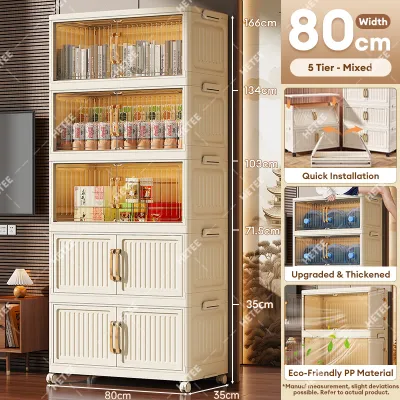
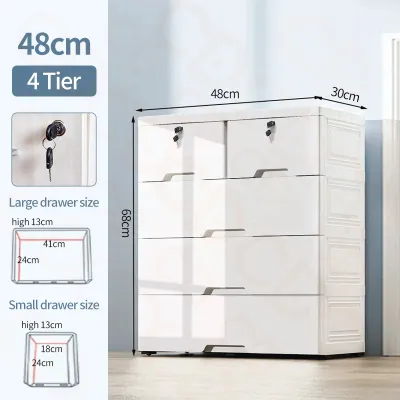
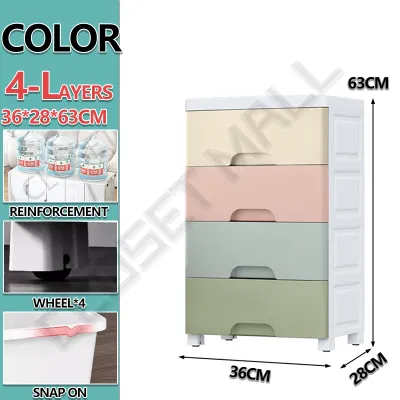
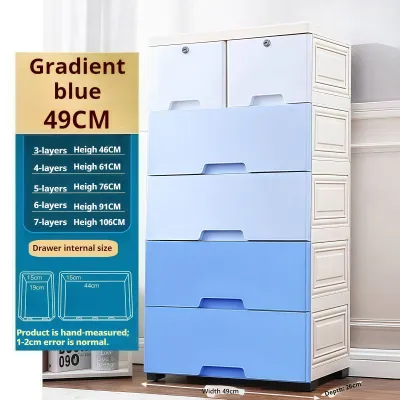
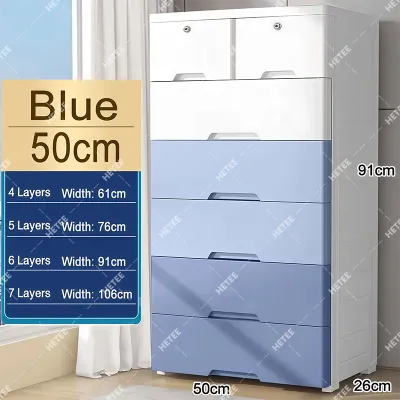
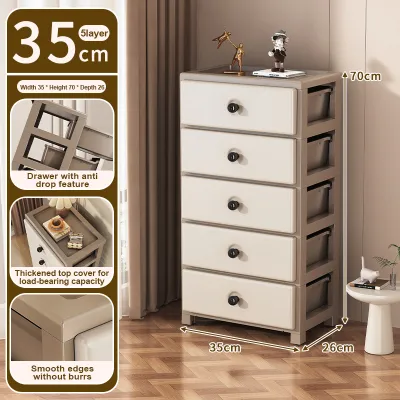
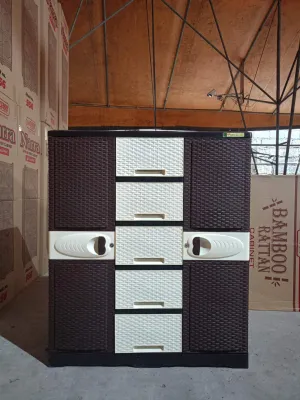
Prices are valid at publication and may change. Please refer to the product page for the latest price.
To get started, empty your wardrobe completely and grab a reliable metal measuring tape. Measure the width, depth, and height of each specific shelf compartment. When measuring depth, measure from the back panel to the front edge of the shelf, leaving a small buffer. For height, measure the clear vertical distance between shelves. If your wardrobe has adjustable shelves, decide on their permanent positions before taking these measurements, as moving a shelf later will alter the available vertical space.
Be highly mindful of physical obstacles that can reduce your usable interior space. Hinges for wardrobe doors often protrude several centimeters into the cabinet, which can block a wide box from sliding onto a shelf. Similarly, shelf brackets, hanging rods, sliding door tracks, and drawer slides can restrict the path of your storage containers. Always measure the narrowest point of the compartment, taking these hardware obstructions into account, rather than assuming the entire shelf is fully open.
Additionally, you must measure the wardrobe’s door opening clearance and the entryway of the room itself. A large, fully loaded storage box might technically fit inside a spacious wardrobe compartment once placed, but you must be able to maneuver it through the door opening first. If your wardrobe has sliding doors, only half of the interior is accessible at any given time, which severely limits the maximum width of a box you can easily slide in and out.
In the tropical climate of the Philippines, leaving a small clearance gap around your storage boxes is essential for maintaining air circulation. High relative humidity can cause stagnant air to trap moisture inside closed closets, leading to mold and mildew growth on both your furniture and your clothes. Aim to leave at least two to three centimeters of free space on all sides of each box to allow air to flow freely.
Finally, always check the exact external dimensions listed on the product label or manufacturer specifications before making a purchase. Do not rely on the internal capacity, which is typically measured in liters. A 50-liter box from one product line may have a tall, narrow footprint, while a 50-liter box from another line might be short and wide. Comparing the physical external width, depth, and height against your measured wardrobe clearance is the only way to guarantee a perfect fit.
Assess Your Clothing Volume to Determine Capacity Needs
Once you know the physical limits of your wardrobe, you must evaluate your clothing inventory to determine the capacity and style of the boxes you need. Different types of garments require different storage environments to remain in pristine condition. Grouping your clothes into distinct categories is the most effective way to start this process.

Begin by categorizing your clothing into everyday folded wear (such as T-shirts, shorts, and activewear), bulky items (such as jackets, hoodies, or thick sweaters), delicate accessories (like scarves, belts, and hats), and undergarments. This categorization directly dictates the ideal depth and width of your storage boxes. For instance, bulky items are best suited for deep, high-capacity boxes where they can be stacked without being crushed. Conversely, small accessories and undergarments are better organized in shallow, smaller boxes that prevent items from shifting and becoming disorganized.
Understanding the relationship between clothing volume and box capacity will prevent you from damaging your storage system. Overstuffing a plastic box forces the sides to bow outward, which can warp the plastic permanently and prevent the lid from sealing properly. It also puts excessive pressure on the latches, which can easily snap over time. Furthermore, a warped box with a bulging lid will be difficult to slide into your wardrobe and may block the wardrobe doors from closing completely.
To avoid these issues, employ a practical sorting method before buying any containers. Gather all the clothes you intend to store and pile them on your bed or a clean table. Group them by category and fold them exactly as you plan to store them. By physically assembling these piles, you can visually estimate the volume of space they occupy. You can then measure the height and footprint of these clothing piles to match them with the most appropriate box sizes, rather than purchasing a uniform set of boxes that might not accommodate your diverse wardrobe.
Match Durabox Dimensions to Specific Wardrobe Zones
To create an ergonomic and highly functional closet, you must strategically match your storage box sizes to different zones within your wardrobe. Organizing your wardrobe by accessibility ensures that daily items are within reach, while long-term storage is kept out of the way.
Top Shelves and High Clearance Areas
The top shelves of your wardrobe are the hardest to reach and should be reserved for long-term or lightweight storage. Large-capacity boxes are ideal for this zone, as they can hold bulky, infrequently used items such as extra bedding, pillows, off-season clothes, or travel gear. However, because these boxes sit high above your head, you must keep them relatively lightweight so you can safely retrieve them without straining.
Before loading up the top shelf, always check the weight limit of your wardrobe’s construction. Particleboard or thin plywood shelves can sag or collapse under excessive weight over time. To ensure safety, distribute the weight evenly across the shelf and avoid placing heavy items in these overhead containers. Additionally, select boxes with secure, snap-lock lids to protect your stored items from the dust that naturally accumulates near the ceiling.
Middle Shelves and Eye-Level Access
The middle shelves represent the prime real estate of your wardrobe, making them perfect for daily or frequent use. For this zone, choose medium-sized boxes that you can easily pull out and lift with one or two hands. These boxes should hold your primary wardrobe items, such as daily casual wear, work attire, or frequently used accessories.
To maximize your shelf space, use boxes of uniform widths side-by-side. This eliminates awkward, wasted gaps and creates a clean, cohesive visual appearance. Opt for clear or semi-transparent plastic options in these middle zones. This allows you to quickly identify the contents of each box at a glance without having to pull down and open every single lid, saving you valuable time during busy mornings.
Bottom Floor and Under-Hanging Space
The wardrobe floor and the space beneath your hanging clothes are heavy-duty, low-clearance areas that require a different organizational approach. This zone is perfect for storing heavy items, such as shoes, denim, or heavy utility items. Large, heavy-duty boxes are excellent here, especially those equipped with built-in wheels that allow you to roll them out effortlessly.
Before placing boxes on the floor, measure the clearance under your hanging garments. You want to ensure that a low-profile, wide box can slide underneath without crushing or wrinkling the hems of your hanging shirts, dresses, or trousers. Leaving sufficient clearance also prevents the fabrics from dragging on top of the boxes, which can cause friction wear.
In humid environments, placing plastic boxes directly on a concrete or wooden wardrobe floor can trap moisture underneath, leading to mold growth. To prevent this, place a small breathable mat under the boxes or ensure you choose containers with a raised base or molded feet. This simple step promotes airflow beneath the box and protects both your wardrobe floor and your stored items from moisture damage.
Common Durabox Sizing Mistakes and How to Avoid Them
Avoiding common sizing and placement errors will save you time, money, and frustration when setting up your closet storage.
- Mistake 1: Ignoring External Dimensions for Internal Capacity. As mentioned, a box's internal volume in liters does not tell you its physical shape. A 50-liter container can be tall and narrow or short and wide. Always verify the manufacturer's listed external width, depth, and height against your physical shelf measurements before purchasing.
- Mistake 2: Forgetting Door and Hinge Clearance. Many people measure their shelves but forget that wardrobe doors and hinges take up space when closed or swung open. If a box is placed too close to the front edge, it can prevent the wardrobe door from shutting completely, or the box can get caught on the hinges every time you try to slide it out. Always leave a few centimeters of clearance at the front of the shelf.
- Mistake 3: Unsafe Stacking. Stacking mismatched box sizes or overloading bottom containers is a major safety hazard. Never stack a larger, heavier box on top of a smaller one. Lids must be specifically designed for stacking, featuring reinforced rims or interlocking grooves that keep the upper box secure. Always place the heaviest items in the bottom box to maintain a low center of gravity and prevent the stack from tipping over when you open the wardrobe.
- Mistake 4: Neglecting Climate Considerations. In the humid climate of the Philippines, trapping moisture inside a sealed plastic box is a recipe for mildew and musty smells. If you are storing sensitive fabrics long-term, avoid using cheap, poorly sealed boxes that allow humid air to seep in while trapping existing moisture. Ensure your garments are completely dry before storage, and look for boxes with tight-fitting latch mechanisms to create a secure barrier against external humidity.
Frequently Asked Questions (FAQ)
Can I stack different Durabox sizes safely?
Stacking different sizes of storage boxes is generally unsafe unless you follow strict guidelines. You must place the largest, heaviest box at the very bottom of the stack. A smaller box should only be placed on top if it sits completely within the reinforced stacking grooves or recessed rim of the lower box’s lid. Mismatched lids or placing larger boxes on top creates an unstable center of gravity, which significantly increases the risk of the stack tipping over when the wardrobe is bumped or opened. Always check the manufacturer’s guidelines and weight limits on the product label to ensure structural stability.
How do I prevent musty odors in plastic storage boxes in a humid climate?
To prevent musty odors in a humid tropical climate, you must ensure that no moisture is trapped inside the container. Plastic boxes are non-porous, meaning they will trap any existing moisture if clothes are stored before they are completely dry. Always ensure your garments are fully dry and have cooled to room temperature after laundering or ironing before sealing the lid. To actively combat humidity, place silica gel packets, activated charcoal bags, or small moisture absorbers inside each box. Remember to check and replace these desiccants regularly according to their product instructions to keep your clothes smelling fresh.
Community discussion
Share your experience or ask a question. Comments are reviewed before publication.