
Creating a comfortable outdoor sanctuary in the Philippines requires a smart approach to managing intense tropical heat and sudden downpours. When searching for an electric owning shade (often referred to as an electric awning shade) for your garden patio, the goal is to balance convenience with high durability. Motorized shade systems allow you to transition your outdoor space from a sun-drenched garden to a cool, protected lounge at the touch of a button.
Choosing the right setup involves evaluating how your patio is built, how the sun hits your garden throughout the day, and how well the materials can withstand local weather patterns. High humidity, strong winds during the monsoon season, and intense UV exposure mean that a standard indoor solution or a flimsy manual shade will not suffice. By understanding the structural demands and mechanical features of motorized options, you can select a system that enhances your outdoor living area for years to come.
Assessing Patio Space and Structural Readiness
Before purchasing any motorized shade system, you must thoroughly evaluate the physical space and structural integrity of your mounting area. Start by measuring the available clearance height, the total width of the wall or beam where the unit will be mounted, and the projection depth required to cover your seating area. Motorized systems require more clearance than manual ones because the motor housing and roller tubes are often larger and heavier. Be sure to check for potential obstructions such as low-hanging tree branches, outdoor light fixtures, or roof gutters that could block the path of the shade as it extends.
Products mentioned in this guide
Prices are valid at publication and may change. Please refer to the product page for the latest price.
The structural load-bearing capacity of your mounting surface is a critical safety factor. A motorized awning or pergola shade exerts significant leverage and weight on your walls, especially when fully extended or during sudden gusts of wind. Concrete walls, solid brick, or heavy structural steel beams are ideal mounting points, whereas lightweight cladding, thin wood fascia boards, or hollow blocks require specialized reinforcement.
Electrical planning is another essential step that must be addressed early in the process. Motorized shades require a dedicated, weather-protected power source near the installation site. You need to plan the routing of electrical cables to ensure they are protected from moisture, direct sunlight, and physical wear, which typically involves running outdoor-rated conduit from your main electrical panel or an existing outdoor outlet.
Comparing Types of Motorized Outdoor Shades
Selecting the ideal motorized shade depends heavily on your existing patio layout and whether you need overhead protection, lateral shade, or a fully enclosed outdoor room. The three primary options—retractable awnings, motorized pergola shades, and exterior roller blinds—each serve distinct structural and functional purposes. Comparing these types across a clear decision matrix helps you match their specific capabilities to your garden’s unique layout.

Retractable Awnings
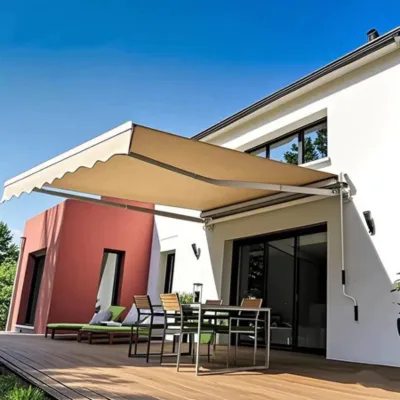
Motorized retractable folding-arm awnings are highly popular for open patios because they extend overhead protection without requiring permanent vertical posts. This design keeps your garden patio open and unobstructed, allowing for flexible furniture arrangements and a seamless transition between indoor and outdoor spaces. When the sun sets or a storm approaches, the arms fold back cleanly against the wall.
To protect your investment from sudden tropical windstorms, look for models that are compatible with automatic wind sensors. These sensors detect excessive vibration or wind speed and automatically signal the motor to retract the awning, preventing structural damage even when you are not home to do it manually.
However, retractable folding-arm awnings have distinct limitations when it comes to heavy weather. They are designed primarily for sun protection and light drizzle; they cannot handle heavy, pooling rainwater or strong lateral rains that blow in from the sides. Additionally, their maximum projection distance is mechanically limited by the strength of the folding arms, meaning they may not cover exceptionally deep garden patios without additional support.
Motorized Pergola Shades
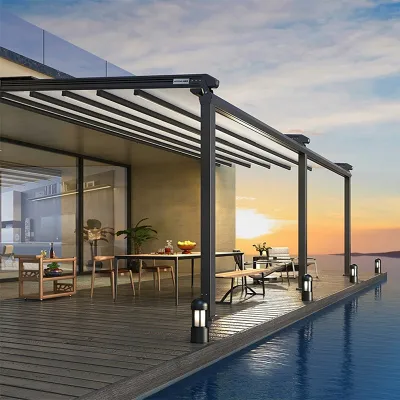
For larger garden patios or spaces that already feature a structural frame, motorized pergola shades offer a robust, semi-permanent roofing solution. These systems utilize a fabric canopy that slides along horizontal tracks integrated into a pergola frame, providing excellent stability and coverage over expansive outdoor dining or lounge areas.
When evaluating motorized pergola shades, pay close attention to the track systems, fabric tension mechanisms, and integrated water drainage channels. High-quality systems keep the fabric taut to prevent water from pooling on top, directing heavy tropical rainfall into built-in gutters and downspouts hidden within the pergola posts.
The primary trade-off with motorized pergola shades is their high structural load and complex assembly requirements. Unlike simple wall-mounted awnings, these systems require a sturdy, multi-post frame anchored securely to concrete footings, making the initial installation more labor-intensive and demanding a larger footprint in your garden.
Exterior Roller Blinds
If your patio already has a solid roof or a pergola but suffers from intense afternoon glare, low-angle sunlight, or a lack of privacy, vertical exterior roller blinds are an excellent addition. These motorized screens roll down vertically to block heat and wind, effectively turning your open patio into a screened-in outdoor room when needed.
Wind resistance is a primary concern for vertical blinds, making side-track stability and bottom-bar weight crucial specifications to verify. Look for zip-track or cable-guided systems that lock the edges of the fabric into side channels, preventing the screen from flapping wildly or blowing out of its tracks during breezy afternoons.
Keep in mind that vertical roller blinds are designed solely for lateral protection and privacy. They cannot provide overhead shade on their own, meaning they must be paired with an existing solid roof, pergola, or awning structure to create a fully shaded outdoor living environment.
Verifying Weather Resistance and Hardware Specifications
The longevity of your electric awning shade in a tropical climate depends entirely on the quality of its materials and hardware specifications. Rather than relying on generic marketing terms, look for specific technical standards provided by the manufacturer. Fabric selection is your first line of defense; prioritize solution-dyed acrylics or high-density polyethylene (HDPE) meshes that carry high UV resistance ratings and specialized water-repellent coatings.
It is important to distinguish between water-resistant and waterproof fabrics when planning for the local climate. Water-resistant fabrics are excellent for blocking light showers and allowing airflow, which helps keep the patio cool, while fully waterproof fabrics are necessary if you plan to use the space during heavy downpours.
The metal components of the frame, arms, and tracks must be highly resistant to corrosion caused by high humidity and salt air, especially if your home is located near coastal areas in the Philippines. Verify that the aluminum extrusions feature architectural-grade powder coating or anodized finishes that meet international standards for weatherability and scratch resistance.
Because the motor is the heart of the system, its resistance to dust and moisture is paramount. Check the Ingress Protection (IP) rating of the motor housing; a minimum rating of IP44 is standard for outdoor use, but IP55 or higher is preferred to ensure the electrical components remain completely sealed against driving rain and fine dust particles.
Planning Installation and Long-Term Maintenance
Installing a motorized shade system is a precise task that requires careful adherence to manufacturer instructions to ensure safety and preserve your warranty. Always consult the product manual for the exact fixing methods, recommended anchor bolt types, and specific torque settings required for your wall material. Using the wrong fasteners can lead to structural failure, posing a serious safety hazard to anyone using the patio.
Given the complexities of structural mounting and safe electrical wiring, hiring qualified professionals for the installation is highly recommended. A professional installer can verify that your wall can support the dynamic loads, properly align the tracks or folding arms, and connect the motor to your home’s electrical system using code-compliant, weatherproof junction boxes and conduits.
Once installed, keeping your motorized shade in optimal condition requires a regular maintenance schedule. Periodically check the fabric tension to ensure it rolls up evenly without bunching, inspect the side tracks or folding arms for debris that could strain the motor, and verify that the automatic wind sensors and remote controls are functioning correctly.
Additionally, establish a gentle cleaning routine to prevent mold and mildew growth, which thrive in humid environments. Gently wash the fabric with a soft brush and mild soap, allowing it to dry completely in the sun before retracting it into the cassette housing.
Frequently Asked Questions (FAQ)
Can I retrofit a manual awning with an electric motor?
Retrofitting a manual awning with an electric motor is possible, but it requires a thorough compatibility check of your existing hardware. First, measure the inner diameter of your awning’s roller tube, as tubular motors are designed to slide inside specific tube sizes. You must also inspect the structural integrity of the existing brackets and the overall frame to ensure they can handle the constant torque and sudden starting forces exerted by an electric motor. Finally, verify that the motor kit you choose is compatible with your current mounting brackets or if you will need to replace the entire mounting assembly to accommodate the motor head and manual override gear.
What happens to the motorized shade during a power outage?
During a power outage, a standard motorized shade will remain in its last position unless it is equipped with a manual override system. When selecting a motor, look for models that feature an integrated mechanical override, which allows you to retract or extend the shade using a manual hand crank during emergencies. If your chosen system does not support a manual override, you may want to consider connecting the motor to an uninterruptible power supply (UPS) or a home battery backup system to ensure you can always retract the shade safely before a major storm arrives.
Community discussion
Share your experience or ask a question. Comments are reviewed before publication.