
Selecting an extendable bed requires balancing two distinct footprints: the compact daytime configuration and the fully expanded nighttime setup. To find the right size, you must measure your room’s total area, map out the clearance needed for doors and other furniture, and select a mechanism that aligns with your room’s layout. This ensures your bedroom remains functional and easy to navigate, whether the bed is collapsed or fully extended.
Measure Your Room and Clearance Needs
Before browsing online catalogs or visiting furniture showrooms, you need precise measurements of your bedroom. Start by measuring the total length and width of the floor space using a steel tape measure. Write down these dimensions and draw a simple sketch of your room’s layout to help visualize where the bed will sit. Remember to measure from the baseboards rather than the walls, as baseboards can reduce your usable floor space by a few centimeters.
Be sure to note any permanent architectural obstacles that cannot be moved. These include electrical outlets, light switches, wall-mounted air conditioning units, and low-hanging window sills. In many modern urban condominiums, structural columns or decorative wall moldings can also reduce the actual usable floor space. Marking these on your sketch prevents you from purchasing a frame that blocks access to essential wall outlets or light switches.
Products mentioned in this guide
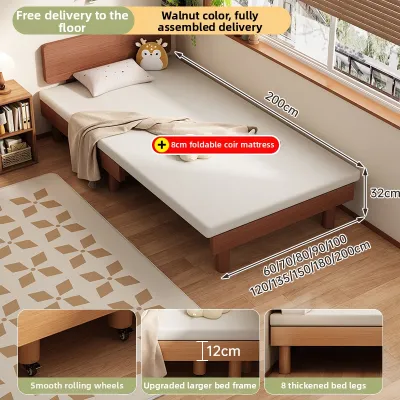

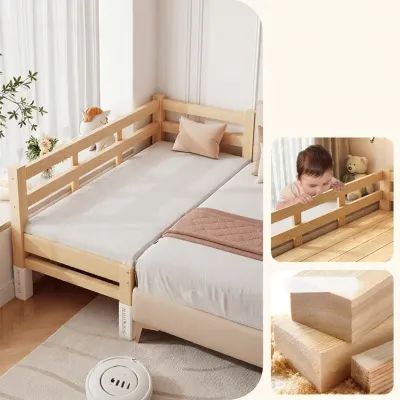

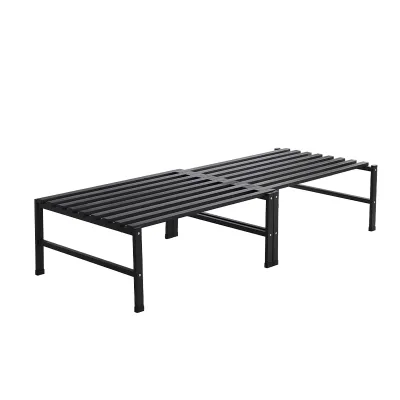

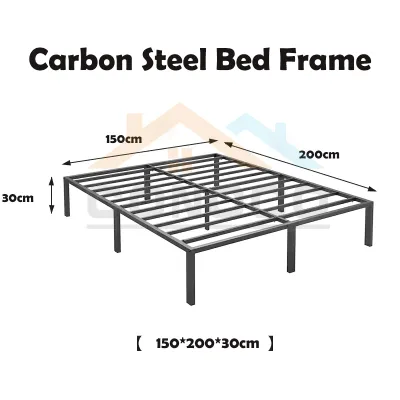
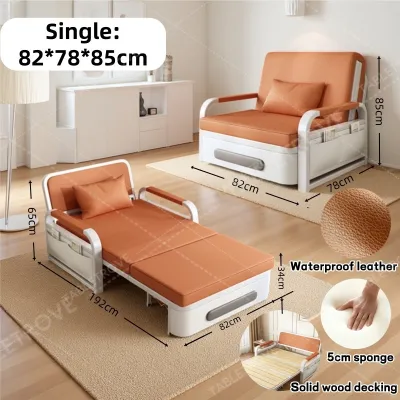
Prices are valid at publication and may change. Please refer to the product page for the latest price.
Vertical clearance is equally important if you are considering an extendable bed with built-in storage drawers or an under-bed trundle. You must measure the vertical distance from the floor to the bottom of window frames or electrical outlets to ensure the bed frame does not block them. Additionally, leave enough vertical space above the bed for comfortable sitting, especially if the room has low ceilings. In tropical climates, ensuring adequate air circulation beneath and around the frame is also vital to prevent moisture buildup and mold.
To establish your absolute spatial limits, identify the maximum footprint the bed can occupy when it is fully extended. Use painter’s tape or newspaper to outline this maximum footprint directly on your bedroom floor. This physical template allows you to see exactly how much floor space remains for walking and other activities when the bed is in its largest configuration, helping you avoid a cramped layout.
Match Base and Extended Sizes to Your Layout
Once you have your room’s measurements, you can begin comparing them to standard bed dimensions. The base size refers to the bed in its collapsed or closed state, which is typically used during the day or for single sleepers. Compare this base size against your room’s minimum width and length to ensure you can move around the room comfortably when the bed is not fully deployed.

Next, evaluate the extended dimensions of the bed frame to verify they do not block essential pathways or access points. When the bed is fully open, it should not obstruct the path to the bathroom, closet, or balcony doors. If the extended bed completely blocks a walkway, it can create a safety hazard and make daily living highly inconvenient, especially in tight studio apartments.
Applying conditional sizing based on your room’s shape is an effective way to optimize your layout. For long and narrow rooms, prioritize width-extending beds, such as daybeds that pull out horizontally to become double or queen-sized beds. Placing the long side of the bed against the wall preserves a central walkway when the bed is collapsed, keeping the room feeling open and airy.
For wider or more square rooms, length-extending beds are often a better fit. These frames are positioned with the headboard against the wall and extend outward into the center of the room. This layout takes advantage of the room’s depth without crowding the side walls, leaving ample space for nightstands or small desks on either side of the bed.
Evaluate the Extension Mechanism and Range
The way an extendable bed expands plays a major role in how well it fits your room. Different mechanisms require different types of physical effort and floor conditions to operate smoothly. Understanding these mechanical differences helps you choose a model that matches your physical space and daily routine.
Check the extension direction and ensure it aligns with your room’s open floor area. Some beds slide out from the side, while others pull out from the foot of the bed. If your room is narrow, a side-sliding mechanism might block your wardrobe, whereas a foot-pull mechanism might block the entrance door. Choose a direction that utilizes your largest patch of open floor space.
Review the mechanism type for required operational clearance. Slatted pull-out frames and drawer-style extensions rely on wheels or runners that glide across the floor. If your bedroom has thick rugs, textured floor tiles, or uneven wood planks, these wheels can catch or scratch the surface. Ensure you have a smooth, level floor area for the mechanism to slide without resistance, and check if the wheels are made of floor-friendly materials.
You must also verify mattress compatibility before making a purchase. Some extendable beds require a specialized split mattress, where extra foam blocks are added to fill the gap when the bed is extended. Other models use two standard single mattresses stacked on top of each other when collapsed, which are then placed side-by-side when the frame is pulled out. Check the manufacturer’s guidelines to ensure your chosen mattress setup provides a seamless, supportive, and comfortable sleeping surface.
Plan for Furniture Placement and Traffic Flow
A successful bedroom layout requires careful planning to ensure the extended bed coexists with your other furniture. You must map out walking paths around the bed in both its collapsed and extended states. Ideally, you should maintain a clearance of at least 60 centimeters around the active sides of the bed to allow for comfortable movement and easy bed-making.
Plan the placement of wardrobes, nightstands, and desks to avoid collisions with the extending frame. If you have a wardrobe with swing doors, ensure the doors can open fully even when the bed is extended. If space is extremely tight, consider replacing swing-door wardrobes with sliding-door models, or position your nightstands further away from the bed’s expansion path to prevent drawer blockages.
To compensate for the floor space lost when the bed is fully extended, look for multi-functional or wall-mounted furniture. Floating shelves can replace bulky traditional nightstands, saving valuable floor space. Wall-mounted folding desks can be flipped down when you need to work and folded flat against the wall before you extend the bed for the night, keeping the floor clear.
Common Sizing and Layout Mistakes to Avoid
One of the most common mistakes when planning for an extendable bed is forgetting to measure the swing radius of nearby doors. This includes bedroom entry doors, closet doors, and even window panes that open inward. A bed frame that blocks a door from opening fully will quickly become a source of daily frustration and can damage both the door and the frame over time.
Another frequent error is assuming the extended bed will remain permanently deployed. If you plan to leave the bed extended all the time, you lose the space-saving benefits of the mechanism and may experience cramped living conditions. If your daily routine does not allow time to collapse the bed, a standard fixed bed frame might be a more practical and cost-effective choice for your home.
Finally, never overlook the manufacturer’s weight capacity labels and structural stability requirements. The extended section of the bed often relies on secondary support legs or cantilevered slats that may have lower weight limits than the main frame. Always check these specifications to ensure the bed can safely support the intended sleepers without risking structural damage, sagging, or tipping.

Community discussion
Share your experience or ask a question. Comments are reviewed before publication.