
Finding the right foldable bar table size for a compact open kitchen in a typical Philippine condo—where studio and one-bedroom units often range from 22 to 35 square meters—requires balancing daily dining needs with strict spatial limits. Generally, a table surface measuring 60 to 90 centimeters in width and 40 to 60 centimeters in depth provides comfortable dining space for one to two people without overwhelming the room. However, the ideal dimensions for your specific home depend on your kitchen’s layout, the clearance required for daily foot traffic, and how the table behaves when fully collapsed.
To make an open kitchen feel spacious, every piece of furniture must serve multiple purposes without blocking movement. A foldable bar table can transition from a breakfast nook to an extra food preparation surface, or even a temporary work-from-home desk. Achieving this versatility requires careful planning, precise measurements, and a clear understanding of how different folding mechanisms interact with your walls and floor space.
Measure Your Open Kitchen Space Before Buying
Before browsing online marketplaces or visiting local furniture showrooms, you must define the exact zone where your table will live. In a small condo, the primary placement zone is typically a blank wall adjacent to the kitchen counter, a tight corner near the entryway, or the open boundary between the kitchen and the living area where the table can act as a subtle room divider. Marking this zone on your floor with masking tape helps you visualize the physical presence of the furniture before making a purchase.
Products mentioned in this guide
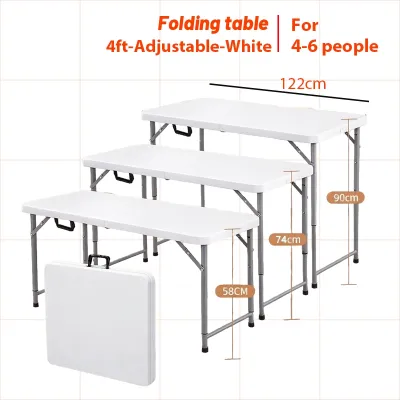
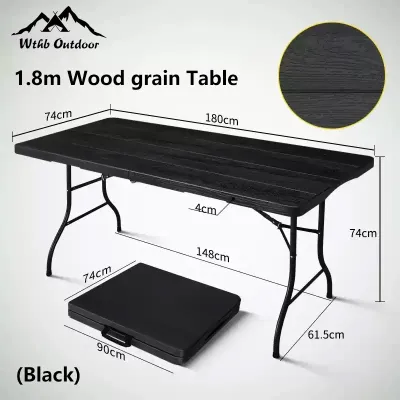
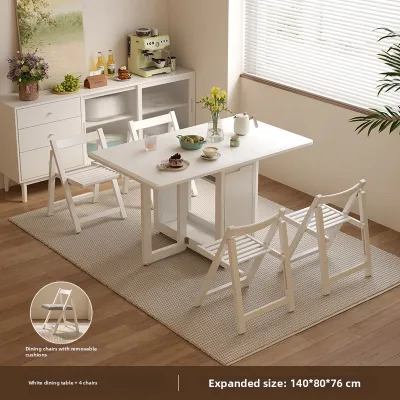
Prices are valid at publication and may change. Please refer to the product page for the latest price.
Once you identify the zone, measure the maximum allowable width, depth, and height of the space. Use a metal measuring tape for accuracy, and record the dimensions of the surrounding area when all nearby cabinet doors, drawers, and appliances are fully open. If your kitchen layout is narrow, a table that is too wide will restrict your movement, turning simple tasks like carrying groceries or washing dishes into a daily obstacle course.
Do not forget to account for architectural details that might prevent a table from sitting completely flush against the wall. Baseboards, wall outlets, light switches, and even protruding cabinet handles can steal valuable centimeters. If you plan to use a wall-mounted table, check the location of your electrical outlets to ensure the folded tabletop does not cover them or block access to appliances that need constant power.
Additionally, consider the delivery path into your condo unit. Measure the width of your main entry door, hallway corners, and even the building’s elevator doors. Since some foldable bar tables are delivered fully assembled or in large, flat-packed boxes, ensuring the package can physically enter your home is just as important as making sure the assembled table fits your kitchen.
Match Folded and Unfolded Footprints to Your Layout
A foldable bar table has two distinct identities: its fully expanded state and its collapsed state. Evaluating both footprints ensures the table remains highly functional when in use and virtually invisible when folded away. Start by comparing the unfolded surface area against your typical daily activities. If you primarily use the table for quick morning coffees or solo meals, a smaller surface is fully adequate, whereas hosting occasional guests or using the table for extensive meal prep requires a wider, more stable top.

Next, verify the folded footprint to ensure the collapsed table does not protrude into major walkways. In a compact condo, even a protrusion of 10 to 15 centimeters can become a tripping hazard, especially in high-traffic zones near the sink or stove. If the table folds downward against a wall, check that the bottom edge does not interfere with your feet as you walk past, and ensure it leaves enough clearance for robot vacuums or manual brooms to clean the floor easily.
The thickness of the table when folded is a critical factor in maintaining a streamlined, modern aesthetic. Some wall-mounted models fold down to a depth of less than 5 centimeters, making them blend seamlessly into the wall. Freestanding models with drop-leaf mechanisms, however, often retain a central structure that remains standing even when the leaves are down, which requires a dedicated permanent floor space that you must account for in your layout.
Finally, consider how the table’s materials and finish look in both states. In humid tropical climates, wood surfaces can expand or warp if exposed to moisture from cooking steam, while metal hinges might degrade if not properly coated. Check the manufacturer’s specifications for moisture-resistant finishes and sturdy joint construction to ensure the folding mechanism operates smoothly over years of daily folding and unfolding.
Choose the Right Folding Mechanism for Daily Use
Selecting the right folding mechanism depends on your condo’s wall construction, your need for layout flexibility, and how often you plan to fold the table. Drop-leaf designs are excellent for freestanding tables that remain in a fixed spot but require adjustable surface areas. With one or both leaves folded down, the table functions as a slim console or a small prep station; with the leaves raised, it expands into a full dining table, offering excellent versatility for changing daily needs.
For maximum floor-space savings, wall-mounted drop-leaf tables are highly effective because they eliminate table legs entirely. However, because these tables rely on the wall for structural support, you must verify your wall’s load capacity and construction before installation. Philippine condos often feature solid concrete walls or lightweight drywall partitions; concrete walls require heavy-duty masonry wall plugs and expansion bolts, while drywall installations must align with internal wall studs to prevent the table from tearing away under weight.
If you prefer layout flexibility, freestanding folding tables with collapsible legs are a practical alternative. These tables can be set up in the kitchen for dinner, moved to the living room for a game night, or folded completely flat and tucked inside a utility closet or behind a sofa when not in use. When evaluating these models, check the product specifications to ensure the locking mechanisms are robust, secure, and easy to operate without pinching your fingers.
Regardless of the mechanism you choose, prioritize stability over sheer size. A larger table with weak hinges or a wobbly frame will feel unsafe during food preparation or dining. Look for models that feature locking braces, diagonal support bars, or heavy-duty steel hinges that keep the tabletop level and secure when fully extended.
Check Clearance, Traffic Flow, and Safety Margins
A well-sized foldable bar table must coexist harmoniously with the rest of your kitchen furniture and appliances. To ensure comfortable seating, maintain a clearance of at least 60 to 90 centimeters behind the table when stools are in use. This space allows seated users to push their stools back and stand up comfortably without bumping into walls, kitchen counters, or other family members walking through the room.
You must also map out the swing radius of all nearby doors to prevent accidental collisions. Ensure the fully unfolded table does not block the path of your refrigerator door, oven door, microwave, or the main entry door of your condo. Opening a hot oven only to find it blocked by a dining stool is a serious safety hazard that can be easily avoided by checking these clearance margins during your initial planning phase.
Ergonomics play a vital role in how comfortable your dining setup feels. Standard bar tables typically stand around 100 to 105 centimeters high, which pairs best with bar stools that have a seat height of 70 to 75 centimeters. If you prefer a slightly lower counter-height table (around 90 centimeters high), you will need counter stools with a seat height of 60 to 65 centimeters. Always check the exact height specifications of both the table and your existing stools to ensure a comfortable gap of about 25 to 30 centimeters between the seat and the underside of the tabletop.
Frequently Asked Questions (FAQ)
Can I use a foldable bar table as a permanent kitchen island?
Yes, you can use a foldable bar table as a kitchen island, provided you select a model designed for stability and weight bearing. Freestanding drop-leaf tables with a heavy, solid base are ideal for this purpose because they resist tipping when you lean on them during food preparation. Before using any foldable table for heavy kitchen tasks like chopping or kneading dough, check the manufacturer’s specified load capacity and ensure the locking mechanisms are fully engaged to prevent sudden collapsing.
What is the standard height for a bar table and stool pairing?
The standard height for a bar table is typically between 100 and 105 centimeters, which pairs with bar stools that have a seat height of 70 to 75 centimeters. If you choose a counter-height foldable table, which usually stands at 90 centimeters, you should pair it with counter stools that are 60 to 65 centimeters high. Always verify the exact product dimensions on the manufacturer’s specification sheet before purchasing to ensure your seating matches the table comfortably.
Community discussion
Share your experience or ask a question. Comments are reviewed before publication.