
Selecting the right furniture for a compact home requires balancing daily comfort with spatial freedom. For a typical 20 square meter condo living room in the Philippines, the ideal folding sofa bed size is a single or twin size (75 to 90 cm wide) or a compact double size (120 to 135 cm wide), keeping the folded depth strictly under 90 cm. When fully extended, the unfolded length should not exceed 190 to 200 cm, ensuring you preserve a minimum of 60 cm of walking clearance around the bed. Armless models are particularly effective in these tight layouts because they eliminate unnecessary bulk and keep walkways clear.
In a limited floor plan, every centimeter counts. Choosing a sofa bed that is too large can quickly turn a cozy living room into an impassable obstacle course, blocking access to your balcony, kitchen, or bathroom. By understanding how different folding mechanisms operate and measuring your space accurately, you can find a versatile piece of furniture that transitions seamlessly from a daytime lounge to a comfortable nighttime sleeper without compromising your home’s flow.
Understanding Usable Space in a 20 Sqm Living Room
A 20 square meter condo unit is a popular layout in urban centers like Metro Manila, but this total area represents the entire footprint, not just the living room. Once you subtract the space dedicated to the entryway, the kitchen counter, the bathroom, and structural columns, the actual usable floor area for your living lounge is often reduced to a mere 8 to 10 square meters. Understanding this distinction is crucial before you start browsing furniture catalogs, as a sofa that looks compact in a spacious showroom can easily overwhelm a real-world condo.
Products mentioned in this guide
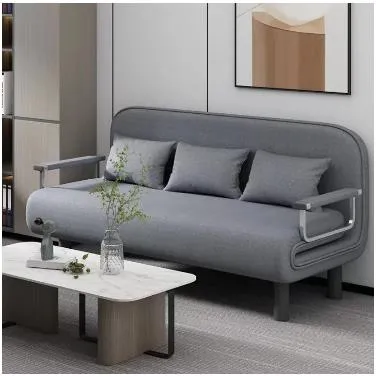
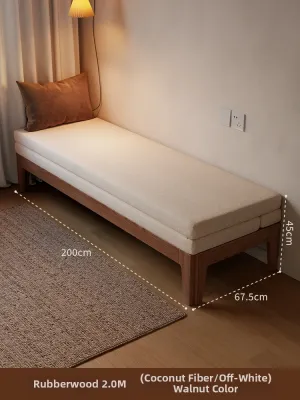
![[AVAILABLE ONHAND] Classic Black Leather Folding Sofa Bed Foldable up to 180 Degree](https://img.lazcdn.com/g/p/56577d29f132e6501a5ea4451c45d397.jpg_400x400q80.jpg_.webp)
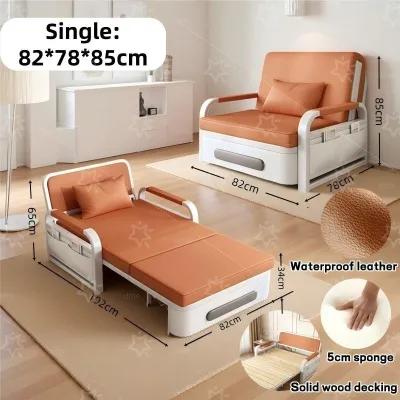
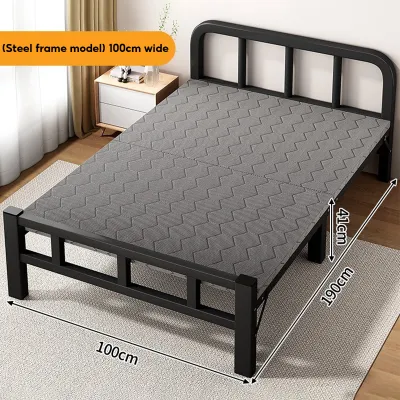
![[Manila 24-hour Boat] 88/108/128/158*78*85CM Foldable Sofa Bed with Storage Cabinet Dual Purpose Small Unit Living Room Lazy Person Sofa Single/Double/Queen Size with Roller Sofa Bed Side Pocket Multi-functional Telescopic Bed 2 Free Throw Pillows](https://img.lazcdn.com/g/p/6b1f7448cee77492697016c498ba8b44.jpg_400x400q80.jpg_.webp)
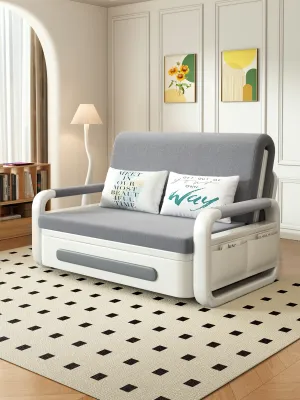
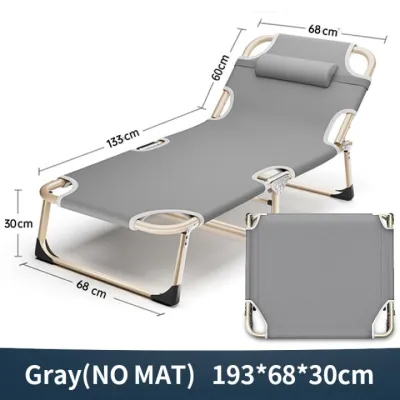
Prices are valid at publication and may change. Please refer to the product page for the latest price.
Within this limited living zone, your sofa bed must coexist with other daily essentials like a TV console, a small dining table or breakfast bar, storage shelves, and perhaps a workspace or standing fan to cope with tropical afternoons. Each of these items claims a portion of the floor, leaving only a narrow envelope of space for your seating. If your sofa bed dominates this zone, you will find yourself constantly squeezing past corners and feeling restricted in your own home.
Beyond physical dimensions, you must also consider “visual weight”—the psychological impact of how much space an object appears to occupy. A bulky, overstuffed sofa with thick, rolled armrests and a high backrest exerts immense visual weight, making a small room feel claustrophobic. In contrast, a low-profile sofa bed with clean lines, exposed legs, and a neutral, light-colored fabric allows light and air to pass through, creating an illusion of spaciousness even when the physical footprint is identical, helping to maintain an open flow and a clutter-free environment.
Typical Folding Sofa Bed Dimensions for Small Layouts
Folding sofa beds, commonly referred to locally as “sopa beds,” come in various mechanical configurations, each with its own spatial requirements. The mechanism you choose dictates not only how easy it is to convert the furniture but also how much floor area it consumes in both its daytime and nighttime states.

A popular option is the click-clack mechanism, which operates by folding the backrest downward until it locks flat into a bed. Because the backrest becomes half of the sleeping surface, these models tend to have a shallower folded depth (typically 80 to 90 cm) and do not extend very far into the room when opened (usually around 110 to 120 cm wide as a bed). However, because they fold flat horizontally, they require you to leave a gap of 10 to 15 cm between the back of the sofa and the wall, or you will have to pull the entire heavy unit away from the wall every time you want to sleep.
In contrast, pull-out sofa beds house a folded mattress beneath the seat cushions that rolls forward on a metal frame or wooden tracks. This design provides a traditional mattress feel and keeps the sofa flush against the wall, but it requires a massive amount of forward clearance. When fully extended, a pull-out bed can stretch 200 to 220 cm from the wall, which can easily block the entire width of a 20 sqm living room. This makes them a challenging choice unless your room is exceptionally long or you are prepared to move all other furniture out of the way every evening.
Futon-style folding beds use a single continuous mattress that folds over a wooden or metal frame. When folded, they can be quite deep as the mattress bunches up, but they offer a simple, robust mechanism with fewer moving parts that can break down. When evaluating any of these designs, always distinguish between the external frame dimensions and the actual mattress size. A manufacturer might advertise a “double bed” experience, but massive armrests can add an extra 30 to 40 cm to the total width, turning a compact sleeper into a spatial hazard.
Single and Twin Folding Sofa Beds
Single and twin-sized folding sofa beds are the most space-efficient options available for a 20 sqm condo. With a folded width ranging from 75 to 100 cm, these compact units can easily tuck into small alcoves, corners, or sit alongside a narrow wall without dominating the room. Their unfolded length is typically around 180 to 190 cm, extending forward just enough to accommodate a single sleeper while leaving plenty of room for walkways and adjacent furniture.
These compact dimensions are ideal for solo condo dwellers, students, or young professionals living in urban centers. They also work exceptionally well in multi-functional spaces, such as a living area that needs to double as a home office during the day and an occasional guest room at night. Because they occupy so little floor space, they allow you to keep other essential furniture, like a dedicated desk or a dining table, permanently in place.
However, these spatial advantages come with clear trade-offs in seating and sleeping capacity. A single sofa bed can only comfortably seat one person during the day, making it less than ideal if you frequently host friends or family. For sleeping, the narrow width (often around 75 to 90 cm) offers limited room to roll around, which might feel restrictive for larger adults or restless sleepers. If your primary goal is hosting couples or maximizing daytime seating, you may need to look at larger alternatives.
Double and Full Folding Sofa Beds
Double and full-sized folding sofa beds offer a much more generous sleeping surface, typically measuring 120 to 140 cm in width. This extra space makes them far more comfortable for couples or solo sleepers who prefer room to spread out, and they easily seat two to three adults during the day. However, integrating a double sofa bed into a 20 sqm condo requires careful spatial planning and a willingness to make compromises elsewhere in your layout.
A larger sofa bed is generally viable only under specific conditions. If your condo’s living area is shaped as a long, narrow rectangle, you can position the sofa against the long wall, allowing the bed to extend into the center of the room while still leaving narrow pathways on either side. Alternatively, if you adopt a minimalist approach—limiting other furniture to a wall-mounted TV, a small nesting table, and a compact dining counter—you can free up enough floor space to accommodate the larger footprint without creating a cramped environment.
Before choosing a double model, you must rigorously verify that the unfolded bed does not block primary walkways, bathroom doors, or the main entryway. In a 20 sqm space, an extended double bed can easily reach from one wall to within centimeters of the opposite wall, effectively cutting the room in half. If a sleeper has to climb over the bed or squeeze uncomfortably against a wall to reach the bathroom in the middle of the night, the layout is fundamentally flawed and potentially unsafe.
Clearance and Layout Rules to Prevent Overcrowding
To maintain a functional and comfortable living room, you must design your layout around human movement rather than just static furniture dimensions. Interior design guidelines recommend maintaining a minimum walking path width of 60 centimeters for secondary pathways and 90 centimeters for primary thoroughfares. In a 20 sqm condo, achieving these clearances requires deliberate placement and a strict limit on the size of your furniture.
A critical concept to plan for is the deployment zone—the exact footprint your sofa bed occupies when fully extended, plus the space you need to stand and operate the mechanism. If your sofa bed requires you to lift, pull, or slide heavy components, you must have enough room to stand at the foot or sides of the bed during transition. Furthermore, if you have to move a heavy wooden coffee table, a massive area rug, or dining chairs every single time you want to open the bed, the daily hassle will quickly become frustrating.
You must also ensure that the unfolded bed does not obstruct critical access points. In tropical climates like the Philippines, keeping access to the balcony clear is essential for natural ventilation and managing indoor humidity. Blocking balcony doors, main entryways, or built-in wardrobe doors with an extended bed creates a safety hazard and disrupts daily routines. Additionally, check that the bed does not cover electrical outlets or light switches that you need to access before sleeping or charging your devices.
To optimize your layout, consider these practical strategies:
- Utilize the Longest Wall: Position the back of your sofa bed against the longest uninterrupted wall to anchor the room and maximize the open floor space in front of it.
- Ditch the Central Coffee Table: Instead of a large, heavy coffee table in the center of the room, use lightweight, movable nesting tables or a slim C-shaped side table that slides over the arm of the sofa. These can be easily relocated to a corner when it is time to deploy the bed.
- Choose Wall-Mounted Fixtures: Opt for wall-mounted bookshelves, floating TV consoles, and swing-arm sconces instead of floor lamps and bulky entertainment centers to keep the floor area completely clear.
Essential Condo Measurements Before You Buy
Buying a sofa bed that fits your floor plan on paper is only half the battle; it must also physically fit into your actual room and, crucially, make it through your building’s delivery route. Before committing to a purchase, grab a steel measuring tape—avoid using soft sewing tapes or phone apps, which can be inaccurate—and conduct a thorough spatial audit of your condo.
Start by measuring the designated wall space where the sofa will sit. Do not just measure wall-to-wall; look for subtle architectural details that can steal valuable centimeters. Check for thick skirting boards, protruding electrical outlets, light switches, window sills, or low-hanging air conditioning units that might prevent the sofa from sitting flush against the wall. If your sofa bed has a backrest that tilts backward during conversion, ensure there is enough vertical and horizontal clearance to accommodate this movement without scraping the wall paint or blocking a window.
Next, map out the entire delivery route from the building’s unloading bay to your living room. Many condo dwellers face the heartbreaking realization that their brand-new sofa bed cannot fit into the building’s passenger elevator or make the tight turn in the emergency stairwell. Measure the height, width, and diagonal clearance of the service or passenger elevator doors, the interior cabin depth, all hallway corners, your condo unit’s main entry door frame, and any interior doorways the box must pass through.
Finally, check your ceiling height and the placement of overhead fixtures. If your condo has a low ceiling or features a drop-ceiling design for air conditioning ducts, a sofa bed with a tall backrest can make the room feel incredibly cramped. More importantly, ensure that the path of any ceiling fans or low-hanging pendant lights does not intersect with the sofa bed’s frame when it is being folded or unfolded, preventing accidental damage to your lighting or your fingers.
Common Sizing Mistakes in Small Living Rooms
When furnishing a compact space, minor miscalculations can lead to major daily inconveniences. One of the most common mistakes is focusing solely on the sofa’s width while completely ignoring its folded depth. A sofa bed with a deep seat (100 cm or more) might look incredibly comfortable in a showroom, but once placed in a narrow living room, it will push your seating too far into the center, leaving you with a cramped walkway and bringing your knees uncomfortably close to the TV console.
Another frequent oversight is forgetting the swing radius of nearby doors. In a 20 sqm condo, doors for the bathroom, bedroom, or built-in closets often swing outward into the main living area. If you do not account for this arc, you may find that you cannot open your bathroom door when the sofa bed is unfolded, or worse, an opening door might slam directly into the side of the sofa frame, causing scratches and structural damage over time.
Many buyers also make the mistake of measuring only the advertised mattress size (such as “double” or “queen”) and assuming the sofa will fit their wall. They overlook the extra bulk added by thick, padded armrests, wide wooden side panels, or decorative outer frames. These aesthetic features can easily add 20 to 40 cm to the overall width of the furniture without providing any additional sleeping or seating space, making them highly inefficient for small-space living.
Lastly, avoid buying a sofa bed that requires complex, heavy lifting to deploy. In a tight space with low clearance, maneuvering a heavy metal frame or lifting a thick, dense mattress can be physically exhausting and awkward. If the mechanism is too difficult to operate in a confined space, you will likely end up leaving it permanently in one position, defeating the entire multi-functional purpose of the furniture. Always test the mechanism in-store to ensure you can operate it easily and safely on your own.
Frequently Asked Questions (FAQ)
Can a folding sofa bed block the balcony door when unfolded?
Yes, in many standard 20 sqm condo layouts, the balcony door is positioned directly opposite or adjacent to the main living room wall, making it highly susceptible to being blocked. To prevent this, measure the swing of your balcony door (if it opens inward) or ensure there is at least a 60 cm gap next to a sliding glass door when the bed is fully extended. If blocking the door is unavoidable when the bed is open, prioritize lightweight, armless click-clack models that can be easily folded back up during the day to restore access and maintain ventilation.
Are armless folding sofa beds better for 20 sqm living rooms?
Generally, yes. Armless folding sofa beds are highly recommended for compact spaces because they eliminate the extra 20 to 40 cm of horizontal width occupied by traditional armrests. This reduction in physical and visual bulk makes the room feel significantly more open and allows you to maximize the actual seating and sleeping surface. While you do lose a side arm to lean against or rest your pillows, you can easily compensate for this by using loose decorative throw pillows or bolster cushions against the adjacent wall.
Community discussion
Share your experience or ask a question. Comments are reviewed before publication.