
Choosing the right glass vanity table size for a small Philippine bedroom requires balancing its physical footprint with the clearance needed for daily movement. In local homes, bedrooms often serve multiple purposes, making floor space highly valuable. Selecting a vanity involves measuring your exact floor area, accounting for high-humidity conditions, and choosing a configuration that maximizes visual openness. A glass vanity table is an excellent choice for tight spaces because its transparency reduces visual weight, but it must still physically fit within your room’s layout without blocking walkways, wardrobes, or natural light. By focusing on precise measurements and smart configurations, you can create a highly functional grooming station that enhances, rather than crowds, your personal sanctuary.
Measure Your Bedroom Space and Calculate Clearances
Before browsing online marketplaces or visiting local showrooms, map out your bedroom’s physical limits. Use a metal measuring tape to determine the exact floor area for the glass vanity table. Avoid visual estimates, as even a discrepancy of a few centimeters can make a room feel cramped or prevent a drawer from opening fully. Take note of nearby architectural features like electrical outlets, light switches, window sills, and baseboards. In the Philippines, many bedrooms feature swing-out wardrobe doors or low-hanging window air conditioning units that can easily collide with poorly positioned furniture.
Next, calculate the necessary walkway clearances. To maintain comfortable movement, aim for a clear path of at least 60 to 70 centimeters between the edge of the vanity table and adjacent furniture like the bed or wardrobe. If the vanity sits along a primary walkway—such as the path leading to the bathroom—prioritize a shallower table depth to prevent accidental bumps. Additionally, consider the tropical climate; leaving a small gap of 2 to 3 centimeters between the back of the vanity and the wall allows for proper airflow, which helps prevent moisture buildup and mold in high-humidity environments.
Products mentioned in this guide
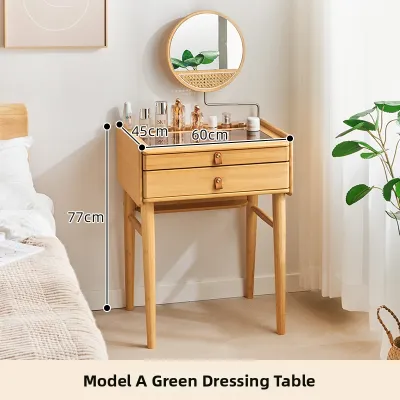
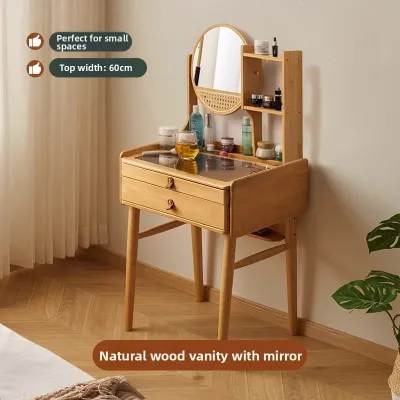

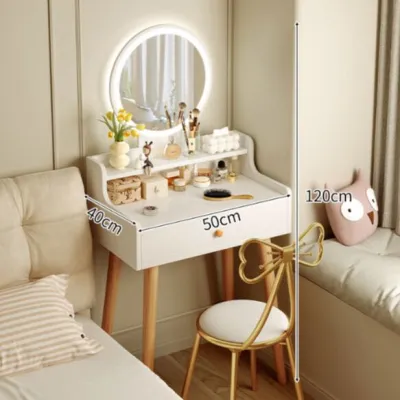
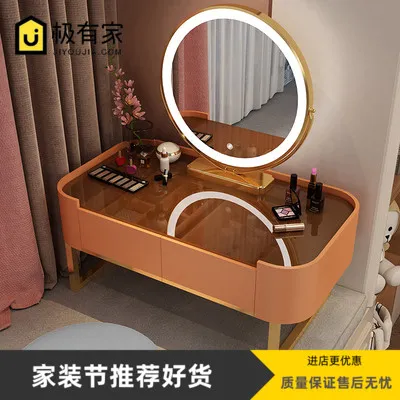
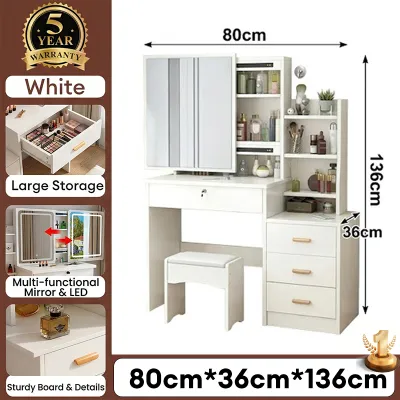
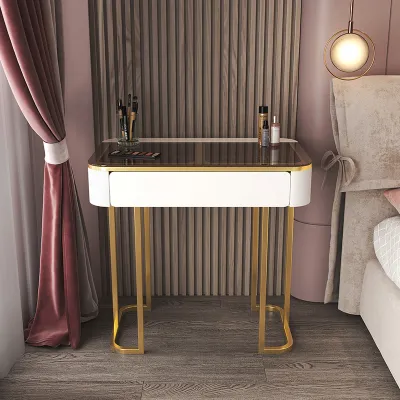
Prices are valid at publication and may change. Please refer to the product page for the latest price.
Finally, determine the seating clearance by factoring in the depth of your chosen chair or stool. A common mistake is measuring only the table’s footprint while ignoring the space required for the person sitting at it. A standard stool or vanity chair requires at least 50 to 60 centimeters of pull-out space behind the table. If your bedroom is exceptionally tight, look for a compact stool that can slide completely underneath the glass vanity table when not in use, keeping the walkway entirely clear during the day.
Match Glass Vanity Dimensions to Your Layout
Once you have established your clearances, match specific glass vanity table dimensions to your layout. The width of the table is often the most critical dimension for fitting the unit beside a bed or in a narrow alcove. Standard vanity widths typically range from 80 to 100 centimeters, which provides ample surface area but may overwhelm a small room. For compact bedrooms, look for space-saving models with a width of 60 to 70 centimeters. This narrower profile still offers enough space for a tabletop mirror and essential cosmetics while preserving precious wall space for other furniture.

Evaluating the depth of the glass vanity table is equally important for maintaining a balanced room proportion. Standard furniture depths of 40 to 50 centimeters can easily encroach on walking paths in a small bedroom. A shallower depth of 30 to 35 centimeters is often the sweet spot for tight spaces. While a shallower table offers less surface area, it ensures the vanity remains flush against the wall and does not block natural light from nearby windows. When choosing a shallow depth, verify that your daily beauty essentials, makeup organizers, and mirror bases can still sit securely on the glass surface without hanging over the edge.
Aligning the table height with your seating choice is the final step in ensuring ergonomic comfort. Most vanity tables stand at a standard height of 75 to 78 centimeters. When pairing a table with a stool or chair, ensure there is at least 20 to 25 centimeters of clearance between the seat cushion and the underside of the table frame. This gap allows you to sit comfortably without your knees pressing against the table structure. Additionally, consider how the table height affects your mirror placement; a wall-mounted mirror should be positioned so that your reflection is centered at eye level when you are seated, preventing neck strain during your daily routine.
Select Space-Saving Configurations and Storage
Maximizing utility in a small bedroom requires choosing a glass vanity table configuration that aligns with your room’s structural layout. One of the primary decisions is choosing between a wall-mounted (floating) vanity and a traditional freestanding model. Wall-mounted glass vanities are highly effective for small spaces because they eliminate table legs, leaving the floor space underneath open and clear. This open floor area makes the room feel larger and simplifies cleaning. However, before purchasing a wall-mounted unit, verify your wall structure; these units require secure anchoring into solid concrete walls or sturdy wall studs to safely support the weight of the glass and your personal items.
If wall mounting is not an option, freestanding glass vanities with slim metal frames offer excellent stability and flexibility. To make the most of awkward layouts, consider placing a freestanding vanity in an unused corner. Corner glass vanities utilize dead space that would otherwise go wasted, keeping the main walls free for your bed and wardrobe. Additionally, look for designs that feature a completely transparent glass top paired with a minimalist metal frame. The visual weight of a transparent glass table is significantly lower than that of a solid wooden dresser, allowing light to pass through and maintaining an airy, uncluttered aesthetic in the room.
Managing storage is another crucial factor when selecting a glass vanity. Because glass tables prioritize a clean, modern look, they often feature minimal built-in drawers. To keep the glass surface functional and tidy, utilize separate storage solutions such as acrylic tabletop organizers, which complement the transparency of the glass. You can also place a slim, rolling storage cart next to or underneath the vanity to hold larger items like hair dryers and styling tools, keeping them out of sight when not in use.
Avoid Common Sizing and Placement Mistakes
To ensure your new glass vanity table is functional and comfortable, avoid several common sizing and placement errors. One frequent mistake is overlooking the pull-out depth of the vanity chair. If you do not account for this extra space, you may find yourself unable to sit comfortably without blocking pathways or preventing wardrobe doors from opening. Always measure the room with the chair in the fully extended position to ensure a practical layout.
Another common error is choosing a table depth that is too generous. While a deep table offers more surface area, it can physically cramp a small bedroom and make daily movement frustrating. Stick to shallower depths and utilize vertical wall space for storage instead. Additionally, ensure there is enough clearance for mirror tilt or swing to prevent accidental collisions with nearby walls, curtains, or lighting fixtures.
Finally, never neglect to check the manufacturer’s specifications for weight limits and mounting requirements, especially when installing wall-hung units. Tempered glass is highly durable, but it is also heavy and requires proper support. Ensure that any wall brackets, anchors, and mounting hardware are rated for the combined weight of the glass table and all the items you plan to store on it.
Frequently Asked Questions (FAQ)
Can a glass vanity table make a small bedroom look bigger?
Yes, a glass vanity table can significantly improve the perception of space in a small bedroom. Because tempered glass is transparent, it allows light to pass through and keeps the floor and wall behind the table visible. This lack of visual obstruction reduces the visual weight of the furniture, making the room feel more open and less cluttered compared to using a solid wood dresser.
What is the minimum depth needed for a functional glass vanity?
The minimum functional depth for a glass vanity table is typically 30 to 35 centimeters. This depth provides just enough space to accommodate a standard tabletop mirror, a small makeup organizer, and your personal items while keeping the table’s footprint compact. If you choose a shallower depth, consider mounting your mirror and storage shelves on the wall to keep the glass surface completely clear.
Should I choose a wall-mounted or freestanding glass vanity for a small room?
The choice depends on your room’s wall structure and your living situation. A wall-mounted glass vanity is ideal for maximizing floor space and creating a modern, floating look, but it requires a solid concrete wall or sturdy studs for secure installation. A freestanding glass vanity is a better option if you rent your home, prefer an easier assembly process, or want the flexibility to rearrange your layout.

Community discussion
Share your experience or ask a question. Comments are reviewed before publication.