
A bed frame with stands or legs offers excellent under-bed airflow, ease of cleaning, and a light, elevated aesthetic. However, when it comes to adding a headboard, these frames present unique structural puzzles. If you are searching for compatible headboards for beds with stand, you do not have to settle for a mismatched bedroom. You can successfully pair almost any legged frame with a freestanding, wall-mounted, or frame-attached headboard.
Choosing the right option requires assessing how your bed frame, mattress height, and bedroom walls interact. Because a legged frame stands independently, the headboard must either secure directly to the frame’s legs, mount to the wall behind it, or rest stably on the floor. Understanding these physical relationships ensures a secure, squeak-free setup that enhances both your comfort and your bedroom’s design.
Diagnose Your Bed Frame and Wall Setup
Before purchasing any headboard, you must perform a quick physical audit of your sleeping area. Begin by inspecting the head of your bed frame. Run your hands along the back of the legs or the head-end frame bar to check for pre-drilled holes, metal brackets, or welded nuts. Many metal platform beds with stands feature integrated mounting plates with vertical slots. If your frame has these slots, it is designed to accept a frame-attached headboard directly. If the metal or wood legs are completely smooth, you will need to look at alternative mounting methods.
Products mentioned in this guide
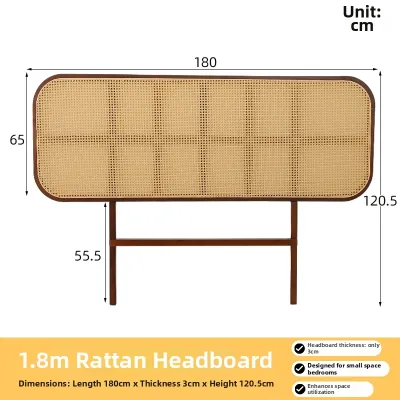
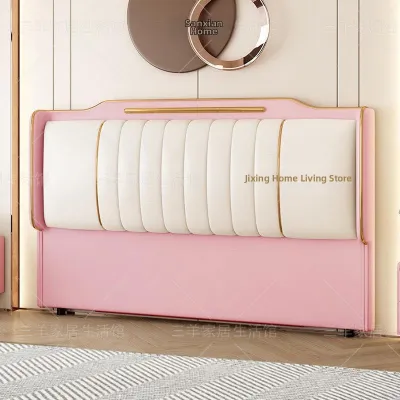
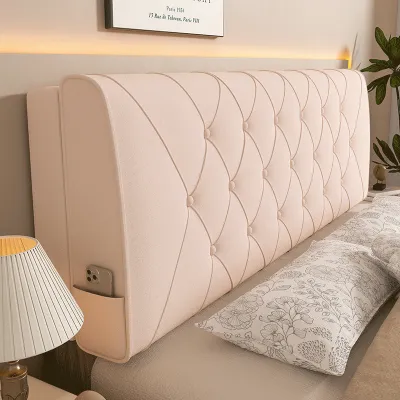
Prices are valid at publication and may change. Please refer to the product page for the latest price.
Next, measure the height of your bed setup. Use a steel measuring tape to find the distance from the floor to the top of your mattress. This measurement is critical because it dictates where the bottom of the headboard panel should sit. A headboard that is positioned too high will leave an unsightly gap where pillows can slip through, while one that sits too low will be hidden entirely by your mattress and pillows.
After measuring, evaluate the wall behind your bed. In the Philippines, residential bedroom walls are commonly constructed from solid concrete or concrete hollow blocks finished with plaster, though some modern condominiums and partition walls use drywall over metal studs. Tap on the wall to determine its density. Solid concrete walls provide exceptional support for heavy wall-mounted headboards but require specialized masonry anchors and a hammer drill for installation. Drywall partitions require you to locate the vertical studs or use heavy-duty toggle bolts.
Finally, check the clearance between the bed frame’s legs and the wall. Look down at the floor to see if you have thick baseboards or skirting boards. These moldings create a physical offset, preventing the legs of your bed frame from sitting completely flush against the wall. Note the depth of this gap, as it will influence whether a freestanding headboard can stand straight without leaning or wobbling.
Freestanding Headboards: The Universal Fit for Any Frame
Freestanding headboards are an exceptionally versatile choice when searching for headboards for beds with stand. These headboards are engineered to stand on their own two legs, resting directly on the floor. Instead of relying on bolts or brackets for structural integrity, a freestanding headboard is simply sandwiched between the heavy bed frame and the wall. The weight of the mattress, foundation, and frame pushes forward, securing the headboard firmly in place.

When planning for a freestanding model, a thorough clearance check is essential. Because the headboard has its own posts or a solid panel extending to the floor, you must verify that the legs of your bed frame do not collide with the headboard’s base. If your bed frame has wide corner legs, they might push the headboard outward, creating an awkward gap. Ensure your baseboards do not tilt the headboard forward; if they do, you may need to choose a model with recessed legs or accept a slight gap between the headboard and the wall.
Stability is another major consideration. If your bed frame with stands is lightweight—such as a simple black steel folding grid—it may not exert enough pressure to hold a massive, top-heavy wooden headboard stable. When you sit up to read or watch television, a lightweight frame can shift forward, causing the headboard to tilt or rattle against the wall. For lightweight frames, opt for a freestanding headboard with a wider, lower center of gravity or one upholstered in lightweight materials.
In humid tropical environments, placing a large piece of furniture flush against a concrete wall can trap moisture, potentially leading to mold growth or paint damage. To prevent this, apply adhesive rubber bumpers or thick felt pads to the back of the headboard. These bumpers protect your wall paint from friction scratches when the bed moves, and they create a crucial five-millimeter air gap that allows ventilation behind the headboard.
Wall-Mounted Headboards: Bypassing the Frame Entirely
Wall-mounted headboards offer a clean, floating aesthetic and completely bypass the structural limitations of your bed frame. Because they hang directly on the wall, they do not care if your bed frame has thin legs, no brackets, or an unusual height. They are secured using heavy-duty interlocking brackets, often referred to as French cleats, or direct wall-anchoring systems.
Your wall material dictates the installation process and the hardware you must use. If you are mounting to a solid concrete or concrete hollow block wall, you cannot use standard plastic wall plugs. Instead, use heavy-duty masonry anchors (often called tox plugs) paired with concrete screws. You will need a hammer drill to penetrate the concrete. If you are mounting to a drywall partition, you must locate the timber or metal studs using a stud finder and drive your screws directly into them. If the studs do not align with your headboard brackets, you must use high-capacity metal toggle bolts; never rely on simple plastic drywall anchors for a heavy headboard.
To ensure proper alignment, calculate the vertical spacing carefully before drilling. Ideally, the bottom edge of the wall-mounted headboard should sit five to ten centimeters below the top surface of your mattress. This overlap prevents your pillows from getting pinched in a gap and keeps the mattress from sliding underneath the headboard panel. Use a spirit level to draw a perfectly horizontal line on the wall before mounting the brackets.
Always respect safety boundaries during installation. If your wall plaster is crumbling, or if you suspect electrical conduits or copper plumbing pipes run behind the plaster near your bed, stop immediately. It is far safer to consult a qualified local carpenter or handyman to complete the installation than to risk damaging utility lines or creating an unstable mount that could fall onto the bed.
Frame-Attached Headboards: Verifying Bracket Compatibility
If you prefer a cohesive, single-unit feel, a frame-attached headboard is the traditional route. This style bolts directly to the head of your bed frame, moving with the bed whenever you rearrange your room. However, because your bed frame has stands or legs, you must carefully verify that the frame’s legs and joints can handle the physical leverage of an attached headboard.
Start with a detailed bracket inspection. Look at the face of the mounting plates on your bed frame. Measure the distance between the horizontal slots, as well as the height of the slots from the floor. Standard headboards typically feature bolt holes spaced to match standard twin, queen, or king dimensions, but minor variations can make direct bolting impossible. Note whether the frame requires standard bolts and nuts or specialized metric screws.
If you discover a mismatch between the holes on your bed frame and those on your chosen headboard, you do not need to abandon the purchase. You can use universal headboard brackets, often sold as “modification plates” or “mod plates.” These inexpensive metal plates feature multiple intersecting slots, allowing you to bridge different hole configurations and heights. You simply bolt the modification plate to your bed frame, and then bolt the headboard to the plate.
Finally, evaluate the structural limits of your legged bed frame. When you lean back against a frame-attached headboard, your body weight exerts significant leverage on the connection points. If your bed frame has thin, spindly legs or weak corner joints, this leverage can cause the frame to bend, creak, or sway. Ensure all bolts on your bed frame’s legs are fully tightened, and consider adding reinforcing washers to distribute the pressure across the metal brackets.
Quick Comparison: Matching Headboard Styles to Your Setup
To help you decide which headboard configuration aligns best with your bedroom setup, review this summary of the three primary styles:
| Headboard Style | Best For | Frame Requirements | Wall Requirements | Installation Effort |
|---|---|---|---|---|
| Freestanding | Renters, heavy bed frames, and quick bedroom updates | Sturdy, heavy frame to press the headboard flush | No drilling required; needs a flat wall surface | Low; simply position and push the bed frame back |
| Wall-Mounted | Lightweight frames, concrete walls, and floating designs | None; works with any bed frame height or style | Solid concrete or stud-backed drywall; requires drilling | High; requires precise leveling, drilling, and anchoring |
| Frame-Attached | Permanent setups, frequent room rearrangers | Built-in brackets or legs compatible with mod plates | None; can stand away from the wall | Medium; requires aligning bolts and tightening hardware |
Frequently Asked Questions (FAQ)
Can I use a headboard if my bed frame has no brackets?
Yes, you can easily use a headboard even if your bed frame lacks built-in brackets. Both freestanding and wall-mounted headboards bypass the bed frame entirely, making brackets unnecessary. If you prefer a frame-attached headboard but your bed frame has smooth legs, you can purchase universal headboard clamp-on brackets. These clamps attach securely to the steel or wooden legs of your bed frame, creating a stable mounting plate where you can bolt the headboard.
Will a freestanding headboard damage my wall over time?
Because a freestanding headboard is held in place by friction and pressure, slight movements when you toss, turn, or sit up can cause the headboard to rub against the wall. Over time, this friction can scuff your paint, tear wallpaper, or leave dark marks on plaster. To prevent this, stick thick adhesive felt pads or soft rubber bumpers to the back corners of the headboard. This cushions any movement, eliminates rattling noises, and protects your wall finish.
How do I hide the gap between the mattress and a wall-mounted headboard?
To prevent pillows from slipping down and to hide the wall behind your bed, mount the headboard so that its bottom edge sits roughly five to ten centimeters below the top surface of your mattress. If you have already mounted the headboard too high and a gap is visible, you can bridge the space visually and physically by using extra-thick bed pillows, a decorative bolster, or a folded coverlet tucked neatly behind your main pillows.
Community discussion
Share your experience or ask a question. Comments are reviewed before publication.