
To choose the right headboard frame size, you must match the headboard’s width to your specific mattress dimensions while accounting for a standard visual overhang of 2 to 10 centimeters on each side. Because “single” and “double” bed sizes vary widely among manufacturers, relying solely on standard labels often leads to misaligned mounting holes or awkward proportions. Measuring your actual mattress width and verifying the compatibility of your bed frame’s mounting points are the most critical steps to ensuring a secure, polished fit.
Decoding Standard Bed Sizes and Headboard Widths
In the local market, standard bed sizes typically fall into four main categories: Single (36 inches or 91 cm wide), Double (54 inches or 137 cm wide), Queen (60 inches or 152 cm wide), and King (72 inches or 183 cm wide). However, these classifications are not universally standardized across all local and imported brands. A “double” bed from one manufacturer might measure slightly wider or narrower than the standard 54 inches, meaning a pre-fabricated headboard frame bought off the shelf might not align correctly with your existing setup.
To achieve a balanced look, interior designers rely on the “overhang” principle. This rule dictates that a headboard frame should extend roughly 2 to 5 centimeters beyond the outer edges of the mattress on both sides. This subtle extension creates a visually anchoring frame for your pillows and prevents the bed from looking top-heavy or awkwardly narrow. Furthermore, this slight clearance ensures that bulky comforters or thick blankets can drape naturally over the sides of the mattress without being pinched against the headboard structure.
Products mentioned in this guide
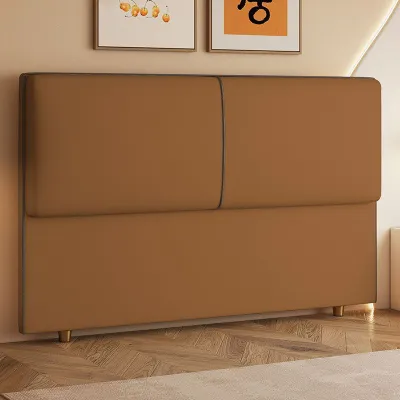







Prices are valid at publication and may change. Please refer to the product page for the latest price.
When evaluating product specifications, focus strictly on the core mounting width rather than the maximum overall width. Many decorative headboards feature flared crown moldings, wingback ears, or extended upholstery panels that add extra inches to the outer edges. While these decorative elements dictate how much wall space you need, they do not change the mounting points where the headboard actually secures to your bed base. Always separate the functional mounting width from the total decorative width to avoid installation errors.
Translating Height, Depth, and Mounting Specs
Calculating the correct height of your headboard frame is essential for both comfort and visual proportion. A headboard that is too low will quickly disappear behind your decorative pillows, leaving you with no physical support when sitting up to read or watch television. To find the ideal visible height, subtract the combined thickness of your bed base and mattress from the total height of the headboard. Ideally, you want at least 30 to 60 centimeters of visible headboard above your pillows to provide a comfortable backrest and a balanced focal point.

The depth or thickness of the headboard frame is another critical dimension that directly impacts your bedroom’s layout. Thick, plushly upholstered headboards can measure anywhere from 10 to 20 centimeters in depth. In compact urban condominiums or smaller bedrooms, this extra thickness pushes the entire bed further away from the wall, reducing valuable walkway space at the foot of the bed. If your room has tight clearances around wardrobes, sliding doors, or pathways, opting for a slim, low-profile wooden or metal frame is a more practical choice.
Mounting compatibility determines how securely the headboard attaches to your bed and wall. Strut-mounted headboards are highly common; they utilize wooden or metal struts that bolt directly into pre-drilled holes on the back of your bed frame. Wall-mounted designs float independently on the wall using heavy-duty brackets or French cleats, which saves floor space but requires drilling into your concrete or drywall. Freestanding headboards stand on their own legs and are sandwiched between the wall and the bed frame, relying on the weight of the bed to hold them in place.
Before purchasing any strut-mounted headboard frame, you must verify the existing bed frame’s attachment points. Check the back of your bed base for pre-drilled holes, threaded inserts, or bracket slots, and measure the distance between them. If your bed frame does not have these built-in mounting points, you will either need to purchase a wall-mounted model, drill custom holes yourself, or use adapter brackets, which can compromise the stability of the setup.
Step-by-Step Measurement Guide for a Guaranteed Fit
To avoid the hassle of returning a heavy piece of furniture, follow this systematic measurement checklist before making your final selection.
Step 1: Measure your mattress dimensions. Use a metal tape measure to record the exact width and length of your mattress. Do not rely on the size printed on the label, as manufacturing tolerances can vary by a few centimeters, and older mattresses may have stretched or sagged over time.
Step 2: Inspect the bed frame mounting points. Look closely at the head of your bed frame to locate any pre-drilled holes or mounting brackets. Measure the exact center-to-center distance between these holes, as well as their height from the floor, to ensure they align perfectly with the struts of your chosen headboard frame.
Step 3: Determine the mattress height. Measure the vertical distance from the floor to the very top surface of your mattress. This measurement tells you where the bottom of the visible headboard panel should start so that no unsightly gaps are left exposed between the mattress and the headboard.
Step 4: Assess the room clearance. Measure the total distance from the headboard wall to the foot of the bed, including any extra space needed for closet doors, dresser drawers, or walking paths. Ensure that the added depth of your new headboard will not block these functional zones or restrict movement.
Matching Headboard Proportions to Your Bedroom Layout
The scale of your headboard frame should harmonize with the architectural features of your bedroom, particularly the ceiling height. In homes with lower ceilings, a very tall headboard can make the room feel cramped and vertically compressed; opting for a lower, wider headboard helps stretch the room visually. Conversely, if your bedroom features high ceilings or a spacious loft layout, a taller headboard serves as an excellent design anchor that prevents the bed from looking swallowed up by empty wall space.
Visual weight is equally important when coordinating your bedroom layout. Bulky, heavily tufted, or deeply upholstered headboards command attention and suit large, airy master bedrooms where they can act as a luxurious centerpiece. For compact bedrooms or studio apartments, a minimalist wooden spindle or slim metal headboard frame maintains an open, breezy feel. These lighter designs allow light to pass through and prevent the room from feeling overcrowded, which is especially beneficial in humid, tropical climates where air circulation and visual openness keep spaces feeling cool.
Frequently Asked Questions (FAQ)
Can I use a double headboard frame on a single bed?
Using a double headboard frame on a single bed is physically possible, but it requires careful planning to look intentional rather than accidental. Because a double headboard is significantly wider than a single mattress, it will extend roughly 20 to 25 centimeters beyond the mattress on each side. This setup can work beautifully if you want to create a cozy, daybed-style lounge area or if you plan to place matching nightstands directly in front of the extended headboard wings. However, if your bedroom is small, this excessive overhang can look highly disproportionate and may block nearby bedroom doors, wardrobe access, or electrical outlets.
Does the headboard frame need to touch the floor?
No, a headboard frame does not necessarily need to touch the floor. Floor-standing headboards extend all the way down to the ground, providing maximum stability and a solid, continuous look, but they can be heavy and difficult to move during cleaning. Floating or wall-mounted headboards, as well as strut-mounted models that hover slightly above the floor, are excellent alternatives. These designs keep the floor area completely clear, allowing for easy under-bed cleaning access, better air circulation to combat tropical humidity, and a lighter visual aesthetic that makes small bedrooms feel more spacious.
Community discussion
Share your experience or ask a question. Comments are reviewed before publication.