
Choosing a headboard shelf is an excellent way to maximize storage in your bedroom, especially when floor space is limited. Unlike traditional bedside tables that occupy valuable floor area, a headboard shelf utilizes the vertical space directly above or behind your bed. This setup keeps your nighttime essentials—such as books, glasses, and phones—within easy reach while creating a clean, organized look. However, finding the right shelf requires careful planning to ensure it fits your bed frame, matches your wall structure, and remains safe to use.
To make an informed decision, you must evaluate several practical factors before purchasing. These include measuring your bed and room clearance, identifying your wall construction, and selecting materials that can withstand your local climate. By taking a systematic approach to these details, you can avoid common installation mistakes and select a shelf that is both functional and secure.
Evaluate Your Bed Dimensions and Room Clearance
Before browsing online marketplaces or local furniture stores, take precise measurements of your bed and the surrounding wall space. Start by measuring the exact width of your mattress and bed frame. In the Philippines, standard bed sizes range from Single and Double to Queen and King; your shelf should coordinate with these dimensions. For a balanced look, select a shelf that matches the width of your bed frame or extends slightly beyond it by a few inches on either side. A shelf that is too narrow can look disproportionate, while one that is excessively wide may interfere with room traffic.
Products mentioned in this guide
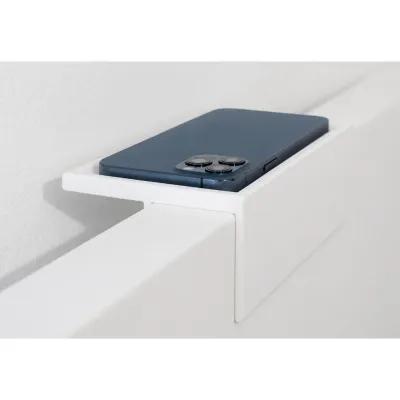

Prices are valid at publication and may change. Please refer to the product page for the latest price.
Next, determine the vertical clearance required for comfortable daily use. Sit upright on your mattress against the wall, just as you would when reading or watching television, and have someone measure the height from the top of the mattress to several inches above your head. This measurement represents your minimum safe clearance zone. The bottom of the headboard shelf must be installed above this line to prevent you from accidentally bumping your head when sitting up or getting out of bed.
Additionally, account for the thickness of your pillows and your preferred lounging posture. Thick, plush pillows or decorative shams can push your body forward, which alters the angle at which you sit. If you tend to lean back at an angle, you will need slightly more clearance than someone who sits completely upright. Taking these physical habits into account ensures that the shelf remains a convenient storage feature rather than a safety hazard.
Diagnose Your Wall Type to Choose the Right Mounting Style
The structural integrity of your bedroom wall dictates the type of headboard shelf you can safely install. In many Philippine homes, walls are constructed from solid concrete or concrete hollow blocks (CHB) finished with plaster. While these walls offer exceptional load-bearing capacity, they require specialized installation tools, such as a hammer drill, masonry drill bits, and plastic wall plugs or expansion anchors. Attempting to drive standard wood screws directly into concrete will damage your wall and fail to secure the shelf.

Conversely, modern condominium units and partition walls often utilize drywall or gypsum board over metal or wooden studs. Drywall cannot support heavy loads on its own. If your bedroom has drywall, you must use a stud finder to locate the vertical studs and secure the shelf brackets directly into them. For lighter decorative items where stud alignment is not possible, you must use heavy-duty toggle bolts or hollow-wall anchors. Never rely on simple plastic plugs in drywall, as the weight of the shelf and its contents can easily pull the hardware out, damaging your wall and risking injury.
If you are renting your home or prefer not to drill into your walls, freestanding or lean-to headboard shelves are an excellent alternative. These units stand on the floor and slide directly behind your bed frame, mimicking the look of a built-in headboard. When choosing a freestanding model, check its base footprint to ensure it does not push your bed too far forward, which can crowd your bedroom walkway. Additionally, look for models that include anti-tip safety straps, which can be secured with minimal wall damage to prevent the unit from falling forward.
Align Shelf Materials and Weight Capacity With Your Storage Items
The items you plan to store on your headboard shelf should guide your choice of material and weight capacity. Categorize your belongings by weight before making a purchase. Light items, such as a pair of reading glasses, a smartphone, or a small decorative candle, require minimal structural support. In contrast, heavy items like a collection of hardcover books, ceramic bedside lamps, or heavy smart speakers demand a robust shelf with a high weight rating.
Always check the manufacturer’s specified weight limits and compare them to your storage needs. Keep in mind that a deeper shelf allows you to store larger items, but it also increases the leverage and pulling force exerted on the wall anchors or frame. To prevent the shelf from sagging over time or pulling away from the wall, select a unit with a weight capacity that comfortably exceeds the total weight of your planned items.
Furthermore, consider how your local environment affects different furniture materials. In tropical climates with high humidity, moisture resistance is a critical factor for furniture longevity. Solid wood shelves should be treated with a high-quality sealant or varnish to prevent warping. If you choose engineered wood, such as MDF or particleboard, ensure it features a durable, water-resistant laminate or melamine finish to protect the inner fibers from swelling due to humidity. Metal shelves are highly durable but should have a rust-resistant powder coating to prevent corrosion over time.
Complete a Final Pre-Purchase and Installation Checklist
Before finalizing your purchase, complete a thorough logistical check to ensure a smooth delivery and installation process. First, verify the delivery path into your bedroom. Measure the width of your front door, hallway corners, stairwells, and elevator cabins to confirm that a long or pre-assembled shelf can be transported into your home without getting stuck. This step is especially important for long, single-piece shelves designed for Queen or King beds.
Second, inspect the mounting hardware that comes with your shelf. Many imported furniture pieces include generic screws and anchors that may not be suitable for your specific wall type. If you have concrete walls, plan to visit a local hardware store to purchase high-quality masonry anchors and screws. Spending a small amount of your budget, perhaps a few hundred pesos (₱), on reliable, heavy-duty hardware is a worthwhile investment in the safety and stability of your shelf.
Finally, plan your cable management if you intend to place electronic devices on the shelf. Look for shelves that feature pre-drilled cable holes, wire channels, or built-in power strips. Properly routing your charging cables and lamp cords prevents them from hanging loosely behind your bed, which can look untidy and create a pulling hazard when you adjust your pillows or mattress.
Frequently Asked Questions (FAQ)
Can I install a wall-mounted headboard shelf on drywall?
Yes, you can install a wall-mounted headboard shelf on drywall, but you must follow strict safety guidelines. For heavy storage needs, the mounting brackets must be screwed directly into the wooden or metal studs behind the drywall. If the studs do not align with your desired shelf position, you must use heavy-duty toggle bolts or steel hollow-wall anchors designed to distribute weight across the back of the drywall. Avoid using standard plastic wall plugs, and do not overload the shelf, as excessive weight can tear the drywall and cause the shelf to collapse.
How deep should a headboard shelf be?
The ideal depth of a headboard shelf typically ranges from 4 to 10 inches (approximately 10 to 25 centimeters), depending on your storage goals and bedroom layout. A shallow shelf of 4 to 6 inches is perfect for holding small items like phones, glasses, and thin paperbacks without encroaching on your sleeping space. If you need to store larger items like hardcover books or table lamps, a deeper shelf of 8 to 10 inches is necessary. Always measure the distance your head extends when sitting up to ensure the shelf depth does not interfere with your comfort.
Do I need to remove my current headboard to use a headboard shelf?
You do not always need to remove your current headboard. Wall-mounted shelves can be installed high enough on the wall to clear your existing headboard completely, allowing you to keep both. However, if you choose a freestanding headboard shelf, it is usually designed to replace your current headboard entirely or slide directly behind it if space permits. If your bedroom has limited floor space, removing your existing headboard is often the best way to ensure the new shelf sits flush against the wall and fits securely.
Community discussion
Share your experience or ask a question. Comments are reviewed before publication.