
Choosing a headboard for bed setups is a practical way to anchor your bedroom design, but finding the perfect fit requires looking beyond standard sizing labels. While terms like Single, Double, and King provide a general starting point, actual dimensions vary significantly between manufacturers, especially when comparing local Philippine brands with international imports. A headboard that is too narrow looks unfinished, while one that is too wide can block light switches, overlap with bedside tables, or overwhelm your room.
To ensure a seamless fit, you must measure the physical dimensions of your mattress and bed frame, calculate the necessary clearance for your bedroom walls, and verify the mounting mechanism. In the Philippines, where bedroom spaces range from compact high-rise condominiums to spacious houses, selecting the right headboard size also involves accounting for tropical room features like split-type air conditioners, skirting boards, and concrete walls. Taking a systematic approach to these measurements will help you avoid costly delivery mistakes and create a balanced, comfortable sleeping space.
Understand How Bed Labels Differ from Actual Dimensions
Bed size labels are not universally standardized, meaning a “King” from one manufacturer might differ from another. In the Philippine market, a standard local Single mattress typically measures 36 by 75 inches, and a Double measures 54 by 75 inches. However, imported bed frames and mattresses—such as those from European or American brands—often follow different sizing systems, resulting in variations of several inches in both width and length. If you purchase a headboard based solely on the name of your bed size, you run a high risk of receiving a piece that does not align with your actual frame.
Products mentioned in this guide
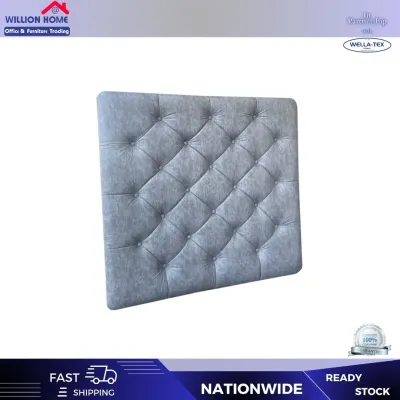


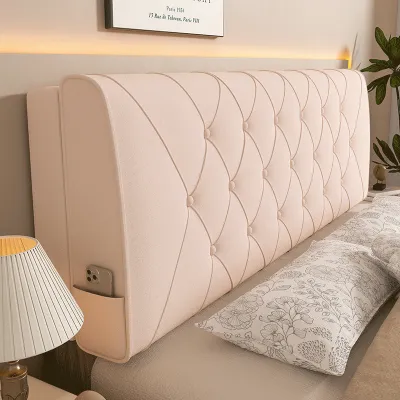

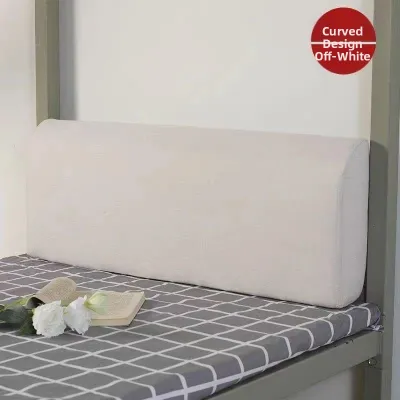


Prices are valid at publication and may change. Please refer to the product page for the latest price.
The general design rule for headboard width is that it should be slightly wider than your mattress. An overhang of 2 to 4 inches on each side helps frame the bed beautifully, hiding the raw edges of the mattress and bed frame. This extra width creates a layered, professional look. However, the exact overhang depends on your room size and aesthetic preferences; a flush headboard works well in tight spaces, while an extended headboard creates a luxurious, hotel-like feel in larger master bedrooms.
Visual proportion is just as crucial as physical width. A headboard’s height and thickness must balance with the bed’s overall volume and the room’s ceiling height. In modern condominiums with lower ceilings, an excessively tall headboard can make the room feel cramped and visually top-heavy. Conversely, in traditional houses with high ceilings, a low-profile headboard might look disproportionate and get lost visually against a vast wall.
Before you begin measuring, gather a few basic tools to ensure accuracy. You will need a metal measuring tape, a notepad to write down your dimensions, and painter’s tape or masking tape to map out the headboard’s footprint on your wall. Avoid using soft fabric tailor’s tapes, as they can stretch over long distances and lead to inaccurate measurements.
Measure Your Bed, Walls, and Clearance Step-by-Step
Width and Overhang
Start by measuring the exact width of your mattress and the outer width of your bed frame. The bed frame is often wider than the mattress, especially if it features a padded fabric border or a thick wooden platform design. To find your ideal headboard width, add your desired overhang to the outer frame measurement rather than the mattress itself.

Once you have this total width, check how it interacts with your bedside tables. If your nightstands are already in place, measure the distance between them to ensure the headboard can fit comfortably. A headboard that is too wide will force your nightstands forward or prevent them from sitting flat against the wall, disrupting the symmetry of your room.
Height and Proportions
Next, measure the vertical space of your room. Measure from the floor to the top of your mattress, and then from the top of your mattress to the ceiling. The visible height of the headboard—the portion that sits above the mattress—should typically be at least 18 to 24 inches to allow you to lean back comfortably against your pillows.
When planning the height, look up and check for any wall-mounted obstacles. In many Philippine homes, split-type air conditioning units, window frames, or wall-mounted light fixtures are positioned directly above the bed. Ensure your chosen headboard height leaves at least 10 to 15 centimeters of clearance below these fixtures to prevent blocking airflow, restricting AC maintenance, or crowding your lighting.
Depth and Room Clearance
Headboard depth is often overlooked but is critical for maintaining a comfortable walking path. While a simple wooden panel headboard might only be 1 to 2 inches thick, a plush, button-tufted upholstered headboard can easily be 6 to 8 inches deep. Adding a thick headboard will push your entire bed frame forward by that same thickness.
Measure the distance from your wall to the foot of the bed. After accounting for the headboard’s thickness, ensure you maintain at least 60 centimeters of clear walking space at the foot of the bed. Additionally, verify that pushing the bed forward does not block the swing radius of your bedroom door, closet doors, or adjacent dresser drawers.
Before finalizing your purchase, you must also verify the delivery logistics of your building. Measure your doorways, stairwells, and elevator lift dimensions. A massive King-size headboard may fit perfectly on your bedroom wall, but if it cannot clear the building’s service elevator or turn the corner in your hallway, you will face a frustrating and costly return process.
Verify Mounting Compatibility and Installation Options
Frame-Attached Headboards
Frame-attached headboards mount directly to the bed base, creating a single, cohesive unit. To check for compatibility, inspect the back of your wooden bed frame or upholstered divan base for pre-drilled holes, vertical wooden struts, or metal brackets. These fixtures are typically located near the head of the bed.
Use your metal tape to measure the horizontal distance between the mounting holes (center-to-center) and the vertical distance from the floor to the holes. These measurements must align with the mounting slots on the headboard you plan to buy. If your existing bed frame does not have these pre-drilled holes or brackets, attaching a headboard directly is generally not possible without custom drilling, which may damage the frame or void its manufacturer warranty.
Wall-Mounted and Freestanding Alternatives
Wall-mounted headboards are hung directly on the wall, completely independent of the bed frame. In the Philippines, interior walls are frequently made of solid concrete or concrete hollow blocks. To wall-mount a headboard securely on concrete, you must use a masonry drill bit to create holes, insert plastic wall plugs (commonly called “tox”), and secure the mounting brackets with heavy-duty screws. If your wall is a drywall partition, you must use a stud finder to locate the metal or wooden studs, or use specialized toggle bolts to prevent the headboard from pulling out of the plaster.
Freestanding headboards stand on the floor and are sandwiched tightly between the wall and your bed frame. While easy to install because they do not require drilling, they rely on the weight of the bed frame to stay upright. You must ensure your bed frame is heavy enough to push flat against the headboard, preventing wobbling or creaking when you move.
Clearing Electrical Outlets and Switches
Take a close look at the wall behind your bed. It is common to have electrical outlets, light switches, or telephone jacks positioned right where the bed sits. A solid headboard can completely block access to these utilities, or worse, crush plugged-in phone chargers and lamp cords against the wall, creating a fire hazard.
Map out the exact locations of these outlets on your wall. If your headboard will cover them, you must either choose a narrower or shorter model, select a headboard with built-in cutouts, or plan to have an electrician safely relocate the outlets. Some modern headboards also come with integrated power strips, which can be plugged into the wall outlet before the headboard is pushed into place.
Avoid Common Headboard Sizing and Fit Mistakes
- The Skirting Board Gap: Most Philippine bedrooms feature skirting boards (baseboards) along the bottom of the walls. These boards protrude about half an inch to an inch from the wall surface. If you choose a wall-mounted or freestanding headboard that goes all the way to the floor, the skirting board will prevent the headboard or the bed frame from sitting flush against the wall. This creates an unstable, wobbly setup that creaks whenever you move. To fix this, you can use wooden spacer blocks or battens on the wall above the skirting board to bring the mounting brackets flush with the headboard, or hire a carpenter to professionally notch the bottom legs of the headboard to fit over the skirting board.
- The "Too Narrow" Illusion: Buying a headboard that is exactly the same width as your mattress often looks visually awkward. Because mattress covers, blankets, and duvets drape over the sides, they add bulk. A flush headboard can end up looking too small and swallowed up by the bedding, exposing the underlying metal brackets or bed frame. Always aim for a headboard that is at least slightly wider than the mattress to maintain clean, professional proportions.
- Ignoring the Nightstands: If you have bedside tables, a headboard that is too wide will overlap with them. This prevents the nightstands from sitting flat against the wall, forces them to sit at an angle, or blocks you from opening drawers and cabinet doors. Before buying a wide or extended headboard, measure your nightstands and ensure they can sit comfortably alongside or entirely in front of the headboard panel.
- Overlooking Return Policies: Returning a bulky furniture item like a headboard can be incredibly difficult and expensive. Shipping fees for oversized items in the Philippines can cost thousands of pesos (₱), and many retailers do not accept returns on custom-sized or assembled furniture unless there is a manufacturing defect. Always read the seller's return policy carefully, verify the return shipping costs, and double-check your measurements before finalizing your order.
Verify the Fit Visually Before Purchasing
Before spending your hard-earned money, perform a physical simulation in your bedroom. Take your painter’s tape or masking tape and outline the exact width and height of the proposed headboard directly onto your bedroom wall. This simple step helps you visualize how much wall space the headboard will occupy and how it interacts with nearby windows, light switches, and air conditioners.
To simulate the thickness and depth of the headboard, stack cardboard boxes or pillows against the wall within your taped outline. This gives you a realistic sense of how far the bed will be pushed into the room. If you have a small room, this step is essential to ensure you still have enough space to walk around the bed comfortably.
Walk around the room and evaluate the taped outline from different angles—from the doorway, from the side of the room, and from your closet. Check if the proportions feel balanced with your ceiling height and other furniture. If the space feels too tight or the visual lines look off, you can easily adjust your planned dimensions before making a purchase.
Frequently Asked Questions (FAQ)
Can I use a larger headboard on a smaller bed frame?
Yes, using a larger headboard (such as a Double or King headboard on a Single bed) is a popular design technique to create a dramatic, hotel-style feature wall. However, because the pre-drilled holes on a smaller bed frame will not align with a wider headboard, you cannot use a frame-attached mounting method. Instead, you must secure the wider headboard to the wall or use a freestanding model, ensuring your wall space and bedside tables can accommodate the extra width.
How do I accommodate skirting boards when mounting a headboard?
To prevent skirting boards from pushing your headboard away from the wall, you can mount a wooden batten or spacer block directly to the wall above the skirting board. This creates a flush mounting surface that matches the thickness of the baseboard. Alternatively, some wooden headboards can be professionally notched at the bottom of the legs or frame, allowing them to slide neatly over the skirting board and sit completely flat against the wall.
Community discussion
Share your experience or ask a question. Comments are reviewed before publication.