
Selecting the right heavy-duty boltless rack for a home office requires balancing structural capacity with the physical constraints of a residential workspace. Unlike standard decorative shelving, a heavy-duty rack is designed to support substantial weight, making it ideal for dense book collections, heavy printing equipment, and archived files. To make the correct choice, you must calculate your actual storage load, verify the manufacturer’s specified weight limits, and evaluate the unit’s stability features. Additionally, accounting for local environmental factors like high tropical humidity and ensuring proper room clearance will guarantee a safe, long-lasting storage setup.
Assess Your Home Office Storage Load and Space
Before browsing online marketplaces or local furniture stores, you must determine the total weight of the items you plan to store. Home office items can be deceptively heavy; a single shelf of tightly packed hardcover books or reference manuals can easily weigh 30 to 50 kilograms. Add to this the weight of office equipment, such as laser printers, paper shredders, and multiple reams of printing paper, which concentrate significant weight in a small footprint. Listing these items and estimating their combined weight provides a realistic baseline for the load capacity your new rack must support.
Next, measure the exact floor space where the rack will stand. Use a high-quality tape measure to determine the maximum width and depth the area can accommodate without obstructing daily office activities. It is crucial to maintain adequate clearance for your office chair to glide, cabinet doors to open, and walkways to remain clear. If you place the rack behind your desk, ensure there is enough space to push your chair back comfortably without bumping into the frame.
Products mentioned in this guide
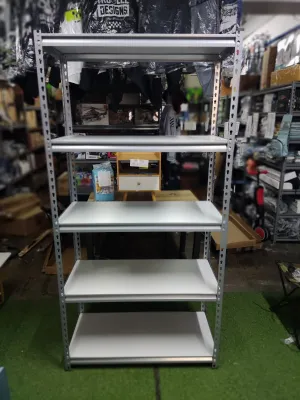
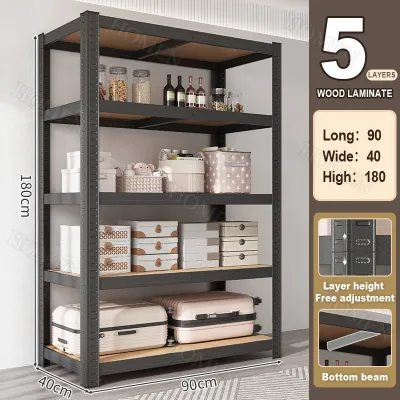
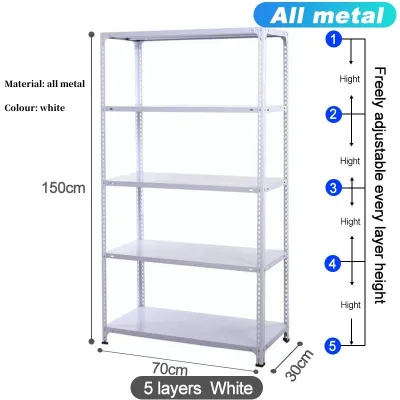
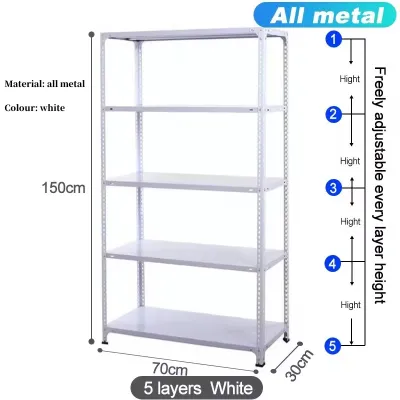
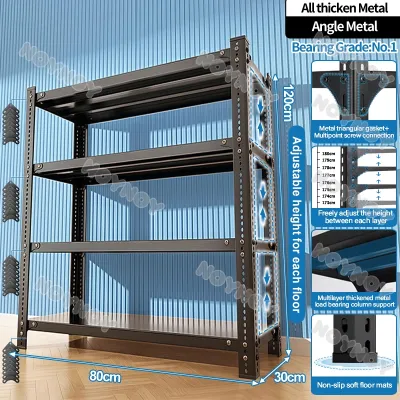
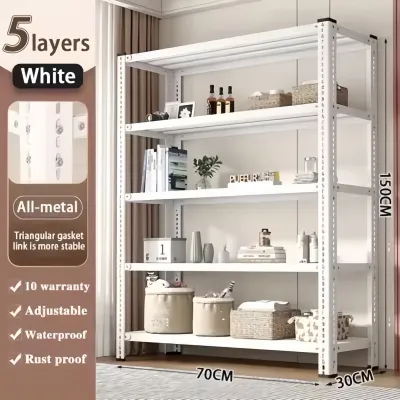
Prices are valid at publication and may change. Please refer to the product page for the latest price.
Vertical space is another critical dimension to evaluate. Measure your ceiling height, taking note of any low-hanging light fixtures, ceiling fans, or air conditioning units that might interfere with a tall shelving unit. While taller racks maximize vertical storage, they also require a higher center of gravity, which demands careful stabilization. If your home office has a drop ceiling or decorative molding, ensure the rack’s upright posts will clear these features with at least a few centimeters of breathing room.
Finally, identify the physical dimensions of your largest storage items to determine the minimum shelf depth and height. Standard storage boxes, plastic bins, and desktop computer towers often require deeper shelves than typical novels or decorative items. If your shelf depth is too shallow, these items will overhang, creating a safety hazard and blocking walkways. Measure the width, depth, and height of your largest printer or storage container, and use these dimensions to guide your selection of shelf spacing and overall rack depth.
Core Specifications to Check on Product Labels
When reviewing product listings or physical labels, pay close attention to the weight capacity specifications. Manufacturers typically list two distinct weight limits: the per-shelf capacity and the total unit capacity. These ratings assume the weight is evenly distributed across the entire shelf surface rather than concentrated in one spot. For a home office, look for racks that explicitly state their load limits on the packaging or user manual, and avoid products that use vague terms like “heavy-duty” without providing numerical ratings.

The flexibility of your storage setup depends heavily on the adjustability of the shelves. Look for boltless racks that feature adjustable shelf increments, typically spaced every few centimeters along the upright posts. This design allows you to customize the vertical spacing to fit tall items like archival binders or large equipment without wasting valuable vertical space. Check the product specifications to confirm that the shelf support beams can be locked into place at various heights to suit your changing storage needs.
The structural integrity of a boltless rack is determined by its materials and construction. Most heavy-duty racks utilize steel frames, but the thickness of the steel—often referred to as the gauge—varies significantly. A lower gauge number indicates thicker, stronger steel, which is less prone to bending under heavy loads. For residential office use, a frame made of medium-to-heavy gauge steel provides a stable foundation that will not warp over time when loaded with heavy books or equipment. While budget-friendly options may start around ₱1,500, investing in thicker steel frames ensures long-term durability.
In tropical climates like the Philippines, high humidity levels can accelerate rust and corrosion on metal furniture. Therefore, it is essential to check the surface treatment of the steel frame. Look for racks finished with a durable powder coating or a galvanized zinc layer, which provides a protective barrier against moisture. Avoid untreated or poorly painted steel, as the humid air can cause the finish to peel, leading to structural degradation and potential damage to your stored office supplies.
The material used for the shelf decking itself is just as important as the steel frame. Common options include medium-density fiberboard (MDF), particleboard, wire decking, or solid steel panels. While MDF and particleboard are popular for indoor offices, they can absorb moisture and sag in humid environments if not properly sealed. If you choose wood-based decking, verify that it has a moisture-resistant laminate or coating, or consider wire decking and steel panels for durability in humid conditions.
Evaluating Structural Stability and Assembly Design
The defining feature of a boltless rack is its assembly mechanism, which relies on interlocking joints rather than traditional nuts and bolts. Most designs use a rivet-and-keyhole system, where rivets on the horizontal beams slide into tapered slots on the upright posts. When inspecting a rack, look for clean, well-formed keyholes and sturdy rivets that fit snugly without excessive play. A precise fit ensures that the frame locks together tightly as weight is applied, creating a rigid structure.
To prevent lateral swaying or racking, high-quality boltless units incorporate structural reinforcements. Look for racks that feature double-rivet support beams at the top and bottom of the unit, which help maintain squareness. Some models also include central support bars that run underneath each shelf decking panel, preventing the shelf from bowing in the middle under heavy loads. These reinforcements are critical for maintaining the overall stability of the rack when it is fully loaded with office supplies.
A heavy-duty rack can place immense pressure on your home office flooring, potentially scratching hardwood, tearing vinyl, or denting carpets. Check if the rack includes protective plastic or rubber foot caps that slip onto the bottom of the upright posts. These caps distribute the weight more evenly and protect your floors from damage. Additionally, because residential floors are rarely perfectly level, look for units that allow for minor adjustments or can be shimmed safely to prevent wobbling.
Safety should always be a primary consideration when installing tall shelving units in a home environment. Many manufacturers mandate or highly recommend anchoring the rack to the wall, especially if the height-to-depth ratio is high. Check the product packaging or manual to see if wall-tie kits or anchoring brackets are included. If your home office has concrete or drywall walls, ensure you have the appropriate wall plugs and screws to secure the unit firmly, preventing accidental tip-overs.
Pre-Purchase and Installation Verification
Before finalizing your purchase, consider the logistics of getting the rack into your home office. Heavy-duty boltless racks are typically packaged in long, heavy flat packs that can be difficult to maneuver. Measure your doorways, stairwells, hallways, and elevator cabins to ensure the package can be transported safely to your workspace. If you live in a multi-story home or an apartment building, planning the delivery route beforehand prevents the frustration of a package that cannot fit through tight corners.
It is also vital to verify that your home office floor can handle the concentrated weight of a fully loaded rack. While concrete ground floors can support virtually any residential load, upper-floor rooms with wooden joists may have structural limits. If you plan to store hundreds of kilograms of books or heavy equipment on an upper floor, position the rack perpendicular to the floor joists and close to load-bearing walls to distribute the weight safely.
Although boltless racks do not require wrenches or screwdrivers, you will still need a few basic tools for a smooth assembly process. A rubber mallet is highly recommended for tapping the beams firmly into the upright slots without damaging the protective powder coating. Avoid using a standard metal hammer, as it can dent the steel frame and chip the paint, exposing the metal to rust. Read the manufacturer’s assembly instructions beforehand to understand the step-by-step process and ensure you have a clear workspace to lay out the parts.
Once the rack is assembled, perform a thorough physical inspection before placing any items on the shelves. Check that every single rivet is fully seated at the bottom of its corresponding keyhole slot and that the frame is perfectly square. When loading the rack, always place the heaviest items on the bottom shelf first to establish a low center of gravity. Gradually load lighter items on the upper shelves, and periodically check the joints over the first few weeks of use to ensure everything remains secure.
Frequently Asked Questions (FAQ)
Can I add casters to a heavy-duty boltless rack for mobility?
Adding casters to a heavy-duty boltless rack is only advisable if the manufacturer explicitly offers an approved caster kit designed for that specific model. Standard upright posts are engineered to rest flat on the floor, and inserting unapproved wheels can concentrate stress on the corners, leading to structural failure. Furthermore, adding wheels raises the unit’s center of gravity and significantly reduces its maximum safe weight capacity. If you do use an approved caster kit, ensure that at least two of the wheels have reliable locking mechanisms to keep the rack stationary during daily office use.
How do I prevent a fully loaded boltless rack from tipping?
To prevent a tall or heavily loaded boltless rack from tipping over, you must follow proper weight distribution and anchoring practices. Always place your heaviest items, such as printer paper boxes, heavy hardware, or large binders, on the lowest shelf to keep the center of gravity as low as possible. Secure the top of the rack to a solid wall using the manufacturer-provided wall-anchoring brackets or heavy-duty wall ties. Finally, ensure the rack is assembled on a completely level surface and that all interlocking joints are fully driven home with a rubber mallet during assembly.
Community discussion
Share your experience or ask a question. Comments are reviewed before publication.