
Finding the right coffee table for a compact living room requires balancing daily functionality with physical space. In many homes across the Philippines, where condominiums and townhouses often feature cozy, open-plan layouts, a coffee table must serve multiple purposes without blocking traffic. Linsy offers a variety of space-saving designs, but selecting the ideal model depends on precise measurements, layout compatibility, and smart features that keep clutter out of sight. By focusing on clearance, shape, and visual weight, you can find a table that enhances your living room’s usability while keeping the area feeling open and inviting.
Measure Your Space: Clearance and Layout Constraints
Before browsing any furniture catalog or online marketplace, you must establish the physical boundaries of your living room. The most common mistake when buying a coffee table is relying on visual estimation, which often leads to a cramped layout that disrupts the flow of your home. To avoid this, take a physical tape measure and map out the exact distance between the front edge of your sofa and the opposite wall, TV stand, or media console. This measurement defines the maximum depth your new table can occupy while still allowing comfortable movement.
Once you have the total distance, you must calculate the necessary clearance for walkways and legroom. As a general rule of thumb, you should maintain a clearance of 14 to 18 inches (approximately 35 to 45 centimeters) between the edge of the coffee table and the edge of the sofa. This spacing provides enough room to sit down, stretch your legs, and stand up comfortably without bumping your knees, while keeping the table surface within easy reach for a cup of coffee or a book. Additionally, ensure there is at least 24 to 30 inches of walking space between the table and any adjacent furniture, such as a TV credenza or armchair, to allow family members to pass through without squeezing.
Products mentioned in this guide
Prices are valid at publication and may change. Please refer to the product page for the latest price.
In compact Philippine homes, layout planning must also account for unique physical constraints. Consider the swing path of balcony glass doors, the opening clearance of nearby cabinets, and the entryways to narrow corridors. If your living room doubles as a sleeping area with a pull-out sofa bed, you must measure the space with the bed fully extended to ensure the coffee table can be easily moved or bypassed. Marking the proposed dimensions of your prospective Linsy table on the floor using painter’s tape or newspaper is an excellent way to visualize the footprint before making a final decision.
Match the Shape and Size to Your Sofa and Room
The shape of your coffee table plays a critical role in how spacious your living room feels and how easily you can navigate the space. Round and oval coffee tables are highly recommended for tight layouts and high-traffic zones. Because they lack sharp corners, these shapes eliminate the risk of painful bumps in narrow walkways, making them a practical choice for active households. Furthermore, the curved edges of a round table allow for more fluid movement around the seating area, helping to soften the rigid lines of a small, boxy room.

If your living room features a long, narrow layout or a sectional sofa, a rectangular or square table may be more appropriate. When pairing a table with a standard sofa or an L-shaped sectional, aim for a table length that is roughly two-thirds of the sofa’s total length. This proportion ensures the table is long enough for everyone seated to reach, without overpowering the sofa visually. For example, if your sofa is 72 inches long, a coffee table around 48 inches in length will maintain a balanced aesthetic.
Height is another crucial dimension that directly impacts comfort and ergonomics. Ideally, the surface of your coffee table should sit level with or slightly lower than the top of your sofa’s seat cushions—typically within a range of one to two inches. A table that is too high will block your line of sight to the television and feel awkward when reaching for items, while a table that is too low requires excessive bending. Always check the specifications of the Linsy model you are considering and compare them directly to the measured height of your sofa cushions.
Maximize Utility with Space-Saving Features
When floor space is limited, your furniture must work harder to earn its place. Choosing a coffee table with multi-functional features allows you to maximize daily utility without expanding the physical footprint of your living room. One of the most popular innovations for small spaces is the lift-top mechanism. A lift-top coffee table features a surface that elevates and moves forward, transforming your casual living room table into a temporary desk for remote work or a comfortable dining surface for meals. When closed, the mechanism conceals a spacious internal compartment perfect for storing laptops, chargers, and work documents.
Built-in storage is another essential feature for maintaining an organized, clutter-free environment. Look for Linsy models that incorporate drawers, open lower shelves, or hidden compartments. In a compact home, small items like remote controls, game controllers, coasters, and magazines can quickly clutter surfaces, making the entire room feel disorganized. Utilizing dedicated storage within the table keeps these everyday essentials within arm’s reach but completely out of sight, preserving a clean and minimalist aesthetic.
For ultimate layout flexibility, consider nesting tables or expandable designs. Nesting coffee tables consist of two or three tables of varying heights that slide completely underneath one another when not in use. This design allows you to keep a single, compact footprint during your daily routine, and then slide the smaller tables out to provide extra surface area when hosting guests for coffee or snacks. Once your guests leave, the tables tuck away neatly, instantly restoring your valuable floor space.
Reduce Visual Weight to Make the Room Feel Larger
In interior design, visual weight refers to how heavy or dominant an object appears to the eye. A solid, block-like wooden coffee table that sits flat on the floor can make a small room feel incredibly cramped, even if its physical dimensions are technically correct. To keep your living room feeling bright and airy, look for design elements that minimize visual weight. Tables featuring glass or acrylic tops are excellent for this purpose, as they allow light to pass through and keep sightlines open, making the floor underneath visible.
Structural profiles also heavily influence perceived space. Opt for coffee tables with slim metal frames, raised legs, or minimalist bases rather than solid, heavy plinths. A table that is elevated off the ground on slender legs exposes more of the floor, which tricks the brain into perceiving the room as larger than it actually is. This design detail also makes cleaning much easier, as it allows vacuum cleaners or sweepers to pass underneath without requiring you to move heavy furniture.
Finally, consider the color palette and surface finishes in relation to your room’s lighting. In the humid, tropical climate of the Philippines, light-colored wood veneers, matte white finishes, or warm neutrals can brighten up a room and reflect natural light beautifully. When selecting finishes, check the manufacturer’s care instructions to ensure the surfaces are easy to wipe down and maintain, especially if the room experiences high humidity or direct sunlight from large windows.
Final Checklist: Verify Specs and Delivery Access
Before finalizing your purchase from an online marketplace or an authorized retailer, it is essential to run through a practical checklist to ensure a smooth delivery and installation process. Start by cross-referencing the exact, finished dimensions listed on the product page with the physical measurements you took of your living room. Double-check the height, width, and depth to confirm that the table will fit comfortably within your planned layout and maintain the required clearances.
Next, evaluate the structural specifications and weight capacity of the table. If you plan to use a lift-top table for dining, working, or supporting heavier items like books and decorative trays, verify the manufacturer’s stated maximum load capacity for both the closed and extended positions. Ensure the table’s base is stable and balanced, particularly if you have a busy household where the table might be leaned on or bumped frequently.
Finally, do not overlook the logistics of getting the furniture into your home. Review the packaging dimensions provided by the seller and compare them to the narrowest points of your delivery route. This includes measuring building elevator doors, tight stairwell turns, hallway corridors, and your apartment’s main entrance door. Confirm whether the table arrives fully assembled or flat-packed, and review the assembly instructions to ensure you have the necessary tools and space to put it together safely.
Frequently Asked Questions (FAQ)
Can I use a Linsy side table instead of a coffee table in a very small room?
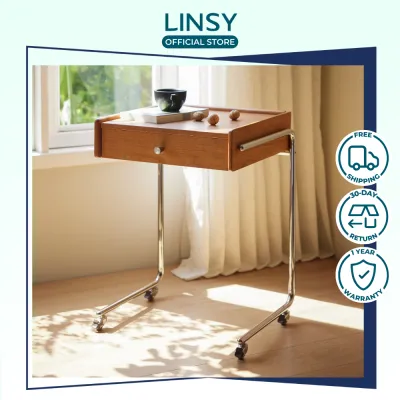
Yes, substituting a standard coffee table with one or two side tables or C-shaped tables is an excellent strategy for ultra-compact living rooms. Side tables have a much smaller footprint and can be placed next to the arm of your sofa, keeping the central floor space completely open. C-tables are particularly useful because their bases slide under the sofa, allowing the tabletop to hover directly over your lap for convenient use. While they offer less surface area than a traditional coffee table, they provide exceptional placement flexibility and are incredibly easy to move around when cleaning or rearranging the room.
How do I protect a Linsy wood or glass coffee table from humidity?
To preserve the condition of your coffee table in a humid tropical climate, consistent preventative care is key. Always use coasters, placemats, or trivets under hot drinks, cold beverages, and condensation-prone items to prevent moisture rings and water damage to wood veneers or glass surfaces. Avoid placing the table in direct path of air-conditioning drafts or intense, direct sunlight, as extreme temperature fluctuations and UV rays can cause wood to warp or finishes to fade. Always consult the manufacturer’s care label for approved cleaning agents, and use a soft, dry microfiber cloth to wipe away dust and immediate spills promptly.
Community discussion
Share your experience or ask a question. Comments are reviewed before publication.