
Selecting the ideal Sanyang cabinet for your dining room is a decision that balances daily functionality, spatial harmony, and long-term durability. A sideboard is not merely an ornamental piece of furniture; it serves as the central hub for your dining essentials, from heavy dinnerware sets to delicate glassware and table linens. To find the configuration that best serves your household, you must look beyond aesthetics and evaluate how a cabinet’s physical dimensions, material specifications, and storage layout align with your home’s unique environment. In tropical climates like the Philippines, where ambient humidity can fluctuate significantly, choosing a cabinet also requires careful attention to surface finishes and construction details to ensure your investment remains stable and beautiful for years to come.
Assess Your Dining Room Space and Layout
Before browsing specific Sanyang cabinet models, you must establish the exact physical boundaries of your dining area. Begin by measuring the available wall width and floor space where you intend to place the sideboard. It is crucial to account for the clearance required around other furniture, particularly your dining table and chairs. A common mistake is forgetting to measure the space needed when chairs are pulled out or when people are actively seated. Ensure there is a comfortable walkway of at least 60 to 90 centimeters between the edge of the cabinet and the back of your dining chairs to prevent traffic bottlenecks during family meals.
Beyond the final resting spot of the cabinet, you must plan the delivery route. Measure the width and height of all entryways, hallways, stairwells, and elevator doors through which the packaged cabinet must pass. Flat-pack furniture can come in surprisingly long, heavy boxes that require ample turning radius in tight corners. Verifying these dimensions beforehand prevents the frustration of a delivery that cannot physically reach your dining room.
Products mentioned in this guide
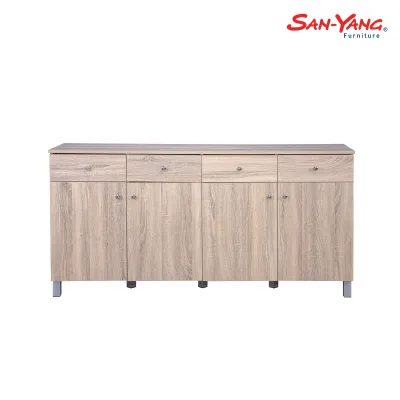
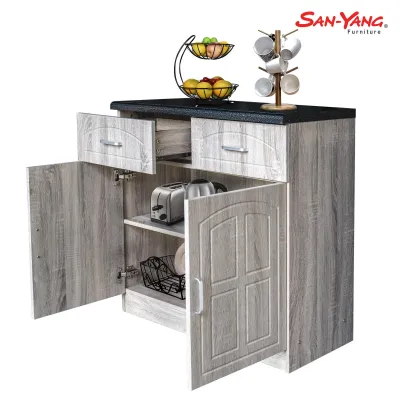
Prices are valid at publication and may change. Please refer to the product page for the latest price.
Finally, consider the structural placement of the unit. Decide whether you will position the cabinet as a freestanding room divider or flush against a load-bearing wall. Freestanding setups require a highly stable base and a finished back panel if the rear of the cabinet is visible. If you place the unit against a wall, locate any baseboards, electrical outlets, or light switches that might interfere with a flush fit. Ensuring the cabinet does not block access to power outlets is essential if you plan to use the sideboard surface for small dining appliances.
Define Your Storage and Display Needs
The internal configuration of your Sanyang cabinet should directly reflect what you plan to store inside it. Start by taking an inventory of your dining items and categorizing them into pieces you want to display and items you prefer to keep hidden. Closed storage, utilizing solid wooden or laminate doors, is ideal for concealing everyday dinnerware, bulky serving platters, and table linens that do not need to be on show. This keeps your dining room looking tidy and protects your items from dust and light exposure.

Conversely, open shelving or glass-front doors are perfect for showcasing fine glassware, heirloom ceramics, or decorative items. Glass doors offer the visual benefit of display while still providing a barrier against dust and accidental bumps. If you opt for open display sections, consider how the items will look when arranged and whether you have the time to maintain an organized presentation.
Another critical factor is shelf adjustability. Fixed shelves limit your storage options, making it difficult to accommodate tall pitchers, wine bottles, or small kitchen appliances like blenders and coffee makers. Look for models that feature adjustable shelf pegs, allowing you to customize the interior height as your storage needs evolve. Additionally, drawers are indispensable for organizing smaller items. Dedicated drawers for cutlery, table mats, coasters, and serving utensils keep these frequently used accessories organized and easily accessible, preventing them from getting lost in deep cabinet shelves.
Match the Cabinet Style to Your Dining Decor
A sideboard cabinet should harmonize with your existing dining room furniture rather than compete with it. Sanyang cabinets come in various finishes, ranging from warm wood grains to sleek, modern laminates. When selecting a finish, consider the existing color palette of your dining table, chairs, and flooring. If your dining room features dark hardwood furniture, a matching dark wood grain cabinet can create a cohesive, formal look. Alternatively, a lighter wood tone or a neutral white or gray finish can brighten a smaller dining space and make it feel more open.
Pay close attention to how the cabinet’s surface finish interacts with your room’s lighting. High-gloss finishes reflect light, which can help illuminate darker corners but may also highlight fingerprints and dust. Matte or textured wood-grain finishes are more forgiving of daily wear and tear and contribute to a softer, more relaxed atmosphere.
Hardware details, such as handles, knobs, and hinges, also play a significant role in defining the cabinet’s style. Sleek, handleless designs with push-to-open mechanisms complement minimalist and modern interiors. Traditional metal handles or vintage-style knobs can tie the cabinet into a classic or rustic decor theme. Ensure the hardware material matches other metal accents in your dining room, such as light fixtures or chair frames. Finally, balance the visual weight of the cabinet. A solid, floor-length sideboard can look heavy in a small room, whereas a model with raised legs creates a sense of space by allowing light to pass underneath.
Key Specifications to Check Before Buying
To ensure long-term satisfaction, you must carefully verify the technical specifications of your chosen Sanyang cabinet before finalizing your purchase. Start by cross-referencing the manufacturer’s exact dimensions—height, width, and depth—with the physical measurements you took of your dining room. Even a discrepancy of a few millimeters can prevent a cabinet from fitting into a designated alcove or block a nearby doorway.
In tropical environments, the material composition and surface treatment of the cabinet are paramount. Check the product description to see if the unit is constructed from solid wood, medium-density fiberboard (MDF), or particleboard. If engineered wood is used, verify that it features high-quality edge banding and a moisture-resistant laminate or veneer finish. This is crucial for preventing the wood fibers from absorbing atmospheric moisture, which can lead to swelling, warping, or peeling over time.
Weight capacity is another critical specification that is often overlooked. Check the manufacturer’s guidelines for the maximum weight limit of individual shelves and the overall unit. Placing heavy ceramic dishes, stacks of cast-iron cookware, or heavy appliances on a shelf that is not rated for that weight can cause the shelf to sag or collapse.
Lastly, review the assembly requirements. Most Sanyang cabinets are delivered as flat-pack units that require self-assembly. Check the product page to see what tools are required and whether they are included in the package. For safety, especially if you have young children or live in an area prone to seismic activity, confirm whether the cabinet includes wall-anchoring hardware. Anchoring the unit to the wall is highly recommended for tall or top-heavy cabinets to prevent accidental tip-overs.
Where to Buy and What to Verify
When you are ready to purchase your Sanyang cabinet, it is important to source it from reputable channels to ensure product authenticity and reliable customer service. Compare prices in ₱ across official brand stores, authorized physical showrooms, and established online furniture platforms. While online marketplaces often offer convenience and home delivery, visiting a physical showroom allows you to inspect the build quality, feel the finish, and test the smoothness of the drawer glides and door hinges in person.
Upon delivery, do not rush to sign the receipt without conducting a thorough inspection. Carefully examine the external packaging for any signs of rough handling, such as deep punctures, crushed corners, or water damage. Once you open the package, verify all components, panels, and hardware packs against the parts list in the instruction manual. If you notice any missing pieces, cracked panels, or defective hardware, contact the seller immediately before attempting assembly.
Before completing your transaction, clarify the warranty terms and return policies. A reliable warranty should cover manufacturing defects and structural failures under normal use conditions. Understand the process for claiming a replacement or refund, including who covers the shipping costs for returned items. Having a clear understanding of these policies provides peace of mind and protects your investment.
Frequently Asked Questions (FAQ)
How much weight can a typical Sanyang sideboard shelf hold?
The exact weight capacity of a Sanyang sideboard shelf varies depending on the specific model, shelf material, and span width. To avoid structural damage or sagging, always refer to the product manual or the manufacturer’s official specifications for the precise weight limits of your unit. As a general rule, distribute weight evenly across the shelf rather than concentrating heavy items in the center, and avoid placing heavy kitchen appliances on shelves that do not have verified load-bearing ratings.
Do Sanyang cabinets require professional assembly?
Most Sanyang sideboard cabinets are designed as flat-pack furniture intended for DIY assembly. They typically come with step-by-step instruction manuals and basic hardware. However, if you are uncomfortable using hand tools, have limited time, or are dealing with a particularly large, heavy, or complex modular unit, hiring a professional assembly service is highly recommended. Professional installers can also ensure that critical safety steps, such as secure wall anchoring, are completed correctly to prevent tip-over hazards.
Community discussion
Share your experience or ask a question. Comments are reviewed before publication.