
To choose the right Sanyang vanity dresser size for your bedroom, you must balance your room’s physical layout, your daily storage requirements, and the clearance space needed for comfortable seating. Selecting a vanity that is too large can disrupt the flow of your bedroom and block essential pathways, while a unit that is too small might fail to accommodate your daily cosmetics, styling tools, and accessories. Finding the perfect fit requires precise measurements of your space and a clear understanding of how different furniture configurations function in real-world settings.
In the Philippines, bedroom layouts vary widely, from compact high-rise studio apartments in Metro Manila to spacious provincial homes. Tropical humidity also plays a role in how you place and care for your furniture, making the physical dimensions and structural placement of your sanyang vanity dresser highly important. By taking a systematic approach to measuring your room, evaluating your storage habits, and planning for delivery, you can select a vanity size that enhances both the utility and the aesthetic of your personal space.
Assessing Your Bedroom Space and Layout
Before browsing designs, you must accurately measure the physical footprint of the designated area in your bedroom. Use a steel measuring tape to determine the maximum width and depth of the wall space where you plan to place the vanity. Avoid relying on visual estimates, as baseboards, wall trim, and electrical outlets can reduce the actual usable floor area by several centimeters. Knowing the exact dimensions of your wall space ensures you select a unit that sits properly without overlapping door frames or window sills.
Products mentioned in this guide
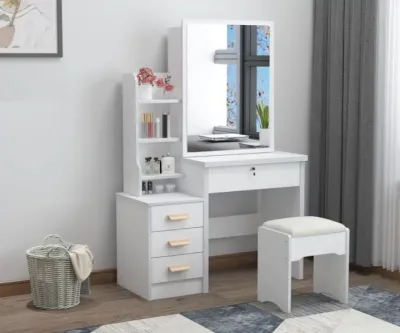
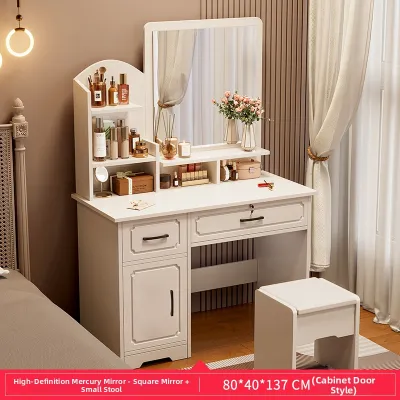
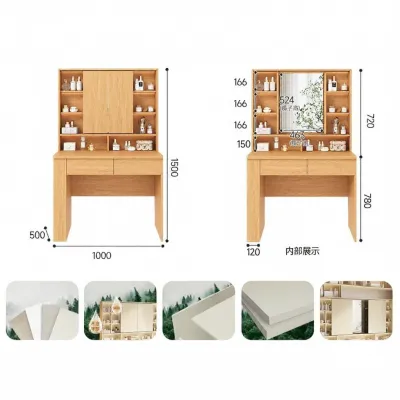
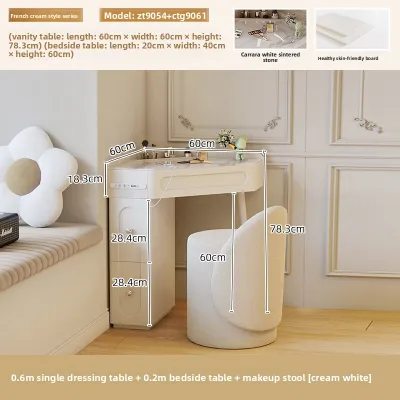
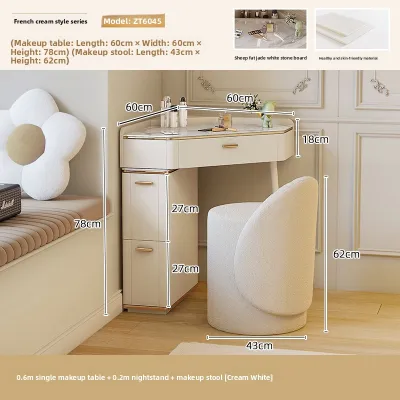
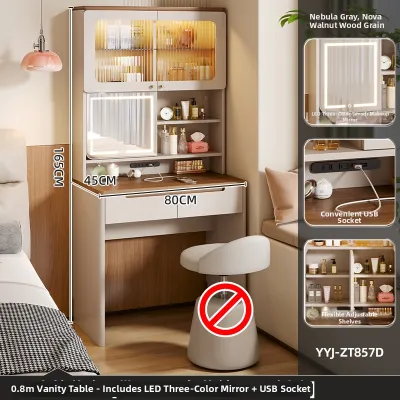

Prices are valid at publication and may change. Please refer to the product page for the latest price.
Your bedroom layout relies on balanced proportions among all furniture pieces. A massive vanity dresser placed next to a queen-sized bed in a small room can make the space feel cramped and restricted. Map out the locations of your bed, wardrobe, and bedside tables to see how much open floor remains. Ensuring there is sufficient breathing room between these pieces preserves a comfortable, relaxing atmosphere in your sleeping area.
Determining the primary focal point of your bedroom helps you decide where the vanity dresser fits best. If you want the vanity to serve as a functional accent piece, you might place it on a prominent wall where its mirror and design can stand out. Alternatively, if your bedroom layout is already busy, you may want to position the vanity in a quiet corner or alongside a wardrobe to serve as a hidden utility piece. This placement strategy prevents the room from feeling visually cluttered.
Always verify the finished dimensions of the specific Sanyang model you are interested in by checking the official product listings, user manuals, or manufacturer spec sheets. Do not rely on generic size categories, as actual widths, depths, and heights can vary between different product lines. Confirming these measurements beforehand prevents layout surprises during assembly and ensures the piece fits your room exactly as intended.
Understanding Typical Vanity Dresser Dimensions
Vanity dressers generally follow specific dimensional standards to ensure comfortable, ergonomic use when you are seated. Most standard vanity tables feature a desktop height ranging from 75 to 80 centimeters, which allows your legs to fit comfortably underneath while keeping the tabletop surface at a natural height for makeup application. The overall depth of these units typically ranges from 40 to 50 centimeters, providing a balanced surface area that keeps your items within arm’s reach without extending too far into the room.

Because individual models feature different configurations, you should always check the specific SKU specifications for the exact finished dimensions, including any attached mirrors or shelving units. Sanyang offers a variety of designs tailored to different spatial needs, and verifying these details on the product label is the most reliable way to plan your layout.
Compact and Space-Saving Configurations
Compact vanity dressers are designed specifically for tight corners, narrow walls, or small bedrooms where floor space is limited. These units typically feature a narrow width of 60 to 80 centimeters and a shallow depth of approximately 40 centimeters, allowing them to fit easily into multi-functional spaces without obstructing walkways.
To compensate for a smaller floor footprint, space-saving vanities often utilize vertical storage solutions to maximize organization:
- Integrated vertical shelving: Open shelves or cubbies built around the mirror keep daily skincare bottles and perfumes easily accessible without cluttering the main desktop.
- Hidden mirror compartments: Some compact models feature sliding or flip-top mirrors that reveal hidden storage compartments behind the glass, perfect for storing jewelry and small cosmetics.
- Stacked drawer designs: Narrow, vertical columns of drawers provide dedicated slots for different categories of makeup while keeping the overall width of the unit minimal.
Standard and Wide Dresser Vanities
Standard and wide vanity dressers, ranging from 90 to 120 centimeters or more in width, are ideal for larger bedrooms that can accommodate a more substantial piece of furniture. These wider units often serve a dual purpose, functioning both as a spacious makeup station and as a primary bedroom dresser for folded clothing and linens.
When planning for a wider vanity, consider how its larger footprint affects your room’s layout:
- Visual anchoring: A wide vanity dresser can act as a beautiful anchor along a large, empty wall, helping to balance the visual weight of a large bed.
- Generous tabletop surface: The extended width provides ample space for tabletop organizers, brush holders, and decorative items without sacrificing your workspace.
- Multiple drawer columns: Wider configurations often feature side-by-side drawer units, allowing you to separate your beauty products from your daily wardrobe storage.
Matching Dimensions to Storage and Usage Needs
To choose the right size, you must connect the physical exterior dimensions of the vanity dresser to your personal storage requirements. Take a close look at the drawer configurations of the models you are considering. Shallow drawers are highly efficient for organizing jewelry, hair accessories, and flat makeup palettes, as they prevent items from getting lost at the bottom. On the other hand, deeper drawers are necessary if you need to store tall skincare bottles, hair dryers, or bulkier styling tools.
There is often a direct trade-off between having a larger mirror and maximizing your internal drawer space. A wide, seamless mirror offers an excellent view for styling, but it may limit the amount of vertical shelving or upper drawer storage the unit can provide. Conversely, a vanity with extensive hutch storage and multiple upper compartments will offer superior organization but may feature a smaller, more centralized mirror. Decide which feature is more critical to your daily routine before making your choice.
Before finalizing your purchase, conduct a quick audit of your current makeup, skincare, and accessory collection. Group your items by size and frequency of use, and estimate how much drawer and shelf space you actually need. If you have a large collection of tall bottles, look for a vanity with adjustable shelves or deep bottom drawers. If your collection consists mostly of small cosmetics, a unit with multiple shallow drawers and built-in dividers will serve you better.
In the humid climate of the Philippines, proper ventilation and storage organization are also important for preserving your cosmetics and skincare products. Storing items in well-organized, easy-to-clean drawers protects them from dust and ambient moisture. When evaluating a vanity, check the interior finish of the drawers and the quality of the joints to ensure they can withstand daily opening and closing in tropical conditions.
Clearance, Pathways, and Delivery Considerations
Selecting a vanity dresser that physically fits against your wall is only half the battle; you must also account for the clearance required to use the furniture comfortably. Ensure there is at least 60 to 70 centimeters of open space in front of the vanity to accommodate a stool or chair and to allow you to pull out the drawers fully. If the vanity is placed in a high-traffic pathway, such as the walk space between the foot of your bed and the wall, make sure there is still enough room for someone to pass by while you are seated.
Logistical planning is crucial to ensure your new furniture can actually reach your bedroom. Before ordering, measure the widths of your bedroom doors, hallway corners, entryways, and stairwells. If you live in a high-rise condominium, check the interior dimensions and door clearance of the building’s passenger and service elevators. Comparing these measurements against the packaged dimensions of the Sanyang vanity dresser prevents delivery day complications and ensures the box can be safely transported into your home.
When preparing the installation site, check the walls for baseboards, skirting boards, or low-profile wall outlets. Baseboards can prevent the back of the vanity from sitting completely flush against the wall, which can add a few unexpected centimeters to the unit’s overall depth. Additionally, ensure the vanity does not block access to wall outlets that you need for plugging in hair dryers, straighteners, or vanity mirror lights. Planning for these small details ensures a clean, safe, and highly functional setup.
Common Sizing Mistakes to Avoid
One of the most common errors when buying a vanity dresser is measuring only the available wall width while completely ignoring the depth required for open drawers and seating. A vanity might seem to fit perfectly on paper, but once you place a stool in front of it and pull open the drawers, you may find that it blocks the walkway or bumps against your bed frame. Always visualize the unit in its fully open state during your planning process.
Another frequent mistake is positioning the vanity dresser in a way that interferes with the room’s natural architectural features. Avoid placing the unit where it might block natural light from windows, obstruct access to balcony doors, or prevent built-in closet doors from swinging open fully. Ensuring all doors and windows in your bedroom can operate without obstruction preserves the room’s ventilation and overall functionality.
Finally, do not assume that all vanity dressers share the same internal drawer depth, weight capacity, or structural stability. Always check the manufacturer’s specific product labels, assembly guidelines, and care instructions. If your vanity includes a tall mirror or heavy shelving, verify the recommended anchoring methods to ensure the unit remains stable and secure on your bedroom floor. Following these guidelines helps you avoid buyer’s remorse and ensures your vanity remains a durable, useful part of your bedroom for years to come.
Community discussion
Share your experience or ask a question. Comments are reviewed before publication.