
Finding the perfect shelf organizer rack for your closet is the key to transforming a cluttered wardrobe into a highly functional storage system. In the Philippines, where high humidity can quickly lead to musty odors and mold on tightly packed clothes, choosing the right rack size is not just about maximizing space—it is also about ensuring proper airflow. A rack that is too large will choke your closet, making it difficult to access your belongings and blocking ventilation. Conversely, a unit that is too small leaves valuable vertical and horizontal space completely wasted. To find the ideal fit, you must balance the physical boundaries of your closet with the specific dimensions of the items you plan to store.
Measure Your Closet Space Accurately
Before browsing online marketplaces or visiting a local home improvement store, you must capture the exact physical boundaries of your closet. Do not rely on a single measurement across the back wall. Walls in residential buildings are rarely perfectly square, and floors can have subtle slopes. Use a reliable metal tape measure to record the width, height, and depth at three different points: the top, middle, and bottom. Always use the smallest of these three measurements as your maximum limit to ensure your new shelf organizer rack will actually slide into place without scraping the walls.
Next, look closely for hidden obstructions that can easily ruin your installation plans. Baseboards along the floor, decorative crown molding at the ceiling, door hinges, and existing closet rods all subtract valuable centimeters from your usable space. If your closet has built-in light fixtures, electrical outlets, or wall switches, you must ensure the rack will not block access to them or create a safety hazard. Measure the distance these fixtures protrude from the wall and subtract that from your available depth or width.
Products mentioned in this guide

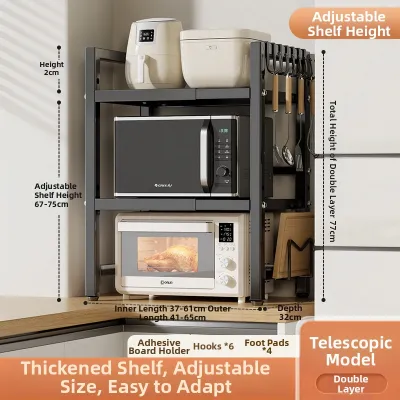
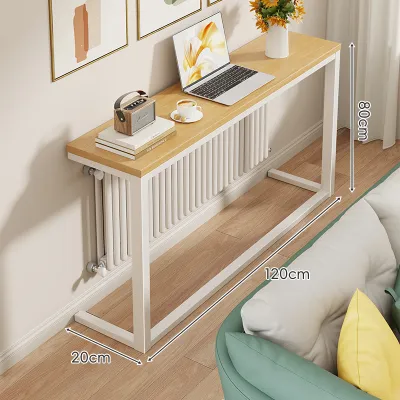
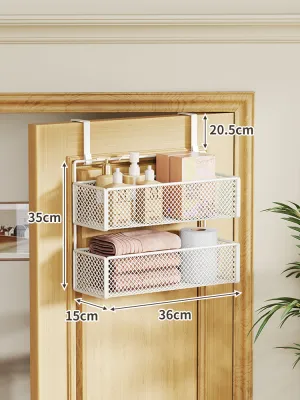
Prices are valid at publication and may change. Please refer to the product page for the latest price.
Finally, consider how your closet doors operate. Whether you have traditional outward-swinging doors, folding bifold doors, or sliding panels, the shelf organizer rack must sit far enough back to allow the doors to close completely. For swinging doors, map out the swing radius to ensure the door does not strike the front edge of the rack. For sliding doors, remember that only one side of the closet is fully accessible at a time; your rack’s shelves must align with these openings so you can actually reach your stored items without struggling against the door panels.
Match Rack Dimensions to Your Storage Items
A shelf organizer rack is only as useful as its ability to hold your specific belongings. Start by grouping your items by category to understand what kind of shelving configuration you need. In tropical climates, wardrobes typically consist of lightweight cotton garments, activewear, and sandals, which require different spacing than heavy winter coats or bulky boots. Folded t-shirts and shorts generally fit well on shelves spaced 25 to 30 centimeters apart, while taller items like storage bins, folded bedding, or organizers for bags may require 40 centimeters or more of vertical clearance.

Calculate the total linear shelf space you need by laying out your items or measuring your current stacks. If you plan to use fabric storage bins or plastic organizers on the shelves, measure these containers first. Your shelf organizer rack must have a usable depth and width that accommodates these bins comfortably, with a few centimeters of wiggle room on either side so you can slide them in and out easily. Standard shelf depths usually range from 30 to 45 centimeters; choosing a shelf that is too deep for small items can lead to lost space at the back, while a shelf that is too shallow will cause items to overhang and potentially fall.
You should also decide between fixed-shelf units and adjustable configurations. Fixed shelves offer excellent structural rigidity and are often more budget-friendly, making them a solid choice if your wardrobe rarely changes. However, if your storage needs shift throughout the year—perhaps accommodating extra bedding during the rainy season or shifting to lighter storage in the dry months—an adjustable shelf organizer rack is highly beneficial. These systems allow you to reposition individual shelves along pre-drilled tracks, ensuring you never waste vertical space on short items.
Evaluate Clearance, Access, and Installation Limits
Selecting a rack that physically fits inside your closet is only half the battle; you must also ensure you can comfortably use and assemble it. Walkway clearance is a critical factor, especially in compact bedrooms or narrow walk-in closets. Ensure that once the shelf organizer rack is in place, you still have at least 60 to 75 centimeters of open floor space in front of it. This space is necessary for you to stand, bend down to reach lower shelves, and pull out drawers or storage bins without bumping into opposite walls or furniture.
Weight capacity is another essential specification to verify before making a purchase. While lightweight plastic or thin wire racks are affordable and easy to move, they can bow or sag under the weight of heavy items like stacks of denim, books, or filled organizer boxes. Check the manufacturer’s rated weight capacity per shelf and ensure your planned load falls safely below this limit. If you are storing heavier items, look for racks with reinforced metal frames or thick engineered wood shelves, and always distribute the heaviest items on the bottom shelves to maintain a low center of gravity.
Do not forget to plan the assembly process. Many freestanding shelf organizer racks are shipped flat-packed and must be assembled inside or near the closet. Check the product manual or specifications to see if the rack requires assembly while lying flat on the floor. If your bedroom or closet lacks the floor space to assemble a tall unit horizontally and lift it upright, you may need to look for modular designs that can be built piece-by-piece from the ground up, or assemble the unit in a larger room and verify that it can fit through your bedroom and closet doorways.
Common Sizing Mistakes to Avoid
One of the most frequent errors when choosing a shelf organizer rack is failing to account for the door frame’s clearance. Even if the interior of your closet is wide enough to hold a large rack, the door opening itself is often narrower. If you purchase a single, wide, rigid rack, you might find it impossible to maneuver the unit through the door frame and into the closet. To avoid this frustration, measure the clear opening of your closet doorway and consider buying two smaller, modular racks that can be brought in individually and placed side-by-side.
Another common mistake is misinterpreting product dimensions listed on online marketplaces. Product listings sometimes highlight the dimensions of the shelves themselves rather than the overall footprint of the entire unit. The outer frame, corner posts, leveling feet, or decorative top moldings can add several centimeters to the total width and depth. Always look for the “overall dimensions” or “assembled dimensions” in the product specifications to ensure the entire structure will fit within your measured limits.
Finally, many homeowners overlook the stability of tall, narrow freestanding racks. A rack that is tall and shallow has a high risk of tipping over, especially when placed on uneven floors or when drawers are pulled out. If your chosen rack is taller than 120 centimeters, check if the manufacturer includes wall-anchoring hardware. If you live in a rental home where drilling into walls is restricted, you must prioritize wider, lower-profile racks with a broader base, or look for tension-rod systems that secure between the floor and ceiling without damaging the walls.
Frequently Asked Questions (FAQ)
How do I measure depth for sliding closet doors?
To measure the usable depth in a closet with sliding doors, place your tape measure against the back wall and extend it to the inner edge of the sliding door track, rather than the door panel itself. This track represents the absolute limit of your storage space. To ensure smooth operation, subtract a safety margin of at least 2 to 3 centimeters from this measurement. This gap prevents clothes, hangers, or the shelf organizer rack itself from rubbing against the sliding doors, which can cause the doors to jump off their tracks or damage your garments.
Can I use a freestanding shelf organizer rack in a small reach-in closet?
Yes, you can use a freestanding shelf organizer rack in a small reach-in closet, provided you select a shallow model that leaves enough room for you to stand in front of it. A rack with a depth of 30 centimeters is usually ideal for tight spaces. However, if the floor footprint of a freestanding unit restricts your ability to close the closet doors or comfortably reach your items, you should consider wall-mounted shelving tracks or over-the-door organizer racks. These alternatives keep the closet floor clear, making the space feel larger and easier to clean.
Community discussion
Share your experience or ask a question. Comments are reviewed before publication.