
Choosing the right shoe rack cabinet size for a small Philippine condo closet requires balancing your limited floor plan with the physical dimensions of your footwear collection. To maximize your space without blocking walkways, you must look beyond external dimensions and focus on internal depth, door clearance, and ventilation. A standard cabinet typically requires an internal depth of at least 30 to 33 centimeters to allow average-sized shoes to sit flat, while ultra-slim tilt-out designs can operate on a footprint as shallow as 15 to 24 centimeters.
How to Measure Your Condo Closet for a Shoe Cabinet
To ensure a shoe cabinet fits seamlessly into your closet, start with precise measurements of the designated zone. Use a steel tape measure to record the width, height, and depth. Measure these dimensions at the top, middle, and bottom of the alcove. Walls in many Philippine condominiums are not perfectly plumb, and a variance of even a few millimeters can prevent a tight-fitting cabinet from sliding into place.
Next, inspect the area for architectural obstructions. Look at the floor level for baseboards, which often protrude one to two centimeters. Without a rear baseboard cutout, your cabinet will sit away from the wall, creating an unstable gap. Additionally, note the locations of electrical outlets, light switches, and door frames. A cabinet that blocks an outlet or prevents a light switch from being reached quickly becomes a daily frustration.
Products mentioned in this guide
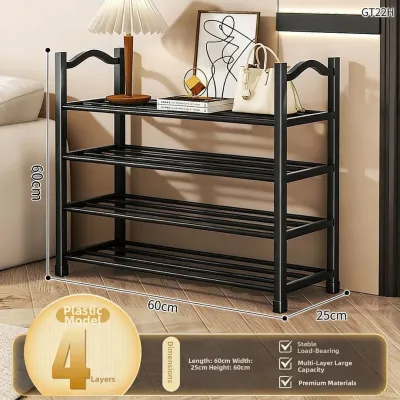
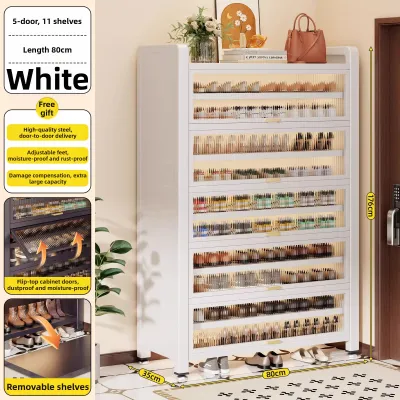
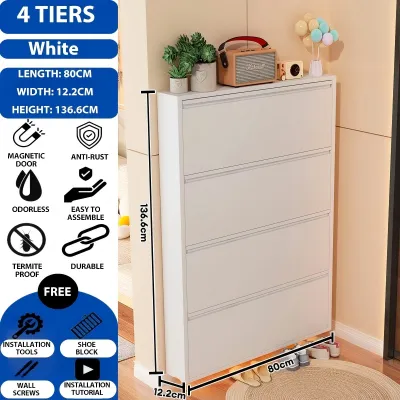
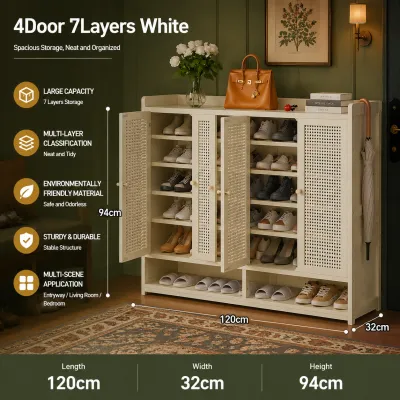
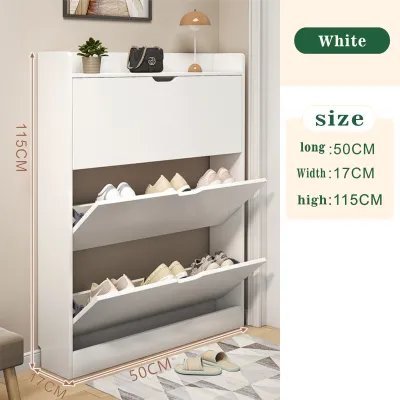
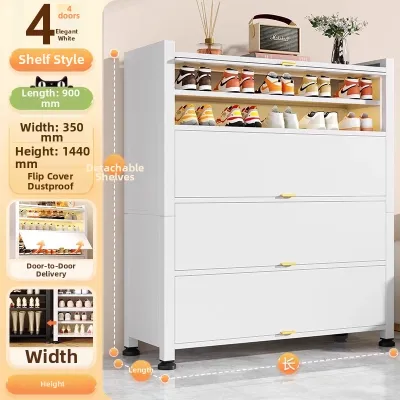
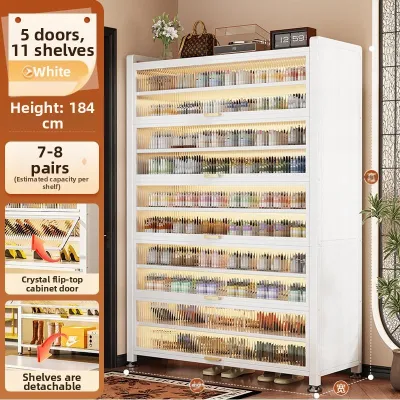
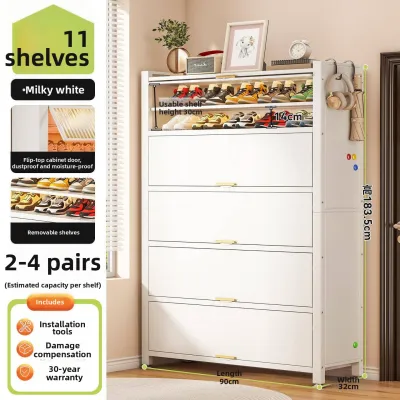
Prices are valid at publication and may change. Please refer to the product page for the latest price.
The clearance required for doors to operate is another vital factor. If your closet has hinged doors, measure the full arc of the door swing to ensure it will not collide with the cabinet. For sliding closet doors, check the track alignment to make sure the cabinet does not obstruct the panels. You must also verify that the cabinet doors themselves have enough clearance to open without hitting nearby bedroom furniture.
To prevent confusion, record all measurements in centimeters, the standard used by local furniture retailers in the Philippines. Once you have your final numbers, subtract a safety margin of at least two centimeters from the width and depth. This small clearance gives you the physical tolerance to maneuver the cabinet into the closet without scratching your paintwork or damaging the unit during assembly.
Calculating Capacity: Matching Dimensions to Your Shoe Collection
When browsing online marketplaces or local showrooms, you will frequently see shoe cabinets advertised with generic capacities, such as “holds 18 to 24 pairs.” It is risky to rely solely on these claims. These estimates are almost always calculated using small, low-profile footwear like flat sandals or slim slip-ons. If your collection consists of bulky sneakers, high heels, or boots, the actual capacity will be significantly lower.

To determine the exact cabinet dimensions you need, measure your own footwear. Gather your largest, longest, and widest pairs of shoes. Use your tape measure to find the maximum length from toe to heel, the widest part of the sole, and the total height. For example, high-top basketball sneakers or platform heels require much more vertical clearance and depth than flat step-ins. These dimensions establish the minimum internal depth and shelf height required.
Calculating the required shelf width is a straightforward mathematical exercise. Take the average width of your shoes, multiply it by the number of pairs you wish to store on a single shelf, and add a few centimeters of breathing room. If an average pair of your shoes is 20 centimeters wide and you want to fit three pairs side-by-side on one shelf, you need an internal shelf width of at least 65 centimeters. This prevents forcing shoes to overlap, which can deform them over time.
To maximize vertical storage efficiency, prioritize shoe cabinets with adjustable or removable shelves. A fixed-shelf cabinet often leaves wasted empty space above low-profile flats while failing to accommodate taller boots or high heels. Adjustable shelves allow you to customize the vertical clearance of each compartment, ensuring every centimeter of the cabinet’s height is utilized effectively. You can set tight shelves for slippers and wider gaps for bulkier footwear.
Comparing Space-Saving Cabinet Designs for Small Footprints
In a compact condominium, the mechanism of your shoe cabinet doors plays a massive role in determining how much usable space remains in your room or closet aisle. Different designs offer distinct spatial trade-offs that dictate where the cabinet can be placed and how easily you can access your collection.
Slim Tilt-Out Drawers
- Spatial Efficiency: Tilt-out or flip-down shoe cabinets are engineered for exceptionally narrow spaces, such as shallow closet alcoves or tight entryways. Instead of storing shoes flat on horizontal shelves, these cabinets hold them vertically or at a steep angle within hinged compartments. This unique configuration allows the cabinet to maintain a shallow exterior depth, often ranging between 15 and 24 centimeters.
- Clearance Requirements: While these slim units save floor space, you must calculate the front clearance. When pulled open, the drawer tilts downward and outward, temporarily extending the cabinet's footprint. Ensure there is sufficient clearance in front of the unit so the drawers can open fully without striking closet doors, bed frames, or opposing walls, while leaving room for you to stand.
- Footwear Limitations: The angled compartments of tilt-out designs restrict the types of shoes you can store. They are highly suited for flat shoes, sandals, canvas sneakers, and low-profile loafers. However, high-top sneakers, platform heels, and ankle boots generally will not fit inside these narrow slots. If your wardrobe consists primarily of high-profile footwear, a tilt-out model is not the most practical choice.
Sliding Door and Fold-Down Cabinets
- Aisle Optimization: Cabinets with sliding doors are highly effective at conserving space in tight closet aisles. Unlike traditional hinged doors that swing outward, sliding doors glide horizontally within their tracks. This eliminates front clearance requirements, allowing you to place other furniture or pathways directly adjacent to the cabinet without restricting access to your shelves.
- Access and Visibility: If you prefer to see your entire shoe collection at a single glance, fold-down or pull-out drawer systems offer excellent visibility. These mechanisms allow you to pull a shelf completely outward. However, these systems require a deeper cabinet body to house the heavy-duty drawer slides and hardware, making them less suitable for shallow closet alcoves.
- Hardware and Weight Limits: Before purchasing a sliding or pull-out cabinet, inspect the quality of the tracks. Overloading shelves with heavy leather shoes or thick-soled boots puts immense stress on moving parts. Look for sturdy metal tracks rather than thin plastic alternatives, and verify the manufacturer's specified weight capacity. Overloaded shelves can cause sliding doors to jump their tracks or jam over time.
Managing Clearance, Ventilation, and Installation Limits
The tropical climate of the Philippines presents unique challenges for closed storage systems. High relative humidity, particularly during the rainy season, creates an environment where mold, mildew, and musty odors thrive inside dark, enclosed spaces. When selecting a shoe cabinet for a condo closet, prioritizing proper air circulation is essential for protecting your footwear and surrounding garments from moisture damage.
To combat humidity, look for cabinet designs with passive ventilation features. Slatted doors, mesh panels, or built-in ventilation grilles on the back panel are excellent options that allow continuous airflow. If you prefer a fully closed aesthetic, plan to leave the cabinet doors open periodically to let the interior air out. Avoid placing a completely sealed cabinet in a dark, unventilated closet corner, as this creates a breeding ground for fungal growth that can ruin leather and fabric.
Weight distribution and stability are critical safety considerations, especially for tall, narrow shoe cabinets. These units have a high center of gravity, making them prone to tipping forward when multiple drawers are opened simultaneously or if heavy shoes sit on the upper shelves. Always store your heaviest footwear, such as work boots or thick-soled sneakers, on the bottom shelves to anchor the base. Ensure the cabinet sits perfectly level, using shims if your floor tiles or laminate planks are uneven.
To eliminate the risk of tipping, securely anchor any tall or narrow cabinet to the wall. Before drilling, verify the structural integrity of your closet wall. Many Philippine condos utilize concrete shear walls or hollow blocks covered in plaster, which require a hammer drill, masonry drill bits, and sturdy plastic wall plugs (tox) to secure the mounting screws. If your closet wall is made of drywall, locate the wall studs or use heavy-duty toggle bolts to ensure the anchors hold securely.
Common Sizing and Placement Mistakes to Avoid
One of the most frequent mistakes condo dwellers make is ignoring the door swing zone of both the closet doors and the room’s entry door. A shoe cabinet may physically fit into a corner on paper, but if its depth blocks your main closet door from opening fully, your daily routine will be disrupted. Always sketch a quick floor plan showing how all doors swing to ensure the cabinet remains completely outside these operational pathways.
Another common oversight is forgetting to account for the thickness of baseboards when measuring floor space. If your baseboards are two centimeters thick and your cabinet has a flush back with no bottom cutout, the entire unit is pushed forward by two centimeters. This gap prevents the cabinet from sitting flat against the wall, making it unstable and difficult to anchor securely. Look for cabinets designed with a recessed base or a rear cutout that accommodates standard baseboard heights.
Do not assume that a cabinet’s external dimensions represent its actual storage capacity. Thick side panels, backboards, and internal door hinges easily reduce the usable internal width and depth by three to five centimeters. For example, a cabinet with an external depth of 32 centimeters might only have an internal shelf depth of 28 centimeters, which is too shallow for larger shoes. Always verify the internal specifications or ask the seller for the exact shelf measurements before purchasing.
Finally, always measure the delivery pathway from your building’s entrance to your closet door. Even if a cabinet fits perfectly inside your closet, it is useless if it cannot fit inside the condo elevator, navigate tight hallway corners, or pass through your main entrance door. If you are purchasing a pre-assembled unit, double-check these clearance limits along the entire route. For flat-pack furniture, ensure you have sufficient open floor space in your condo to safely assemble the cabinet.
Frequently Asked Questions (FAQ)
How do I prevent mold inside a closed shoe cabinet in a humid climate?
To prevent mold growth in the humid Philippine climate, you must ensure your shoes are completely dry and clean before placing them inside the cabinet. Never store damp shoes immediately after walking in the rain. Place moisture-absorbing desiccants, such as silica gel packets, activated charcoal bags, or hanging dehumidifier bags, inside the cabinet compartments to capture excess moisture. Additionally, make it a habit to leave the cabinet doors open for a few hours during dry, sunny days to promote air circulation and keep the interior dry.
What is the minimum internal depth required for storing large sneakers?
Large athletic sneakers generally require a minimum internal depth of 33 to 35 centimeters to sit flat on a shelf without bending the heels or forcing the shoes to sit sideways. Because shoe sizes and sole designs vary significantly by brand, you should measure your largest pair from the tip of the toe to the edge of the heel. Add a clearance margin of one to two centimeters to this measurement to ensure easy retrieval. Always compare this total length against the cabinet’s internal shelf depth specification rather than its external depth.
Community discussion
Share your experience or ask a question. Comments are reviewed before publication.