
Finding the right shoe rack for your closet is more than just picking a design that looks good; it requires balancing your closet’s physical dimensions with the specific storage needs of your footwear collection. In many Philippine households, where seasonal rains, high humidity, and a diverse mix of footwear—ranging from casual tsinelas to formal leather shoes—are the norm, choosing the wrong size can lead to cramped closets, damaged shoes, or mold growth. To find the perfect fit, you must measure your available space, calculate your capacity needs, and select a configuration that allows for adequate airflow and easy access.
A well-planned shoe rack maximizes vertical space, keeps your entryway or bedroom clutter-free, and protects your investment in footwear. By understanding the physical boundaries of your wardrobe and the specific dimensions of your shoes, you can avoid the frustration of doors that will not close or shelves that crush your favorite pairs.
Assess Your Closet Space and Clearances
Before browsing online marketplaces or visiting local furniture showrooms, you must establish the exact physical boundaries of your available closet space. Grab a reliable steel tape measure to record the width, depth, and height of the designated area where the shoe rack will sit. If you plan to place the rack on the closet floor, measure the floor footprint directly rather than relying on general wardrobe specifications, as interior dimensions often differ from exterior frame measurements.
Products mentioned in this guide
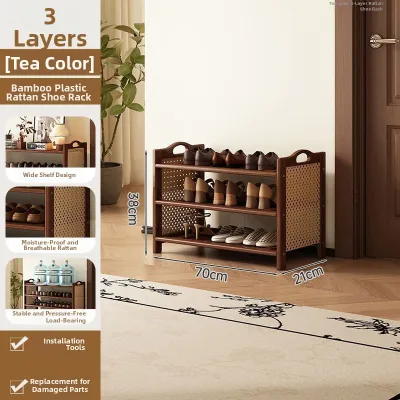
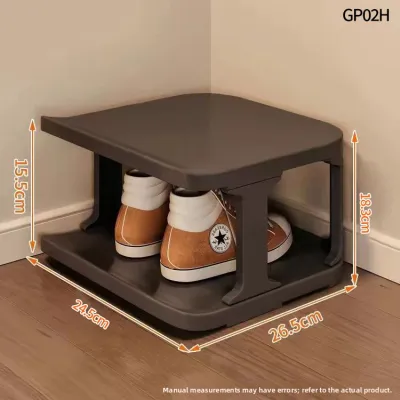
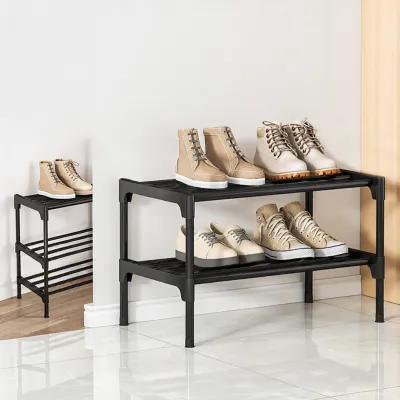
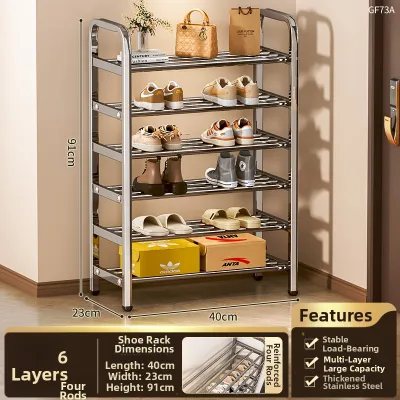
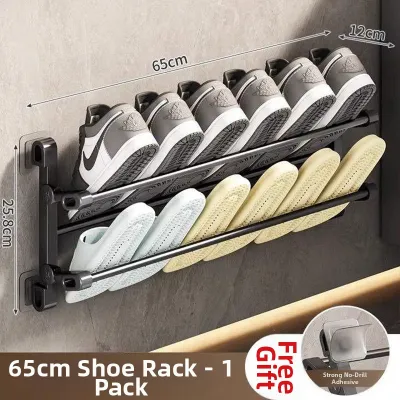
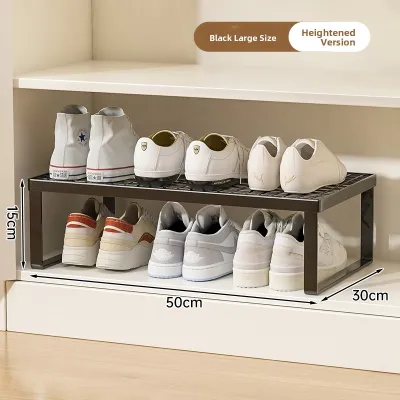
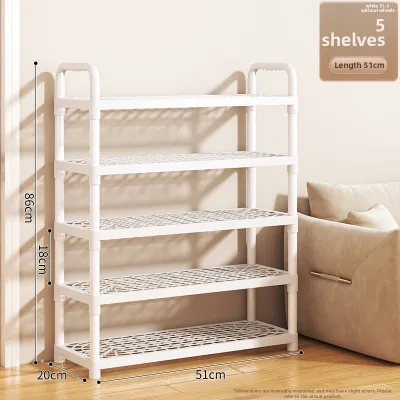
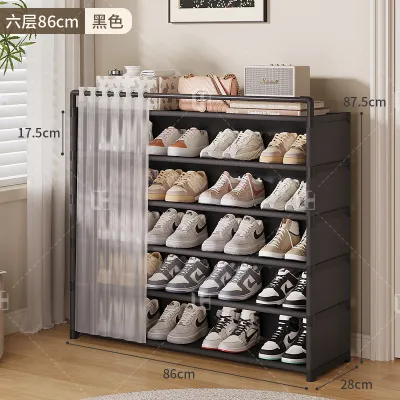
Prices are valid at publication and may change. Please refer to the product page for the latest price.
Architectural obstacles within the closet can easily disrupt your storage plans if overlooked. Pay close attention to baseboards along the back and side walls, which can prevent a flat-backed shoe rack from sitting flush against the wall, effectively stealing one to two centimeters of depth. Note the location of door hinges, sliding door tracks, and the swing path of your closet doors. In many Philippine homes, built-in closets utilize sliding doors that only expose half of the closet interior at a time; your shoe rack must be positioned so that it does not block the sliding mechanism or remain permanently inaccessible behind a door overlap.
Clearance is not just about the rack itself, but also about how you interact with the space. Ensure there is enough clearance in front of the rack for you to stand comfortably, bend down, and retrieve your shoes. If your closet features low-hanging clothes rods, measure the distance from the floor to the bottom of your hanging garments to ensure your shoe rack does not compress or wrinkle your clothes.
If you intend to place a shoe rack on an elevated closet shelf rather than the floor, you must verify the weight capacity of that shelf. A fully loaded shoe rack, especially one holding heavy leather boots or thick-soled sneakers, can weigh ten kilograms or more. Check the brackets and supports of your existing shelving to ensure they can handle this concentrated load without sagging or collapsing over time.
Calculate Your Shoe Collection Capacity Needs
An accurate shoe count is the foundation of choosing the correct rack size. Begin by gathering every pair of shoes you own and counting them, then add a fifteen to twenty percent buffer for future purchases or seasonal additions. If you skip this buffer, your new storage system will be fully congested from day one, leaving no room for growth.

Footwear is rarely uniform in shape or size, meaning you cannot rely on a single average dimension to calculate your capacity. Group your collection into distinct categories: flat sandals and tsinelas, standard sneakers and running shoes, high heels, and boots. Flat shoes require very little vertical clearance (typically ten to twelve centimeters) and can often be double-stacked or placed on narrow shelves. In contrast, high heels and ankle boots need fifteen to twenty-five centimeters of height, while tall boots require thirty-five to fifty centimeters of vertical space to prevent the shafts from creasing.
Once categorized, determine the number of tiers or individual slots you need based on these specific heights. For example, if you own fifteen pairs of flat shoes and five pairs of boots, a uniform five-tier rack with fixed fifteen-centimeter gaps will leave your boots bent and wasted empty space above your flats. Instead, look for configurations that offer varied tier heights or modular layouts that adapt to your specific inventory.
To keep your closet functional, separate your daily-use footwear from your occasional or seasonal pairs. Your everyday slippers, work shoes, or school sneakers should occupy the most accessible middle and lower-middle tiers of the rack. Occasional footwear, such as formal dress shoes or heavy hiking boots, can be relegated to the very top or bottom tiers, or even stored in clear, stackable boxes on higher closet shelves to save prime real estate.
Match Shoe Rack Dimensions to Your Space
Once you have your physical measurements and capacity requirements, you can select the ideal shoe rack style. Freestanding floor racks are highly stable and simple to install, making them excellent for spacious walk-in closets or wide reach-in wardrobes. If floor space is exceptionally tight, stackable plastic cubes or modular interlocking organizers allow you to build upward, utilizing narrow vertical gaps that would otherwise go unused.
For exceptionally small closets, over-the-door organizers or hanging fabric shelves that attach directly to your closet rod are excellent alternatives. However, before choosing an over-the-door model, verify that your closet door frame has at least a three-millimeter gap at the top and sides to allow the door to close smoothly with the brackets in place. Hanging fabric organizers are lightweight and budget-friendly, but they are best reserved for lighter footwear like sandals, flats, and canvas sneakers, as heavy leather shoes can cause the fabric shelves to sag and distort.
Standard shoe rack depths typically range between thirty and thirty-five centimeters, which comfortably accommodates most shoe sizes up to a men’s US size ten or eleven. If someone in your household wears larger sizes, standard shelves may cause the shoes to overhang, preventing sliding closet doors from closing or blocking the walking path. For larger footwear, look for racks with a depth of thirty-eight to forty centimeters, or opt for angled-shelf designs that store shoes at a downward slant to save horizontal depth.
Adjustable shelves and modular designs offer the highest level of future-proofing for your closet. Racks with removable or height-adjustable shelves allow you to customize the spacing as your collection evolves, such as removing a shelf during wet months to accommodate taller rain boots. When evaluating prices in the Philippines, basic plastic or wire shoe racks generally range from ₱300 to ₱1,000, mid-range modular engineered wood or sturdy metal racks cost between ₱1,200 and ₱4,000, while premium, custom-fitted closet storage systems can exceed ₱5,000.
Common Sizing Mistakes to Avoid
One of the most frequent mistakes is forgetting to account for the swing clearance of the closet door. A shoe rack might fit perfectly inside the closet footprint when the doors are wide open, but if its depth extends even a centimeter too far, it can block hinged doors from latching shut or stall sliding doors along their tracks. Always measure the clearance with the closet doors fully closed to ensure a seamless fit.
Another common error is assuming that all shoe racks are built to accommodate all types of footwear. Purchasing a rack with fixed, narrow tier heights often forces you to store heels on their sides or bend the shafts of tall boots, which can permanently damage the materials and ruin the structural integrity of the shoes. If you have a diverse collection, avoid uniform racks in favor of those with adjustable shelving or dedicated tall sections.
In the tropical and highly humid climate of the Philippines, ignoring ventilation is a critical mistake. Enclosed shoe cabinets or tightly packed plastic bins trap moisture, sweat, and humidity, creating an ideal breeding ground for mold, mildew, and unpleasant odors. Over time, this trapped moisture can cause synthetic leathers to peel and natural leathers to rot. To prevent this, prioritize open-backed racks, slatted wooden shelves, or wire mesh grids that promote continuous airflow around your footwear.
Finally, avoid overloading stackable or hanging organizers beyond their structural limits. While these systems are excellent for saving space, exceeding the manufacturer’s specified weight capacity can cause plastic joints to crack, metal rods to bend, or hanging fabric straps to tear. Always distribute the weight evenly, placing heavier boots and sneakers on the bottom tiers and lighter flats or slippers near the top.
Frequently Asked Questions (FAQ)
How much depth does a standard shoe rack need?
A standard shoe rack typically requires a depth of thirty to thirty-five centimeters. This range accommodates most average adult shoe sizes without letting the heels or toes overhang the edges of the shelves. However, if you or members of your household wear larger shoe sizes, such as a men’s US size twelve or above, you should look for a rack with a depth of thirty-eight to forty centimeters.
To find your exact depth requirement, measure your largest pair of shoes from the back of the heel to the tip of the toe using a ruler or tape measure. Add a safety margin of two centimeters to this measurement to ensure the shoes do not slide off or press against the closet door when closed. If your closet depth is extremely limited, consider an angled shoe rack, which stores footwear at a slant and reduces the required shelf depth to twenty-five centimeters or less.
What is the best shoe rack for a narrow closet?
The best shoe rack for a narrow closet is one that prioritizes vertical storage over horizontal floor space. Tall, slim stackable shoe towers or modular interlocking plastic cubes are excellent because they let you build upward, utilizing the narrow gaps next to hanging clothes. These units can easily fit into corners that are otherwise wasted.
Over-the-door organizers are another highly effective option for narrow closets, as they utilize the back of the door and require zero floor space. Before purchasing an over-the-door model, ensure your door hinges are strong enough to support the added weight and that the frame clearance allows the door to close. Alternatively, low-profile, two-tier stackable racks can be placed directly underneath short-hanging garments like shirts and jackets, making efficient use of the lower half of your closet.
Community discussion
Share your experience or ask a question. Comments are reviewed before publication.