
Choosing the right boneless sofa bed for your living room comes down to measuring your available floor space, matching the configuration to your household’s daily seating needs, and selecting a layout that accommodates both lounging and sleeping. Because boneless or frameless foam-based designs lack a rigid internal wooden or metal frame, they offer unique flexibility and a low-profile aesthetic. However, finding the perfect fit requires careful planning of clearances, seat counts, and modular options to ensure your living space remains functional, breathable, and comfortable.
Assessing Your Living Room Space and Clearances
Before purchasing a boneless sofa bed, you must map out the exact floor space where it will sit. Use a tape measure to determine the length and width of the designated area, and mark the footprint on your floor using masking tape. This physical outline helps you visualize how much room the sofa will occupy alongside existing furniture, coffee tables, and media consoles.
Traffic flow is critical, especially in tropical climates like the Philippines where open, airy spaces help maintain comfortable indoor temperatures. Ensure you leave at least 60 to 75 centimeters of walking space around the sofa bed so family members can move freely without squeezing past. You must also verify that the sofa’s placement does not block access to balconies, windows, emergency exits, or the direct airflow from wall-mounted air conditioners and floor fans.
Products mentioned in this guide
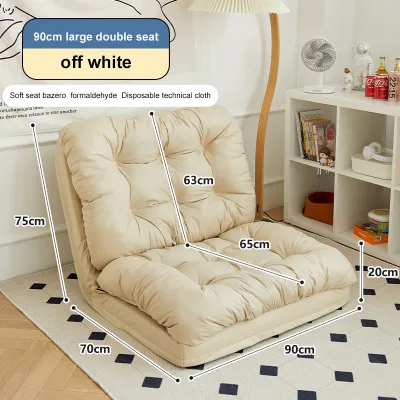
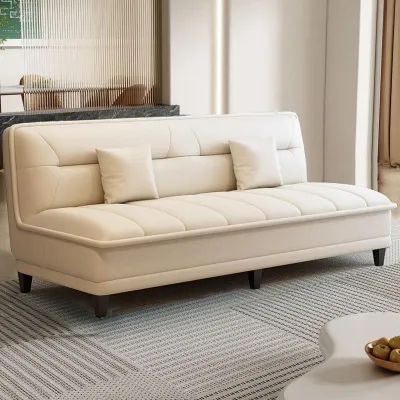
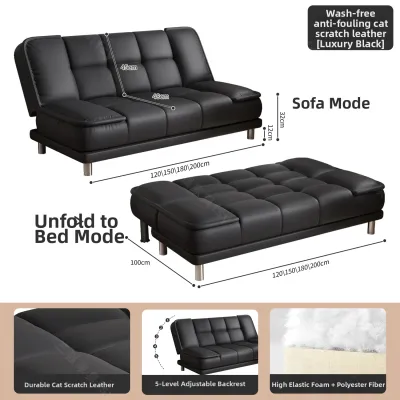
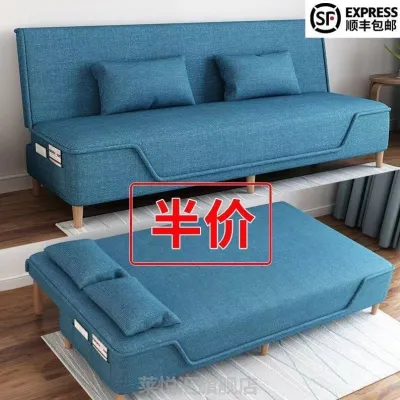
Prices are valid at publication and may change. Please refer to the product page for the latest price.
The visual weight of a boneless sofa bed is significantly different from traditional framed furniture. Because these designs sit low to the ground, they can make a small living room feel more open and spacious. However, this low-profile look means you should check how the height aligns with your windows and other low-standing furniture to maintain a balanced aesthetic.
Matching Seat Count to Your Family Size
Selecting the right seat count depends on your daily household size and how often you host guests. For smaller families or couples, a 3-seat boneless sofa bed provides ample room for daily relaxation while remaining compact enough for cozy living spaces. If you have a larger household or frequently entertain relatives, a 4-seat or 5-seat configuration offers the necessary capacity to prevent anyone from sitting on the floor.

When planning your seating capacity, consider general ergonomic spacing to ensure everyone sits comfortably. A standard guideline is to allow at least 60 to 70 centimeters of width per person, which prevents overcrowding and reduces heat buildup when multiple people sit together during warm afternoons. Check the manufacturer’s specifications for individual seat widths, as frameless designs sometimes feature wider, plush cushions that alter the overall footprint.
Multi-functional use is another key factor in determining seat count. If you plan to use the sofa bed frequently for sleeping or deep lounging, you will need a larger configuration that can unfold into a spacious bed. A larger footprint ensures that when the unit is converted, it still provides a comfortable sleeping surface without requiring you to rearrange your entire living room layout every night.
Comparing L-Shaped, Modular, and Straight Layouts
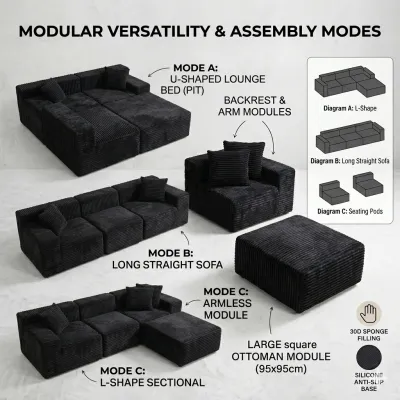
The physical configuration of your boneless sofa bed should match both your room’s geometry and your family’s lifestyle. L-shaped configurations are excellent for corner placements, helping you maximize corner space that might otherwise go unused. They are also highly effective at defining distinct zones in open-plan living areas, though you must check the chaise orientation (left-facing versus right-facing) to ensure it aligns with your room’s main focal point, such as a television or window view.
Modular setups offer the ultimate flexibility, allowing you to rearrange individual seating sections or expand your setup as your living situation changes. This adaptability is perfect for dynamic households, but you must verify the connection mechanisms used to hold the pieces together. Check if the modules use high-friction bottom fabrics, interlocking straps, or heavy-duty connectors to prevent the individual seats from sliding apart when someone sits down.
Straight layouts remain the most practical choice for narrow or linear living rooms where floor space is at a premium. These classic designs sit neatly against a single wall, keeping the center of the room clear for foot traffic. When choosing a straight boneless sofa, evaluate the depth of the frameless cushions to ensure that even when fully assembled, they do not protrude too far into your primary walkways.
Checking Delivery Access and Structural Limits
Even the most comfortable boneless sofa bed is only practical if you can successfully bring it into your home. Before finalizing your purchase, measure the width and height of all doorways, narrow hallways, stairwells, and elevator doors. Compare these measurements against the dimensions of the largest indivisible module or the packaged shipping boxes to avoid delivery day complications.
Weight and floor protection are also important considerations for frameless furniture. While boneless sofas are generally lighter than traditional wooden-framed couches, high-density foam modules can still be surprisingly heavy and dense. Check the bottom material of the sofa and plan to use non-slip floor protectors or a sturdy area rug to prevent the modules from sliding on smooth tiled or polished hardwood floors, which are common in local homes.
Finally, review the manufacturer’s guidelines regarding weight limits and structural integrity. Because these sofas rely on dense foam layers rather than a steel or wooden frame, their stability depends entirely on the quality of the foam construction. Verify the recommended weight capacity for both the seating and sleeping configurations to ensure the sofa bed can safely support your family and guests over years of daily use.
Common Sizing and Placement Mistakes to Avoid
One of the most common mistakes when buying a boneless sofa bed is ignoring the fully extended bed footprint. Many homeowners measure their space only for the sofa configuration, only to find that when unfolded, the bed blocks bedroom doors, hallways, or nearby cabinets. Always measure the total length of the sofa when it is fully converted into a bed to ensure it fits comfortably during nighttime use.
Overcrowding the room is another frequent error, especially when buyers opt for a massive 5-seat setup in a modest living space. While maximizing seating is tempting, a sofa that is too large will restrict daily movement and make your living room feel cramped and hot. Prioritize open walkways and ventilation over maximum seating capacity to maintain a comfortable living environment.
Lastly, do not neglect modular alignment when planning your layout. Because boneless sofas have soft, rounded edges, they may not sit perfectly flush against baseboards or uneven walls. Check the straightness of your walls and ensure that any modular pieces align neatly with adjacent furniture to prevent awkward gaps that can collect dust and debris.
Frequently Asked Questions (FAQ)
Can I add more seats to a modular boneless sofa bed later?
Yes, you can often expand a modular boneless sofa bed, provided you check a few key details first. Verify with the manufacturer that individual matching modules are sold separately and that the connection hardware is compatible. Keep in mind that fabric dye lots can vary over time, and older modules may show slight wear or color differences compared to brand-new sections added later.
Do boneless sofa beds require a specific type of flooring?
Boneless sofa beds do not require a specific flooring type, but they perform best on surfaces that offer some traction. On smooth surfaces like ceramic tiles or polished wood, frameless foam modules may slide when you sit down or stand up. Using a textured area rug or placing non-slip rubber pads underneath the modules will help anchor the sofa bed securely in place.
Community discussion
Share your experience or ask a question. Comments are reviewed before publication.