
Finding the right foyer console table is a balancing act between physical space constraints and your home’s visual aesthetic. Rather than relying on standard furniture dimensions, the most effective approach is to evaluate your specific entryway layout, measure clearances, and define how you will use the surface daily. In tropical climates like the Philippines, where entryways often handle everything from dusty shoes to wet umbrellas during the rainy season, your choice of console table must also account for environmental factors like humidity and ventilation. By taking a systematic approach to measuring, styling, and planning, you can select a piece that serves as a practical drop zone while creating a welcoming first impression.
Assessing Your Foyer Space and Traffic Flow
Before browsing online marketplaces or visiting local showrooms, you must establish the physical boundaries of your entryway. Start by measuring the length of the wall where you plan to place the table. Be sure to note any architectural features that could interfere with the table’s placement, such as light switches, electrical outlets, baseboard moldings, or wall vents. If your foyer features a front door that swings inward, measure the full arc of the door swing to ensure the table will not block the entrance or risk being struck when someone enters.
Traffic flow is another critical consideration when mapping out your foyer. The entryway is a high-activity zone where family members and guests constantly pass through, often carrying bags, groceries, or umbrellas. To maintain a comfortable pathway, ensure there is enough clearance for at least one person to walk past the table without having to turn sideways. In standard residential layouts, maintaining a clear walkway of at least 90 centimeters is recommended to prevent the space from feeling cramped or hazardous.
Products mentioned in this guide

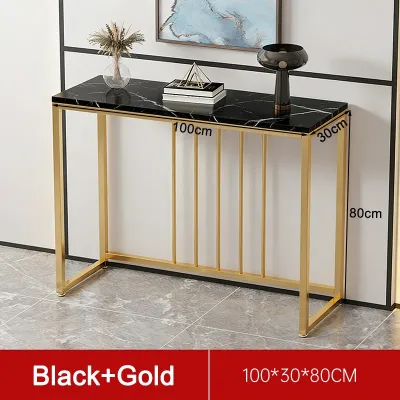

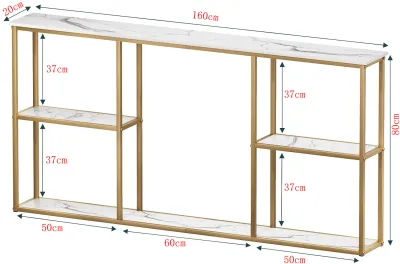
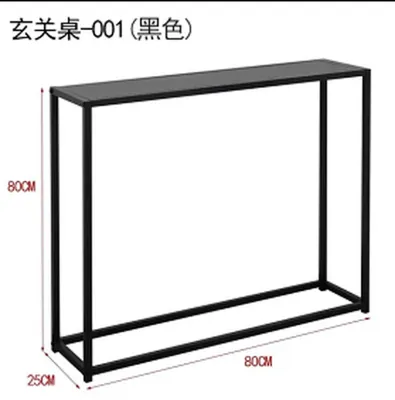
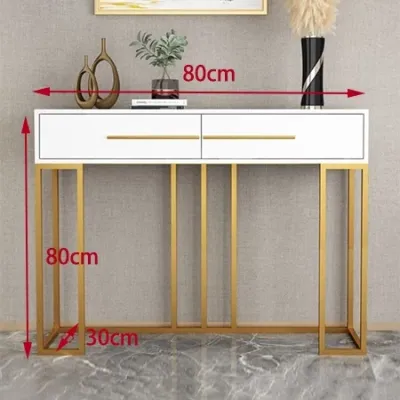
Prices are valid at publication and may change. Please refer to the product page for the latest price.
Visual weight also plays a significant role in how spacious your foyer feels. A heavy, solid wooden console table can easily overwhelm a narrow hallway, making the entire entrance feel dark and confined. Conversely, a very small, delicate table might look lost in a grand, double-height foyer. Assess the overall volume of your entryway and aim for a table that matches the scale of the surrounding space, keeping in mind that open-frame designs can help maintain a sense of airiness in tighter quarters.
Determining the Ideal Console Table Dimensions
Once you have mapped out your traffic flow, you can calculate the specific height, width, and depth proportions that will fit your foyer. The height of your console table should be both visually balanced and physically comfortable. Most standard console tables stand between 75 and 85 centimeters tall, which aligns well with the average height of light switches and door handles. If you plan to use the table primarily as a drop zone for keys, mail, and daily essentials, choose a height that allows you to reach the surface comfortably without bending over.

The width of the table should be determined by the length of the wall it sits against. As a general rule of thumb, a console table should occupy approximately two-thirds of the available wall length. This proportion leaves adequate breathing room on both sides, preventing the table from looking squeezed into a corner or awkwardly isolated on a massive wall. If the table is placed between two doorways, ensure there is a buffer of at least 15 to 20 centimeters on either side to keep the transition zones clear.
Depth is perhaps the most critical dimension when selecting a foyer console table, especially in narrow entryways. Standard console depths range from 30 to 45 centimeters, but exceptionally shallow models can be as slim as 20 to 25 centimeters. If your foyer is narrow, opting for a shallow depth ensures the table does not protrude into the walking path. Always prioritize walking clearance over surface area; a table that is too deep will quickly become a daily physical obstacle.
Matching the Console Table Style to Your Home Aesthetic
Your foyer sets the design tone for the rest of your home, making the console table a key styling element. To create a cohesive transition, identify the dominant interior style of your living spaces and look for a table silhouette that reinforces that theme. For instance, a minimalist home benefits from a console table with clean lines, geometric shapes, and a sleek profile. A rustic or farmhouse aesthetic, on the other hand, pairs beautifully with textured finishes, warm wood tones, and robust hardware.
Coordinating materials and finishes is essential for integrating the table into your existing decor. Look at the flooring, wall colors, and nearby furniture pieces to guide your material selection. If your home features warm wood floors, you can choose a matching wood tone or opt for a contrasting painted finish to create visual interest. In humid tropical environments, it is wise to verify that wooden tables have been treated with moisture-resistant finishes to prevent warping, and to check that metal frames are powder-coated to resist rust.
The design of the table’s base also influences the visual lightness of your entryway. A solid, grounded base with drawers or cabinets offers excellent storage but can make a small foyer feel more enclosed. An open, airy leg design—such as a console with slender metal legs or a trestle base—allows light to pass through, creating the illusion of more floor space. Consider the balance of light and shadow in your foyer when deciding between these two structural styles.
Defining the Functional Purpose of Your Foyer Table
A foyer console table should be as functional as it is beautiful. Before making a final decision, define exactly how you and your household will use the table on a daily basis. If your entryway tends to accumulate clutter like shoes, bags, dog leashes, and umbrellas, prioritize a table with concealed storage. Drawers are excellent for tucking away keys, mail, and chargers, while lower shelves can accommodate decorative baskets or bins to keep shoes organized and out of sight.
If your primary goal is to create an inviting decorative display, focus on a table with a generous surface area. This allows you to style the table with a table lamp, a tray for small items, a vase of fresh flowers, or curated decorative objects. Keep in mind that a well-lit entryway feels safer and more welcoming, so planning space for a small lamp or ensuring the table sits near an electrical outlet is a practical step during the selection process.
For homes with limited space, multi-functional console tables offer clever solutions to everyday storage challenges. Look for designs that incorporate built-in shoe racks beneath the main tabletop, or models that feature open space underneath where you can tuck a pair of small stools or ottomans. This setup provides a convenient place to sit while putting on or taking off shoes, and the seating can easily be pulled into the living room when hosting guests.
Verifying the Fit and Clearance Before You Buy
Before finalizing your purchase and allocating your ₱ budget, it is crucial to verify the physical fit of the console table in your actual space. One of the simplest and most effective ways to do this is by using painter’s tape to outline the table’s exact footprint on both the floor and the wall. This simple exercise provides a three-dimensional sense of how much physical and visual space the table will occupy, allowing you to test door swings and walk past the outlined area to ensure the clearance feels comfortable.
Do not forget to plan for the delivery process itself. Measure your front door frame, hallway widths, and any stairwells or elevator doors the packaged table must pass through to reach your foyer. Many console tables are delivered fully assembled or in large, flat-packed boxes that can be difficult to maneuver around tight corners. Ensuring that the package can safely navigate these entry points prevents delivery-day headaches and potential damage to your walls or the furniture.
Finally, review the manufacturer’s care and maintenance instructions to ensure the materials align with your lifestyle. Entryway furniture is subjected to daily wear and tear, dust, and varying humidity levels. If you have young children or pets, look for durable, easy-to-clean surfaces like tempered glass, sealed stone, or high-quality laminates rather than delicate, untreated wood finishes. Checking these details beforehand ensures your foyer console table remains a beautiful and functional part of your home for years to come.
Frequently Asked Questions (FAQ)
How much space should I leave between a console table and a mirror?
When hanging a mirror above a foyer console table, aim to leave a gap of 15 to 20 centimeters between the bottom of the mirror frame and the top of the table surface. This spacing creates a clear visual distinction between the two pieces while keeping them connected as a single design unit. If the gap is too wide, the mirror will look like it is floating aimlessly on the wall; if it is too narrow, the display can feel crowded, especially if you place taller decorative items like vases or lamps on the table.
Can I use a console table in a very narrow entryway?
Yes, you can successfully use a console table in a very narrow entryway by selecting a shallow-depth model or a wall-mounted floating console. Floating consoles are particularly effective for tight spaces because they leave the floor underneath completely clear, which visually expands the room and makes cleaning much easier. To enhance the sense of openness, choose a table with a slender metal frame, a glass top, or a light-colored finish that reflects natural light throughout the hallway.
Community discussion
Share your experience or ask a question. Comments are reviewed before publication.