
To safely and comfortably share a large hammock with two or more people, you must look beyond generic marketing labels and focus on two critical metrics: a generous usable fabric width and a total weight capacity that accounts for both static weight and dynamic movement. In tropical climates like the Philippines, where a backyard or balcony hammock—locally known as a duyan—is a staple for catching a cooling breeze, choosing the right specifications ensures your relaxation spot remains safe and structurally sound. By verifying the exact physical dimensions of the fabric and calculating a realistic weight buffer, you can prevent bottoming out, fabric tears, or structural failures.
Selecting a multi-person hammock requires a systematic approach to sizing, weight limits, and installation hardware. Because there is no universal standard for what constitutes a “double” or “family” size, you must evaluate the physical specifications of the hammock bed and the structural integrity of your support system. Taking the time to measure your space and inspect your hardware ensures a comfortable, worry-free experience for everyone sharing the space.
Decoding Dimensions for Multiple Users
When shopping for a large hammock, the most common mistake is relying solely on generic marketing terms like “double,” “extra-large,” or “family size.” These labels vary significantly between manufacturers, meaning one brand’s double might feel cramped for two adults, while another’s is exceptionally spacious. To ensure a comfortable fit, always check the manufacturer’s specifications for the exact bed length and width, which represent the actual fabric dimensions before suspension.
Products mentioned in this guide
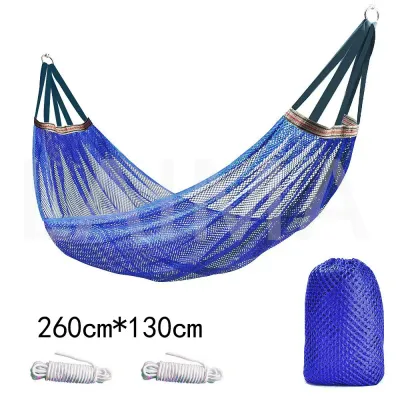
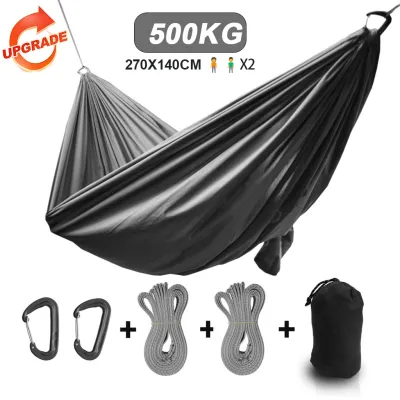


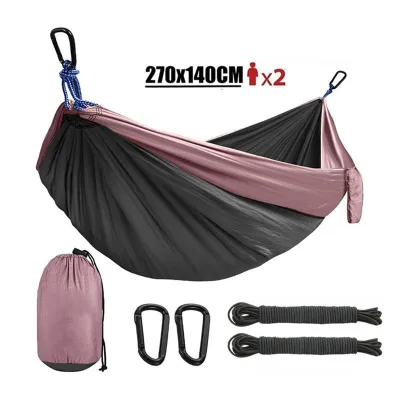


Prices are valid at publication and may change. Please refer to the product page for the latest price.
Fabric width is the single most important factor for multi-person comfort. A standard single hammock typically measures around 120 to 140 centimeters wide, which is only sufficient for one person to lie diagonally. For two or more adults to share the space without feeling squeezed together, look for a fabric width of at least 180 to 200 centimeters. This extra width provides enough material to support different seating and laying configurations without the fabric walls pinching your shoulders.
It is also essential to differentiate between the total flat fabric width and the actual usable laying space once the hammock is hung. When a hammock is suspended, the fabric naturally curves and bunches at the ends, which reduces the flat, usable surface area. If you plan to lie side-by-side, you will need a wider bed to prevent rolling into each other at the center. If you prefer an overlapping or perpendicular seating position, a slightly narrower but longer fabric bed may suffice, though a wider design always offers superior versatility.
Laying positions also dictate how much fabric you need. The most comfortable way to lie in a gathered-end hammock is diagonally, which flattens the fabric and prevents your back from banana-curving. When two people attempt to lie diagonally in the same hammock, they require ample fabric width to cross angles comfortably. Without this extra material, you will be forced to lie inline, which often results in shoulder squeezing and head-to-head crowding.
Calculating the Required Weight Capacity
Determining the correct weight capacity is a matter of safety and structural longevity. To start, calculate the combined weight of all intended users who might share the hammock simultaneously. Be realistic with these measurements, and always plan for the maximum potential load rather than an average estimate. If family members, friends, or pets are likely to climb in together, their weights must all be factored into the baseline calculation.

Once you have the static combined weight, you must add a dynamic load buffer. A dynamic load refers to the temporary increase in force exerted on the hammock and its suspension during movement, such as sitting down, swinging, shifting positions, or climbing in and out. A sudden drop onto the fabric can easily double the instantaneous force applied to the support points. To account for this, add a safety buffer of at least 20 to 30 percent to your static weight calculation.
Always locate and interpret the manufacturer’s official maximum weight limit, which is typically printed on the product tag, packaging, or instruction manual. For a multi-person hammock, this rating should ideally be at least 200 to 250 kilograms (approximately 440 to 550 pounds). If the manufacturer does not clearly state a weight limit, treat the product with caution and avoid using it for multiple occupants.
It is also critical to understand the difference between the working load limit and the ultimate breaking strength. The working load limit is the maximum weight the manufacturer deems safe for regular, daily use under normal conditions. The ultimate breaking strength is the point of catastrophic failure where the fabric, ropes, or joints physically break. Never attempt to test or approach the ultimate breaking strength; always keep your combined static and dynamic weight well within the stated working load limit.
Matching Installation Space and Support Hardware
An exceptionally strong hammock is only as safe as the space and hardware supporting it. Before purchasing a large hammock, measure the distance and height between your intended anchor points, whether they are trees, wooden posts, concrete pillars, or a freestanding metal frame. A larger hammock requires a longer hanging distance and higher anchor points to maintain the optimal 30-degree suspension angle, which prevents excessive tension on the support structures.
If you are installing the hammock in a garden or yard, verify the structural integrity of your anchor points. Trees must be mature, healthy hardwoods with a trunk diameter of at least 30 centimeters; avoid softwoods, young trees, or dead branches that could snap under a multi-person load. If you are using wooden posts or concrete pillars on a patio or balcony, ensure they are deeply anchored into the ground or structurally tied to the building’s foundation to withstand lateral pull forces.
Your suspension hardware must be individually rated to exceed your total calculated multi-person load. Standard hardware included in budget packages is often designed only for single-user limits. Upgrade to heavy-duty, tree-friendly straps that are at least 3.8 centimeters wide to protect tree bark and distribute weight evenly. Ensure all carabiners, S-hooks, and ropes carry an official load rating that matches or exceeds the hammock’s maximum capacity.
Remember that the suspension system operates under tension, which multiplies the force applied to the anchor points. When a hammock is hung too flat (with a low sag angle), the tension on the straps and anchors increases exponentially. Maintaining a proper sag—where the hammock resembles a gentle banana shape—reduces the stress on your hardware and anchor points, ensuring the setup can easily support multiple users.
Pre-Use Safety Checks and Sizing Mistakes
One of the most common mistakes is assuming that the hardware bundled with a hammock is automatically sufficient for maximum multi-person loads. Many manufacturers package their large hammocks with standard-grade ropes or lightweight carabiners to keep retail costs down. Always inspect the load ratings of these included accessories, and do not hesitate to purchase separate, heavy-duty climbing-rated carabiners and suspension straps if the bundled items look thin or lack clear specifications.
Establish a routine of inspecting your entire hammock setup before every use, especially if it is installed outdoors where it is exposed to tropical sun, high humidity, and rain. Check the fabric for signs of UV degradation, color fading, or thinning fibers, which can drastically reduce material strength. Inspect the stitching along the seams and end loops for fraying, and examine metal rings, carabiners, and chains for rust, cracks, or physical deformation.
Pay close attention to the knots and strap adjustments. Over time, nylon and polyester ropes can stretch or slip, especially under heavy loads. Ensure that straps are lying flat against the tree or post and have not slid down, which can alter the hanging angle and increase tension. If you notice any wear, replace the affected component immediately before allowing anyone to sit in the hammock.
Finally, prioritize safety over convenience. If you are unsure about the stability of a tree, the strength of a balcony railing, or the load-bearing capacity of an indoor wall, stop the installation immediately. Do not attempt to mount a multi-person hammock to hollow blocks, drywall, or decorative wooden posts. When in doubt, consult a qualified contractor or structural professional to verify your anchor points before suspending a heavy load.
Frequently Asked Questions (FAQ)
Can I use a large hammock indoors without a stand?
Yes, you can install a large hammock indoors without a stand, but you must anchor it directly into solid structural elements. Never attach hammock hardware to drywall, plaster, or hollow concrete blocks, as these materials cannot support lateral or downward forces and will fail catastrophically. Instead, use a stud finder to locate the center of solid wood ceiling joists or wall studs, or anchor directly into poured concrete walls using heavy-duty expansion bolts.
Before drilling, check your home’s building specifications to ensure the framing can handle dynamic lateral pull forces. When a multi-person hammock is occupied, it exerts a horizontal force on the walls that can be significantly higher than the actual weight of the users. If you are renting or cannot verify the structural integrity of your walls, using a heavy-duty, freestanding steel hammock stand is a much safer and more reliable option.
Does a spreader bar change the size and capacity requirements?
Yes, a spreader bar significantly alters how a hammock behaves, distributes weight, and utilizes space. Hammocks with spreader bars hold the fabric flat and taut, preventing it from wrapping around you like a cocoon. While this makes it easier to step into and keeps the fabric flat, it also raises the center of gravity, making the hammock much more prone to tipping over if weight is not distributed evenly.
Because the fabric is held flat, you do not need as much excess width to lie comfortably side-by-side compared to a gathered-end design. However, the rigid wooden or metal spreader bars introduce new failure points. You must carefully inspect the joints where the ropes meet the bar, as well as the bar itself, for cracks or warping. Always check the specific weight rating for the spreader bar assembly, as it may have a lower capacity than a comparable gathered-end fabric hammock.
Community discussion
Share your experience or ask a question. Comments are reviewed before publication.