
Finding the perfect bamboo shoe cabinet for your home is a balancing act between the physical limits of your room and the storage needs of your household. Whether you plan to place it in a busy entryway or a quiet bedroom corner, selecting the right size ensures your footwear remains organized without cluttering your living space. To make an informed decision, you must measure your available floor area, account for door clearances, and evaluate the specific types of shoes you own.
In tropical climates like the Philippines, where high humidity and sudden rain showers are part of daily life, choosing the right storage solution is even more critical. A well-sized bamboo cabinet not only keeps your everyday slippers, sneakers, and formal shoes organized but also promotes proper air circulation to protect your footwear from moisture buildup. By taking precise measurements and planning for your household’s habits, you can find a durable, stylish, and highly functional piece of furniture that fits seamlessly into your home layout.
Assess Your Available Floor Space and Clearance
Before browsing online catalogs or visiting local furniture showrooms, you must establish the exact physical boundaries of the designated area. Use a reliable metal measuring tape to record the maximum width, depth, and height available in your entryway or bedroom. Do not rely on visual estimates, as even a discrepancy of a few centimeters can prevent a cabinet from fitting into a recessed nook or sitting flush against a wall.
Products mentioned in this guide
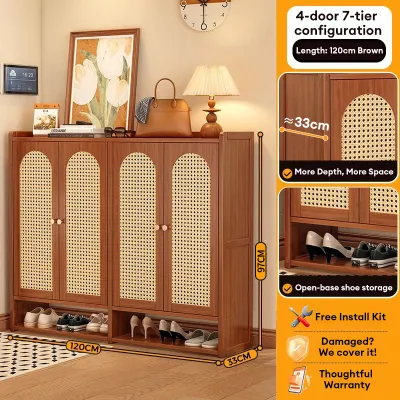

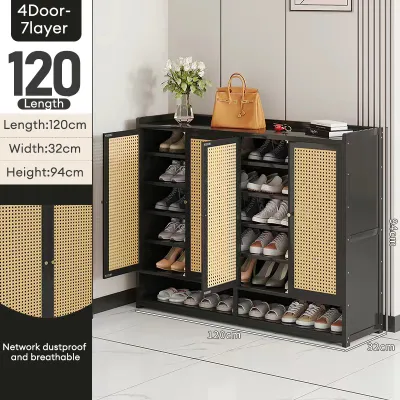
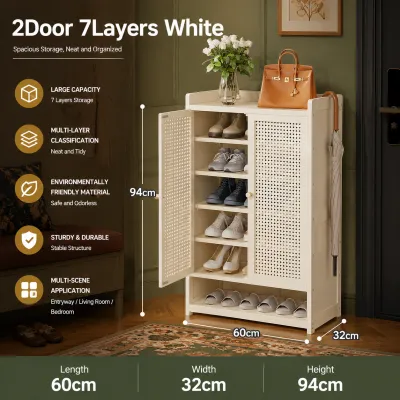
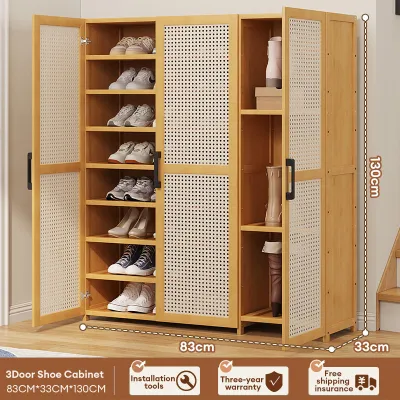
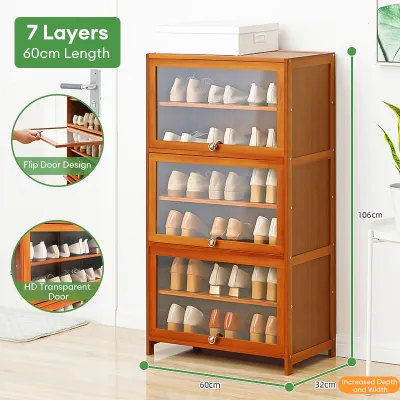
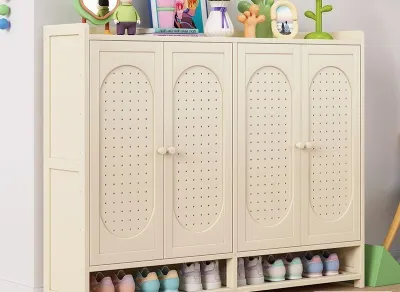
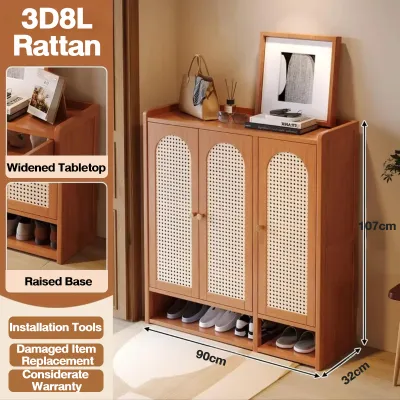
Prices are valid at publication and may change. Please refer to the product page for the latest price.
When measuring, pay close attention to architectural features that might obstruct the cabinet. Baseboards, wall moldings, electrical outlets, and light switches can all impact how a piece of furniture sits in a space. If your entryway has a baseboard that projects outward, measure the distance between the baseboards rather than wall-to-wall to ensure the cabinet does not stick out awkwardly or block a doorway.
Walkway clearance is another critical factor, especially in narrow hallways or compact bedroom layouts. A standard hallway requires enough open space for residents to walk comfortably without bumping into furniture. Ensure that the depth of the bamboo shoe cabinet leaves ample room for daily foot traffic, carrying groceries, or moving other household items through the area.
In humid environments, ventilation is essential for preserving both the bamboo material and your footwear. When planning the placement, allow for a small gap of at least two to three centimeters between the back of the cabinet and the wall. This clearance encourages airflow, which helps prevent moisture from trapping behind the unit and causing mold growth or warping. If you plan to place the cabinet near a window or an air conditioning unit, verify that the location does not expose the natural bamboo to extreme temperature fluctuations or direct moisture.
Calculate Your Household Shoe Capacity Needs
Once you know how much physical space you have, you must determine the internal storage capacity required to house your footwear collection. Begin by gathering all the shoes currently used by your household members and sorting them by type. This exercise gives you a realistic count of the pairs you need to store immediately, while also allowing you to allocate extra space for future purchases.

Different types of footwear occupy vastly different amounts of space, which directly influences the shelf configuration you will need. For instance, flat sandals, flip-flops, and indoor slippers (tsinelas) can often be stacked or placed closely together on low-clearance shelves. On the other hand, bulky running shoes, leather loafers, high heels, and ankle boots require significantly more vertical and horizontal clearance.
If your household collection includes tall boots or high-top sneakers, look for bamboo shoe cabinets that feature adjustable or removable shelves. This flexibility allows you to customize the interior layout, preventing you from having to bend or squeeze taller shoes into tight spaces, which can damage their structure over time. If the shelves are fixed, measure the height of your tallest shoes and compare them against the manufacturer’s shelf spacing specifications.
Additionally, consider whether the cabinet will serve purposes beyond storing shoes. Many households use the top surface or dedicated drawers of an entryway cabinet to store everyday essentials like keys, umbrellas, shoe horns, polish, and cleaning brushes. If you plan to store these accessories within the cabinet, factor this into your capacity calculations so you do not sacrifice valuable shoe storage space.
Match Cabinet Dimensions to Your Space and Volume
With your spatial measurements and shoe count in hand, you can now match these requirements to standard bamboo shoe cabinet configurations. Bamboo cabinets generally come in vertical (tall and narrow) or horizontal (low and wide) designs. Choosing between these two styles depends on your room’s layout and the total volume of footwear you need to accommodate.
For tight entryways, narrow corridors, or small bedrooms, a vertical bamboo shoe cabinet is often the most efficient choice. These tall units utilize vertical wall space, offering multiple tiers of storage while maintaining a very small floor footprint. When selecting a tall cabinet, always check the manufacturer’s instructions regarding stability and anchoring. Because vertical units have a higher center of gravity, securing them to the wall with appropriate anti-tip hardware is highly recommended to ensure safety.
If you have a wider entryway or a spacious bedroom wall, a horizontal bamboo shoe cabinet can provide a highly functional alternative. Low-profile cabinets often double as a convenient entryway bench, giving you a sturdy place to sit while putting on or taking off your shoes. If you choose a bench-style cabinet, verify the manufacturer’s maximum weight capacity to ensure it can safely support the weight of an adult sitting on it.
When evaluating the cabinet’s dimensions, compare the external depth of the unit with the length of your largest pair of shoes. Standard shoe cabinets typically have an external depth ranging from 30 to 35 centimeters. If anyone in your household wears larger shoe sizes, ensure the internal shelf depth is deep enough for the shoes to sit straight; otherwise, you may have to store them at an angle, which drastically reduces the overall capacity of each shelf.
Avoid Common Sizing and Placement Mistakes
One of the most frequent mistakes when buying a shoe cabinet is failing to account for the clearance needed to open the cabinet doors or drawers fully. Slatted doors, cabinet drawers, and drop-down compartments all extend outward into your living space when accessed. Measure the path of these moving parts to ensure they do not strike nearby walls, bedroom doors, or other furniture when fully opened.
Another common error is overloading the shelves beyond their structural limits. While bamboo is a remarkably strong and resilient natural material, individual shelves still have specific load capacities determined by the thickness of the slats and the quality of the joints. Overloading shelves with heavy work boots or multiple pairs of heavy footwear can cause the bamboo slats to bow, sag, or eventually break. Always check the product manual for the recommended weight limit per shelf and distribute the weight evenly.
Finally, pay close attention to the environmental conditions of your chosen spot. Natural bamboo furniture can degrade if exposed to harsh, unmitigated elements. Avoid placing your cabinet in areas that receive direct, intense sunlight for extended periods, as this can dry out the bamboo, fade the finish, and cause cracking. Similarly, avoid placing it in damp zones with poor ventilation, such as directly next to a shower door or in an unshaded outdoor area, unless the manufacturer explicitly states the product has been treated for those specific conditions.
Frequently Asked Questions (FAQ)
Can I place a bamboo shoe cabinet outdoors or on a balcony?
Standard indoor bamboo shoe cabinets are generally not designed to withstand outdoor weather conditions. Unless the manufacturer’s specifications explicitly state that the product is weatherproof or rated for outdoor use, you should keep the cabinet indoors. Exposure to heavy rain, high humidity, and direct tropical sunlight can quickly damage the protective finish, leading to warping, mold growth, and structural deterioration of the bamboo joints.
How much weight can a typical bamboo shoe shelf support?
The weight capacity of a bamboo shoe shelf varies depending on the product’s design, the thickness of the bamboo slats, and the overall quality of the assembly joints. To prevent structural damage, always consult the specific product manual or manufacturer’s label for the exact weight limits. As a general practice, distribute your heaviest footwear evenly across the lower shelves of the cabinet to maintain a low center of gravity and ensure maximum stability.
Community discussion
Share your experience or ask a question. Comments are reviewed before publication.