
Finding the right furniture for a compact bedroom in the Philippines can be a spatial puzzle. Between the limited floor plans of modern high-rise condominiums and the challenge of high tropical humidity, choosing a dressing table storage cabinet requires careful planning. To maximize your bedroom’s layout without creating a cramped, cluttered environment, you must balance the cabinet’s physical footprint with your daily storage requirements. Selecting the ideal unit involves measuring precise clearances, assessing your beauty inventory, and choosing space-saving configurations that keep your room functional and visually open.
Assess Your Bedroom Space and Clearances
Before browsing online marketplaces or local furniture showrooms, you must establish the exact physical boundaries of your room. Start by using a steel tape measure—which is far more accurate than a fabric tape—to measure the width of your designated wall space. In typical Philippine bedrooms, structural columns or concrete beams often protrude from corners, reducing the flat wall area. Note the exact width between these architectural features rather than measuring wall-to-wall. Next, measure the height from the floor to the ceiling, or up to the bottom of any wall-mounted split-type air conditioning units. High-wall air conditioners are standard in local homes, and you must leave at least 15 to 20 cm of clearance below the unit to ensure proper airflow and easy access for regular filter cleaning.
Walkway clearance is the next critical factor in a small bedroom layout. A dressing table storage cabinet should never obstruct your natural path through the room. Ensure there is a minimum passage width of 60 to 70 cm between the edge of the cabinet and your bed, wardrobe, or doorway. If you place the cabinet near the bedroom entry, verify that the door can swing fully open without striking the furniture.
Products mentioned in this guide
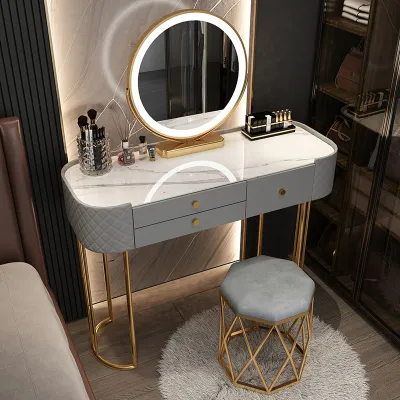
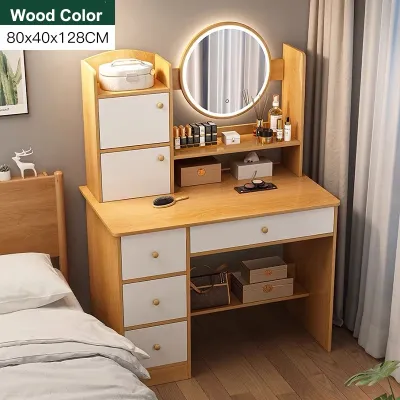
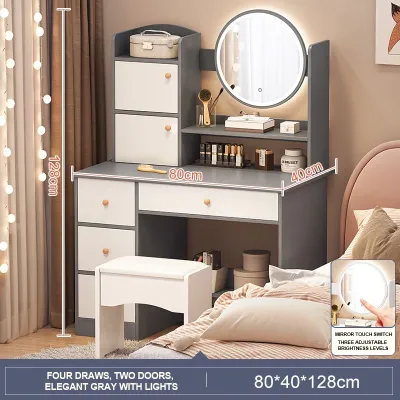
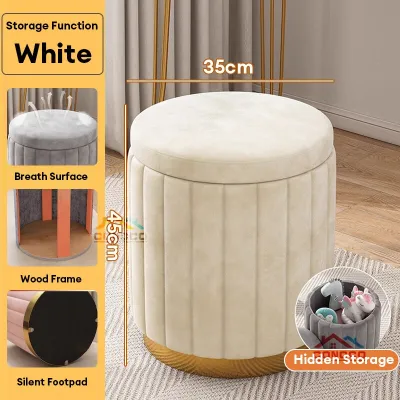
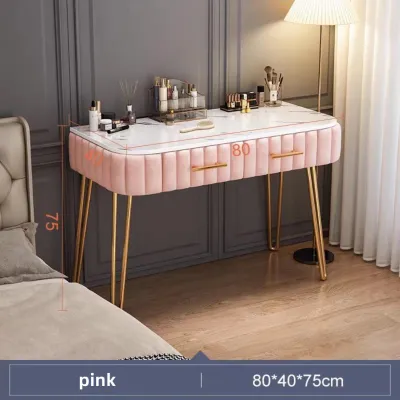
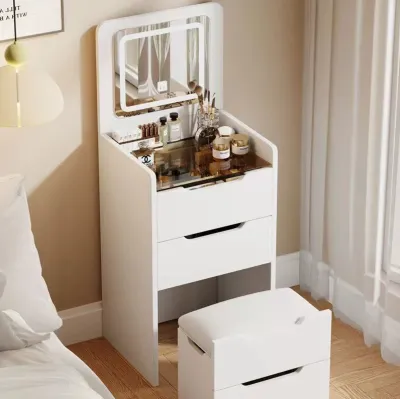
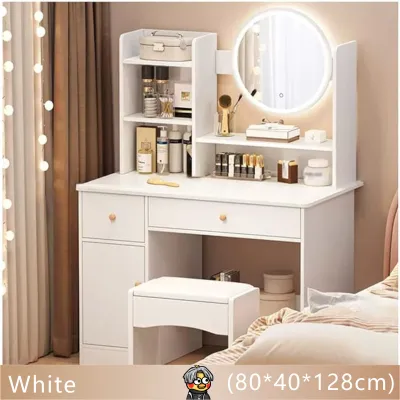
Prices are valid at publication and may change. Please refer to the product page for the latest price.
Do not overlook smaller architectural details that can disrupt your placement plans. Baseboards along the bottom of the wall can prevent a cabinet from sitting completely flush, which might steal an extra 1 to 2 cm of depth. Window sills that project outward can also block tall cabinets or prevent hinged doors from opening. If your bedroom features sloped ceilings or low window frames, measure these heights carefully to avoid purchasing a unit that is too tall for the space.
Finally, plan the delivery and assembly route. Many compact apartments and townhouses feature narrow stairwells, tight corridor corners, and small elevator cabins. Measure the height and width of your main entryway, elevator doors, and any hallway turns. If you purchase a pre-assembled cabinet, it must physically fit through these passages. For flat-pack or knock-down furniture, ensure you have enough open floor space in the bedroom to safely lay out the pieces and assemble them without damaging your walls or other furniture.
Match Cabinet Dimensions to Your Storage Needs
To find a cabinet that truly fits your lifestyle, conduct a thorough inventory of your cosmetics, skincare products, and hair styling tools. Categorize your items by size and frequency of use. Daily essentials like toners, serums, and frequently used makeup palettes should sit within easy arm’s reach, while bulk refills, seasonal items, or bulky hair dryers can be tucked away in lower compartments. Knowing exactly what you need to store prevents you from buying a cabinet that is either too small or unnecessarily bulky.

The external dimensions of a dressing table storage cabinet directly dictate its internal utility. A cabinet with an external depth of 30 cm might seem spacious, but the internal shelf depth will be slightly less due to the thickness of the back panel and front doors. If you primarily store small cosmetic bottles, a shallow cabinet with an internal depth of 15 to 20 cm is highly efficient, as it prevents items from getting lost behind one another. For larger items, such as hair straighteners, blow dryers, or tall lotion bottles, you will need a cabinet with an external depth of at least 30 to 35 cm and drawers that are deep enough to accommodate these tools.
Look for cabinets featuring adjustable shelves or modular drawer inserts. Fixed shelves often lead to wasted vertical space, leaving empty gaps above short cream jars while failing to accommodate tall hairspray cans. Adjustable peg systems allow you to customize the interior layout as your collection evolves. When evaluating drawers, check that the runners operate smoothly and can handle the weight of heavy glass jars without sagging.
Consider the visual weight of the furniture. In a small bedroom, a bulky, dark-colored cabinet can feel overbearing and make the room appear smaller than it is. To maintain a light and airy atmosphere, choose cabinets with light wood finishes (such as light oak or rubberwood), off-white laminates, or those featuring mirrored door fronts. Mirrored surfaces serve a dual purpose: they provide a functional vanity mirror while reflecting light to make the room feel more spacious. Generally, compact cabinets in the Philippine market range from ₱2,000 for basic engineered wood designs to over ₱8,000 for solid wood or highly modular units.
Space-Saving Configurations for Compact Rooms
When floor space is at a premium, look upward. Vertical or tall cabinets—often referred to as tower cabinets or high-boys—utilize high wall space without expanding the footprint. A cabinet that is only 30 cm wide but 150 cm tall can hold a substantial amount of skincare and makeup, making it an excellent choice for tight corners beside a bed or wardrobe. This configuration maximizes storage capacity while keeping the floor footprint to an absolute minimum.
Wall-mounted or floating cabinets are another exceptional option for small bedrooms. By elevating the cabinet off the floor, you create an open visual line that makes the room feel larger. This configuration also simplifies floor cleaning, preventing dust and moisture from accumulating underneath—a common issue in humid tropical climates. However, floating cabinets require careful installation. Always verify the wall material; concrete hollow block (CHB) walls require heavy-duty masonry plugs and screws, while drywall installations must be anchored directly into wood or metal studs to support the weight of the cabinet and its contents. Always check the manufacturer’s maximum load-bearing capacity before loading shelves with heavy glass bottles.
Slim-profile or shallow-depth cabinets (ranging from 15 to 25 cm deep) fit neatly into narrow alcoves or the space behind a bedroom door. These units often feature flip-down compartments or sliding doors that do not project into the room when opened. This design is highly effective for keeping walkways clear while still providing dedicated storage for daily cosmetics.
Multi-functional designs are highly practical for compact spaces. Some dressing table storage cabinets feature a fold-down desktop that transforms into a vanity table when needed and hides your clutter when closed. Others integrate sliding mirror panels that reveal hidden shelving behind the glass. When selecting these units, inspect the hinges, joints, and sliding tracks. High humidity can cause low-quality particle board to swell, leading to misaligned doors or sticky drawers. Opt for moisture-resistant medium-density fiberboard (MDF), engineered wood with high-pressure laminate (HPL) finishes, or solid wood treated with a protective sealant to ensure longevity.
Common Sizing Mistakes to Avoid
The most common error when choosing a dressing table storage cabinet is ignoring the swing radius of doors and drawers. A drawer that is 30 cm deep requires at least 35 to 40 cm of clear space in front of it to open fully and allow you to stand comfortably. If your bed frame is too close, you may find yourself wedged in an uncomfortable bottleneck every time you reach for your makeup. Always measure the clearance with the doors and drawers fully extended.
Another frequent mistake is blocking access to electrical outlets and light switches. In a modern bedroom, you need easy access to power for hair dryers, straighteners, and vanity lighting. Placing a tall cabinet directly over an outlet can force you to run extension cords across walkways, creating a tripping hazard. Measure the height and placement of your outlets before finalizing your cabinet’s position, ensuring there is enough clearance to plug in your devices safely.
Do not assume that “standard” cabinet sizes will fit your space perfectly. Dimensions can vary wildly between brands and manufacturers. Always check the seller’s detailed dimension diagram rather than relying on generic terms like “small,” “compact,” or “mini.” A cabinet labeled “mini” might still be too deep for a narrow condo walkway.
Finally, avoid neglecting the moisture levels in your bedroom. If you place a cabinet flush against an exterior-facing wall in a humid environment without a small gap for airflow, mold can develop on the back panel. Leave a 1 to 2 cm gap between the back of the cabinet and the wall to ensure adequate ventilation, and factor this small clearance into your depth calculations. Regularly inspect the joints and back panel for any signs of moisture damage or warping.
Frequently Asked Questions (FAQ)
What is the ideal depth for a dressing table storage cabinet in a small room?
For a compact bedroom, a shallow depth of 15 to 20 cm is ideal if you primarily store cosmetics, skincare bottles, and makeup palettes. This depth allows you to see all your products at a glance without items getting buried in the back. If you need to store larger hair styling tools, organizers, or bulk items, an external depth of 30 to 35 cm is recommended. However, deeper cabinets require careful spatial planning to ensure they do not block walkways or door swings.
How much clearance do I need in front of a storage cabinet with doors?
You should allow a minimum clearance equal to the width of the cabinet door plus an additional 45 to 60 cm of standing space. For example, if your cabinet has a 30 cm wide hinged door, you need at least 75 to 90 cm of clear space in front of the cabinet to open the door fully and stand comfortably. If your room layout cannot accommodate this clearance, consider cabinets with sliding doors, open shelving, or roll-up tambour doors to save valuable floor space.
Community discussion
Share your experience or ask a question. Comments are reviewed before publication.