
The ideal size for a foldable study table in a small dorm room or bedspace generally ranges from 60 to 80 centimeters in width and 40 to 50 centimeters in depth. This compact footprint provides just enough surface area to accommodate a standard laptop, a notebook, and a phone, while still folding down thin enough to slide under a bed frame or behind a wardrobe.
In cramped living quarters, every square centimeter of floor space matters. Selecting a foldable study table for student use requires looking beyond just the open tabletop dimensions. You must also evaluate how the unit stores away, how much legroom it leaves, and whether its deployment interferes with daily movement in a high-humidity, high-traffic shared environment.
Measuring Your Dorm or Bedspace for a Foldable Table
Before browsing online marketplaces, grab a tape measure to map out the exact physical boundaries of your designated study corner. Start by measuring the clear floor area where you plan to set up the table. You must account for the swing radius of doors, the projection of bed frames, and the essential walking pathways that you or your roommates need to navigate the room comfortably.
Products mentioned in this guide
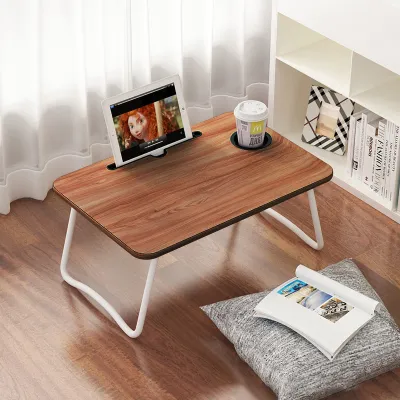
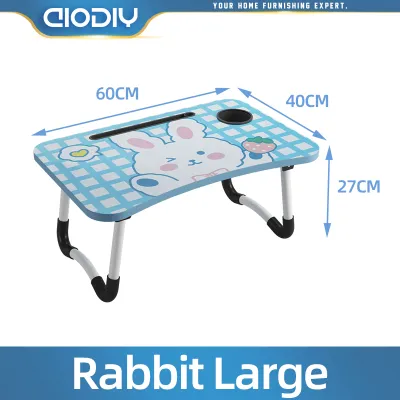
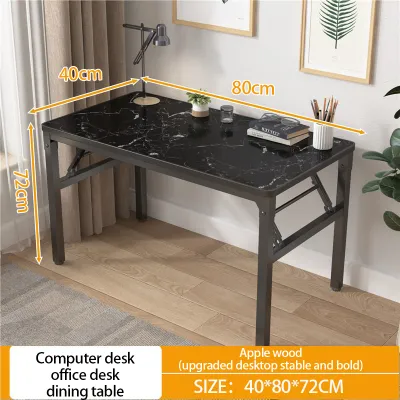
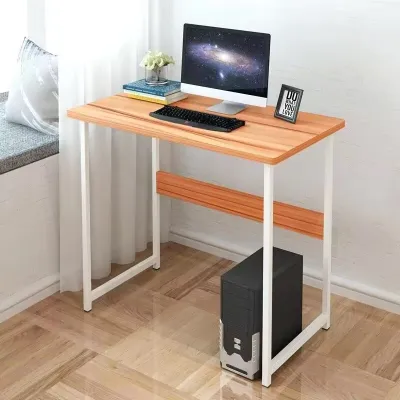
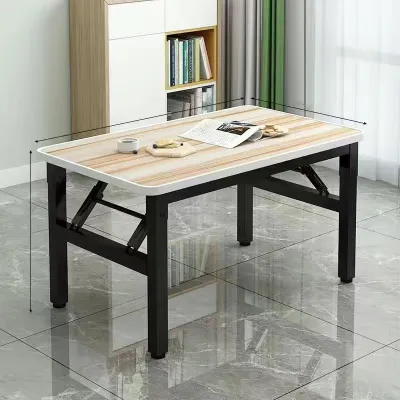

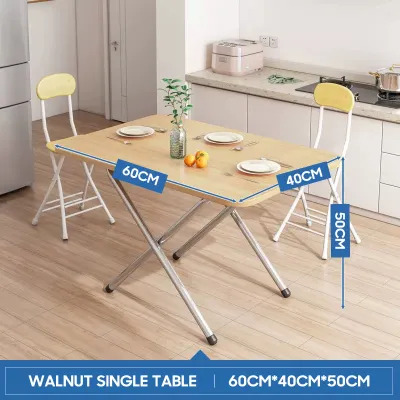
Prices are valid at publication and may change. Please refer to the product page for the latest price.
Next, measure the wall width and vertical clearance. If your bedspace is highly restricted, you might be tempted to squeeze a table into a narrow gap between a wardrobe and the wall. Ensure there is enough clearance so that the table legs can fully extend without scraping against other furniture or blocking access to power outlets.
Equally important is measuring the storage zone. When the table is folded, where will it go? Measure the gap under your bed frame, the space behind your door, or the narrow sliver of room beside your closet. This determines the maximum allowable folded thickness of your table. A table that is even a centimeter too thick to slide under your bed will end up leaning against a wall, cluttering your limited walking space.
If you are considering a wall-mounted drop-leaf table, check the structural integrity of the wall. Many dorms and bedspaces use lightweight drywall, hollow concrete blocks, or thin plywood partitions. You must verify if these walls can support anchors and screws. Additionally, review your rental agreement; many student accommodations strictly prohibit drilling or permanent modifications, which would immediately rule out wall-mounted designs.
Balancing Surface Area and Folded Footprint
Finding the right foldable study table for student life is a balancing act between having enough workspace and keeping the room passable. To estimate your minimum surface area requirements, lay out your daily study essentials on a bed or floor. Place your laptop, an open textbook, a notebook, and a pen holder together. Measure the total area they occupy to understand your absolute minimum functional tabletop size.

Standard compact desks typically range from 80 to 100 centimeters in width, which is excellent for writing but can easily overwhelm a shared bedspace. In contrast, ultra-compact folding tables might measure only 60 centimeters wide. While this smaller size fits almost any corner, it requires you to be highly organized, as there is little room for both a laptop and an open physical textbook simultaneously.
When spatial constraints are severe, prioritize table depth over width if you plan to place the desk directly beside a bed or against a narrow wall. A deeper table—around 50 to 60 centimeters—allows you to push your laptop back to make room for writing materials in front of it. However, if your walking path is narrow, a shallower table of 40 centimeters depth with a wider tabletop of 80 centimeters might be the only way to keep the walkway clear while still offering sufficient horizontal workspace.
Evaluating Foldable Table Types for Tight Spaces
Different folding designs offer distinct spatial advantages and installation demands. Freestanding folding tables are the most common choice for students. They offer excellent flexibility because you can set them up anywhere in the room, move them closer to a window for natural light, or pack them away when guests visit. The trade-off is that they still require dedicated floor or closet space when folded, and their legs must be sturdy enough to prevent wobbling on uneven dorm floors.
Wall-mounted drop-leaf tables are a brilliant solution for saving floor space. When not in use, the tabletop folds flat against the wall, leaving the floor completely clear. However, this option requires permanent installation. You must use appropriate wall anchors and screws, and you cannot easily rearrange your room layout once the table is mounted. This is rarely an option for temporary bedspace rentals where drilling is banned.
Over-bed tables or bed-desk trays represent the most compact category, requiring zero floor space because they sit directly on your mattress. While they are highly portable and easy to store under a pillow or beside a mattress, they offer very limited surface area. Furthermore, they restrict your ergonomic seating positions, often forcing you to sit cross-legged or lean forward without proper back support, which can lead to discomfort during long study sessions.
Checking Stability, Weight Limits, and Build Quality
A foldable study table for student use must be durable enough to handle daily setup and teardown. Before purchasing, check the manufacturer’s stated weight capacity and compare it to the actual weight of your study gear. A typical setup consisting of a laptop, a secondary monitor, several heavy textbooks, and a desk lamp can easily weigh 10 to 15 kilograms. Ensure the table’s rated capacity comfortably exceeds this total to prevent bowing or structural failure.
Next, inspect the product specifications for details on the folding mechanism. Look for tables that feature robust metal hinges, secure locking pins, or cross-braced legs. A simple friction-fit hinge without a locking mechanism can easily slip or collapse if you accidentally bump the table. Locking pins or manual latches provide physical security, ensuring the legs stay locked in the open position during use.
Do not rely on generic material names like wood or metal to judge durability. Instead, look for specific surface treatments and frame specifications. For example, a steel frame with a powder-coated finish offers better resistance to rust and scratches in humid tropical climates than untreated metal. For the tabletop, check for water-resistant melamine or laminate finishes with sealed edges, which help protect the core material from swelling if you spill water or set down a cold, sweating drink.
Common Space-Matching Mistakes to Avoid
One of the most frequent mistakes students make is forgetting to measure the additional space required for a chair and leg clearance. A compact table might fit perfectly in a corner, but once you pull out a study chair or stool, you may find yourself blocking the main doorway or hitting the bed frame. Always add at least 50 to 60 centimeters of clearance behind the table to accommodate your body and the chair.
Another common oversight is ignoring the relationship between the table height and your seating. If you plan to use an existing dorm chair or sit on the edge of your bed, measure that height first. A table that is too high forces your shoulders up, while a table that is too low causes you to hunch over, leading to neck and back strain. Ensure the table height allows your elbows to rest at a comfortable 90-degree angle when typing or writing.
Finally, do not ignore the physical weight of the table itself. If a foldable table is too heavy or awkward to lift, you will likely leave it unfolded permanently, defeating the purpose of buying a space-saving model. Look for lightweight yet structurally sound designs that you can easily lift, fold, and carry on your own without straining your back or risking damage to surrounding dorm furniture.
Frequently Asked Questions (FAQ)
Can I use a freestanding foldable study table on a carpeted dorm floor?
Yes, but you must take extra precautions regarding stability. Soft carpeted floors or thick rugs can cause lightweight folding tables to wobble or tip, especially if the table legs have small, pointed feet. To ensure a stable writing surface, look for tables with wide, sled-style bases or flat feet. Alternatively, you can place a rigid plastic chair mat or a small piece of plywood under the table legs to create a firm, level foundation.
How do I clean and maintain the folding hinges?
Keeping the folding mechanisms clean is essential for smooth operation, especially in dusty or humid environments. Periodically wipe down the hinges and joints with a dry microfiber cloth to remove dust and lint. If the hinges begin to squeak or feel stiff, apply a small drop of silicone-based lubricant or general household machine oil directly to the pivot points, then fold and unfold the table a few times to distribute it. Avoid using harsh chemical cleaners on the joints, as they can strip away protective coatings and accelerate rust.
Community discussion
Share your experience or ask a question. Comments are reviewed before publication.