
Finding the right size for large storage boxes is a balance between the physical volume of your belongings and the actual dimensions of your home’s storage areas. To choose correctly, you must categorize your items by weight and compressibility, measure your storage spaces while accounting for lid overhangs and handles, and verify the manufacturer’s weight limits. Taking these steps prevents buying containers that are too heavy to lift, too large for your closets, or easily damaged under tropical humidity.
Assess Your Storage Needs: What Are You Actually Storing?
Before looking at product listings, group your household items to estimate their physical volume and shape. Compressible items like spare pillows, thick blankets used during the rainy season, and seasonal linens can be packed tightly into large containers. These items are forgiving of irregular spaces, allowing you to maximize every liter of capacity without damaging the goods.
In contrast, rigid or dense items such as books, tools, kitchen appliances, or pantry goods require careful volume planning. Packing these items into a single massive box often makes the container impossibly heavy and risks cracking the plastic base. For these goods, smaller or reinforced utility boxes are far more practical.
Products mentioned in this guide
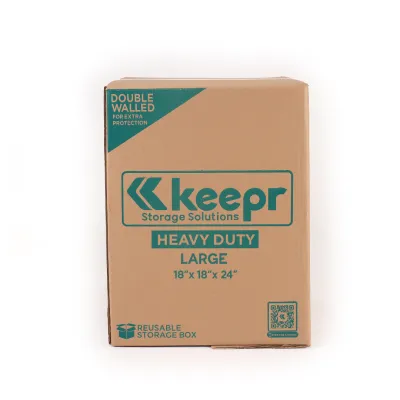
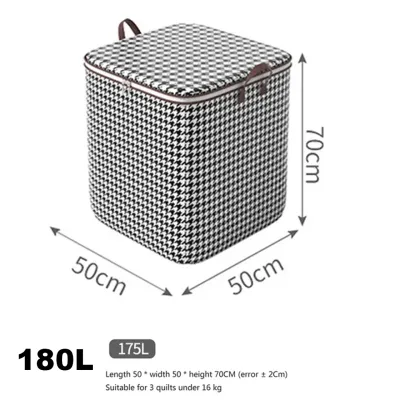
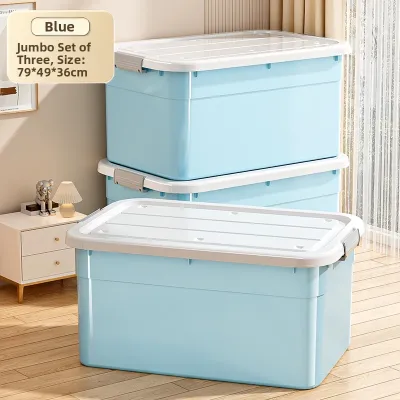
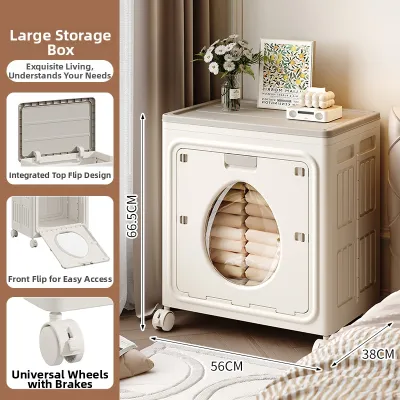
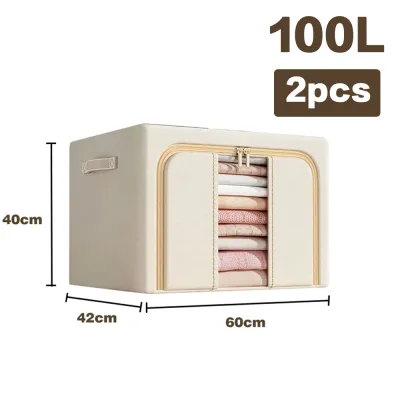
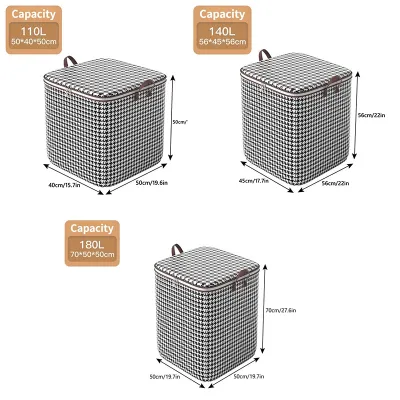
Prices are valid at publication and may change. Please refer to the product page for the latest price.
Frequency of use dictates where and how you store these boxes. Items you need weekly, such as extra pantry supplies or children’s toys, belong in accessible, medium-large boxes placed on lower shelves. Deep-archive items, like old documents or holiday decorations, can go into larger, heavy-duty containers destined for the top of a closet or a dedicated storage room.
Finally, consider the physical shape of your belongings. Storing square or rectangular items in a rounded box creates awkward gaps and dead corners, wasting valuable storage volume. Grouping items of similar shapes together helps you choose a box profile that matches your inventory and prevents shifting during transport.
Measure Your Available Space Before Buying
Before browsing online marketplaces or local home improvement stores, grab a tape measure to map out your storage zones. Measure the exact width, depth, and height of your target shelves, closet interiors, or under-bed clearances. Protecting your household items—which can represent an investment of thousands of pesos (₱)—requires choosing containers that fit your space perfectly without forcing them into tight spots.

In humid tropical climates, leaving a small gap around your storage boxes is essential for air circulation. This gap helps prevent mold and mildew growth on your walls, shelves, and the boxes themselves. A tight fit might maximize space, but it traps moisture and increases the risk of damage.
Do not rely solely on the basic dimensions listed on a product page. You must account for exterior features such as lid overhangs, protruding handle cutouts, and wheel bases, as these elements add to the total footprint. A box labeled with a specific width might not slide into your closet if the lid flares out an extra centimeter on each side.
Additionally, consider the physical path the box must travel. Check the clearance of your doorways, narrow hallways, and stairwells to ensure that a fully packed, large container can be carried safely to its final destination. A box that fits perfectly under your bed is of little use if it cannot clear the bedroom doorway when fully loaded.
Matching Item Volume to Box Capacity
Understanding how manufacturers calculate volume is key to selecting the right container. Most brands list capacity in liters, but this number represents the total liquid volume the box can hold, often calculated from the outermost exterior points. Because of tapered walls, reinforced corners, and recessed lids, the usable interior space is almost always smaller than the advertised capacity.
A 100-liter box will not comfortably hold 100 liters of stacked, rigid household goods due to the ‘stacked item’ reality. To bridge this gap, look for detailed interior dimensions provided by the manufacturer. If these are unavailable, a good rule of thumb is to choose a box with a rated capacity roughly 15 to 20 percent larger than the estimated volume of your stacked items.
Always check the product labels or manufacturer specifications for weight limits. Large-capacity boxes can easily be overloaded; storing heavy tools or books in a standard plastic utility box can lead to bowing, cracking, or handle failure when you attempt to lift it. If you must store heavy items, verify if the box features a reinforced base and heavy-duty latches.
Additionally, check the material finish and joint construction. For humid environments in the Philippines, look for boxes with tight-fitting lids or silicone seals to keep out dust and moisture. While clear plastic allows you to see contents easily, opaque, heavy-duty plastics often offer better structural support for heavier loads.
Common Sizing Mistakes to Avoid
One of the most frequent errors is assuming that exterior dimensions represent the interior usable space, which often results in purchasing boxes that are too small for your items or too large for your shelves. Always verify both sets of measurements before making a purchase.
Another common mistake is forgetting to leave clearance space for handling. You need enough room to comfortably grip the handles, pull the box out of a tight shelf, and lift a hinged or removable lid without hitting the shelf above it. If you have to struggle to access the box, you are less likely to keep your space organized.
Lastly, avoid the temptation to buy one massive box to hold everything. While a single 120-liter container might seem convenient, it quickly becomes a safety hazard and a strain to lift once filled. Opting for multiple medium-large boxes instead distributes the weight evenly, making transport much safer and organizing far more manageable.
Frequently Asked Questions (FAQ)
Can I stack large storage boxes safely?
Yes, but only under specific conditions. Look for boxes designed with interlocking lids and reinforced bases that prevent sliding. Always place the heaviest boxes at the bottom of the stack to maintain stability and prevent the lower containers from buckling. Check the manufacturer’s guidelines for the maximum recommended stacking height, and avoid stacking boxes so high that they become top-heavy or block ventilation.
How do I clean and maintain large plastic storage boxes?
To clean your plastic storage boxes, use mild dish soap, warm water, and a soft cloth. Avoid harsh chemical cleaners or abrasive scrubbing pads, as these can scratch the plastic and weaken its structural integrity over time. Because tropical humidity can trap moisture inside, ensure the boxes are completely dry before closing the lids and storing your items to prevent the growth of mold and mildew.
Community discussion
Share your experience or ask a question. Comments are reviewed before publication.