
Selecting the perfect leather headboard for bed frames requires balancing visual weight, physical mattress dimensions, and room clearances. The ideal size of a leather headboard is determined by matching the width of your bed frame, accounting for your mattress and bedding thickness, and ensuring the height complements your bedroom’s ceiling. A well-proportioned headboard acts as an elegant focal point, while an incorrectly sized one can make your room feel cramped or leave awkward gaps that swallow pillows.
To find the right dimensions, you must first decide on a styling direction—whether you want a streamlined look that aligns perfectly with your bed frame or a dramatic, wide-spanning statement piece. From there, precise measurements of your mattress, frame, and wall clearances will guide you to a size that is both functional and visually stunning.
Matching a Leather Headboard for Bed Frames by Standard Sizes
The width of your leather headboard establishes the horizontal boundaries of your sleeping area. Choosing the correct width is not merely a matter of matching standard industry labels; it involves understanding how the headboard interacts with your bed frame’s actual outer edges and the surrounding bedroom furniture.
Products mentioned in this guide

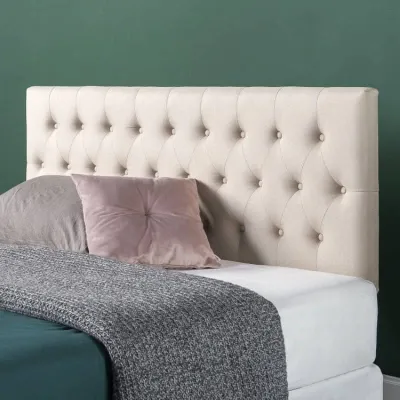
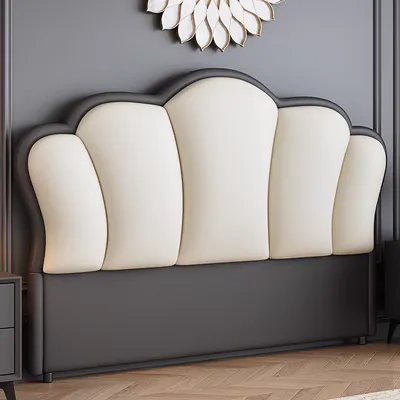





Prices are valid at publication and may change. Please refer to the product page for the latest price.
Flush, Overhang, and Wide Width Styles
The horizontal profile of a headboard generally falls into one of three distinct design styles, each offering a different aesthetic and layout solution.
- Flush Style: A flush headboard is designed to match the exact width of your bed frame. This style is highly recommended for compact bedrooms, minimalist design schemes, or rooms where space on either side of the bed is limited. It provides a clean, continuous line from the floor to the top of the headboard, ensuring that the bed setup does not encroach on valuable wall space.
- Slight Overhang Style: This approach involves a headboard that extends roughly 2 to 4 inches (5 to 10 cm) beyond the mattress or frame on each side. The slight overhang creates a cozy, framed aesthetic that softens the transition between the bed and the wall. It is particularly effective for concealing the edges of thick duvets, blankets, or sheets that naturally drape over the sides of the mattress.
- Wide or Wall-Spanning Style: A wide headboard extends significantly beyond the bed frame, often stretching far enough to sit behind the adjacent nightstands. This style creates a dramatic, high-end hotel appearance, visually anchoring the entire wall. However, it requires a large bedroom with ample uninterrupted wall space, as any light switches, electrical outlets, or decorative trim must be carefully integrated into the design.
Reference Dimensions for Standard Bed Frames
While standard mattress sizes provide a helpful starting point, you must measure your physical bed frame before purchasing a headboard. Frame designs vary wildly, and upholstered, platform, or wooden frames often add several inches to the overall width compared to a bare mattress.
In the Philippines, standard mattress dimensions serve as the baseline for sizing. The following dimensions outline standard mattress sizes alongside recommended headboard widths for the three primary styling approaches:
- Single Bed: Standard mattress dimensions are 36 inches wide by 75 inches long (91 cm x 191 cm).
- Flush Width: 36 to 38 inches (91 to 97 cm)
- Slight Overhang Width: 40 to 42 inches (102 to 107 cm)
- Wide Width: 60 inches (152 cm) or more, depending on nightstand placement.
- Double Bed: Standard mattress dimensions are 54 inches wide by 75 inches long (137 cm x 191 cm).
- Flush Width: 54 to 56 inches (137 to 142 cm)
- Slight Overhang Width: 58 to 60 inches (147 to 152 cm)
- Wide Width: 80 inches (203 cm) or more.
- Queen Bed: Standard mattress dimensions are 60 inches wide by 75 inches long (152 cm x 191 cm), or 60 inches wide by 80 inches long (152 cm x 203 cm).
- Flush Width: 60 to 62 inches (152 to 157 cm)
- Slight Overhang Width: 64 to 66 inches (163 to 168 cm)
- Wide Width: 90 inches (229 cm) or more.
- King Bed: Standard mattress dimensions are 72 inches wide by 78 inches long (183 cm x 198 cm), or 72 inches wide by 80 inches long (183 cm x 203 cm).
- Flush Width: 72 to 74 inches (183 to 188 cm)
- Slight Overhang Width: 76 to 78 inches (193 to 198 cm)
- Wide Width: 102 inches (259 cm) or more.
Always measure the outermost edges of your bed frame, including any decorative side rails, brackets, or protruding hardware. If your bed frame features a bulky wooden lip or thick upholstery, a standard mattress-width headboard will look awkwardly narrow. If you are ordering a custom leather headboard, providing the fabricator with the exact outer frame measurements ensures a seamless fit.
How to Determine the Ideal Headboard Height
The height of your headboard dictates the vertical balance of your bedroom. A leather headboard that is too short will be completely swallowed by pillows, while one that is excessively tall can overwhelm a room with low ceilings, making the space feel dark and cramped.

Standard, Tall, and Extra-Tall Profiles
Headboard heights are generally categorized into three profiles, each suited to specific room scales and design goals.
- Standard Profile: Typically stands 14 to 29 inches (35 to 74 cm) above the top of the mattress. This profile is ideal for standard ceiling heights of 2.4 to 2.7 meters, which are common in many Philippine homes and condominiums. It provides a balanced, classic look without dominating the wall.
- Tall Profile: Ranges from 30 to 39 inches (76 to 99 cm) above the mattress. A tall headboard works beautifully in rooms with higher ceilings (2.8 meters or more) or as a deliberate design statement in a medium-sized room. It offers excellent back support if you enjoy sitting up in bed to read or watch television.
- Extra-Tall Profile: Stands 40 inches (101 cm) or more above the mattress. Extra-tall headboards are dramatic pieces reserved for grand bedrooms with vaulted or high ceilings. In a small room with low ceilings, an extra-tall profile will visually compress the space, making the ceiling feel lower than it actually is.
Factoring in Mattress and Pillow Thickness
To ensure your leather headboard remains both functional and visually appealing, you must account for the height of your mattress, mattress topper, and pillow arrangement. A common mistake is measuring the headboard height from the bed frame base without considering how much of that height will be obscured by bedding.
Start by measuring the distance from the floor to the top of your mattress, including any plush toppers or protectors. Next, pile your standard sleeping pillows and decorative shams against the wall as you would normally arrange them. Measure the height of this pillow stack from the top of the mattress.
To maintain visual balance, aim for a minimum of 12 to 18 inches (30 to 46 cm) of visible headboard space above your pillow stack. This ensures that the texture, color, and craftsmanship of the leather—whether it is a deep button-tufted design, a modern channeled pattern, or a sleek, smooth panel—are on display rather than hidden behind your bedding.
Furthermore, different leather styles scale differently. Deeply tufted leather headboards require more vertical height to showcase the tufting pattern effectively without looking cut off. Conversely, horizontal leather panels or smooth, minimalist leather slings can look exceptionally elegant in lower, more compact height profiles.
Measuring Your Space and Installation Clearances
Before committing to a specific leather headboard size, you must evaluate the physical constraints of your bedroom and the path required to get the headboard inside. Because high-quality leather headboards are often heavy and rigid, they require careful spatial planning.
First, identify the mounting style of your headboard, as this directly affects installation clearances:
- Wall-Mounted Headboards: These are secured directly to the wall using interlocking brackets or cleats. They offer a highly stable, flush fit but require solid wall anchoring.
- Bed-Frame-Attached Headboards: These mount directly to the back of your existing bed frame using bolts and brackets. They move with the bed, making them highly versatile, but they can wobble if the frame is lightweight.
- Freestanding Headboards: These stand on the floor and are sandwiched between the bed frame and the wall. They are easy to install but can add extra depth, pushing your bed further into the room.
Next, conduct a thorough wall clearance check. Take note of the depth of your baseboards or skirting boards. If you are installing a wall-mounted headboard, thick baseboards can prevent the headboard from hanging completely flush against the wall, potentially requiring spacer blocks or a specialized bracket setup. Additionally, measure the location of all electrical outlets, light switches, and window sills. A wide or tall headboard must not block access to essential light switches or power outlets, nor should it overlap with low-hanging window frames.
Finally, do not overlook delivery and access clearances. Measure the width and height of all doorways, narrow hallways, stairwells, and elevator doors. This is particularly crucial for residents of high-rise condominiums or multi-story homes in urban areas, where tight corners and low elevator ceilings can prevent a large, solid-backed leather headboard from reaching the bedroom. If access is tight, consider a modular leather headboard design that can be assembled in sections on-site.
Common Headboard Sizing Mistakes
Avoiding common pitfalls during the selection process can save you from costly return shipping fees or frustrating installation delays.
- Ignoring Mattress and Topper Height: Many buyers measure only the bare bed frame, forgetting that a thick 12-inch mattress combined with a 3-inch topper will hide a significant portion of a standard-height headboard.
- Forgetting Baseboard Depth: Failing to account for skirting boards can result in a wall-mounted headboard that leans forward or puts unnecessary strain on mounting brackets.
- Blocking Bedside Tables: Choosing a headboard that is too wide can block adjacent nightstands, preventing drawers from opening fully or forcing you to place your bedside tables at an awkward, unreachable distance.
- Ignoring Humidity and Wall Spacing: In tropical climates like the Philippines, mounting a heavy leather headboard tightly against an exterior concrete wall without any gap can trap moisture, potentially leading to mold growth on the back of the headboard. Leaving a microscopic gap or ensuring proper room ventilation is essential.
Before finalizing your order, use this quick pre-purchase verification checklist:
- Measure the exact outer width of your bed frame (not just the mattress).
- Measure the total height from the floor to the top of your mattress.
- Measure the height of your standard pillow arrangement.
- Verify that the headboard width will leave at least 2 inches of clearance from nearby light switches and outlets.
- Confirm that the path from your front door to the bedroom can accommodate the packaged dimensions of the headboard.
Frequently Asked Questions (FAQ)
Can I use a queen-size headboard on a double bed frame?
Yes, you can use a queen-size headboard on a double bed frame, but it requires careful alignment and secure mounting. A queen headboard is typically 60 inches wide, while a double bed frame is 54 inches wide, resulting in a 3-inch overhang on each side. This can create a cozy, expansive look that makes the bed feel larger. However, the mounting slots on a queen headboard will not align naturally with a double bed frame. You will need to use modification plates (mod plates) to secure the frame to the headboard, or mount the headboard directly to the wall and push the double bed frame against it.
How far should a leather headboard sit from the mattress?
Ideally, a leather headboard should sit flush against the back edge of the mattress with no visible gap, or have a minimal gap of less than 1 inch (2.5 cm). This snug fit prevents pillows, phones, or books from slipping down behind the bed. However, ensure that the headboard is not pressed so tightly against the mattress that it causes excessive friction. Over time, constant rubbing from a tight mattress can wear down or scuff the leather finish, particularly with delicate real leather or synthetic alternatives.
Do I need to reinforce my wall for a heavy leather headboard?
Whether you need to reinforce your wall depends on the weight of the headboard and your wall construction. Solid concrete or brick walls, which are common in Philippine residential construction, do not require reinforcement but do require heavy-duty masonry anchors and a hammer drill for secure installation. If you are mounting a heavy leather headboard to a drywall or gypsum partition, you must secure the mounting brackets directly into the wooden or metal wall studs. Never rely solely on plastic drywall anchors for a heavy headboard, as the weight and daily pressure of leaning against it can pull the anchors out, damaging the wall and posing a safety hazard. Always check the manufacturer’s weight specifications and installation instructions before mounting.
Community discussion
Share your experience or ask a question. Comments are reviewed before publication.