
Finding the perfect minimalist sofa for a family living room requires balancing clean, uncluttered aesthetics with the practical demands of daily household life. A sofa that is too large will overwhelm your space and disrupt the natural airflow essential for tropical comfort, while one that is too small will leave family members competing for seating during gatherings. To make the right choice, you must align your room’s physical boundaries with your family’s daily seating habits and the structural dimensions of the furniture itself.
Selecting a minimalist sofa is not just about choosing a sleek design; it is a systematic process of measuring, mapping, and verifying clearances. By focusing on functional proportions and modular flexibility, you can secure a centerpiece that offers ample seating without sacrificing the open, airy feel that defines minimalist design.
Assess Your Living Room Dimensions and Layout
Before browsing online marketplaces or visiting local showrooms, you must establish the exact physical limits of your living room. Use a physical tape measure to record the length and width of the designated seating area, as well as the ceiling height. Relying on visual estimates often leads to purchasing furniture that crowds the room, particularly in compact condominium units or open-plan layouts where every centimeter counts.
Products mentioned in this guide
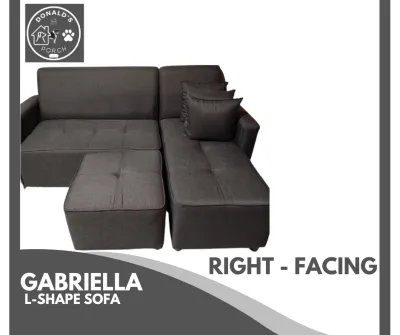
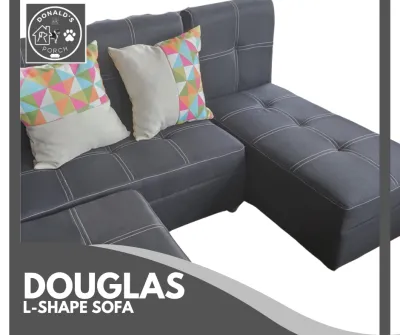
Prices are valid at publication and may change. Please refer to the product page for the latest price.
Take note of all fixed architectural elements that could interfere with sofa placement. In the Philippines, this means identifying the locations of wall-mounted air conditioning units, floor fans, electrical outlets, window frames, and low-hanging light fixtures. A tall backrest might block a window breeze, while a wide sectional could cover essential power outlets or block access to a balcony door.
Finally, map out the primary traffic flow paths through the room. A well-placed sofa should allow family members to move freely from the entryway to the kitchen or dining area without squeezing past corners. Mark these pathways on your floor with painter’s tape to visualize how a potential sofa size affects daily movement and ensures the room remains easy to navigate.
Match Sofa Seating Capacity to Your Family Needs
Your sofa must comfortably accommodate your household while remaining prepared for extended family visits or weekend gatherings. Start by calculating the standard seating requirements for your immediate family members. If your household regularly hosts relatives or friends, you will need to plan for extra seating capacity without cluttering the room with individual chairs.

When comparing configurations, a standard 3-seater minimalist sofa is often highly efficient for smaller households, offering a compact footprint that preserves floor space. However, larger families or those who frequently entertain may find a 4-seater or 5-seater configuration more practical. These larger options provide dedicated space for everyone to lounge comfortably during movie nights or casual conversations.
If your family size fluctuates or you anticipate moving to a different home in the future, modular configurations offer excellent flexibility. Modular minimalist sofas allow you to add, remove, or rearrange individual seating sections over time. This adaptability ensures your investment can grow alongside your family’s needs without requiring a completely new furniture purchase.
Evaluate Minimalist Sofa Configurations for Space Efficiency
The shape of your minimalist sofa plays a critical role in how spacious your living room feels. For narrow or rectangular rooms, a classic straight-line sofa is highly effective. This configuration sits flush against a wall or acts as a clean divider, leaving plenty of open floor space in front of it for traffic and additional low-profile furniture.
For larger, open-plan living areas or corner spaces, L-shaped sectionals or modular layouts are excellent choices. These configurations maximize corner seating that might otherwise go unused, creating a cozy, defined zone for family interaction. They also help partition a large room into distinct functional areas without the need for physical walls, maintaining a bright and breezy atmosphere.
To preserve the minimalist aesthetic, pay close attention to the physical details of the sofa design. Look for slim armrests, low-profile backrests, and raised legs that allow light to pass underneath. These design elements reduce the visual weight of the sofa, making even a large 5-seater feel light and unobtrusive rather than bulky and dominant in your living space.
Check Clearance, Delivery, and Installation Requirements
A sofa that fits perfectly in your living room is of no use if it cannot pass through your front door. Before finalizing your purchase, verify the exact dimensions of all entryways, hallways, stairwells, and elevator doors. In many multi-story residential buildings and condominiums, tight corners and low elevator ceilings present significant delivery challenges that require careful planning.
Once inside, the sofa must be positioned to maintain comfortable clearance distances. Ensure there is sufficient space between the sofa and your coffee table, media console, or adjacent walls. These clearances are vital for comfortable legroom, easy cleaning, and preventing a cramped appearance that contradicts the principles of minimalist design.
Additionally, review the manufacturer’s specifications regarding assembly and floor protection. Some minimalist designs feature heavy metal or solid wood frames that require assembly on-site. Check if the delivery team provides installation services, and prepare your floors with protective pads to prevent scratches on delicate tiles or wooden planks during the setup process.
Common Sizing Mistakes to Avoid
One of the most frequent errors is relying solely on online photos or showroom displays to judge a sofa’s size. Showrooms have high ceilings and vast open spaces that make large sofas look deceptively small. Always use physical tape measurements and lay down newspaper or painter’s tape on your living room floor to represent the sofa’s actual footprint before buying.
Another common mistake is ignoring the visual scale of minimalist designs in relation to the rest of the room. A very low-profile, sleek sofa can look lost and uninviting in a room with exceptionally high ceilings or massive rustic furniture. Ensure the scale of your sofa matches the height of your windows and the proportions of your other living room pieces.
Lastly, do not overlook the extra space required for functional features. If you are considering a minimalist sofa with reclining mechanisms, pull-out footrests, or convertible sleeper functions, you must measure the fully extended footprint. Failing to account for these moving parts can result in a sofa that blocks walkways or collides with other furniture when fully deployed.
Frequently Asked Questions (FAQ)
Do I need a 3-seater or a 5-seater minimalist sofa for a medium-sized living room?
A 3-seater minimalist sofa is generally ideal for medium-sized living rooms because it preserves open floor space, maintains smooth traffic flow, and keeps the room looking uncluttered. However, if you have a large household or frequently host guests, a 5-seater or a modular sectional can be justified. In this case, choose a design with low backrests, slim arms, and raised legs to minimize the visual bulk of the larger frame.
How much space should I leave between a minimalist sofa and the coffee table?
You should aim to leave a clear pathway between your minimalist sofa and the coffee table to allow for comfortable legroom and easy movement. If your sofa features reclining seats, extended footrests, or is positioned along a high-traffic walkway, you will need to increase this distance to prevent collisions and ensure unobstructed passage.
Community discussion
Share your experience or ask a question. Comments are reviewed before publication.