
Finding the right balance between storage capacity and floor space is a common challenge in compact Philippine homes and high-rise condominiums. A modern minimalist shoe cabinet offers a clean, clutter-free aesthetic, but its success depends entirely on selecting the correct dimensions for your specific layout. Generally, a cabinet depth of 15 to 20 centimeters is ideal for narrow entryways when using tipping-bucket designs, while standard flat-shelved units require a depth of 30 to 35 centimeters. By matching the cabinet’s physical footprint to your available wall space and your household’s footwear habits, you can maintain an organized, welcoming foyer without obstructing daily foot traffic.
How to Measure Your Entryway or Closet Space
Before browsing online catalogs or visiting furniture showrooms, you must establish the exact physical limits of your designated placement area. Use a metal measuring tape to record the maximum width, depth, and height available along your entryway wall or inside your closet. Write these numbers down and keep them handy during your search, as even a discrepancy of one or two centimeters can prevent a cabinet from fitting into a tight alcove.
Next, evaluate the operational clearance required for the space to function comfortably. If your cabinet is going near the main entrance, measure the swing path of the front door to ensure it can open fully without striking the furniture. You must also maintain a clear walkway for daily traffic; a standard residential corridor should ideally preserve at least 70 to 90 centimeters of unobstructed width so residents can carry groceries, laundry, or bags inside without bumping into obstacles.
Products mentioned in this guide
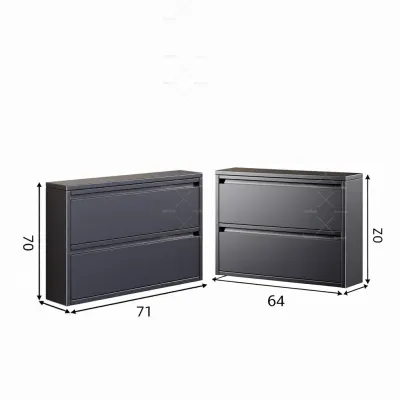
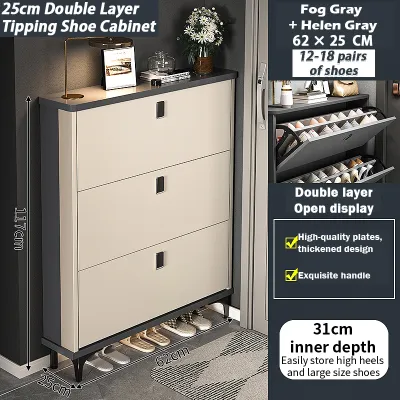
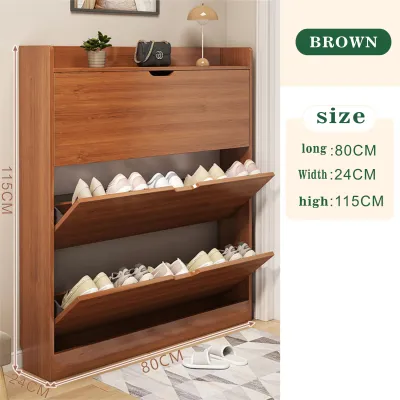
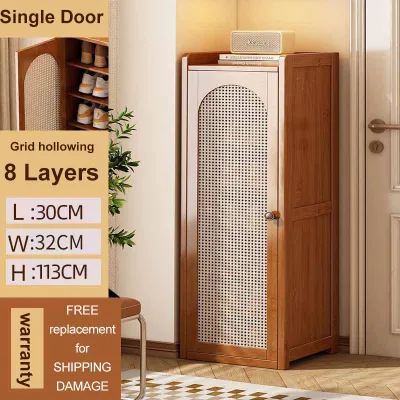
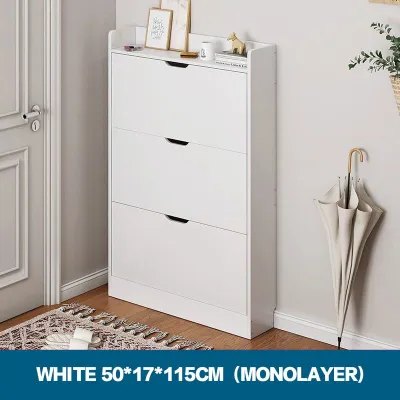
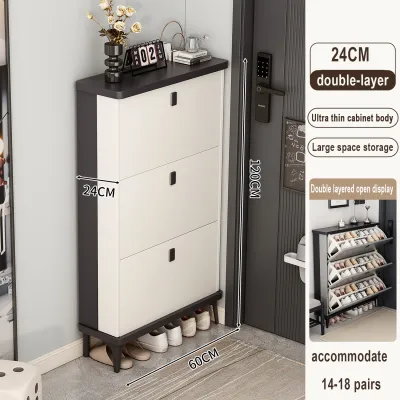
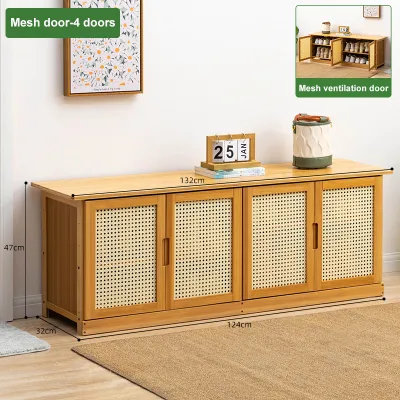
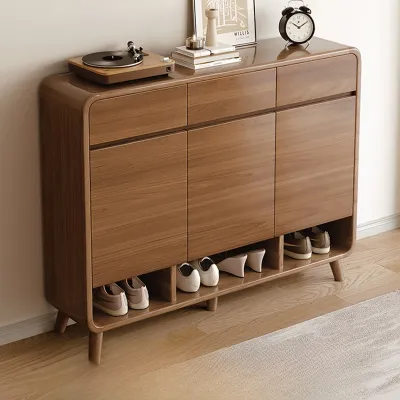
Prices are valid at publication and may change. Please refer to the product page for the latest price.
Finally, map out any physical obstructions on the wall or floor that could interfere with a flush installation. Take note of the location of light switches, intercom panels, electrical outlets, and door trim. If your condo features prominent baseboards, the cabinet will be pushed away from the wall slightly, which adds to its effective depth. To achieve a perfectly flush, minimalist look, look for cabinets designed with a baseboard cutout at the bottom rear, or factor that small gap into your overall depth calculations.
Matching Cabinet Dimensions to Your Shoe Collection
To choose a cabinet that actually solves your storage problems, you need to calculate your required internal capacity based on your household’s footwear habits. Begin by counting the number of shoes you need to store, and group them by style. A single pair of adult sneakers typically requires a horizontal shelf width of 20 to 25 centimeters, while flat sandals or slippers may only need 15 to 20 centimeters. Dividing your total shelf width by these averages will give you a realistic estimate of how many pairs can sit side-by-side on a single level.

Vertical clearance is another critical factor that varies by shoe type. Standard flat shelves with a fixed height of 15 centimeters are perfectly adequate for low-top sneakers, flats, and slippers. However, high heels, wedge sandals, and high-top sneakers will require more vertical space. If your collection includes a mix of styles, prioritize cabinets with adjustable internal shelves, which allow you to customize the height of individual compartments and maximize every inch of vertical space.
It is also important to distinguish between a cabinet’s external dimensions and its actual internal usable space. The product specifications listed by manufacturers represent the outermost edges of the unit. The internal shelves are always slightly narrower and shallower due to the thickness of the cabinet walls, back panels, and door hinges. For standard flat-shelf cabinets, ensure the internal depth is at least 30 centimeters to accommodate average adult shoe lengths without forcing you to store them sideways.
Space-Saving Designs and Installation Checks for Compact Areas
When floor space is exceptionally limited, specific minimalist designs can help you maximize storage without crowding your entryway. Slim-profile tipping-bucket cabinets are highly popular for narrow hallways because they store shoes vertically inside tilting compartments. This design allows the cabinet’s external depth to remain as slim as 15 to 18 centimeters. Alternatively, wall-mounted or floating cabinets elevate the unit off the floor, creating an airy visual effect and leaving an open space underneath where you can tuck away everyday indoor slippers.
Before committing to a wall-mounted or floating shoe cabinet, you must verify the structural integrity of your wall. Many modern condominiums use lightweight drywall or fiber cement boards for internal partitions, which cannot support the weight of a fully loaded shoe cabinet on their own. If mounting to a partition wall, you must locate the wooden or metal studs behind the wall board to secure the mounting screws. For solid concrete or concrete hollow block walls, ensure you use a hammer drill and the correct masonry wall plugs to guarantee a secure hold.
Safety and stability are paramount, even for floor-standing cabinets that are tall and shallow. Because these units are front-heavy, they present a significant tipping hazard when multiple drawers are pulled open or when children attempt to climb them. Always check if the cabinet includes an anti-tip kit, which typically consists of wall anchors and safety straps. Installing these anchors is a necessary step to secure the unit firmly to the wall and prevent accidental tipping, ensuring a safe environment for everyone in the home.
Common Sizing Mistakes and How to Avoid Them
One of the most frequent mistakes buyers make is ignoring the operational footprint of the cabinet’s doors and drawers. A cabinet might physically fit into a corner when closed, but if the doors hit an adjacent wall, a closet frame, or a piece of living room furniture when opened, accessing your shoes will be incredibly frustrating. Always add the depth of the open doors or fully extended drawers to the cabinet’s closed depth to ensure you have enough physical space to stand and operate the unit comfortably.
Another common oversight is neglecting ventilation, which is especially critical in the hot, humid climate of the Philippines. Storing damp or sweat-absorbent shoes in a completely sealed, airtight wooden cabinet creates an ideal environment for mold, mildew, and unpleasant odors to develop. To prevent this, look for minimalist designs that incorporate subtle ventilation features, such as louvered doors, open-back panels, or small ventilation grommets that allow continuous airflow without compromising the clean exterior look.
Finally, do not assume that standard product listings tell the whole story regarding clearance. Handles that protrude from the front of the cabinet, decorative base trim, or top-opening lids can add several centimeters to the actual space the unit occupies. Carefully review the detailed technical drawings or assembly manuals online to check for these minor hardware extensions, ensuring your new modern minimalist shoe cabinet fits seamlessly into your compact condo layout.
Frequently Asked Questions (FAQ)
How do I choose a shoe cabinet for a very narrow hallway?
For exceptionally narrow hallways, prioritize ultra-slim tipping-bucket cabinets with an external depth of 15 to 20 centimeters. These designs store shoes vertically, minimizing the physical footprint and keeping the walkway clear. Before purchasing, check your condominium association’s house rules or local building fire safety regulations. Many properties strictly prohibit placing any furniture or personal items in shared common corridors to ensure emergency exit paths remain completely unobstructed, meaning your cabinet must be installed inside your unit’s private entryway.
How do I prevent odors in a fully enclosed minimalist shoe cabinet?
To prevent odors and moisture buildup in an enclosed cabinet, select a model featuring louvered doors, mesh panels, or built-in ventilation holes on the back panel. You can also place disposable moisture-absorbing canisters or reusable silica gel packets on the shelves to manage indoor humidity. Most importantly, establish a habit of letting your shoes dry completely in an open, well-ventilated area after outdoor use—especially after a sudden rain shower—before placing them inside the enclosed storage unit.
Community discussion
Share your experience or ask a question. Comments are reviewed before publication.