
Finding the perfect wardrobe for a bedroom involves balancing available floor space with your actual storage needs. In tropical climates like the Philippines, where high humidity and termites can compromise traditional wood furniture, a cabinet with hanging clothes plastic design offers a highly durable, pest-resistant, and low-maintenance alternative. However, choosing the wrong size can lead to cramped walkways, crushed garments, or a cluttered room layout. To select the ideal unit, you must evaluate both the external footprint that your bedroom can accommodate and the internal configurations required to keep your clothes organized and wrinkle-free.
Measure Your Bedroom Space and Door Clearances
Before browsing online marketplaces or visiting local furniture stores, you must establish the exact physical boundaries of your bedroom. Start by measuring the floor footprint of the specific area where you plan to position the cabinet. Use a metal measuring tape to record the maximum width and depth available. Do not rely on visual estimation; even a discrepancy of two centimeters can prevent a plastic wardrobe from fitting into a designated alcove or corner.
When measuring the walls, pay close attention to structural and utility obstacles. Baseboards can push the bottom of the cabinet away from the wall, meaning a unit that matches your wall-to-wall measurements exactly might end up protruding into your walking path. Similarly, take note of wall outlets, light switches, window sills, and air conditioning units. Placing a tall plastic cabinet directly in front of an outlet renders it inaccessible, while positioning it too close to a window might block natural light or interfere with curtain movement.
Products mentioned in this guide
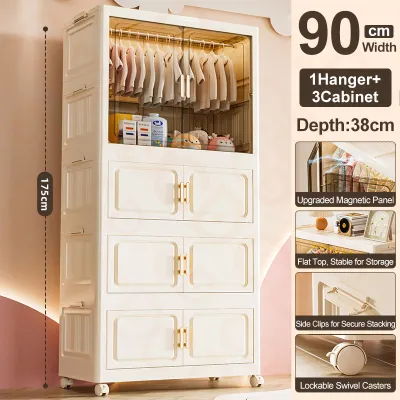
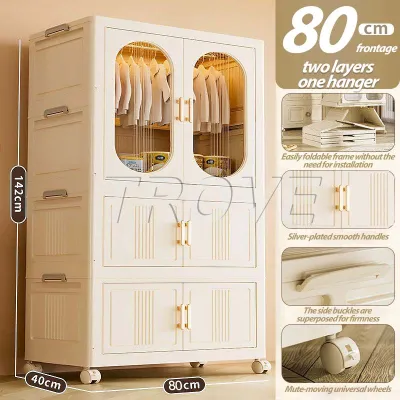
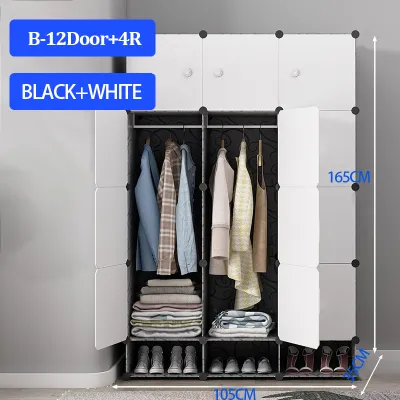
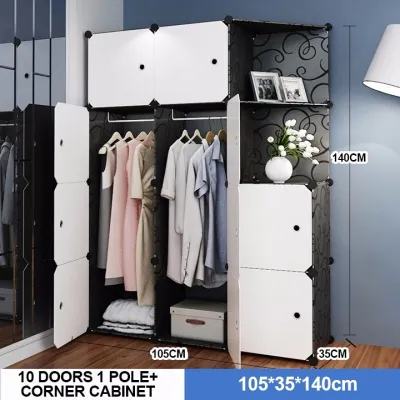
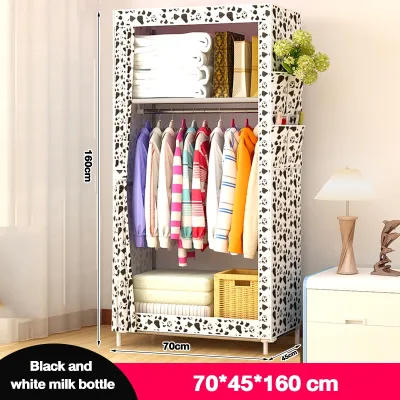
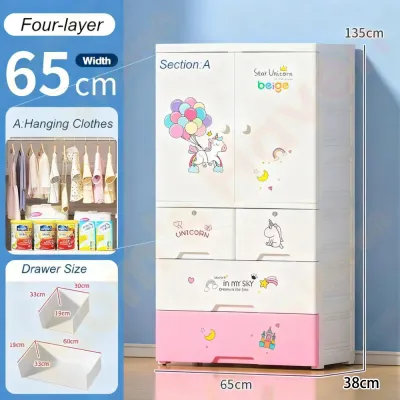
Prices are valid at publication and may change. Please refer to the product page for the latest price.
Physical access to the bedroom is another critical factor that buyers frequently overlook. Even if a cabinet is sold as a flat-pack assembly, the individual panels and packaging can be bulky. Measure the widths of your front doorway, hallways, stairwells, and bedroom entrance to guarantee that the box can be carried into the room without getting wedged. If you live in a condominium or apartment building, check the dimensions of the service elevator and the clearance of tight corridor turns.
Finally, calculate the space required for the cabinet doors to operate. Hinged doors require a clear swing radius in front of the unit, which means you must leave enough clearance so they do not strike your bed frame, nightstand, or bedroom door. If your floor space is exceptionally tight, consider a plastic cabinet with sliding doors or folding accordion panels. While sliding doors require lateral clearance within the cabinet frame itself, they eliminate the need for front swing space, making them highly efficient for narrow walkways.
Match Internal Dimensions to Your Wardrobe Inventory
An organized wardrobe relies entirely on how well the internal layout aligns with the specific types of clothing you own. A cabinet with hanging clothes plastic configuration must be evaluated not just by its outer shell, but by the volume and height of its internal compartments.

Hanging Section Height Requirements
The vertical clearance of your hanging rod determines whether your clothes remain neat or end up crumpled at the bottom of the compartment. Short hanging items, such as folded trousers, button-down shirts, skirts, and blouses, typically require an internal vertical clearance of 80 to 100 centimeters. In contrast, long hanging garments like maxi dresses, long coats, or traditional formal wear require a continuous vertical drop of 120 to 150 centimeters.
When reviewing product specifications, always check the internal hanging rod height rather than the total external height of the cabinet. The external height includes the top panel, base legs, and any bottom drawers, which significantly reduces the actual hanging clearance inside. Ensure there is a gap of at least 5 to 10 centimeters between the bottom hem of your longest hanging garment and the floor of the compartment to prevent dust accumulation and fabric friction.
Shelving and Drawer Configurations
A functional plastic wardrobe must strike a balance between hanging space and flat storage. Evaluate your personal inventory to decide whether you need adjustable shelves or fixed compartments. Adjustable shelves provide the flexibility to reconfigure the cabinet as your seasonal storage needs change, allowing you to accommodate bulky bedding or tall storage boxes. Fixed shelves, while less flexible, often offer superior structural stability for heavier items.
Standard folded clothes, such as t-shirts, jeans, and sweaters, require a shelf depth of at least 35 to 40 centimeters to sit comfortably without hanging over the edge. If you plan to store shoes inside the cabinet, measure your largest pair from heel to toe to ensure the doors can close fully. Crucially, remember that plastic components have lower weight thresholds than solid wood or steel. Always verify the manufacturer’s specified load capacity for each shelf and drawer before stacking heavy items like thick denim, winter blankets, or heavy organizers, as exceeding these limits will cause the plastic to bow or crack over time.
Understand Standard Widths for a Cabinet with Hanging Clothes Plastic
Plastic cabinets with hanging sections generally fall into three standard width categories, each suited to different room sizes and storage volumes. Single-door or narrow units (typically 50 to 65 centimeters wide) are excellent for compact studio apartments, guest rooms, or as supplemental storage for a single person. Double-door or standard units (ranging from 70 to 90 centimeters wide) represent the most common configuration, offering a practical split between a hanging rod on one side and shelving on the other. Multi-door or large modular units (exceeding 100 centimeters in width) are designed for couples or individuals with extensive wardrobes, though they require a spacious bedroom to avoid overwhelming the interior design.
Understanding the distinction between external and internal dimensions is vital when choosing plastic furniture. The external dimensions dictate whether the cabinet physically fits into your bedroom layout, while the internal dimensions dictate whether your clothes actually fit inside. Because plastic is a flexible material, manufacturers must design these cabinets with thicker hollow walls, heavy-duty corner joints, and prominent internal structural ribs to ensure stability.
These necessary structural reinforcements can significantly reduce the actual usable space inside the cabinet. For instance, a cabinet with an external depth of 50 centimeters might only provide an internal depth of 44 centimeters once you account for the thickness of the back panel, front doors, and structural supports. This distinction is critical because standard adult clothes hangers measure approximately 40 to 45 centimeters wide. If the internal depth is less than 45 centimeters, your hung clothes will sit at an angle, and the sleeves will constantly get pinched when you close the doors. Always consult the detailed product manual or check the specifications on the online marketplace listing to verify the exact internal clearance before finalizing your purchase.
Avoid Common Sizing and Placement Mistakes
One of the most frequent mistakes when installing a plastic wardrobe is failing to account for the door swing radius. Placing a hinged-door cabinet too close to the side of a bed or a doorway can restrict movement, forcing you to squeeze past open doors or risk bumping your limbs. Always map out the door path on your floor using painter’s tape before buying to ensure a comfortable walkway remains open even when the cabinet is fully accessible.
Another common error is ignoring the structural limitations of plastic materials. Overloading a plastic hanging rod with heavy jackets, wet laundry, or tightly packed hangers will cause the rod to sag, which can warp the entire cabinet frame and prevent the doors from aligning or closing properly. Distribute weight evenly across the rod and utilize the lower shelves or drawers for heavier items to keep the cabinet’s center of gravity low.
In the hot and humid climate of the Philippines, placing a plastic cabinet flush against a concrete wall can trap moisture, creating a breeding ground for mold and mildew. Because plastic does not breathe like wood, any trapped humidity can ruin your clothes and cause persistent musty odors. To prevent this, always leave a gap of at least 5 centimeters between the back of the cabinet and the wall to facilitate adequate air circulation.
We also advise against assuming that all standard clothing hangers will fit inside any cabinet labeled as a wardrobe. Many budget-friendly plastic cabinets are designed with shallow depths to save space in small rooms, making them more suitable for children’s clothing or folded items. Always check the internal depth measurement against your hangers to avoid the frustration of doors that pop open or garments that get crushed.
Frequently Asked Questions (FAQ)
Can a plastic hanging rod support heavy clothes?
A plastic hanging rod can support a moderate load of lightweight garments like shirts, blouses, and light dresses, but its weight capacity varies significantly based on design, wall thickness, and reinforcing brackets. Most standard plastic rods are not engineered to support heavy winter coats, thick denim jackets, or wet garments. To prevent the rod from sagging, bowing, or snapping, always check the manufacturer’s specified load limit (often ranging from 5 to 10 kilograms for standard models) and distribute the weight evenly across the rod. If you need to hang heavier items, look for models that feature a metal-reinforced rod or independent support brackets.
Do I need to anchor a plastic cabinet to the wall?
Yes, anchoring a tall, narrow, or heavily loaded plastic cabinet to the wall is highly recommended for safety and stability. Because plastic is lightweight, these cabinets can easily become top-heavy when the upper hanging section is filled or when multiple drawers are pulled out simultaneously. To prevent accidental tip-overs, which pose a serious safety risk in households with children or pets, check the assembly manual for anti-tip kit instructions. If the manufacturer includes wall anchors or brackets, follow their safety recommendations carefully, securing the unit to a wall stud or using appropriate masonry plugs for concrete walls.
Community discussion
Share your experience or ask a question. Comments are reviewed before publication.