
To comfortably seat 6 to 10 family members for daily meals and festive gatherings, you need a dining table that balances physical surface area with the layout of your room. For a group of this size, a rectangular table should measure between 150 cm to 240 cm (approximately 5 to 8 feet) in length, while a round table requires a diameter of at least 120 cm to 180 cm (4 to 6 feet). Selecting the right setup, such as a durable zooey plastic table or a similar reinforced model, ensures that every family member has enough elbow room to enjoy their meals without feeling cramped. Finding the perfect fit involves understanding standard ergonomic spacing, evaluating room dimensions, and checking the structural limits of the furniture.
Baseline Space Requirements for 6 to 10 Diners
Seating a large household requires careful attention to human ergonomics. The standard rule of thumb in interior design is to allocate approximately 24 inches (60 cm) of table edge width per individual diner. This measurement provides enough lateral space for a person to eat comfortably without bumping elbows with their neighbors. For a family of 6, you will need a minimum of 144 linear inches (360 cm) of total table perimeter. As your gathering grows to 8 people, the required perimeter increases to 192 inches (480 cm), and a full household of 10 diners demands at least 240 inches (600 cm) of edge space.
Beyond lateral width, you must also consider the depth of each dining place setting. A comfortable place setting requires at least 12 to 15 inches (30 to 38 cm) of depth to accommodate plates, utensils, and drinking glasses. When two diners sit directly opposite each other, the table width should ideally be at least 30 to 36 inches (76 to 91 cm) to prevent their place settings from overlapping, while leaving a small central zone for serving dishes.
Products mentioned in this guide
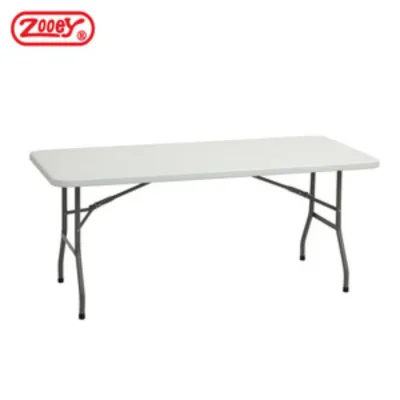
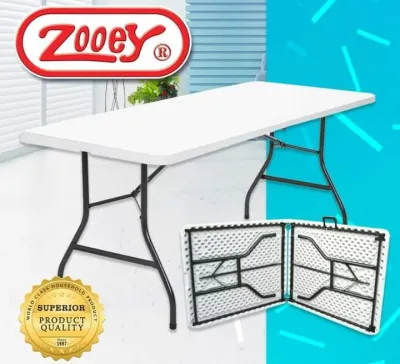
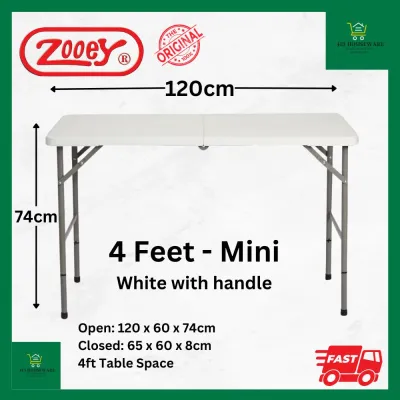
Prices are valid at publication and may change. Please refer to the product page for the latest price.
Keep in mind that these dimensions represent baseline human factors. The actual comfort of your dining setup depends heavily on the physical design of your dining chairs. Standard plastic or wooden chairs without armrests generally measure between 18 and 20 inches (45 to 50 cm) in width, which fits easily within the 24-inch allowance. However, if your family prefers wider chairs or models with integrated armrests, you must increase the edge allocation per person to 26 or 28 inches (66 to 71 cm) to ensure everyone can slide their chairs in and out smoothly.
Choosing the Right Table Shape and Dimensions
The shape of your zooey plastic table or dining furniture directly dictates how efficiently you can use your available floor space and how easily your family can converse. Different shapes distribute their perimeter in unique ways, making some better suited for narrow rooms and others more appropriate for open-plan layouts. When shopping for a large plastic table, always verify the manufacturer’s stated seating capacity and exact finished dimensions on the product label. Structural designs, leg placements, and edge curves vary significantly between brands, meaning a table marketed for “8 to 10 people” might only fit 6 comfortably if the design features bulky corner legs or rounded edges.

Rectangular Tables
Rectangular tables are the most popular choice for seating 6 to 10 people, especially in long, narrow dining areas or homes where the table must occasionally be pushed against a wall to clear walking paths. For 6 diners, a rectangular table should measure at least 60 to 72 inches (150 to 180 cm) in length and 30 to 36 inches (76 to 91 cm) in width. To accommodate 8 people, look for a length of 72 to 96 inches (180 to 240 cm). Seating 10 people comfortably requires a substantial length of 96 to 108 inches (240 to 274 cm), which allows for three to four diners along each long side and one at each end.
When selecting a rectangular plastic table, pay close attention to the placement of the table legs. If the legs are positioned at the very corners of the frame, they maximize the clear space underneath for chairs. However, if the legs are set inward from the corners, they can block the chairs of those sitting near the ends, forcing diners to straddle the supports. Always check the underside design of the plastic frame to ensure there is adequate legroom and that the support bars do not interfere with natural seating positions.
Round and Oval Tables
Round and oval tables are excellent for square rooms and open-concept spaces because they soften the room’s flow and encourage face-to-face conversation among all diners. For a group of 6, a round table should have a diameter of at least 48 to 54 inches (120 to 137 cm). Seating 8 people requires a diameter of 60 inches (152 cm), while a 10-person gathering demands a large 72-inch (183 cm) round table. Oval tables offer a middle ground, providing the elongated surface of a rectangle with the curved, space-saving corners of a round table, typically requiring a length of 72 to 96 inches (180 to 240 cm) to seat 8 to 10 people.
A key structural consideration for large round or oval plastic tables is how the tabletop is supported. Because plastic is a flexible material, a wide tabletop requires a robust central pedestal or multiple reinforced legs to prevent the surface from sagging in the middle or tipping when someone leans on the edge. Before purchasing, check the manufacturer’s assembly instructions and product specifications to verify that the frame includes integrated metal support bars or heavy-duty structural ribbing underneath the plastic surface.
Measuring Your Dining Room for a Large Plastic Table
Before buying any large dining furniture, you must measure your physical dining room to ensure a comfortable fit. Start by measuring the absolute length and width of the room using a steel tape measure. Be sure to subtract the depth of any permanent fixtures, such as built-in cabinets, sideboards, pillars, or low-hanging window sills, which reduce the usable floor area.
To ensure your family can move around the table safely, apply the essential clearance rule: leave a minimum of 36 inches (90 cm) of open space between the edge of the table and the nearest wall, door frame, or piece of furniture. This 36-inch clearance allows diners to pull their chairs out, sit down, and stand up without hitting obstacles. If you want enough space for someone to walk comfortably behind a seated diner—such as when serving food during a family meal—increase this clearance to 48 inches (120 cm).
Additionally, do not overlook the logistics of getting the table into your home. Large, single-piece plastic tables do not disassemble like wooden or metal tables. You must measure the width and height of all doorways, narrow hallways, staircases, and elevator doors through which the table must pass during delivery. If your entryways are too narrow to accommodate a rigid 8-foot or 10-foot tabletop, you may need to consider foldable or multi-piece designs instead.
Using Extendable and Foldable Tables for Flexible Seating
If your household only needs to seat 10 people during weekend family gatherings or special occasions, a permanent 10-seater table can make your dining room feel unnecessarily cramped during the week. In these scenarios, extendable or foldable plastic tables offer a highly practical, space-saving solution. You can use a compact 4-seater or 6-seater setup for daily meals, then expand the surface to accommodate up to 10 guests when needed.
When evaluating these flexible options, it is vital to inspect the extension and folding mechanisms. Look for high-quality metal slides, locking hinges, and secure latches that operate smoothly and hold the table sections firmly in place. Because these moving parts are subject to wear, check the manufacturer’s care instructions regarding lubrication and cleaning to prevent rust or binding, especially in humid environments.
Additionally, be aware that extended plastic leaves or fold-out sections often have lower weight tolerances than the main, centrally supported body of the table. Placing heavy serving platters, large rice cookers, or heavy soup bowls on the outer edges of an extended table can cause the joints to bend or fail. Always consult the manufacturer’s load limits and care instructions before placing heavy items on any extended sections, and distribute the weight of your dishes evenly across the entire surface.
Common Sizing and Clearance Mistakes to Avoid
One of the most frequent mistakes homeowners make is buying a large table based solely on its nominal seating capacity without measuring their existing dining chairs. If your chairs are wide, have thick cushions, or feature armrests, they will occupy more lateral space than standard models. This mismatch can prevent you from tucking the chairs fully under the table, cluttering your walking paths and reducing the actual number of people you can comfortably seat.
Another common error is ignoring the structural integrity of the table’s base. A large plastic tabletop that lacks internal metal reinforcement or thick underside ribbing will inevitably bow or sag over time, particularly when loaded with heavy serving dishes or when subjected to the weight of diners leaning on the edges. When shopping, do not rely on material names alone to guarantee durability; instead, physically inspect the underside of the table or read the technical specifications to confirm the presence of a reinforced frame.
Finally, many buyers overlook the visual weight of a massive 10-seater table. Placing a large, solid table in a relatively small room can overwhelm the space visually, making the entire dining area feel dark, cramped, and uninviting. To avoid this, consider lighter-colored plastic finishes or tables with open, minimalist leg designs that allow light to pass through, preserving a sense of spaciousness.
Frequently Asked Questions (FAQ)
Can a standard plastic table safely hold heavy dishes for 10 people?
Yes, but its safety and weight capacity depend entirely on the table’s internal support structure rather than the thickness of the plastic surface itself. High-quality plastic tables designed for large groups feature dense underside ribbing or integrated steel support frames that distribute weight evenly. Always check the manufacturer’s maximum load specifications before use. To prevent damage or structural failure, avoid placing excessively heavy, concentrated items—such as large clay cooking pots (palayok), heavy cast-iron pans, or kitchen appliances—directly on the unsupported central spans of the tabletop.
How do I maintain a large plastic dining table in a humid climate?
In humid environments, plastic tables can quickly accumulate a sticky residue from airborne grease, dust, and moisture. Clean the surface regularly using a soft cloth, mild dish soap, and warm water, avoiding abrasive scrubbers that can scratch the finish. Because prolonged exposure to intense tropical sunlight can cause plastic to become brittle, fade, or warp, position your dining table away from direct sunlight. Additionally, ensure your dining room is well-ventilated to prevent mold and mildew from growing on the underside joints or adjacent walls.
Community discussion
Share your experience or ask a question. Comments are reviewed before publication.