
Finding the right portable table for a compact condominium balcony requires balancing personal utility with physical safety. In many urban developments across the Philippines, balcony spaces are highly prized but limited in footprint, often serving multiple roles from laundry drying areas to pocket gardens. To prevent your outdoor setup from becoming a cramped obstacle course, you must carefully calculate your layout before bringing any new furniture home.
The primary rule for a functional balcony is maintaining a clear, unobstructed walkway. As a general guideline, a comfortable residential pathway requires a width of 60 to 75 centimeters to allow a single adult to pass through without turning sideways. For a typical small condo balcony, which often measures between 1.2 and 1.5 meters in depth, a portable table with a maximum width or diameter of 50 to 60 centimeters is usually the most practical choice. This size provides enough surface area for a laptop, a book, or a couple of coffee cups while preserving the essential walking space around it.
Measure Your Balcony and Walkway Clearance
Before browsing online marketplaces or visiting local furniture showrooms, you must obtain precise measurements of your balcony. Use a metal measuring tape rather than a soft tailor’s tape to ensure accuracy over longer distances. Begin by measuring the absolute length and width of the floor surface, but do not stop there. You must also account for any structural elements that protrude into the space, such as concrete pillars, decorative columns, or low-hanging utility pipes.
Products mentioned in this guide
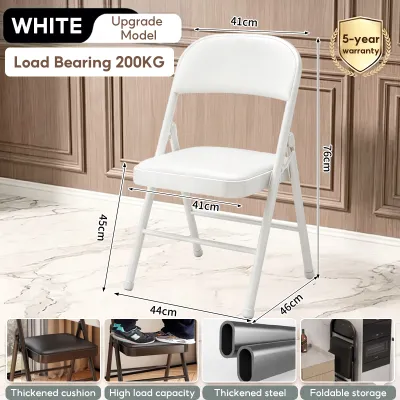
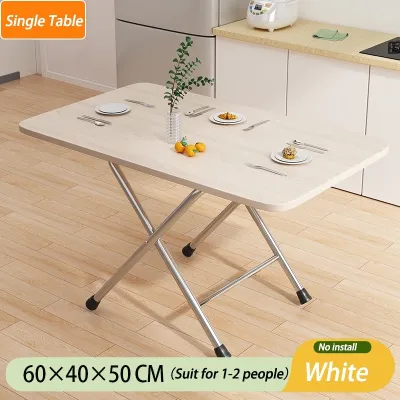
![[NEW] TTRacing Tacto Portable Standing Desk Ergonomic Height Adjustable Table](https://img.lazcdn.com/g/p/8f16283bc24f4912079347f44535040b.jpg_400x400q80.jpg_.webp)
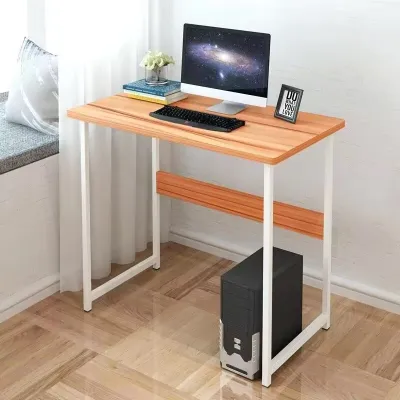
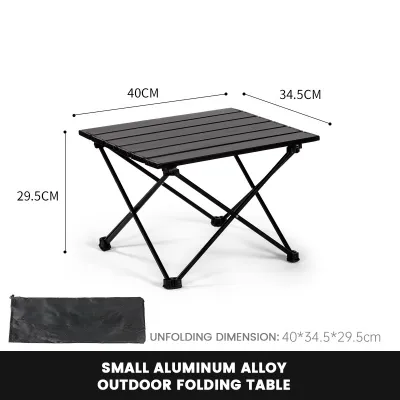
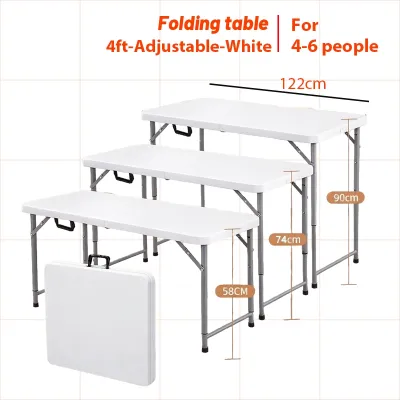
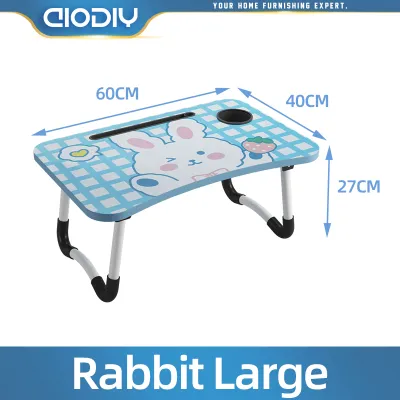

Prices are valid at publication and may change. Please refer to the product page for the latest price.
Next, examine the balcony railings. Some high-rise buildings feature railings with thick top caps or safety glass panels that sit slightly inside the concrete slab boundary. If your railings lean inward, they will reduce the usable clearance at tabletop height. Measure the narrowest point between the interior wall and the innermost edge of the railing to establish your true working width.
Establishing a safe walkway clearance is critical for comfort and safety. Standard guidelines recommend a minimum clear path of 60 centimeters for basic movement. If your balcony serves as a utility area where you regularly carry laundry baskets or watering cans, try to maintain a clearance of 75 centimeters to prevent scraping your shins or risking a trip hazard.
Finally, map all fixed obstacles on your balcony floor. In many Philippine condominiums, the outdoor air conditioning condenser unit is installed directly on the floor or mounted on a low bracket. This unit occupies physical space and blows hot air, making the immediate area uncomfortable for sitting. You must also map out the swing path of sliding glass doors, floor drains, and large planters.
Calculate the Maximum Table Dimensions
Once you have recorded your balcony’s physical dimensions, calculate the maximum allowable footprint for your portable table. Start with the total depth of your balcony (from the sliding door to the railing) and subtract the required walkway clearance of 60 to 75 centimeters. The remaining dimension represents the maximum combined depth available for both your table and your seating.

Next, factor in the space occupied by chairs or stools. A standard outdoor chair requires approximately 45 to 50 centimeters of depth when in use, plus 10 to 15 centimeters of legroom. If you choose traditional chairs that remain permanently unfolded, they will constantly consume this space. However, if you opt for stools or folding chairs that tuck completely underneath the table when not in use, you only need to account for their footprint during active hours.
This distinction between ‘in-use’ and ‘stored’ footprints is crucial. If your balcony is exceptionally narrow, a table depth of 40 to 45 centimeters paired with slim, backless stools is often the most efficient configuration. This setup allows you to slide the stools entirely under the table frame, reclaiming valuable floor space the moment you finish your meal.
To avoid purchasing mistakes, visualize your calculated dimensions in the actual space before buying. Use low-tack painter’s tape or newspaper to outline the exact footprint of the proposed table and chairs on your balcony floor. Leave this mock-up in place for a day or two, walking through the space during your normal daily routines to ensure it does not block your path or door operation.
Portable Table Styles That Maximize Small Balconies
Selecting the right style of portable table can dramatically improve the usability of a restricted balcony. Foldable tables are highly favored for their space-saving capabilities. These models feature legs that fold flat against the underside of the tabletop, allowing you to store the entire unit against a wall or inside a utility closet when the balcony is needed for other activities like drying clothes.
Drop-leaf tables offer an adaptable middle ground for changing spatial needs. These tables feature hinged side panels that can be raised or lowered independently. When using the table alone, you can keep one leaf folded down to minimize the footprint. If a guest joins you, simply raise the second leaf to double the surface area, which is ideal for long, narrow balconies.
Railing-mounted folding tables represent another excellent design solution. These tables attach directly to the top rail of your balcony balustrade using adjustable brackets. Because they do not have traditional legs extending to the floor, they eliminate leg clutter and leave the ground open for your feet. Before purchasing, verify that your balcony railing is structurally sound and that your condo association permits external attachments.
Nesting tables and C-shaped tables provide smart utility for casual lounging. A C-shaped table features an asymmetrical frame with a flat base that slides underneath a low balcony chair. This design allows the tabletop to hover directly over your lap, providing a convenient surface for a drink or tablet without requiring dedicated floor space in front of the seat.
When evaluating portable tables, prioritize lightweight materials with integrated carrying handles or simple folding mechanisms. Tables constructed from powder-coated aluminum, high-density polyethylene, or treated acacia wood are easy to lift and carry. This portability is essential in tropical climates like the Philippines, where sudden afternoon downpours require you to quickly move outdoor furniture indoors.
Common Space-Planning Mistakes to Avoid
Even with careful measurements, several common layout errors can ruin the functionality of a small balcony. One frequent mistake is failing to check the clearance of the sliding glass door track and threshold height. If your portable table is placed too close to the doorway, its legs or frame may obstruct the sliding path of the glass door or catch on the insect screen. Ensure there is a buffer of at least 10 centimeters between the table and any moving door panels.
Another common oversight is ignoring the drainage slope of the balcony floor. To prevent rainwater from pooling, condo balconies are engineered with a slight downward slope toward a floor drain. A portable table with rigid, non-adjustable legs will wobble on this uneven surface. To prevent spills, look for tables that feature adjustable leveling feet or threaded leg caps that can be customized to match the floor’s incline.
Do not underestimate the visual weight of your furniture. A table with thick, solid wooden legs or a bulky central pedestal can make a small balcony feel cramped and dark, even if its physical dimensions technically fit. Instead, choose tables with slender, open metal frames or wire-frame legs that allow light and air to pass through freely, maintaining an airy feel.
Finally, always consult your condominium corporation’s house rules before finalizing your furniture choice. Many high-rise developments enforce strict regulations regarding the height and appearance of balcony items to maintain a uniform building facade. Additionally, some buildings have strict weight limits or prohibit any furniture that could potentially block designated emergency escape routes.
Frequently Asked Questions (FAQ)
Can I use a portable table on a balcony with a sloped floor?
Yes, you can use a portable table on a sloped balcony, but you must select a design that adapts to the incline. Because condo balconies are sloped to facilitate rainwater drainage, standard fixed-leg tables will wobble. To resolve this, look for portable tables equipped with independently adjustable leveling feet or threaded leg caps. These components allow you to fine-tune the height of each leg by a few millimeters, compensating for the slope and ensuring a stable, level surface.
How do I secure a lightweight portable table against strong winds?
High-rise balconies in the Philippines are frequently subjected to strong winds, particularly during the monsoon season. To secure a lightweight portable table without drilling permanent anchors into your balcony floor or walls—which is often prohibited by condo rules—you can use non-damaging weighted solutions. Consider wrapping heavy-duty canopy sandbags or specialized U-shaped weights around the lower crossbars of the table frame to lower its center of gravity. However, for maximum safety during severe weather advisories or typhoons, the most reliable method is to fold the table flat and store it securely indoors.
Community discussion
Share your experience or ask a question. Comments are reviewed before publication.