
When furnishing a compact living area, finding a balance between functionality and floor space is a common challenge. A round table serves as an excellent solution, offering a practical surface while keeping the room accessible and easy to navigate. By choosing the correct dimensions, you can prevent your living room from feeling overcrowded while ensuring your coffee table remains highly functional.
Quick Answer: Standard Sizes for a Round Table
For most small living rooms, the ideal diameter for a round coffee table ranges from 24 to 36 inches (approximately 60 to 90 centimeters). This range provides enough surface area for drinks, books, and decor without blocking the natural flow of foot traffic.
To maintain visual balance, follow the golden rule of furniture proportion: the diameter of your round table should be roughly one-half to two-thirds the total length of your primary sofa. Adhering to this ratio ensures the table looks intentional and scaled to the seating. Unlike rectangular or square alternatives, a round shape eliminates sharp corners, which instantly improves physical traffic flow and introduces a sense of visual softness to tight layouts.
Products mentioned in this guide
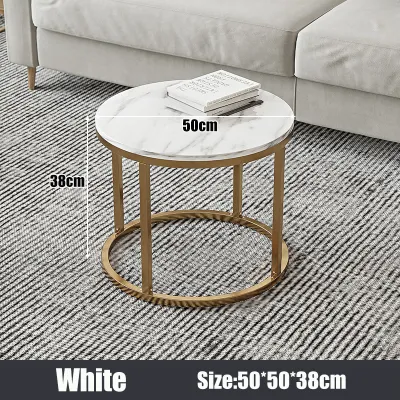
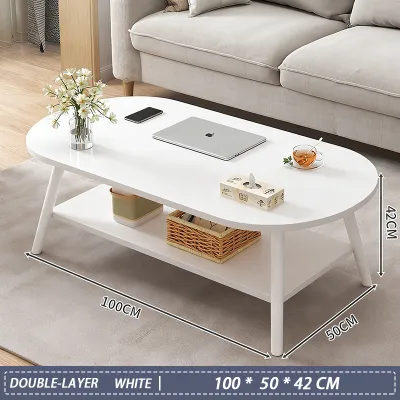
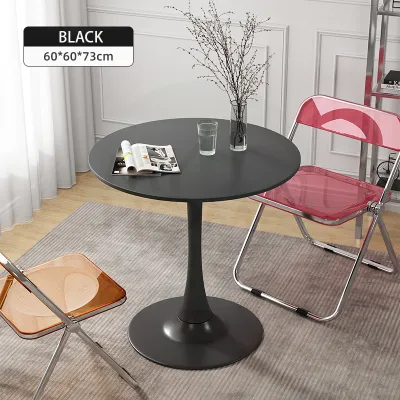
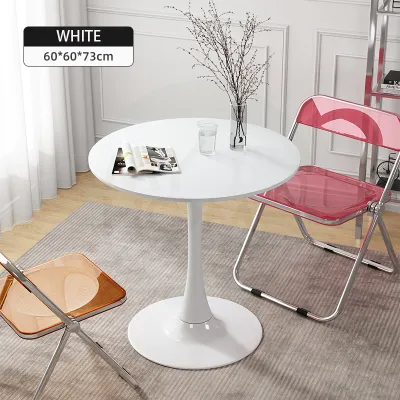
Prices are valid at publication and may change. Please refer to the product page for the latest price.
How to Measure Your Space for a Round Table
Before browsing online marketplaces or visiting local showrooms, you must take precise measurements of your existing layout. Begin by measuring the exact length and depth of your primary sofa. This establishes the baseline for your table’s scale. Next, measure the distance from the edge of the sofa to the opposite wall, television console, or secondary seating. This step is crucial for understanding how much central floor space you actually have to work with.

To find the maximum allowable diameter for your table, calculate the available central floor space by subtracting the required walkway clearance from the total distance between facing furniture. For example, if the distance between your sofa and your TV console is 70 inches, and you subtract the necessary clearance on both sides of the table, the remaining dimension dictates your maximum table diameter.
Additionally, consider the size and placement of your area rug. A round coffee table looks most cohesive when it sits fully on the rug, with a visible border of exposed rug texture framing it. If your rug is too small, a circular table can look like it is floating awkwardly. Measure your rug to ensure it can comfortably accommodate both the table and the front legs of your seating, which anchors the entire conversational grouping.
Finally, always verify your home’s physical access constraints before finalizing a purchase. In high-rise condominiums or compact townhouses across the Philippines, narrow doorways, tight corridors, and small service elevators can present major delivery obstacles. Measure the clearance of your entryways and lifts to ensure your chosen furniture piece can be safely transported into your home without damage.
Matching Table Diameter to Sofa Proportions
Sofa configurations vary widely, and matching your circular table to the specific style of your seating is key to achieving a balanced look. The overall length of your sofa should directly dictate the diameter of the table you choose.
Compact Sofas and Loveseats (Under 72 Inches)
If your living room features a compact two-seater loveseat or an apartment-sized sofa under 72 inches (around 183 centimeters), look for a round table with a diameter between 24 and 30 inches (60 to 75 centimeters). These modest dimensions provide adequate surface space for daily essentials—such as a coffee mug, remote controls, or a small potted plant—without overwhelming the limited footprint of a studio or a small one-bedroom condominium.
Selecting a table within this range prevents the furniture from crowdedly overlapping with the ends of the loveseat. It also leaves ample room on either side for easy entry and exit, keeping the seating area feeling open and airy.
Standard Small Sectionals and 3-Seaters (72 to 84 Inches)
For standard three-seater sofas or small L-shaped sectionals measuring between 72 and 84 inches (183 to 213 centimeters), a round table with a diameter of 30 to 36 inches (75 to 90 centimeters) is the most appropriate choice. This size maintains a balanced relationship with the longer seating length, ensuring that anyone sitting on the sofa can easily reach the table.
When pairing a round table with an L-shaped sectional, the circular shape is particularly effective. It fits neatly into the interior angle of the chaise lounge, providing a central surface while leaving open pathways around the extended leg rest.
Using Nesting Tables for Flexible Sizing
When a single, permanent coffee table feels too restrictive for your space, a set of round nesting tables offers an excellent, highly flexible alternative. These sets typically consist of two or three tables of graduated sizes and heights designed to slide completely or partially underneath one another.
During daily use, you can keep them tucked together to maintain a minimal footprint and maximize open floor space. When hosting guests or enjoying a casual meal, simply pull the smaller tables out to distribute multiple surfaces around the room. This adaptability is perfect for multi-purpose rooms where floor space must occasionally be cleared for other activities.
Essential Clearance and Walkway Rules
Even a perfectly scaled round table will make a room feel cramped if it is positioned incorrectly. To ensure comfortable movement and seating, you must adhere to standard clearance guidelines.
Keep a distance of 14 to 18 inches (35 to 45 centimeters) between the edge of your sofa cushions and the edge of the round table. This distance provides comfortable legroom for sitting and stretching while keeping the table close enough to easily reach a drink or a book. Anything less than 14 inches will make sitting down feel restricted, while a gap wider than 18 inches makes the table inconvenient to use.
For the primary walkways around your seating arrangement, maintain a clearance of 24 to 30 inches (60 to 75 centimeters). This ensures that family members and guests can walk through the room naturally without having to shimmy sideways or bump into furniture.
Adjust these clearance rules based on the specific features of your room. If your layout includes reclining chairs, ensure the table is placed far enough away to clear the footrests when extended. In tropical climates like the Philippines, living rooms often feature high-traffic paths leading to balconies or sliding screen doors for natural ventilation. Keep these pathways entirely clear of the table’s perimeter to allow unobstructed airflow and easy access to outdoor spaces.
Design Features That Maximize Small Spaces
Beyond physical dimensions, the visual weight of a round table plays a significant role in how spacious your living room feels. Certain design characteristics can make a table appear lighter and less intrusive.
Consider the style of the table’s base. A central pedestal base is highly recommended for tight spaces because it eliminates the outer legs, offering superior legroom and making it easier to maneuver around the table. Four-legged tables can sometimes look busy and restrict how close you can pull your feet to the sofa.
Materials also influence visual density. A round table with a glass, acrylic, or open-wire metal frame allows light to pass through, making the floor beneath it visible. This transparency tricks the eye into perceiving the room as larger and less cluttered.
If you choose a wooden table, look for light-toned finishes or open-shelf designs. Due to the high humidity levels in the Philippines, ensure that any wooden furniture features a high-quality moisture-resistant sealant to prevent warping, and verify that metal frames are treated with a rust-resistant powder coating. Avoid heavy, solid-block storage bases that sit flush on the floor, as they block light and can make a compact room feel instantly crowded. If you require extra storage, opt for a leggy design with a slender lower shelf or a lift-top mechanism that preserves an open, airy base.
Common Sizing and Placement Mistakes
Avoiding common layout errors will ensure your small living room remains comfortable and functional. One frequent mistake is purchasing a table that is too high or too low relative to your seating. A table that sits higher than your sofa cushions disrupts the visual sightlines of the room, while a table that is too low can be ergonomically uncomfortable to use. Aim for a table height that is level with your sofa seat cushions or up to 2 inches lower.
Another common error is placing the table too far from the seating. Homeowners often push the coffee table toward the television console to create a wider walkway, but this defeats the functional purpose of the table and makes the room look disjointed. Keep the table anchored within the 14-to-18-inch clearance range of the sofa.
Finally, do not ignore the boundaries of your area rug. Placing a round table partially on and partially off a rug creates visual instability and can cause the table to wobble. Ensure all legs of the table—or the entire pedestal base—rest securely on the rug surface to maintain a balanced, cohesive design.
Frequently Asked Questions (FAQ)
Does a round coffee table make a small room look bigger?
Yes, a round coffee table can make a compact room feel larger. Because circular shapes lack sharp, rigid corners, they soften the overall lines of the room and allow the eye to glide smoothly across the space. This lack of hard edges also creates wider, more natural pathways for walking, which reduces physical congestion and makes the layout feel more open and less cluttered than it would with a rectangular or square table.
What is the standard height for a round coffee table?
Standard coffee table heights typically range from 16 to 18 inches (40 to 45 centimeters). For the best comfort and visual balance, select a table that matches the height of your sofa’s seat cushions, or is no more than 1 to 2 inches lower. This height ensures that reaching for items on the table is comfortable while keeping the profile low enough to preserve open sightlines across your living space.
Community discussion
Share your experience or ask a question. Comments are reviewed before publication.