
Finding the perfect shoe rack chair requires balancing seating comfort with smart storage. Whether you are organizing a compact condo entryway in Manila or optimizing a walk-in closet, the right dimensions prevent your space from feeling cramped. A shoe rack chair serves a dual purpose: it provides a stable place to sit while putting on footwear and keeps your daily shoes neatly organized off the floor.
To choose the correct size, you must evaluate your available floor footprint, door swing paths, and storage requirements. Selecting an ill-fitting unit can block high-traffic walkways or prevent closet doors from opening fully. By taking precise measurements and understanding standard furniture clearances, you can find a configuration that enhances both the functionality and flow of your home.
Measure Your Available Space Before Buying
Before browsing online catalogs or visiting furniture showrooms, you must map out the exact area where the shoe rack chair will sit. Start by clearing the intended spot completely. Use a metal measuring tape to record the maximum width and depth of the floor space. If your entryway has architectural features like columns, recessed niches, or decorative wall trim, measure from the outermost point of these features rather than the flat wall to ensure an accurate fit.
Products mentioned in this guide
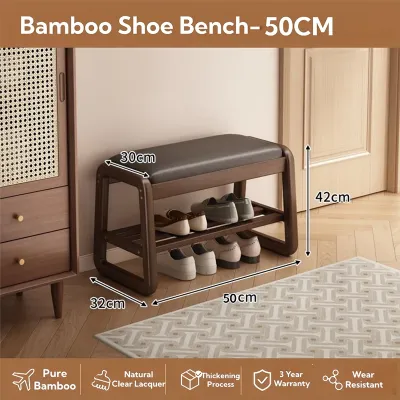
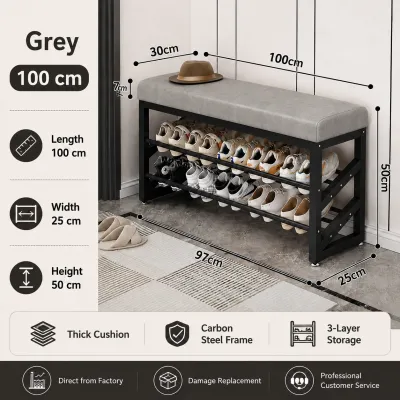
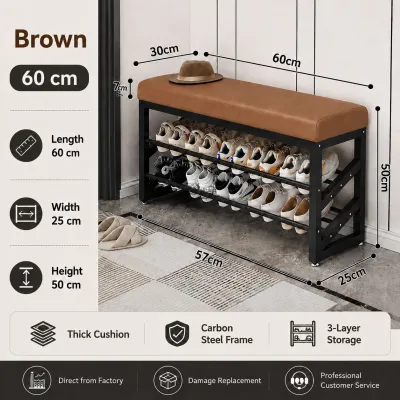

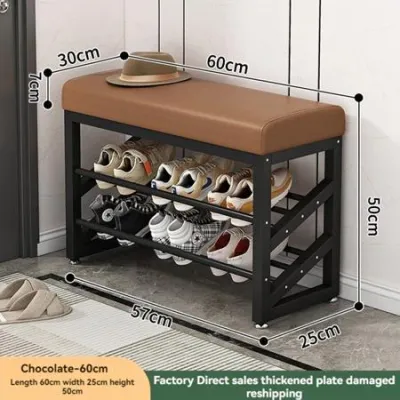
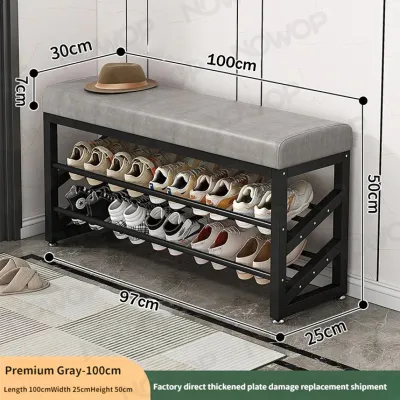
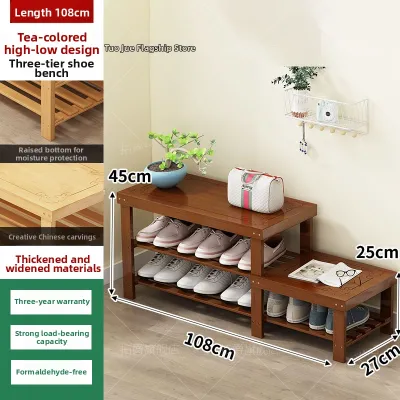
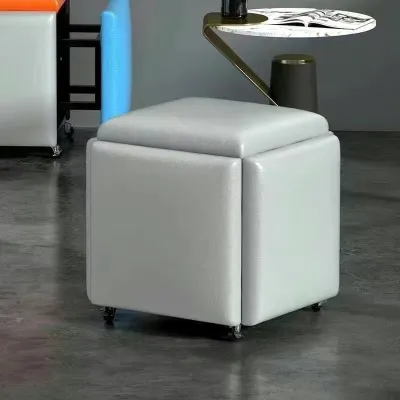
Prices are valid at publication and may change. Please refer to the product page for the latest price.
Vertical clearance is equally critical, especially if you plan to place the chair inside a closet or beneath low-hanging entryway fixtures. Measure the distance from the floor to the bottom of any hanging clothes, shelves, or wall-mounted coat racks. In humid tropical climates like the Philippines, leaving a generous gap between the top of the chair and hanging garments is essential. This gap promotes proper air circulation, preventing moisture buildup and mold growth on both your clothes and the furniture.
Finally, you must account for the movement of doors and daily foot traffic. Open your front door, screen door, or closet doors completely and measure their swing radius. Mark this path on the floor using painter’s tape. Your shoe rack chair must sit entirely outside this zone to prevent collisions. Additionally, consider the natural pathway through your foyer; ensure there is enough room for family members to carry groceries or bags past the chair without squeezing through.
Standard Dimensions and Clearance Requirements
While individual furniture designs vary, understanding standard dimensions helps you evaluate manufacturer specifications more effectively. A typical single-seat shoe rack chair generally ranges from 40 to 60 centimeters in width, making it highly suitable for tight corners. Bench-style designs, which accommodate more storage and allow two people to sit simultaneously, often span 80 to 120 centimeters in width. Depth is another crucial factor; most units measure between 30 and 45 centimeters deep, providing a balance between comfortable seating and a slim profile.

Beyond the static footprint, you must calculate the dynamic clearance required when the storage compartments are in use. If the chair features pull-out drawers or drop-down cabinets, they will extend significantly past the front edge of the frame. For example, a drawer that pulls out requires an additional 30 to 40 centimeters of clear floor space in front of the bench. If you choose a lift-top design, ensure there is enough vertical clearance above the seat so the lid can open fully without hitting wall decorations or low shelves.
Ergonomic clearances are vital for daily comfort and safety. When a person sits down to tie their shoes, their knees and feet extend forward. To accommodate this natural movement, aim to maintain at least 60 to 90 centimeters of open space in front of the chair. In high-traffic entryway zones, this clearance ensures that someone sitting down does not completely block the passage for others entering or leaving the home.
Matching Configurations to Your Floor Plan
Selecting the right configuration depends heavily on your specific floor plan and storage habits. For narrow hallways, compact reach-in closets, or small studio apartments, a single-seat shoe rack chair is often the most practical choice. These vertical or highly compact designs minimize floor usage while still offering a dedicated spot to sit and store a few pairs of daily-use slippers or shoes. They tuck neatly into corners, keeping your main pathways clear.
If you have a spacious foyer or a large walk-in closet, a wider bench-style shoe rack chair offers excellent utility. These wider units provide ample seating space and can hold multiple pairs of shoes across several tiers. This setup is ideal for larger households where multiple family members need to access their footwear at the same time during busy morning routines.
The storage mechanism itself also impacts how the chair interacts with your space. Lift-top benches offer hidden, dust-free storage, which is excellent for keeping clutter out of sight. However, you must stand up to access the contents inside. Pull-out drawers provide organized compartments but require ample front clearance. For humid environments, open-slat shelves are highly recommended. They allow continuous airflow around your footwear, helping wet shoes dry faster after a sudden tropical downpour and reducing the risk of unpleasant odors and mildew.
Common Sizing Mistakes to Avoid in Tight Spaces
One of the most common mistakes when buying a shoe rack chair is ignoring the thickness of baseboards and wall moldings. Many homeowners measure the floor from wall to wall, only to find that the baseboards prevent the chair from sitting flush against the wall. This can push the unit forward by two to three centimeters, which can be critical in a very narrow hallway. Always measure from the face of the baseboard rather than the drywall.
Another frequent error is measuring only the closed footprint of the furniture. It is easy to forget that you need physical space to access the storage. If you purchase a model with drawers or pull-out racks and place it too close to an opposite wall or a closet door frame, you may find yourself unable to open the compartments fully, rendering the storage space useless.
Lastly, do not underestimate the visual weight of the furniture. A solid, dark-colored wooden bench with closed sides can make a small, enclosed closet or a dimly lit entryway feel incredibly cramped and cluttered, even if it technically fits the physical dimensions. To maintain an airy and spacious feel, opt for designs with open metal frames, lighter wood finishes, or slatted shelves that let light and air pass through.
Frequently Asked Questions (FAQ)
Can a shoe rack chair fit inside a standard reach-in closet?
Yes, a shoe rack chair can fit inside a standard reach-in closet, provided you verify the interior depth and door clearance. Most reach-in closets have a depth of about 60 centimeters, which easily accommodates a slim shoe rack chair measuring 30 to 40 centimeters deep. However, you must ensure that the chair does not interfere with sliding, bifold, or hinged closet doors. Additionally, check that you have enough overhead clearance so hanging clothes do not drape directly onto the seating surface, and ensure there is comfortable room to sit down without hitting the closet frame.
How much weight can a typical shoe rack chair support?
The weight capacity of a shoe rack chair depends entirely on its construction materials, joint design, and frame reinforcement. To ensure safety, always check the manufacturer’s official weight limit specified on the product packaging, instruction manual, or store listing. Generally, sturdy solid wood or metal-framed benches can support a standard adult’s weight comfortably, while lightweight plastic or thin particleboard designs may have much lower limits. Avoid overloading the internal shelves or drawers beyond their rated capacity to prevent sagging or structural failure over time.
What is the best shoe rack chair design for a narrow apartment entryway?
For a narrow apartment entryway, the best design is a slim-profile, armless shoe rack chair with open, vertical shelving. Armless designs have a smaller visual footprint and allow you to slide onto the seat easily from the side. Open-slat shelves or vertical shoe slots minimize the depth of the unit, often keeping it under 30 centimeters. Always verify that the chosen design allows your main apartment door to open and close completely without obstruction, ensuring a safe and clear exit path.
Community discussion
Share your experience or ask a question. Comments are reviewed before publication.