
Selecting the right size shoe rack with cover cabinets for your closet requires a careful balance between your available floor space and your actual footwear storage needs. In tropical climates like the Philippines, where high humidity can easily lead to mold and mildew on enclosed shoes, choosing the correct cabinet size is not just about aesthetics—it is essential for preserving your collection. By taking precise measurements of your closet, calculating your current and future shoe inventory, and planning for proper ventilation and door clearance, you can find a storage solution that keeps your shoes protected, organized, and easy to access.
Measure Your Closet Space for Maximum Cabinet Footprint
To find a cabinet that fits seamlessly into your wardrobe setup, start by taking precise measurements of the designated area. Use a reliable metal measuring tape to record the exact width, height, and depth of the floor or shelf space where the unit will sit. Do not rely on rough estimates or the dimensions listed on your closet’s original floor plan, as minor construction variances are common.
When measuring, you must account for baseboards, molding, and trim along the bottom of your closet walls. These architectural details can prevent a flat-backed cabinet from sitting flush against the wall, effectively stealing several centimeters of depth and width. If your closet has sliding doors, measure the depth of the tracks to ensure the cabinet will not obstruct the doors from sliding completely open or closed.
Products mentioned in this guide
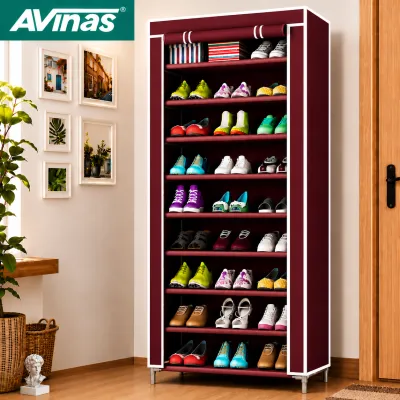
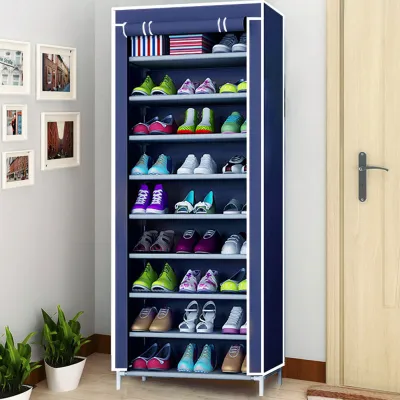
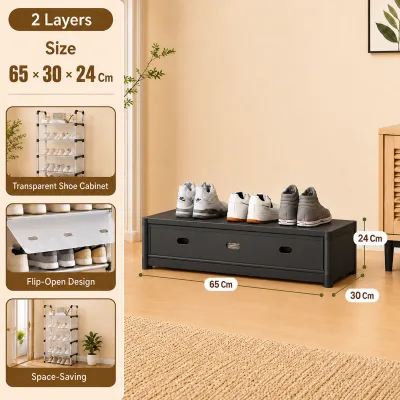
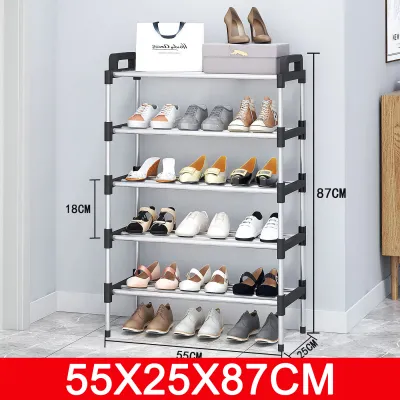
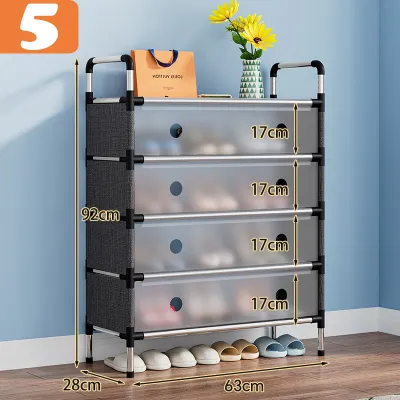
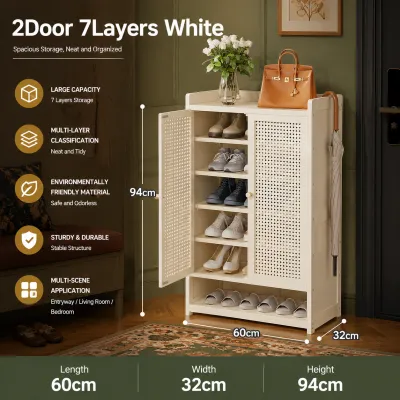
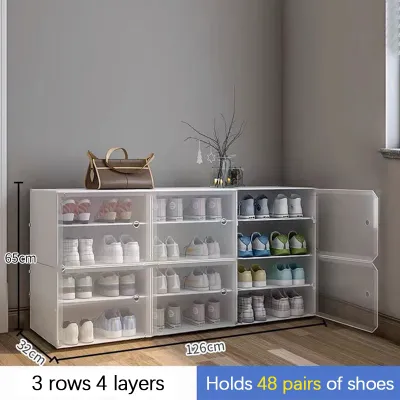
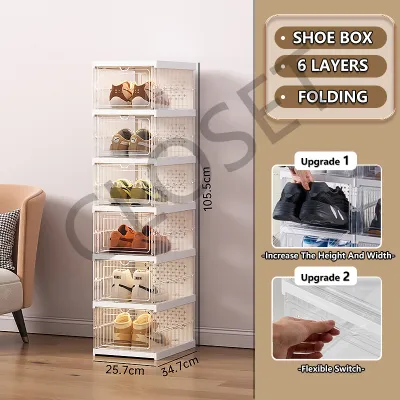
Prices are valid at publication and may change. Please refer to the product page for the latest price.
Additionally, look upward and check for any low-hanging clothes on your closet rods. A tall shoe cabinet might crush or wrinkle long dresses, coats, or trousers hanging directly above it. Ensure there is at least ten to fifteen centimeters of clearance between the top of the cabinet and the bottom of your hanging garments.
Finally, evaluate the clearance required for opening the cabinet doors or pulling out drawers. If your closet is narrow, swinging cabinet doors might block your walkway or collide with other doors. In these tight spaces, consider cabinets with sliding doors, roll-up fabric covers, or drop-down compartments that require minimal front clearance.
Calculate Your Shoe Storage Capacity Needs
Once you know the maximum physical footprint your closet can accommodate, you need to determine the internal volume required for your footwear. Begin by gathering your entire shoe collection and categorizing them by style, as different types of shoes occupy vastly different amounts of space. Flats, sandals, and low-profile sneakers can be packed relatively close together, whereas high heels, platform shoes, and boots require significantly more vertical and horizontal room.

Measure the height and width of your tallest and widest pairs of shoes to establish a baseline for shelf spacing. If your collection includes a diverse mix of footwear, look for covered cabinets that feature adjustable or removable shelves. This design flexibility allows you to customize the interior layout, preventing you from wasting valuable vertical space on flat sandals while squeezing tall boots into cramped compartments.
It is also wise to factor in your future storage needs rather than buying a cabinet that only fits your current inventory. Leaving a buffer of about ten to fifteen percent of empty space ensures you will not have to cram shoes together, which can ruin their shape and restrict airflow. A crowded cabinet also makes it difficult to locate and retrieve pairs quickly.
Keep in mind that bulky footwear, such as thick-soled running shoes or wide work boots, takes up more horizontal shelf space than slim dress shoes. A shelf that comfortably holds four pairs of canvas slip-ons might only accommodate three pairs of heavy athletic shoes. Always calculate your capacity based on your widest and bulkiest pairs to avoid running out of space.
Match Cabinet Dimensions to Your Closet Layout
Your closet’s layout plays a major role in determining the ideal configuration of your shoe rack with cover cabinets. For spacious walk-in closets with unused corners, a tall, freestanding narrow cabinet is an excellent choice. This vertical design maximizes storage capacity while occupying a minimal floor footprint, leaving plenty of room for you to move around and dress comfortably.
If you are working with a standard reach-in closet that features a long hanging rod, a wide, low-profile cabinet designed to sit underneath your hanging clothes is often the most efficient layout. This configuration utilizes the often-neglected space below your shirts and trousers, keeping your shoes organized and out of sight without interfering with your hanging garments.
For highly customized or evolving spaces, stackable or modular covered units offer exceptional versatility. These systems allow you to start with a single low-profile unit and add additional layers vertically as your shoe collection grows. When opting for modular designs, always verify that the interlocking mechanisms are secure and check the manufacturer’s guidelines regarding the maximum safe stacking height.
Choosing between fully enclosed wooden cabinets and fabric-covered racks involves balancing dust protection against visual bulk. Fully enclosed wooden doors offer a clean, built-in look that completely hides clutter, but they require sufficient swing clearance. Fabric-covered racks with zippered fronts or roll-up doors are lightweight, require no swing clearance, and are highly practical for tight, narrow spaces.
Verify Installation and Accessibility Clearances
Before making a final decision, verify that your closet floor or elevated shelving can safely support the weight of a fully loaded cabinet. A solid wood or heavy engineered wood cabinet filled with dozens of pairs of shoes can weigh a substantial amount. If you plan to place the cabinet on an elevated closet shelf, check the shelf’s load capacity and ensure the support brackets are securely anchored into wall studs.
In humid tropical environments, proper ventilation inside a covered cabinet is critical to prevent musty odors, mold, and mildew from ruining your footwear. Look for cabinets that feature slatted doors, mesh back panels, or built-in ventilation grommets that facilitate continuous airflow. If you choose a completely airtight cabinet, you will need to take extra steps to manage moisture levels inside.
For tall or top-heavy cabinets, especially those exceeding one meter in height, planning for anti-tip anchoring is a vital safety measure. This is particularly important if your closet floor is slightly uneven, carpeted, or if you live in an area prone to seismic activity. Check that the cabinet comes with wall-mounting hardware or purchase compatible heavy-duty anchors designed for your specific wall type.
Additionally, consider the physical space required to assemble and install the cabinet. Many flat-pack furniture pieces must be assembled lying flat on the floor before being raised upright. Ensure you have enough open floor space in or near your closet to complete the assembly process, and verify that the fully assembled unit can easily pass through your closet doorway.
Avoid Common Sizing and Clearance Mistakes
One of the most frequent mistakes homeowners make is forgetting to measure the width of their closet door frame. Even if a shoe cabinet fits perfectly inside your closet’s interior dimensions, it will be useless if the fully assembled unit cannot pass through the entryway. Always compare the cabinet’s packaged box dimensions and its fully assembled exterior dimensions against your home’s doorways and hallways.
Another common error is overestimating the internal storage capacity by looking only at the cabinet’s external dimensions. Thick cabinet walls, heavy hinges, sliding door tracks, and internal shelf supports can reduce the usable internal width and depth by several centimeters. Always look for the manufacturer’s specified usable internal dimensions rather than relying solely on the overall product footprint.
Finally, do not ignore the internal depth required for larger shoe sizes. Standard shoe cabinets often feature an internal depth of around 30 to 35 centimeters, which may be too shallow for larger men’s shoes or high-heeled boots. If your shoes are longer than the cabinet’s internal depth, you will be forced to store them sideways, which drastically reduces the number of pairs you can fit on each shelf.
Frequently Asked Questions (FAQ)
Can I install a covered shoe cabinet on a carpeted closet floor?
Yes, you can install a covered shoe cabinet on a carpeted floor, but you must take extra precautions to ensure stability. Heavy cabinets can sink unevenly into carpet pile and padding, causing them to tilt forward. To prevent this, place a solid wooden board or wide furniture coasters under the cabinet’s base to distribute the weight evenly, and always secure tall units to the wall with anti-tip anchors. Additionally, check the carpet periodically to ensure no moisture is trapped underneath, which can lead to mold.
How do I prevent odors inside an enclosed shoe cabinet?
To prevent unpleasant odors inside an enclosed shoe cabinet, never store shoes immediately after wearing them; allow them to air dry completely for a few hours first. Place moisture-absorbing sachets, activated charcoal deodorizers, or small containers of baking soda on the shelves to neutralize odors and control humidity. Regularly wiping down the interior shelves with a mild disinfectant and leaving the cabinet doors open for a few hours during dry days will also help maintain a fresh and hygienic storage environment.
Community discussion
Share your experience or ask a question. Comments are reviewed before publication.