
Finding the perfect balance between functionality and floor space is a common challenge when furnishing compact homes. In high-density urban areas across the Philippines, where studio apartments and modern condominiums often feature tight living room layouts, traditional bulky furniture can quickly make a room feel cramped. A mobile table trolley cart offers an excellent, space-saving alternative to traditional coffee tables, providing versatile storage and surface area that you can easily roll out of the way when not in use.
To choose the right size table trolley cart for a small living room, look for a compact footprint with a width under 60 centimeters, a depth under 40 centimeters, and a height that aligns closely with your sofa’s armrest or seat cushion (typically between 40 and 60 centimeters). Selecting a model with 360-degree swiveling, floor-safe wheels ensures seamless mobility without risking damage to your flooring. By focusing on precise measurements and appropriate wheel specifications, you can maximize your living room’s utility while keeping your walkways completely clear.
Quick Sizing Guidelines for Small Living Rooms
When shopping for a table trolley cart to use in a limited space, having a baseline set of dimensions helps narrow down your options quickly. For most compact living areas, a cart with a width of 40 to 50 centimeters and a depth of 30 to 40 centimeters offers the ideal balance. This footprint is small enough to tuck neatly beside an armchair or sofa arm, yet spacious enough to hold a laptop, a couple of mugs, and a book.
Products mentioned in this guide
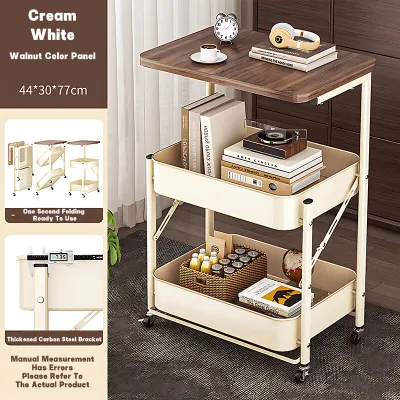
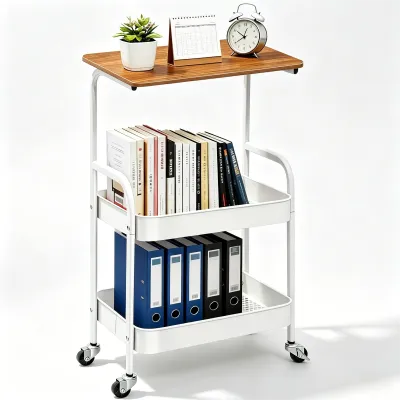
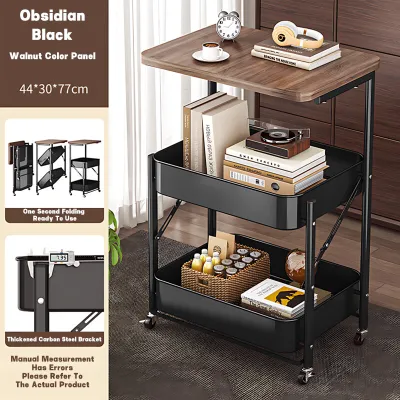
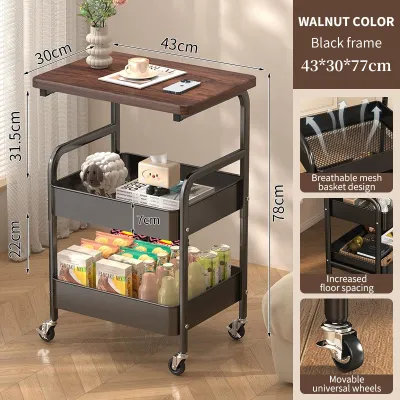
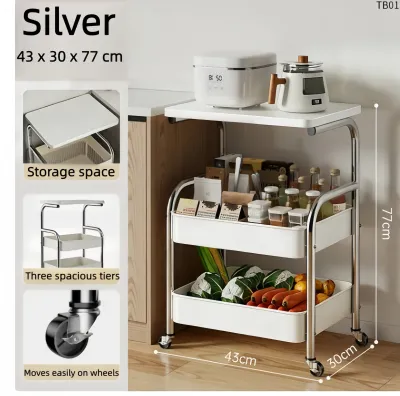
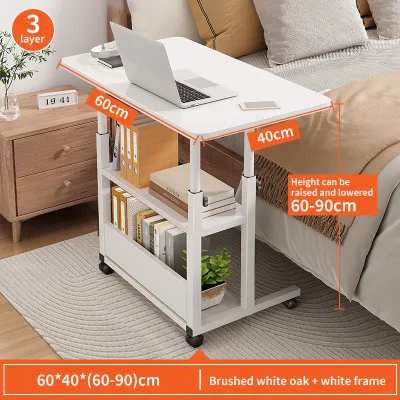

Prices are valid at publication and may change. Please refer to the product page for the latest price.
Height is equally critical for convenience and comfort. A cart standing between 45 and 55 centimeters tall aligns perfectly with the average seat height of standard sofas, allowing you to reach for drinks or remote controls without straining. If you plan to use the top shelf as a temporary workspace while sitting on the sofa, look for a slightly taller model closer to 60 to 65 centimeters, matching the height of a standard sofa armrest.
Mobility should never come at the expense of stability or floor care. For the hard tile, laminate, or vinyl plank flooring common in Philippine homes, look for carts equipped with soft-tread casters made of polyurethane or rubber. Additionally, ensure the cart features locking mechanisms on at least two of its wheels to prevent it from rolling unexpectedly when you place items on the top surface.
Measuring Your Space for a Trolley Cart
Before purchasing any mobile furniture, taking precise physical measurements of your living room is essential to prevent layout mistakes. Unlike static side tables, a trolley cart requires extra clearance because it is designed to move through your living space.

Sofa and Wall Clearances
- Measure the parking spot: Identify where the cart will sit when it is not actively in use. Use a metal tape measure to find the exact width and depth of the gap between your sofa and the adjacent wall, or between two armchairs.
- Account for baseboards: Remember to measure from the edge of the baseboard rather than the bare wall, as baseboards can shave off one to two centimeters of usable floor space.
- Check sofa clearance: Ensure the height of the cart's bottom frame can slide under your sofa if you choose a C-shaped trolley design, which allows the top surface to hover directly over your seat cushion.
Walkway Margins
- Keep high-traffic paths clear: Maintain a clear passage of at least 60 to 80 centimeters around your main furniture pieces. In compact condo layouts, walkways can quickly become blocked if a trolley cart is left in the middle of the room.
- Test the walking flow: Mark the proposed footprint of the cart on your floor using painter's tape. Walk around it for a day to ensure nobody bumps their shins or has to squeeze past.
Transit Routes
- Measure doorways and thresholds: If you plan to roll the cart from the kitchen to the living room to serve snacks or drinks, measure the clear width of your doorways and hallway transitions. Standard interior doorways in modern apartments are often 70 to 80 centimeters wide, which easily accommodates compact carts but can block wider, utility-sized models.
- Check floor transitions: Note any raised floor thresholds or transition strips between tile and laminate flooring, as large bumps can cause items on a tall, narrow cart to wobble or tip.
- Verify lift and entryway access: If you live in a high-rise condominium, ensure the packaged box or fully assembled cart can easily fit through your building's elevators and main entryway doors during delivery.
Ideal Dimensions for Compact Table Trolley Carts
To select a cart that feels proportional to your room, you must analyze how its physical dimensions interact with your existing furniture. A cart that is too wide will dominate the room, while one that is too tall can become a tipping hazard.
Length and Width Proportions
In tight spaces, vertical storage is always preferable to horizontal sprawl. A narrow, three-tier utility cart utilizes vertical height to provide multiple levels of storage while occupying a minimal footprint on your floor. Look for rectangular designs rather than square ones; a rectangular cart (such as 45 centimeters long by 30 centimeters wide) can be aligned parallel to your sofa to save floor space, or turned perpendicular to act as a slim divider.
Height Alignment
To ensure the cart functions comfortably as a side table, its top shelf should sit within 5 centimeters of your sofa’s armrest. If your sofa has a low-profile, armless design, match the top shelf of the cart directly to the height of the seat cushions. This alignment creates a cohesive visual line across your living room and prevents the cart from looking like an intrusive, mismatched utility piece.
Vertical Tier Spacing
Pay close attention to the clearance between the shelves of a multi-tier cart. To store tall items like water pitchers, books, or decorative vases, look for a model that offers at least 25 to 30 centimeters of vertical clearance between the bottom and middle shelves. Keeping heavier items on the bottom shelf is a fundamental safety practice; it lowers the overall center of gravity, making the cart significantly more stable and less likely to tip over when rolled across the room.
Choosing the Right Wheels for Mobility and Floor Protection
The wheel configuration of your table trolley cart dictates how easily it navigates tight spaces and how well it preserves the condition of your floors. Because living room floors are subject to high foot traffic, selecting the wrong wheel material can lead to costly floor repairs.
Caster Types
For maximum maneuverability in tight spaces, choose a cart equipped with 360-degree swivel casters on all four corners. Swivel casters allow you to guide the cart in any direction, make sharp turns around sofa corners, and tuck the cart into tight niches without needing a wide turning radius. Fixed wheels, which only move in a straight line, are less practical for small rooms because they require you to lift or awkwardly drag the cart to change its direction.
Wheel Material and Size
Avoid cheap, hard nylon or solid plastic wheels, which are prone to scratching laminate, engineered wood, and vinyl plank flooring. Instead, opt for wheels coated in soft polyurethane (PU) or thermoplastic rubber (TPR). These materials provide excellent grip, roll quietly, and absorb minor vibrations when crossing tile grout lines. Larger wheels (around 5 to 7 centimeters in diameter) roll much more smoothly over floor transitions and rug edges than tiny, budget-grade casters.
Locking Mechanisms
Safety is paramount when using a mobile cart as a table surface. Ensure the cart features reliable brake locks on at least two of its wheels. When locked, these brakes prevent the cart from sliding away when you press down to write, type on a laptop, or set down a hot beverage. Check the manufacturer’s specifications to ensure the locking tabs are easy to engage with your foot so you do not have to bend down constantly to secure the cart.
Common Sizing and Placement Mistakes to Avoid
Even with careful planning, it is easy to overlook small details that affect how a table trolley cart functions in a busy household. Avoiding these common design and placement errors will ensure your new purchase remains a helpful asset rather than a daily frustration.
Ignoring the Swing Radius
One of the most frequent mistakes is placing a trolley cart directly in the path of swinging doors or drawers. Always check the swing radius of nearby balcony doors, kitchen cabinets, TV console drawers, and even reclining sofa footrests. Ensure that even when these elements are fully extended or opened, they do not collide with the cart.
Visual Clutter
In a small room, furniture with solid, heavy bases blocks light and makes the floor area look smaller. Avoid solid wood or fully enclosed metal cabinet carts. Instead, choose open-frame metal designs, wire mesh baskets, or carts with glass or acrylic shelves. These materials allow light to pass through, preserving sightlines and creating the illusion of a larger, airier living space.
Overloading Top-Heavy Carts
Narrow carts with multiple tiers are highly susceptible to tipping if loaded incorrectly. Never place heavy items, such as stacks of heavy books, ceramic planters, or large water dispensers, on the top shelf while leaving the bottom shelves empty. Always review the manufacturer’s weight capacity guidelines for each individual tier. As a general rule, place your heaviest storage items on the bottom shelf, medium-weight items in the middle, and only lightweight essentials on the top surface.
Frequently Asked Questions (FAQ)
Can a table trolley cart replace a traditional coffee table?
Yes, a table trolley cart can successfully replace a traditional coffee table, especially in very narrow living rooms or studio apartments. The primary advantage is mobility; you can roll the cart to the center of the room when entertaining guests, and push it against the wall or beside the sofa when you need open floor space for exercise or cleaning. Additionally, multi-tier carts offer significantly more storage capacity than a standard flat coffee table.
However, there are trade-offs to consider. Trolley carts generally offer a smaller top surface area, meaning you have less space to spread out board games, decorative trays, or large dining plates. They are also inherently less stable than a heavy, solid-base coffee table, making them less suitable if you have active household members who might accidentally bump into them.
How do I protect my floors from trolley cart wheels in a humid climate?
In the humid, tropical climate of the Philippines, moisture can accelerate the wear and tear on both your flooring and your cart’s hardware. High humidity can cause metal caster stems to rust, which can seize the bearings and cause the wheels to drag rather than roll, leading to deep scratches on your floor. To prevent this, check the product specifications to ensure the cart features a rust-resistant, powder-coated metal frame and high-quality stainless steel or brass wheel housings.
Keep the wheel bearings clean and free of dust, pet hair, and moisture by wiping them down regularly with a dry microfiber cloth. If your cart’s wheels lack soft polyurethane treads, or if you want an extra layer of protection for delicate wood floors, place a low-pile, non-slip area rug under the cart’s designated parking spot. This rug will catch any dust or grit that clings to the wheels, preventing abrasive particles from grinding into your floor’s finish.
Community discussion
Share your experience or ask a question. Comments are reviewed before publication.