
Finding a suitable table with a lockable drawer for a compact breakfast nook requires balancing daily dining comfort with secure, accessible storage. In many homes, especially in tropical climates where space is at a premium and high humidity can affect wood expansion, a table measuring between 75 to 90 centimeters in width offers a highly functional footprint. To ensure the lockable drawer remains fully usable without blocking pathways or cramping your knees, you must account for the physical sweep of the drawer slide and the clearance of your dining chairs. By planning your layout around both static and active measurements, you can create a cozy, secure dining corner that feels open and inviting.
Measuring Your Breakfast Nook for a Table with Drawer with Lock
To avoid a cramped dining experience, start by measuring the physical boundaries of your breakfast nook. You need to map out a three-dimensional footprint that accounts for the table itself, the depth of the chairs when occupied, and the maximum extension of the lockable drawer. A standard dining chair requires at least 60 centimeters of depth to pull out comfortably, but when you add a drawer that slides outward, these zones can easily overlap and cause physical blockages.
Walkway clearances are critical for maintaining a smooth flow in your kitchen or dining area. Ensure there is a minimum of 75 to 90 centimeters of open space behind your dining chairs so family members can walk past without forcing anyone to tuck in. Additionally, check the swing paths of nearby pantry doors, refrigerators, or kitchen cabinets to prevent them from colliding with your table corners or an open drawer.
Products mentioned in this guide
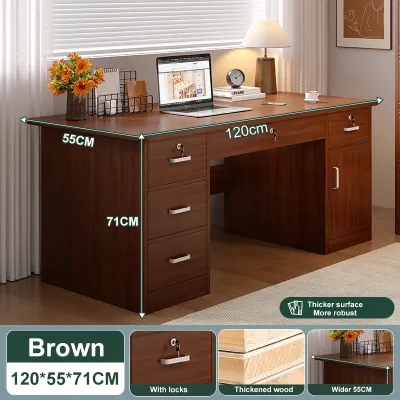
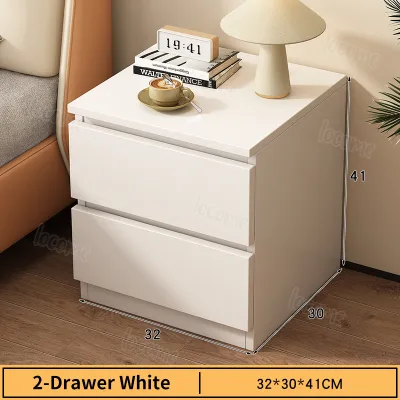
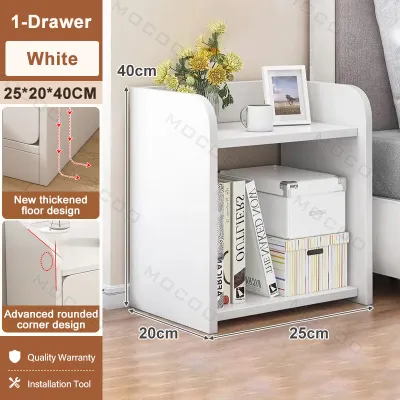
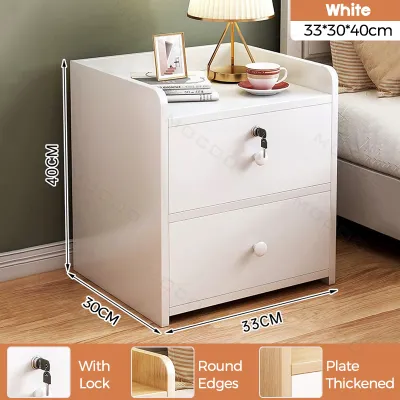
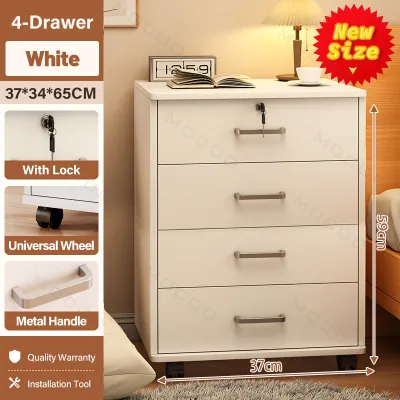
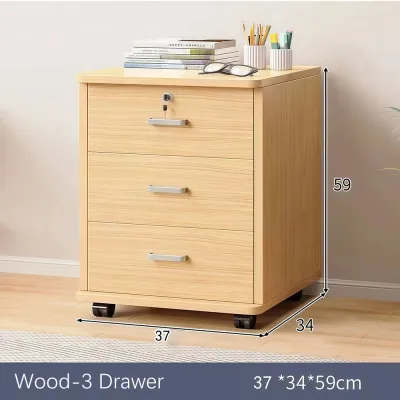
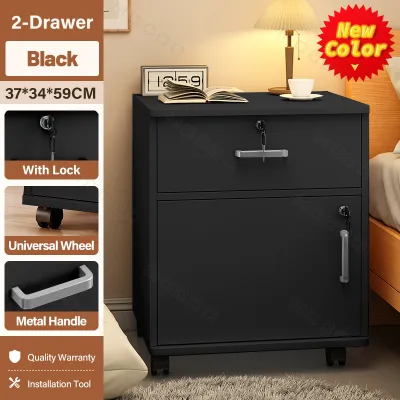
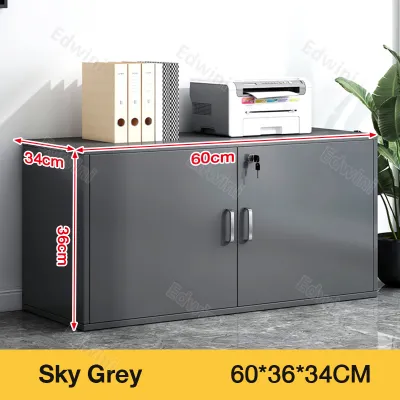
Prices are valid at publication and may change. Please refer to the product page for the latest price.
Vertical clearance is another vital factor that is often overlooked when selecting a table with a drawer. Because the drawer housing sits directly beneath the tabletop, it reduces the available space for your legs. Measure from the floor to the underside of the drawer casing; you will want at least 60 to 64 centimeters of vertical clearance to accommodate your knees comfortably while seated.
Ideal Table Dimensions and Proportions for Compact Spaces
Achieving the right proportions in a small nook means balancing the depth of the tabletop with the depth of the drawer. A table that is too shallow cannot house a functional drawer, while a table that is too deep will overwhelm a compact corner. For a comfortable setup, look for a table depth of at least 80 centimeters, which allows for a drawer depth of 30 to 40 centimeters while still leaving enough room for table settings on either side.

When scaling the length of your table, consider how many people will use the space daily. A length of 100 to 120 centimeters comfortably seats two to three people and provides enough structural width to house a central lockable drawer. If your nook is aligned against a single wall, ensure the table length does not exceed two-thirds of that wall’s total length to keep the room looking balanced.
The thickness of the tabletop is a major design trade-off when integrating storage. A thicker apron or tabletop is necessary to conceal the drawer slide and locking mechanism, but this can make the table look visually heavy in a small, sunlit breakfast nook. To mitigate this visual weight, look for designs with tapered legs or light-colored finishes that reflect natural light, preventing the furniture from dominating the room.
Evaluating Lockable Drawer Mechanisms and Clearance Needs
The type of lock you choose directly impacts how much physical clearance you need around the table. Traditional cam locks with physical keys require minimal front clearance but demand space to turn the key comfortably. Electronic keypad locks or RFID card locks offer a sleek, flush finish but may require a slightly thicker drawer front to house the battery compartment and internal latch.
Before finalizing your purchase, verify the minimum pull-out distance of the drawer slides. Full-extension slides allow you to access the very back of the drawer easily, but they require the drawer to extend its entire length into your walkway. If your breakfast nook is exceptionally tight, a three-quarter extension slide might be a safer choice, though it makes retrieving items from the back slightly more challenging.
Weight capacity and structural integrity are crucial, especially if you plan to store heavier items like household documents, tablets, or emergency cash reserves in ₱. Check the manufacturer’s specifications for both the drawer slides and the table frame to ensure they can support the weight without sagging. In humid tropical climates, wood can swell, so high-quality metal drawer runners are essential to prevent the locking mechanism from jamming over time.
Space-Saving Table Styles That Accommodate Lockable Drawers
Several clever table designs can accommodate a lockable drawer without taking up permanent floor space. Drop-leaf or gateleg tables are excellent options for flexible dining; you can keep the leaves folded down during the day to maximize floor space, while the central fixed section houses the secure drawer. This setup keeps your valuables locked away safely while allowing the table to adapt to your daily needs.
For narrow or hallway-style nooks, a wall-mounted console table with a shallow lockable drawer is a highly efficient alternative. These tables have a very slim profile, often measuring only 30 to 40 centimeters in depth, making them perfect for holding keys, mail, or small electronics. Because they are anchored directly to the wall, they free up valuable floor space underneath for tucking away small stools or storage baskets.
The base design of your table also plays a significant role in drawer accessibility. Pedestal tables offer excellent legroom and make it easy to slide chairs completely under the table, but they require a very sturdy central column to support the off-center weight of an extended drawer. Leg-base tables provide a more traditional, stable frame for housing drawers, but you must ensure the distance between the legs is wide enough to accommodate your chairs.
Common Sizing Mistakes to Avoid in Small Dining Areas
One of the most common mistakes when planning a storage table is ignoring the fully extended drawer length during spatial calculations. It is easy to measure the table when it is closed and assume it fits perfectly, only to find that you cannot open the lockable drawer because a wall or a chair is in the way. Always add the length of the fully open drawer to your total footprint calculations before buying.
Another frequent error is choosing a table with a drawer that is too deep vertically, which severely compromises legroom. While a deep drawer offers more storage space, it forces the bottom of the table apron downward, leaving very little room for your thighs. If you find yourself scraping your knees every time you sit down, the table is not proportioned correctly for dining.
Lastly, do not overlook the visual impact of heavy locking hardware and thick wooden aprons in a small dining area. A bulky, dark wood table with a prominent metal lock can make a cozy breakfast nook feel industrial or cluttered. Opt for hidden locking mechanisms, such as magnetic locks or underside keyholes, to maintain a clean, airy aesthetic that complements your home’s decor.
Frequently Asked Questions (FAQ)
Can I retrofit a lockable drawer onto my existing breakfast nook table?
Retrofitting a lockable drawer onto an existing table is entirely possible, but it requires a thorough inspection of your table’s structural design. First, check the underside of the tabletop to see if there is an existing apron or support beams that might block a drawer casing. You will need a flat, unobstructed surface of at least 35 by 35 centimeters to mount aftermarket drawer slides securely.
Next, measure the vertical clearance to ensure the new drawer won’t interfere with your seating comfort. If your table lacks a deep apron, adding a drawer slide and casing will lower the knee clearance significantly. For tables with limited space, installing a compact, surface-mounted lockable box or a slim keyboard-style drawer tray with a cam lock is often a more practical solution than building a full wooden drawer.
If your table is made of solid wood and has a sturdy frame, a professional carpenter can seamlessly integrate a custom drawer that matches the existing finish. However, for veneer, particleboard, or lightweight metal tables, DIY retrofitting can compromise the structural integrity of the tabletop. In these cases, using a pre-fabricated lockable storage organizer that sits on top of the table or mounting a small lockbox to the wall adjacent to the nook is a safer and more reliable alternative.
Community discussion
Share your experience or ask a question. Comments are reviewed before publication.