
Choosing the right furniture for a compact condominium in the Philippines is a balancing act between style and spatial reality. If you are eyeing a tatami bed frame, you are likely drawn to its clean lines, minimalist aesthetic, and low-profile design that makes tight spaces feel open. However, because these frames often feature an extended platform edge that sits wider than the mattress itself, choosing the wrong size can quickly turn your cozy sanctuary into a cramped obstacle course.
To determine which tatami bed frame fits your condo bedroom, you must look beyond standard mattress labels like “Queen” or “Double.” You need to calculate the frame’s total exterior footprint, map out your room’s physical constraints, and ensure there is ample clearance for essential furniture like wardrobes and doors. For most standard Philippine condo bedrooms—which typically range from 8 to 12 square meters—a Single, Super Single, or compact Double tatami frame is the most practical choice, while a Queen frame requires highly strategic placement to avoid blocking walkways.
Understanding Tatami Bed Frame Dimensions vs. Mattress Sizes
The defining characteristic of a traditional tatami bed frame is its extended platform. Unlike standard bed frames where the mattress sits flush with the outer edges, a tatami frame typically features a wider, low-slung wooden or upholstered border. This border acts as a step, a low-profile lounging area, or a minimalist design accent. While this design creates an incredibly relaxing, grounded atmosphere, it also means the frame occupies significantly more floor space than the mattress itself.
Products mentioned in this guide
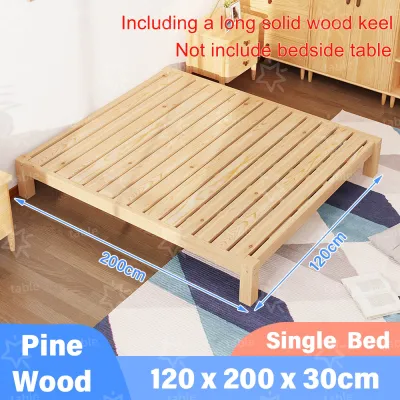

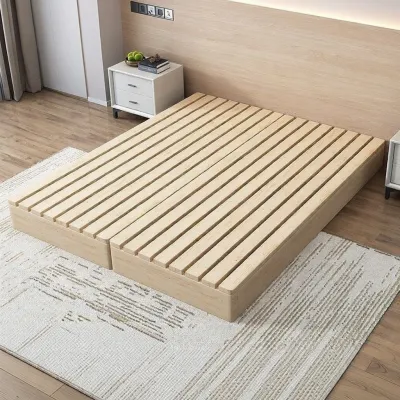

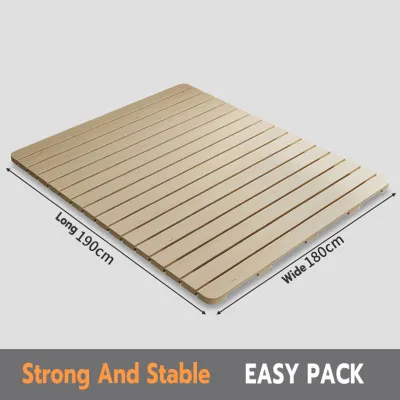

Prices are valid at publication and may change. Please refer to the product page for the latest price.
When shopping for a bed in the Philippines, you will find standard mattress sizes categorized into Single, Double, Queen, and King. A standard local Single mattress measures 36 inches by 75 inches (approximately 91 cm by 191 cm), while a Double measures 54 inches by 75 inches (137 cm by 191 cm). A Queen mattress steps up to 60 inches by 75 inches (152 cm by 191 cm).
However, the actual tatami bed frame can add anywhere from 10 to 30 centimeters of extra width and length to these dimensions. For example, a Queen-size tatami bed frame might have an exterior width of 180 centimeters and an exterior length of 215 centimeters. If you only measure your room using the standard 152 cm by 191 cm mattress size, you will face a rude awakening during installation when the extended wooden platform blocks your wardrobe drawers or juts out into the main entryway.
Therefore, you must always request the manufacturer’s exact exterior dimensions—specifically the total length, total width, and total height—before making a purchase. Do not rely on generic terms like “Queen-size frame” or “Double-size frame.” In a small condo bedroom, a difference of just 5 centimeters can determine whether you can comfortably walk around your bed or if you must squeeze past it sideways.
How to Measure Your Condo Bedroom for a Tatami Bed
Before browsing online marketplaces or visiting local furniture showrooms, you must conduct a thorough physical survey of your bedroom. Start by measuring the total floor area from wall to wall using a reliable tape measure. Do not rely on the floor plans provided by your condo developer, as these diagrams often omit real-world architectural features that reduce usable space.

Pay close attention to structural columns, known locally as haligi, which frequently protrude from corners or walls in Philippine high-rise developments. These columns create awkward recesses that can prevent a wide tatami platform from sitting flush against the wall. Similarly, take note of the placement of built-in wardrobes, window sills, and air conditioning units. A window-type AC unit that juts out from the wall or a split-type unit mounted low can limit where you can safely position a low-profile bed without blocking airflow or filter access.
Next, map out your room’s clearance zones. You must maintain clear walking paths around the sides of the bed that you plan to access. A minimum clearance of 60 centimeters is recommended for comfortable movement, though 70 to 80 centimeters is ideal. You must also account for the opening arcs of your doors. Measure the swing of the bedroom entry door, the closet door, and any en-suite bathroom doors. If your wardrobe has swing-out doors rather than sliding panels, ensure the doors can open fully without striking the low-lying platform of the tatami bed.
Do not forget to account for smaller architectural details like skirting boards (baseboards) and electrical outlets. Skirting boards can prevent a solid-backed tatami frame from pushing completely flush against the wall, leaving a small gap where dust, hair, and small items can accumulate. Additionally, if your wall outlets are positioned low, a wide, solid wooden frame might block them entirely, making it difficult to plug in your phone chargers, bedside lamps, or electric fans.
Finally, consider the logistics of delivery and assembly. Many high-rise condos in Metro Manila and other urban hubs have strict rules regarding elevator usage and delivery hours. Measure your building’s service elevator doors, interior height, and depth, as well as the width of your condo unit’s front doorway and any tight hallway corners. Tatami bed frames are often heavy, solid pieces of furniture that are delivered in large, flat-packed panels. Ensuring these components can physically fit through the elevator and make the turn into your bedroom is just as important as ensuring the assembled bed fits the room itself.
Recommended Tatami Bed Sizes for Common Condo Room Layouts
Condominium layouts in the Philippines vary widely, but most small bedrooms fall into two distinct size categories. Understanding how different tatami frame sizes interact with these layouts will help you choose a configuration that maximizes both sleeping comfort and floor space. Keep in mind that these are general planning frameworks; always verify your room’s exact layout before purchasing.
Compact Rooms (Under 9 Square Meters)
In compact bedrooms typical of studio units or micro-condos (often measuring between 6 to 8 square meters), space is at an absolute premium. For these rooms, a Single (36″ x 75″) or a Super Single/Small Double (48″ x 75″) tatami frame is the most logical choice. These smaller sizes allow you to position the bed comfortably while leaving enough room for a small wardrobe and a compact study desk or vanity mirror.
When choosing a tatami frame for a room under 9 square meters, look for designs with minimal or no extended platform edges. A flush-frame design, where the mattress sits directly on top of the platform with virtually no border, gives you the low-profile look of a tatami bed without sacrificing precious floor space. Opting for a wide, dramatic platform edge in a tiny room is a major trade-off; it may look elegant in design photos, but it will severely restrict your walking clearance and make the room feel incredibly cramped.
Standard Small Bedrooms (9 to 12 Square Meters)
If your bedroom falls within the 9 to 12 square meter range—typical of standard one-bedroom or compact two-bedroom condo units—you have slightly more flexibility. In these spaces, a Double (54″ x 75″) or even a Queen-size (60″ x 75″) tatami frame can work beautifully, provided you plan the layout carefully.
To accommodate a larger frame, consider pushing one side of the bed directly against a wall or a window. This consolidated layout frees up a single, wider walkway on the opposite side of the bed, rather than leaving two narrow, unusable gaps on either side. Additionally, the low-profile height of a tatami bed works to your advantage here. By keeping the bed low to the ground, you create an open, unobstructed sightline across the room. This visual trick makes low condo ceilings feel higher and prevents a larger mattress footprint from visually overwhelming the space.
Space-Saving Alternatives and Layout Adjustments
If your measurements reveal that a standard tatami bed frame will leave you with insufficient floor space, you do not have to abandon the aesthetic entirely. There are several clever design modifications and alternative configurations that can help you achieve the minimalist look while reclaiming valuable square footage.
One of the most effective solutions is to choose a tatami bed frame with integrated under-bed storage. Many modern designs feature deep pull-out drawers built into the sides of the platform, or a hydraulic lift-up mechanism that allows you to store seasonal bedding, luggage, and extra clothes directly beneath the mattress. By utilizing this horizontal storage space, you can eliminate the need for a separate, bulky chest of drawers or a large freestanding wardrobe, effectively expanding your room’s usable floor area.
Another practical adjustment is to select a headboard-less tatami frame. Traditional headboards can add anywhere from 5 to 15 centimeters to the overall length of the bed. In a narrow condo bedroom where every centimeter counts, removing the headboard allows you to push the bed completely against the wall, saving valuable space near the foot of the bed. This is especially helpful if your bed must be placed close to a wardrobe door or the main entry door.
To further enhance the feeling of space, pay attention to the visual flow of the room. The low-slung nature of tatami frames naturally draws the eye downward, leaving the upper half of the walls open. You can capitalize on this by installing a tall, wall-mounted mirror opposite the bed or beside your wardrobe. The mirror will reflect natural light from your windows, making the room feel twice as large and bright.
If standard retail options consistently fail to fit your bedroom’s unique layout, consider exploring custom or modular furniture options. Many local woodworkers and furniture boutiques in the Philippines specialize in custom-built tatami platforms. A custom build allows you to specify the exact height, platform width, and storage configuration that matches your room’s dimensions perfectly, turning architectural obstacles like protruding columns into seamless, built-in design features.
Common Sizing Mistakes to Avoid
When furnishing a small condo, minor oversights can lead to costly and frustrating mistakes. To ensure your tatami bed frame installation goes smoothly, keep these common pitfalls in mind during your planning phase.
First, never assume that the bed frame shares the exact same dimensions as your mattress. This is the most common error condo owners make. Always double-check the manufacturer’s spec sheet for the total exterior dimensions. If the seller only lists the mattress size, contact them directly to ask for the exact width and length of the outer frame.
Second, remember to account for the physical and visual bulk of your bedding. Thick comforters, heavy duvets, and fluffy pillows do not sit flat; they drape over the sides of the bed. On a low-profile tatami platform, a thick duvet can spill over the edge and pile onto the floor, creating a tripping hazard and collecting dust. To avoid this, choose lightweight coverlets or opt for bedding that can be neatly tucked in around the mattress, preserving the clean lines of the platform.
Third, be mindful of window sill heights and curtain drops. Because tatami beds are low, they are often placed under windows to maximize light. However, if your window has long, floor-length curtains, they may drape directly onto the platform or get bunched up behind the mattress. Measure the height of your window sills and consider swapping long drapes for sleek roller blinds or Roman shades that sit neatly within the window frame.
Finally, do not overlook the weight and structural stability of the frame. Solid wood tatami frames, particularly those crafted from dense hardwoods or equipped with heavy hydraulic lift mechanisms, can weigh a significant amount even before you add a mattress and bedding. Ensure the bed frame features robust internal support and center legs to distribute the weight evenly. When assembling the bed, use protective felt pads under the frame’s feet or base to prevent scratching your condo’s laminate, vinyl, or engineered wood flooring during positioning.
Frequently Asked Questions (FAQ)
Can I use a regular spring or foam mattress on a tatami bed frame?
Yes, most tatami bed frames are designed with a solid wood platform or sturdy wooden slats that can support standard spring, memory foam, or hybrid mattresses. However, you must verify the manufacturer’s weight limits to ensure the frame can support both the weight of a heavy mattress and the sleepers. Additionally, check the mattress manufacturer’s guidelines, as some memory foam mattresses require specific slat spacing for proper support.
Do tatami bed frames require a box spring?
No, tatami bed frames do not require a box spring. They are specifically engineered to serve as a complete, low-profile support system for your mattress. Placing a box spring on top of a tatami platform would not only ruin the clean, minimalist aesthetic but would also raise the bed to an uncomfortable height, defeating the primary purpose of a low-slung tatami design.
How do I prevent mold under a tatami bed in a humid climate?
The tropical, humid climate of the Philippines makes mold prevention a priority for low-profile beds. To prevent moisture buildup, ensure your bedroom is well-ventilated, and use a dehumidifier or moisture-absorbing products during the rainy season. When purchasing a tatami frame, choose a design that features built-in ventilation holes in the platform or a raised slatted base that allows air to circulate freely beneath the mattress. Periodically flipping or airing out your mattress also helps keep the sleeping surface fresh and dry.
Community discussion
Share your experience or ask a question. Comments are reviewed before publication.