
Selecting the perfect sliding steel cabinet for a compact bedroom in the Philippines requires balancing storage capacity with the physical limitations of your floor plan. Unlike hinged wardrobes that demand wide clearance zones to swing open, a sliding steel cabinet is highly efficient, making it ideal for tight spaces. However, finding the right size is not just about matching a spot on your wall. You must account for the physical footprint, the internal depth lost to the sliding door tracks, and the practicalities of maneuvering a heavy metal unit through narrow hallways or up tight stairwells. By systematically measuring your room, understanding door clearances, and choosing dimensions that accommodate your actual wardrobe, you can maximize your bedroom’s utility without making the space feel cramped.
Measuring Your Space and Clearance Requirements
To avoid purchasing a cabinet that dominates your bedroom or, worse, cannot fit through your front door, you must start with precise measurements. Begin by measuring the exact width, height, and depth of the designated wall or corner where the cabinet will stand. Use a metal measuring tape and take measurements at three different points: the top, middle, and bottom of the wall. Philippine homes often feature plaster-over-concrete walls or uneven tiled floors that can vary by several millimeters. Also, remember to subtract the thickness of any baseboards, wall trims, or ceiling moldings from your final numbers, as these architectural details will prevent a flush fit and can cause a rigid steel frame to tilt.
Equally important is mapping out the delivery and installation pathway. A sliding steel cabinet is typically delivered either fully assembled or in large, heavy flat-packs. You must measure every doorway, hallway turn, stairwell clearance, and elevator opening from your building’s entrance to your bedroom. If you live in a multi-story townhouse with a narrow winding staircase or a high-rise condominium with compact passenger lifts, a tall, single-unit steel cabinet might be physically impossible to transport. Ensure the packaged dimensions of the cabinet are smaller than the narrowest clearance point along this route, leaving at least a 5 to 10 cm margin for the delivery team to maneuver.
Products mentioned in this guide
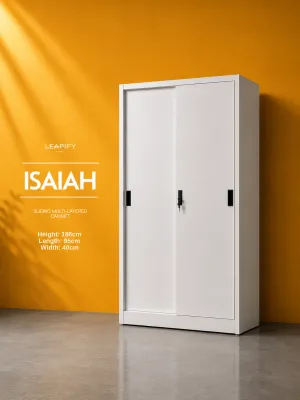
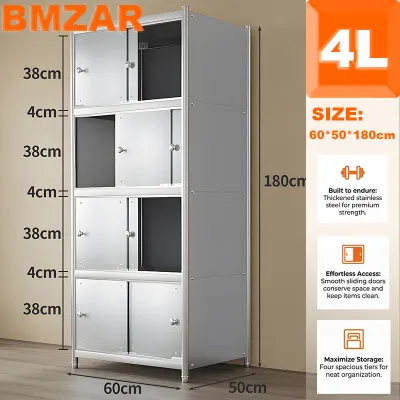
Prices are valid at publication and may change. Please refer to the product page for the latest price.
Within the bedroom itself, you must preserve comfortable walking paths. A good rule of thumb is to maintain at least 60 cm of open clearance between the cabinet and other furniture, such as the edge of your bed frame or a study desk. This ensures you can walk past comfortably without squeezing. Finally, inspect the wall for fixed elements. Make sure the cabinet’s position will not block electrical outlets, light switches, wall-mounted air conditioning units, or the swing radius of bedroom windows and entry doors. Blocking an AC unit’s airflow or obstructing a window not only reduces comfort but can also trap moisture in the room, which can negatively affect your storage environment.
Matching Sliding Steel Cabinet Dimensions to Your Room Layout
Once you have your maximum allowable space, you can select the external dimensions of your sliding steel cabinet. The first decision is the width, which typically dictates whether you choose a two-door or three-door configuration. For small bedrooms, a two-door cabinet ranging from 90 cm to 120 cm in width is usually the most proportional choice. It provides ample storage without overwhelming a narrow wall. A three-door cabinet, generally starting at 150 cm or wider, requires a long, uninterrupted wall and can easily make a small room feel visually heavy. If your wall space is limited, prioritize a narrower but taller unit to make use of vertical space.

Depth is the most critical dimension for clothing storage, yet it is often misunderstood. Standard clothes hangers require an absolute minimum of 40 to 45 cm of clear internal width to hang shirts and jackets straight without the sleeves rubbing against the doors. Because sliding door tracks consume a portion of the cabinet’s depth, an external depth of 55 to 60 cm is highly recommended. If your bedroom layout forces you to choose a shallow cabinet of 40 to 45 cm external depth, standard hanging will not work. In these cases, you must look for models that feature pull-out valet rails or transverse hanging rods, where clothes hang facing forward rather than sideways. While this accommodates a shallower footprint, it significantly reduces the number of items you can hang.
Height utilization is an excellent way to maximize storage in compact Philippine bedrooms, where ceiling heights typically range from 2.4 to 2.7 meters. Choosing a tall cabinet (around 1.8 to 2.1 meters) allows you to store seasonal bedding, travel bags, or less-frequently used items on the top shelves. However, keep in mind that tall steel cabinets carry substantial visual weight. A massive, dark-colored steel block can make a small room feel claustrophobic. Opting for lighter finishes, such as off-white, light gray, or beige powder coatings, can help the cabinet blend into the walls. Always cross-reference the manufacturer’s exact specifications for assembled height against your ceiling height, leaving at least 5 to 10 cm of clearance at the top to allow for assembly and upright positioning.
Sliding Door Mechanics and Internal Storage Needs
The sliding mechanism is what makes these cabinets so space-efficient, but it comes with specific design trade-offs that affect internal storage. Unlike hinged doors that sit entirely outside the cabinet frame when closed, sliding doors operate on a dual-track system where the doors overlap. This track system typically consumes between 5 and 8 cm of the cabinet’s total depth. Consequently, if you purchase a cabinet with an external depth of 50 cm, your actual usable internal depth may only be 42 to 45 cm. You must factor this track clearance into your calculations to ensure your clothes will hang freely without getting caught in the sliding door panels.
This overlapping door design also creates physical blockages inside the cabinet. Because one door panel always covers a portion of the interior, you cannot open the entire cabinet at once. This has major implications for drawer and shelf placement. Any internal drawers, pull-out baskets, or trousers racks must be positioned away from the central overlap zone. If they are placed too close to the center or the outer edges where the door frames sit, they will collide with the door panels when pulled out. When choosing a cabinet, verify that the internal drawers are specifically designed to clear the door tracks and frames, or opt for adjustable shelving that allows you to configure the interior layout to avoid these collision zones.
Furthermore, the material itself demands careful consideration in the tropical Philippine climate. While steel is highly durable, resistant to pests like termites, and structurally stable, it does not behave like wood. Enclosed steel spaces can trap warm, humid air, leading to condensation and musty odors on your clothes. To prevent this, avoid placing the cabinet directly against an exterior concrete wall, which can transfer heat and dampness. Check if the cabinet’s steel panels have a high-quality, rust-resistant powder-coated finish rather than basic liquid paint, as powder coating provides a more durable barrier against moisture. Additionally, plan to use internal moisture absorbers, silica gel packets, or hanging dehumidifier bags, and leave small gaps between your stored clothes to promote airflow within the metal enclosure.
Common Sizing Mistakes and Installation Checks
Avoiding common pitfalls during the selection process can save you from costly returns or unusable furniture. One of the most frequent mistakes is failing to account for adjacent furniture in its fully extended states. For example, a bedside table placed right next to the cabinet might not block the sliding door itself, but it can completely block your access to that side of the wardrobe. Similarly, ensure that the corner of your bed frame or a protruding mattress does not restrict the path you need to stand comfortably while browsing your clothes. Always map out your room’s layout with all furniture drawn to scale or marked on the floor with masking tape before buying.
Another common error is selecting a cabinet that is too shallow under the assumption that “any wardrobe will do.” Forcing standard hangers into a shallow 45 cm external depth cabinet will result in sleeves constantly getting caught in the sliding tracks. This not only damages your clothes but can also derail the sliding doors or scratch the internal powder coating. If space is tight, strictly adhere to the specialized sideways hanging methods or stick to folded storage.
Additionally, never overlook structural stability. Tall, narrow steel cabinets are inherently top-heavy once loaded with clothes and organizers. In a country prone to seismic activity, anchoring your furniture is a critical safety step. Before purchasing, check the manufacturer’s product manual to confirm if anchoring brackets are included. Because most Philippine homes have concrete or hollow-block walls, you will likely need to use a hammer drill and masonry wall plugs (tox screws) rather than standard drywall anchors to secure the cabinet brackets firmly.
Before finalizing your purchase, run through a final verification checklist:
- Confirm the exact assembled width, depth, and height against your measured wall space.
- Verify the minimum clearance required for assembly (some cabinets require being built flat on the floor and then raised, which demands extra ceiling height).
- Check the total weight of the unit to ensure your flooring can support it, especially if placing it on an elevated wooden loft.
- Ensure the delivery path clearances are fully verified from the building entrance to the bedroom.
Frequently Asked Questions (FAQ)
Do sliding steel cabinets require extra wall clearance compared to hinged doors?
Sliding steel cabinets do not require forward clearance to open, making them excellent space-savers. However, they do require minor clearances on the sides and top during installation to allow the doors to be lifted onto the tracks. Additionally, your bedroom wall must be relatively straight; if the wall has a severe bow or tilt, the steel frame can warp slightly when pushed against it, causing the sliding tracks to bind or slide unevenly.
How can I manage moisture inside a steel wardrobe in a humid climate?
Unlike wood, steel does not absorb moisture, which means humid air can condense on the cold metal surfaces. To manage this, choose a cabinet with a high-quality powder-coated finish and built-in ventilation louvers. Avoid placing the unit flush against damp concrete walls, leave a 5 cm gap for airflow behind the cabinet, and place disposable dehumidifier tubs or silica gel packets on the shelves to keep your clothes dry.
Community discussion
Share your experience or ask a question. Comments are reviewed before publication.