
Finding the perfect small cabinet organizer for a compact nightstand requires balancing storage capacity with mechanical clearance. To ensure your nightstand drawer slides smoothly and the cabinet door closes completely, the organizer must be sized with a safety margin of at least 1.5 to 2 centimeters of clearance on all sides.
This buffer accounts for structural obstructions like hinges, drawer glides, and the natural expansion of wood in warm, humid climates like the Philippines. By choosing an organizer that sits comfortably within these boundaries, you maximize your bedside storage without risking jammed drawers or scraped wood veneer.
Measure Your Nightstand's Internal Clearances
To find an organizer that fits perfectly, you must measure the actual usable space inside the cabinet rather than relying on the nightstand’s external dimensions. Start by clearing out the cabinet entirely. Use a metal measuring tape, which remains rigid over longer distances, to measure the internal width, depth, and height.
Products mentioned in this guide
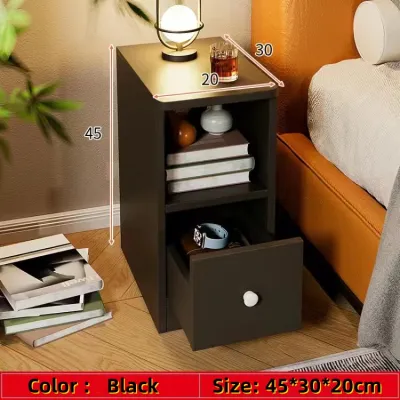
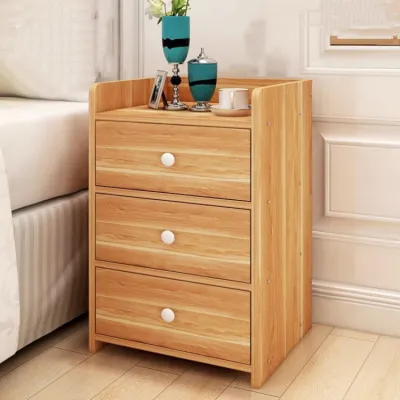
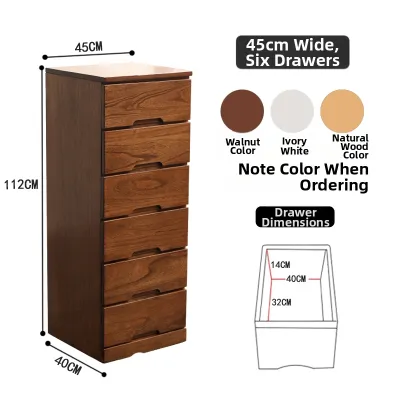
Prices are valid at publication and may change. Please refer to the product page for the latest price.
Because wooden furniture can warp, swell, or settle unevenly—especially in high-humidity environments—always take these measurements at three different points: the front, the middle, and the back. Use the smallest of these three figures as your baseline. This simple step protects your investment, whether your nightstand cost ₱2,000 or ₱15,000.
Next, look closely at the hardware inside the cabinet. Many compact nightstands feature European-style concealed hinges, magnetic door catches, or wooden support cleats that protrude into the open space. Measure how far these components stick out from the side walls and the back panel.
If your nightstand has a drawer directly above the cabinet cavity, you must also measure the vertical clearance. Slide the drawer out and measure from the cabinet floor to the lowest point of the drawer’s bottom panel or its hanging hardware. A drawer that sags slightly when filled with heavy items can easily catch on an organizer that is even a millimeter too tall.
Calculate the Maximum Organizer Dimensions
Once you have recorded the raw internal measurements of your nightstand, you need to calculate the maximum allowable dimensions for your small cabinet organizer. Do not simply buy an organizer that matches your raw measurements exactly. Doing so will almost certainly result in a jammed drawer or a door that refuses to latch.

Instead, apply a strict clearance formula to each dimension to establish a safe working boundary. To calculate the maximum width, subtract the space occupied by door hinges or drawer tracks, then subtract an additional 1.5 centimeters of clearance. This extra space ensures you can easily slide the organizer in and out during cleaning without scratching the interior paint or veneer.
For the maximum depth, measure from the back panel to the inside face of the closed cabinet door, then subtract at least 2 centimeters. This prevents the organizer from pushing against the door or interfering with the drawer above if it features a back-stop mechanism.
Calculating the maximum height requires the most precision. Measure the distance from the cabinet floor to the lowest hanging point of the drawer above. Subtract at least 2.5 centimeters from this number. This generous gap ensures that even if the drawer bottom bows slightly under the weight of books, tablets, or chargers, it will still glide open and closed without rubbing against the top of your organizer.
Evaluate Organizer Types for Tight Spaces
Not all small cabinet organizers are created equal when it comes to tight, awkward bedside spaces. Choosing the right style depends heavily on what you plan to store and how your nightstand is constructed.
Stackable bins are excellent for maximizing vertical space in taller cabinet cavities, but they require careful management. If you choose stackable options, ensure the combined height of the stacked bins remains well below your calculated maximum height. Single-tier trays or low-profile baskets are generally safer for very compact nightstands because they keep the center of gravity low and leave ample room for the drawer above to operate.
Adjustable dividers offer a highly flexible alternative to rigid, fixed-compartment organizers. Because compact nightstands often have unusual internal dimensions or protruding hardware, fixed-size plastic grids can leave wasted, unusable gaps. Adjustable dividers allow you to customize the compartment sizes to fit your specific items, such as e-readers, medication bottles, or sleep masks, while conforming to the exact shape of your cabinet floor.
For deep or dark nightstand cabinets, low-profile and open-top designs are highly recommended. An open-top small cabinet organizer allows you to reach in and grab items from the front without needing to pull the entire organizer out. This is particularly useful in bedside setups where you might want to reach for a glass of water or a phone charger in the dark without making noise or struggling with lids.
Test the Fit Before Final Placement
Before you unpack your new organizer or fill it with personal items, perform a thorough dry fit to verify that all moving parts function seamlessly. Place the empty organizer inside the cabinet in its intended position. Gently nudge it from side to side and front to back to check for stability.
If the organizer slides around too easily on a smooth wooden or laminate floor, it may shift during daily use and eventually block the door or drawer. With the organizer in place, perform multiple open and close cycles of the drawer directly above. Slide the drawer slowly at first, listening closely for any scraping, squeaking, or catching sounds.
If you feel any resistance, remove the organizer immediately and inspect the underside of the drawer for protruding screws, staples, or sagging panels that might be making contact. Finally, open the cabinet door and the drawer above to their maximum extensions simultaneously.
Check the clearance from multiple angles using a flashlight. Ensure that no hidden hardware, such as drawer glides or stop-clips, collides with the organizer when the drawer is fully pulled out. Taking five minutes to run these tests prevents long-term wear and tear on your nightstand’s drawer slides and preserves the finish of your furniture.
Frequently Asked Questions (FAQ)
Can I use a tension-rod organizer inside a nightstand cabinet?
Tension-rod organizers can work in small cabinets, but they require solid, parallel side walls to maintain adequate pressure. If your nightstand is made of solid wood or thick MDF, tension rods can support lightweight shelves or dividers.
However, avoid using them if your nightstand has thin plywood or fiberboard side panels. The outward pressure exerted by the tension rods can cause these flexible panels to bow outward, which can misalign your drawer tracks and cause the drawer above to stick or fall off its glides.
What if my nightstand drawer has a center glide?
A center-mounted drawer glide runs directly down the middle of the drawer’s underside, significantly reducing the vertical clearance in the center of the cabinet below. If your nightstand features this design, a single tall organizer placed in the middle will block the drawer.
Instead, adopt a split-organizer approach. Measure the exact width of the center track and place two smaller, low-profile organizers on either side of the glide. This keeps the center path clear for the glide mechanism while still utilizing the storage space on the left and right.
Should I secure the organizer to the cabinet floor?
Securing your small cabinet organizer prevents it from shifting when you open doors or rummage for items. However, avoid using permanent adhesives, double-sided foam tape, or screws, as these can ruin wood veneers and void furniture warranties.
Instead, use non-permanent solutions like removable mounting putty or cut-to-fit non-slip drawer liners. These options provide excellent grip to keep the organizer stable, are highly resistant to humid conditions, and can be peeled off easily without leaving sticky residue or damaging the cabinet’s finish.

Community discussion
Share your experience or ask a question. Comments are reviewed before publication.