
Setting up a dedicated study or activity corner for your toddler requires more than just a small desk; the right seating is crucial for their posture, focus, and physical safety. Because toddlers are active and still developing their motor skills, a small chair for a baby or toddler must balance ergonomic support with rigorous safety standards. This guide will walk you through the essential dimensions, stability checks, and material considerations you need to evaluate, helping you build a reliable shortlist of chairs that fit your child and your space.
In tropical climates like the Philippines, where high humidity and warm temperatures are part of daily life, choosing children’s furniture requires extra attention to material resilience and ease of cleaning. A toddler’s study corner is a place of high energy, where coloring, crafting, and snack times often merge. The ideal chair must not only support their physical development but also withstand the daily wear and tear of active play and tropical environmental factors.
Finding the right small chair for a baby transitioning into toddlerhood involves looking past bright colors and cute designs. You need to focus on structural integrity, ergonomic alignment, and practical maintenance. By taking precise measurements of both your child and your existing study desk, you can ensure a comfortable setup that encourages focus and independence.
Products mentioned in this guide
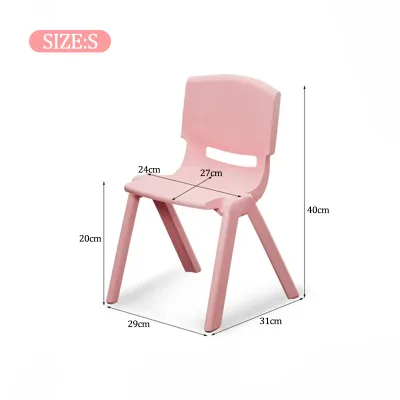
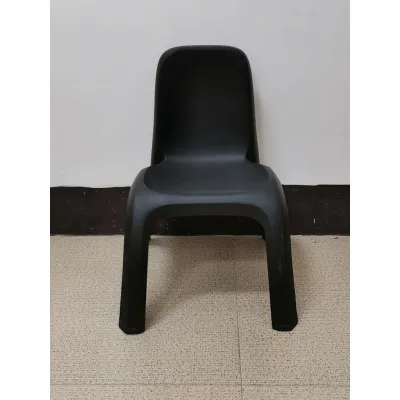
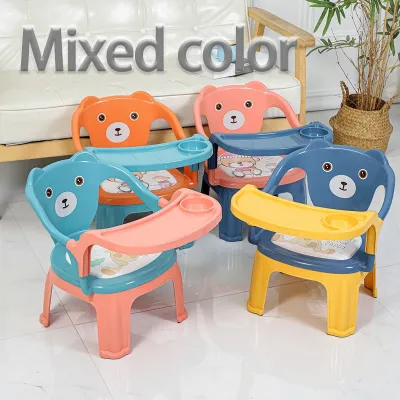
Prices are valid at publication and may change. Please refer to the product page for the latest price.
Evaluate Safety and Stability for Active Toddlers
Toddlers rarely sit completely still, often shifting their weight, leaning over the sides, or attempting to climb onto their chairs. To prevent tipping accidents, you must carefully evaluate the chair’s base footprint and center of gravity. A chair with a wider, flared base is inherently more stable than one with completely vertical legs, as it distributes weight over a larger surface area. Look for designs where the center of gravity remains low, even when the child leans back or reaches for a toy on the desk.
The type of flooring in your home also plays a significant role in the chair’s overall stability. In many homes, polished concrete, ceramic tiles, or smooth wooden floors can cause lightweight chairs to slide unexpectedly when a child tries to sit down. To mitigate this risk, check if the chair legs are equipped with non-slip rubber or silicone pads. These pads not only provide essential traction to keep the chair firmly in place but also protect your floors from scratches.
Physical hazards can turn a fun activity session into an injury risk in seconds. When inspecting potential chairs, verify that all edges, corners, and hardware are smoothly rounded or recessed. Sharp wooden edges or exposed metal screws can easily scrape sensitive skin during active play. If you are considering a wooden chair, run your hands along the frame to check for splinters or rough patches that might have bypassed quality control.
Rather than assuming a chair is safe based on its appearance, look for manufacturer labels indicating compliance with recognized children’s furniture safety standards. These certifications verify that the chair has undergone testing for structural integrity, load capacity, and chemical safety. Inquire with the retailer or check the product packaging for explicit mentions of non-toxic finishes, lead-free paints, and phthalate-free plastics.
Adjustable chairs and folding models often feature moving parts, hinges, or sliding mechanisms that can pose a hazard to curious fingers. Inspect these areas closely to ensure there are no pinch points or narrow gaps where a small finger could get trapped. Any adjustable mechanism should lock securely into place with a child-proof latch or a heavy-duty screw that requires an adult’s strength or tools to loosen.
Match Chair Dimensions to Your Toddler and Desk
Proper ergonomic alignment is essential even for very young children, as it helps establish healthy posture habits early on. The most critical measurement to check is the seat height, which should allow your toddler’s feet to rest completely flat on the floor or on a built-in, stable footrest. When their feet are supported, their knees should bend at a comfortable ninety-degree angle, reducing pressure on the back of their thighs and promoting better blood circulation.

To get an accurate measurement of your child’s ideal seat height, have them sit on a flat surface with their knees bent at a ninety-degree angle and measure the distance from the back of their knee to the floor. This measurement corresponds directly to the required seat height of the chair. Keep this number handy when browsing online listings, as it will serve as your primary filter for finding an ergonomically suitable option.
A small chair for a baby or toddler must also integrate seamlessly with your chosen study desk. Measure the distance from the floor to the underside of the desk drawer or frame, and compare this with the chair’s seat and armrest height. The child’s elbows should rest naturally on the work surface at a ninety-degree angle without their shoulders shrugging upward or their torso slouching forward. Ensure there is sufficient clearance for their legs to slide comfortably under the desk without getting pinched.
Seat depth is another dimension that directly impacts comfort during longer drawing or reading sessions. The depth of the seat should support the majority of the child’s thighs without pressing against the sensitive area behind their knees. A gap of about two to three fingers between the edge of the seat and the back of the toddler’s knees is ideal, as it prevents the chair from cutting off circulation or forcing the child to slouch forward to find relief.
Always consult the manufacturer’s recommended age, height, and weight limits printed on the product label or specification sheet. While these guidelines provide a helpful starting point, remember that children develop at different rates. Use these limits as a safety boundary rather than a strict rule, and prioritize your child’s actual physical measurements over the age range listed on the box to ensure a safe and comfortable fit.
Check Materials and Maintenance for Messy Activities
Toddler activities are notoriously messy, involving everything from spilled juice and water to stray crayon marks and modeling clay. When selecting a chair, assess the surface treatments and upholstery fabrics for wipeability and stain resistance. Smooth, non-porous materials like sealed wood, high-density plastics, or wipeable faux leather are generally much easier to clean than textured fabrics. Always check the care label for specific cleaning instructions, as some finishes may degrade if exposed to harsh household disinfectants.
In humid tropical environments, moisture resistance is a key factor in preventing mold, mildew, and wood warping. High humidity can weaken standard water-based glues used in cheap furniture joints, causing the chair to wobble over time. If you prefer wooden furniture, ensure the wood is treated with a high-quality, moisture-resistant sealant that can handle frequent damp wiping. For plastic chairs, verify that the material is UV-stabilized if the study corner is located near a sunny window, as prolonged sun exposure can cause certain plastics to become brittle and crack over time.
The overall weight of the chair requires a careful balance between independence and stability. A chair should be light enough for your toddler to pull out and push in without adult assistance, fostering a sense of autonomy in their study space. However, it must retain enough heft to remain firmly planted on the floor when they sit down or stand up. Avoid extremely lightweight, hollow plastic chairs that slide away easily on tiled or polished wooden floors.
Inspect the joints, fasteners, and connection structures of the chair to ensure they are built for durability. Toddlers often rock, bounce, or shift their weight abruptly while sitting, which puts significant stress on the chair’s frame. Look for robust joinery, such as mortise-and-tenon joints in wooden chairs, or reinforced metal brackets in composite designs. Regularly check these connections after assembly to ensure that screws and bolts have not loosened over time.
Build Your Shortlist: A Pre-Purchase Evaluation Checklist
To make an informed decision, start by creating a simple comparison matrix of the chairs you are considering. List the exact seat height, overall footprint, material type, and safety certifications of each model alongside your desk’s dimensions and your child’s current measurements. This structured approach allows you to quickly filter out options that are too tall, too wide for your available floor space, or lacking essential safety features.
Before finalizing your purchase from an online marketplace or local furniture retailer, verify that the product includes clear, detailed assembly instructions. A stable setup depends heavily on proper assembly, so check if the manufacturer lists the required tools and includes all necessary hardware, such as locking washers or specialized screws. If the instructions seem vague or incomplete in customer reviews, it may be wiser to choose a different model to avoid structural instability.
Consider the delivery and installation conditions before placing your order. If you live in a high-rise condominium or a multi-story home, check the finished dimensions of the shipping box to ensure it can easily fit through your doorways, hallways, or elevator doors. Knowing these logistics beforehand prevents the frustration of receiving a package that is too bulky to transport to your child’s room.
Evaluating the long-term value of the chair can save you from having to buy a replacement in just a few months. Look for chairs that offer adjustable features, such as multiple seat height slots or a removable, height-adjustable footrest. These adaptable designs allow the chair to grow alongside your toddler, extending its usable lifespan and providing better value for your budget in ₱.
Finally, review the retailer’s return policy, warranty coverage, and the availability of replacement parts. Because children’s furniture undergoes rigorous daily use, having a reliable warranty can provide peace of mind. Confirm whether the seller offers hassle-free returns if the chair arrives with manufacturing defects, or if you can easily purchase replacement glides or hardware if any parts are lost during a household move.
Frequently Asked Questions (FAQ)
When should I transition my baby to a dedicated study chair?
The transition to a dedicated study chair depends more on your child’s physical development and behavioral milestones than their exact age. Your toddler is generally ready when they can sit upright independently with excellent balance and can climb in and out of a low chair safely without assistance. Always check the manufacturer’s minimum age and weight requirements on the product label to ensure the chair is structurally safe for their developmental stage. Behaviorally, if your child is showing interest in tabletop activities like coloring or puzzle-solving and is outgrowing the confined space of a high chair, a dedicated study corner can help foster focus and independence.
Do toddler study chairs need adjustable features?
While adjustable features are not strictly mandatory, they offer significant advantages for rapidly growing toddlers. Chairs with adjustable seat heights and footrests can be customized to maintain perfect ergonomic alignment as your child grows, extending the furniture’s lifespan over several years. In contrast, fixed-size chairs are often simpler, highly stable, and require less maintenance since there are no moving parts or locking mechanisms to inspect. If you choose an adjustable model, always check the locking mechanisms regularly to ensure they remain completely secure and do not slip under your child’s weight during active use.

Community discussion
Share your experience or ask a question. Comments are reviewed before publication.