
Selecting the ideal small foam pad for a hammock chair requires looking beyond standard seat cushions. Because hammock chairs feature unique suspended structures, curved seating areas, and shifting weight distribution, a standard flat cushion often fails to provide adequate support or stay in place. The most effective small foam pad for a hammock chair is a high-density polyurethane or open-cell outdoor foam pad that conforms to curved surfaces, features robust anti-slip attachments, and is wrapped in a breathable, moisture-resistant cover.
To achieve lasting comfort, the foam pad must balance flexibility with structural integrity. It must be pliable enough to adapt to the deep, shifting pocket of a suspended chair while remaining dense enough to prevent your body from pressing directly against the hard frame or rope netting underneath. Evaluating these factors systematically ensures your hanging seat remains a comfortable and safe place to relax.
Understanding Hammock Chair Cushion Needs
Hammock chairs differ fundamentally from traditional, rigid-frame seating. When you sit in a suspended chair, your body weight is concentrated in a single, floating center of gravity. This causes the seating material—whether canvas, rope, or rattan—to sink and curve upward around you. A standard flat chair cushion designed for a rigid dining chair is not built for this dynamic movement; it will naturally resist the curve, bunch up in the center, or slide upward, leaving you without proper support.
Products mentioned in this guide
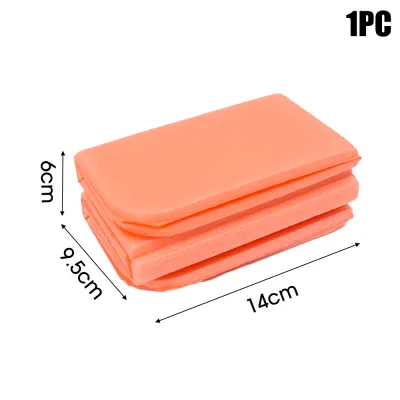
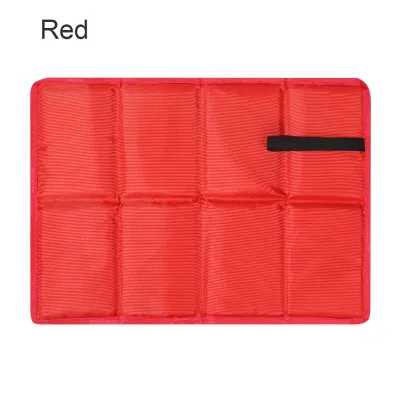
Prices are valid at publication and may change. Please refer to the product page for the latest price.
Without a specialized cushion, the lack of structured support can lead to discomfort. In a curved seat, your lower back and pelvis require targeted cushioning to prevent slouching and muscle strain. A small foam pad acts as a stabilizing insert, filling the deep contour of the hammock and distributing your weight more evenly across the suspended surface.
The material of your specific hammock chair dictates the type of foam pad you need. Canvas hammock chairs hug the body closely and require a highly flexible, low-profile foam pad that enhances comfort without ruining the cozy, cocoon-like feel of the fabric. If the pad is too stiff, it will fight the fabric’s natural drape and make the seating area feel cramped.
In contrast, rattan or wicker egg chairs feature hard, rigid frames with prominent structural ribs. These chairs require a thicker, firmer foam pad to mask the hard frame and prevent the wicker from pressing into your back. The pad must act as a robust barrier, absorbing your weight before it reaches the solid structure of the chair.
Rope netting hammock chairs present a different challenge because of their open-weave design. A small foam pad used in a rope chair must have excellent structural integrity so it does not sag or push through the gaps in the netting. Additionally, because rope offers very little surface friction, the pad requires specialized anti-slip features to keep it from sliding out of place every time you sit down or stand up.
Key Features to Look for in Small Foam Pads
When shopping for a small foam pad, checking the product specifications for foam density is the most reliable way to ensure long-term support. Foam density is typically measured by weight per volume, indicating how much actual foam material is packed into the pad versus air. High-density foam retains its shape under prolonged weight, ensuring that the cushion does not bottom out or flatten completely after a few weeks of use.

To verify support, look for pads labeled as medium-firm or high-resiliency. These ratings indicate that the foam will compress slightly to cushion your body but will provide a strong upward resistance to keep you properly supported. Low-density, inexpensive utility foams tend to collapse completely under pressure, offering little to no ergonomic benefit in a suspended chair.
Anti-slip designs are non-negotiable for any cushion used in a swinging or tilting chair. Look for small foam pads that feature built-in fabric ties, adjustable buckle straps, or a high-friction, silicone-dotted bottom surface. These features allow you to anchor the pad directly to the hammock’s suspension ropes, fabric loops, or metal frame, keeping the cushion securely centered.
In tropical climates where humidity is consistently high, breathability and moisture resistance are critical features to verify. If a foam pad traps heat and sweat, it quickly becomes uncomfortable to sit on and turns into a breeding ground for mold and mildew. Look for covers made from breathable canvas, linen, or specialized outdoor polyester weaves that allow air to circulate freely.
For the foam core itself, check if the product specifications mention open-cell structures. Open-cell foam allows air and moisture to pass through the material rather than trapping it inside. This design keeps the cushion cooler during warm afternoons and allows it to dry much faster if it is exposed to damp air or sudden rain showers on a balcony or patio.
Matching Foam Types to Your Comfort and Environment
Memory foam, or viscoelastic foam, is highly popular for its pressure-relieving properties, as it contours closely to the shape of your body in response to heat and pressure. This creates a deeply cushioned, custom-fit feel that can be incredibly comfortable in a hammock chair. However, memory foam naturally retains body heat, which can make it feel uncomfortably warm in hot, humid environments.
Additionally, standard memory foam acts like a sponge, absorbing and holding onto moisture from the air or sweat. If you plan to use a memory foam pad, it is best suited for indoor, climate-controlled spaces. If used in semi-outdoor areas like a covered veranda, ensure it is encased in a fully waterproof, zippered protective cover to shield the foam from humidity.
High-density polyurethane (PU) foam is the standard choice for most furniture cushions and offers excellent versatility. It is highly resilient, meaning it bounces back to its original shape immediately when you stand up. PU foam provides a firmer, more active level of support than memory foam, preventing you from sinking too deeply into the chair’s frame.
Because polyurethane foam does not retain heat as intensely as memory foam, it remains comfortable even during warm tropical afternoons. It is also more resistant to occasional moisture, making it a practical option for both indoor living rooms and covered outdoor spaces, provided it is paired with a durable, weather-resistant cover.
For fully outdoor or open-balcony setups, reticulated foam—often marketed as fast-dry or filter foam—is the most reliable material. This foam undergoes a manufacturing process that removes the cell walls, leaving an open, net-like structure. Water runs straight through reticulated foam instead of soaking into it, allowing the pad to dry incredibly fast after a heavy downpour.
When selecting an outdoor pad, always check the product label for explicit weather-resistant specifications. Look for covers treated with UV inhibitors to prevent the fabric from fading and weakening under intense sunlight. Water-repellent coatings are also valuable, as they cause light rain or spills to bead up and roll off the surface rather than soaking into the foam core.
Sizing, Shape, and Fit for Hammock Chairs
To find a small foam pad that fits your hammock chair correctly, you must measure the seating area accurately. Do not simply measure the chair in a straight line from edge to edge with a stiff ruler. Instead, take a flexible sewing tape measure and press it flat against the inner curve of the empty chair, measuring from the top of the backrest area down to the front edge of the seat.
Repeat this process horizontally across the widest part of the seating area to determine the true width. Measuring along the curve ensures that you purchase a pad that covers the actual surface area your body contacts, rather than a pad that is too small and leaves uncomfortable gaps along the sides or back.
Shape compatibility is just as important as dimensions. Round or circular foam pads are highly compatible with egg chairs and teardrop-shaped hanging baskets, as they nestle perfectly into the curved bottom of the frame. Square or rectangular pads are better suited for structured, flat-bottomed hanging wooden benches or metal-framed swings.
For fabric or canvas hammock swings that sag deeply in the center, a wedge-shaped or contoured foam pad can be highly beneficial. These pads are thicker at one end, providing targeted support for your lower back and thighs where the fabric naturally pinches. This helps maintain a more natural spinal alignment while you lounge.
Thickness is a critical safety and comfort trade-off that requires careful balance. A foam pad that is too thin—under 1.5 inches—will fail to provide enough separation between your body and a hard rattan or rope frame. You will quickly feel the structural elements of the chair pressing into your back and thighs, leading to discomfort.
However, choosing a pad that is too thick—over 4 inches—can create a safety hazard. An excessively thick cushion raises your physical seating position, shifting your center of gravity upward. This makes the suspended hammock chair unstable, tippy, and difficult to get in and out of safely. It also reduces your available headroom, forcing your head closer to the hanging hardware or spreader bar.
For most hammock chairs, a foam thickness of 2 to 3 inches represents the optimal sweet spot. This range provides ample cushioning to block out hard frames and ropes while keeping your center of gravity low and stable within the suspended seat. Always verify that the pad’s thickness does not compromise your ability to sit back securely in the chair.
Maintenance and Care for Longevity
To extend the lifespan of your small foam pad, always consult the manufacturer’s care label before attempting to clean it. Many high-quality pads feature removable covers with zippered closures, allowing you to easily slide the cover off and wash it. Washing the cover regularly prevents sweat, body oils, and dust from migrating into the foam core.
If the cover is machine-washable, use a gentle cycle with cold water and a mild detergent to preserve any water-resistant or UV-protective coatings. Avoid using harsh bleach or fabric softeners, as these chemicals can break down the synthetic fibers and weaken the fabric’s protective barriers over time.
If the foam pad does not have a removable cover, you must spot-clean the unit. Use a soft cloth dampened with a mixture of mild soap and lukewarm water to gently dab away stains. Never submerge a solid polyurethane or memory foam pad completely in water unless the manufacturer explicitly states it is safe, as saturated foam is incredibly difficult to dry and easily traps destructive moisture.
Proper drying is essential to prevent mold, mildew, and structural degradation. Never place solid foam inserts into a mechanical clothes dryer, as the intense heat can warp, shrink, or melt the foam structure. Instead, press the foam gently between dry towels to remove excess water, then lay it flat to air-dry in a well-ventilated, shaded area.
While it may be tempting to place wet cushions in direct tropical sunlight to speed up drying, prolonged exposure to intense UV rays breaks down the chemical structure of polyurethane and memory foam. This causes the foam to become brittle, lose its elasticity, and eventually crumble. Always dry your foam pads in the shade or under a covered patio.
During periods of heavy rain, typhoons, or extended non-use, store your foam pads indoors in a dry, cool closet. Leaving cushions outside in high humidity for weeks without use invites mold growth, even on weather-resistant fabrics. Storing them properly ensures they remain fresh and ready for your next relaxing session.
Regularly inspect your foam pad for observable signs of aging. If you notice permanent body indentations that no longer bounce back after the weight is removed, the foam has lost its structural integrity. A crumbly texture when you squeeze the pad or a persistent musty odor that remains after washing are clear indicators that the foam has degraded and needs to be replaced.
Frequently Asked Questions (FAQ)
Can I use a regular indoor seat cushion in an outdoor hammock chair?
Using a standard indoor seat cushion in an outdoor or semi-outdoor hammock chair is not recommended because indoor cushions lack the necessary protective treatments. Standard indoor foam and fabrics are highly susceptible to UV degradation, which causes them to fade, weaken, and crumble after brief exposure to sunlight. Furthermore, indoor cushions absorb moisture rapidly from high humidity and rain, creating an ideal environment for mold and mildew to grow. Outdoor use strictly requires verifying that the product label explicitly states the cushion is UV-resistant, water-resistant, and made with quick-drying outdoor foam.
How do I keep a small foam pad from slipping in a rope hammock chair?
To prevent a small foam pad from slipping on the slick surface of a rope hammock chair, look for cushions designed with built-in fastening straps or long fabric ties that can be secured directly to the rope knots or frame. If your current pad lacks ties, you can place a piece of non-slip rubberized shelf liner or grip pad between the cushion and the rope netting. This simple addition increases surface friction and keeps the pad firmly in place. Alternatively, you can sew aftermarket hook-and-loop straps onto the bottom of the cushion cover to wrap around the individual rope strands.
Community discussion
Share your experience or ask a question. Comments are reviewed before publication.